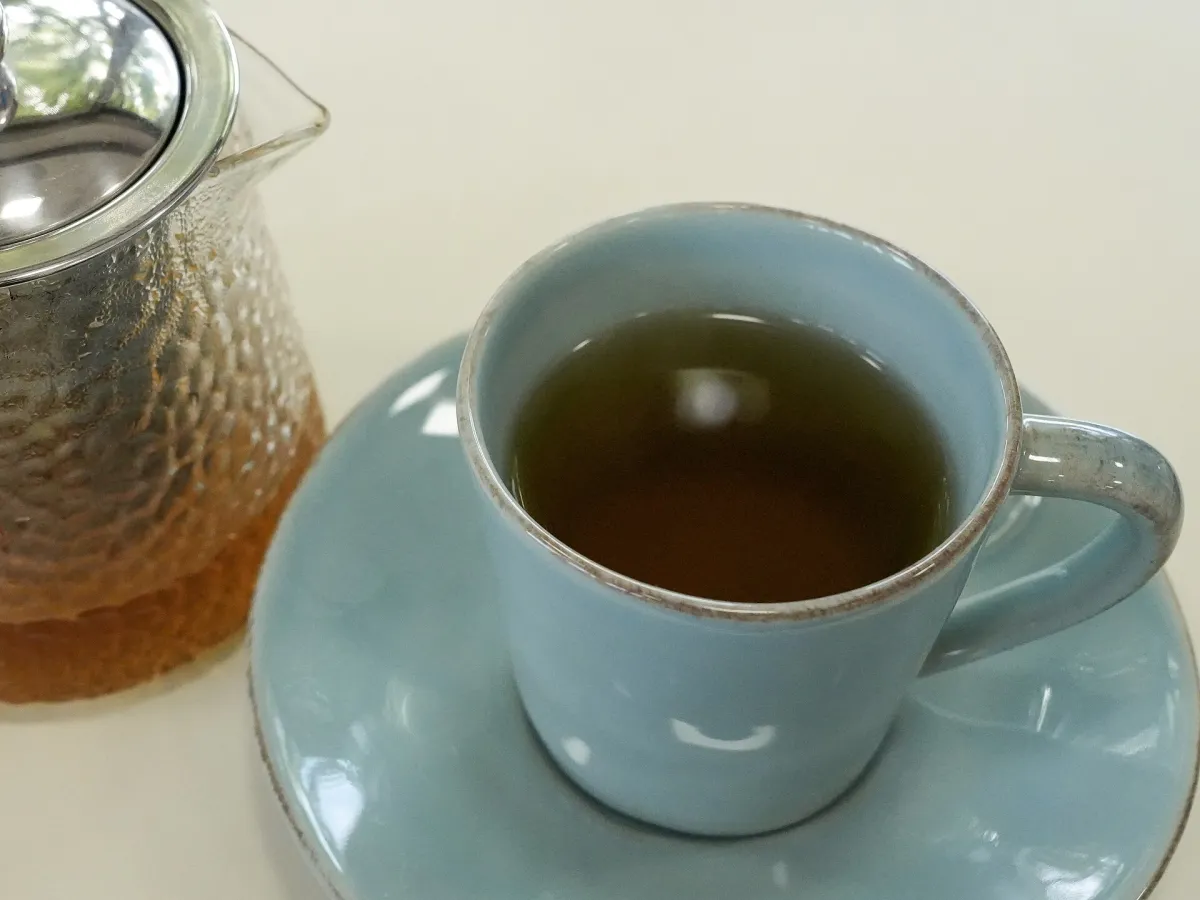
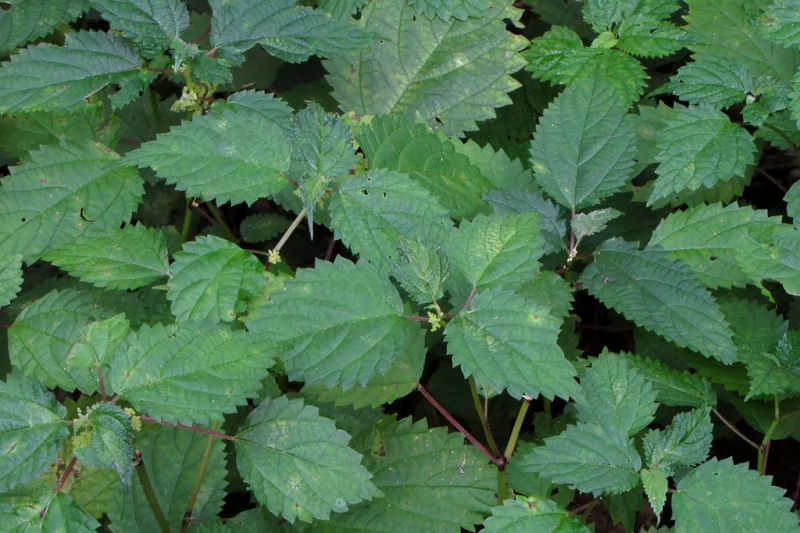
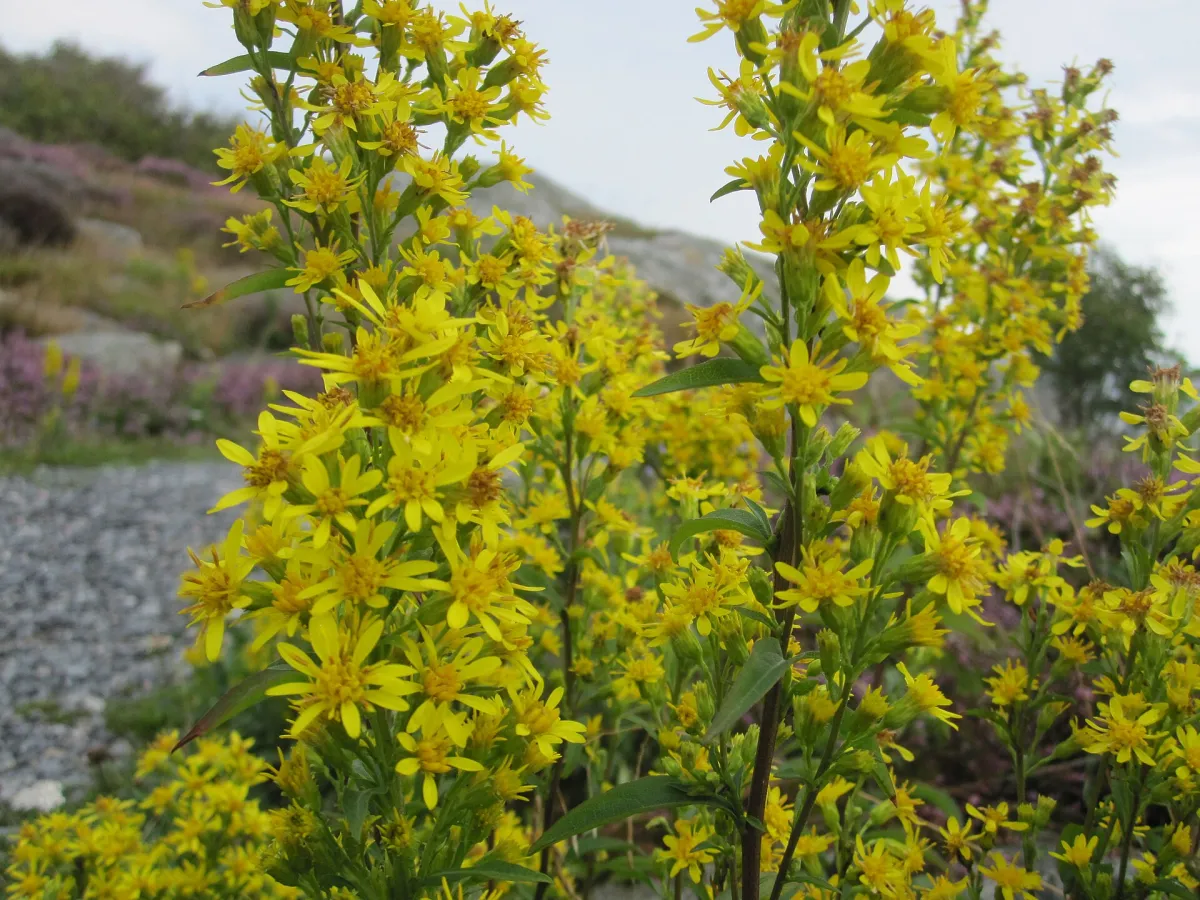
 Photo: Frank Förster, Public domain, via Wikimedia Commons
European goldenrod (Solidago virgaurea), called splinuță or “golden rod” in Romanian, is one of Europe’s most valuable herbs for the urinary tract: it increases urine output, has anti-inflammatory and mildly antispasmodic effects, and is used as an add-on in mild cystitis, bladder irritation and the prevention of kidney gravel. The European Medicines Agency (EMA) recognises it as a traditional herbal medicine for flushing the urinary tract. It is taken as an infusion, 1-2 teaspoons per cup, 2-4 times a day, with plenty of water.
Its Romanian name comes from the old belief that the plant helped the “spleen” (splină); modern use, however, concerns almost exclusively the kidneys and bladder. Below you will learn how to use it correctly.
Key takeaways
- The flowering tops are used, gathered from July to September.
- Active compounds: flavonoids (rutin, quercitrin), phenolic glycosides (leiocarposide), saponins, tannins.
- EMA: a traditional product to increase the amount of urine to achieve flushing of the urinary tract, as an add-on in minor urinary complaints.
- Usual dose: 3-5 g of herb per cup, 2-4 times a day, plus at least 2 litres of fluid.
- Watch out for allergy to the daisy family (Asteraceae) and for swelling due to heart or kidney disease.
What goldenrod is and how to recognise it
Goldenrod is a perennial in the Asteraceae family, 30-100 cm tall, with upright stems, elongated slightly toothed leaves and golden-yellow inflorescences made up of many small flower heads clustered along the top of the stem. It blooms in late summer and autumn, July to October.
It grows wild in open woodland, at forest edges, in clearings and on slopes from hills to mountains. In Romania two invasive North American relatives are also common: Solidago canadensis (Canadian goldenrod) and Solidago gigantea, which form large, dense stands on abandoned land and along railways. They are much taller (up to 2 m) with richer, arching pyramid-shaped flower clusters.
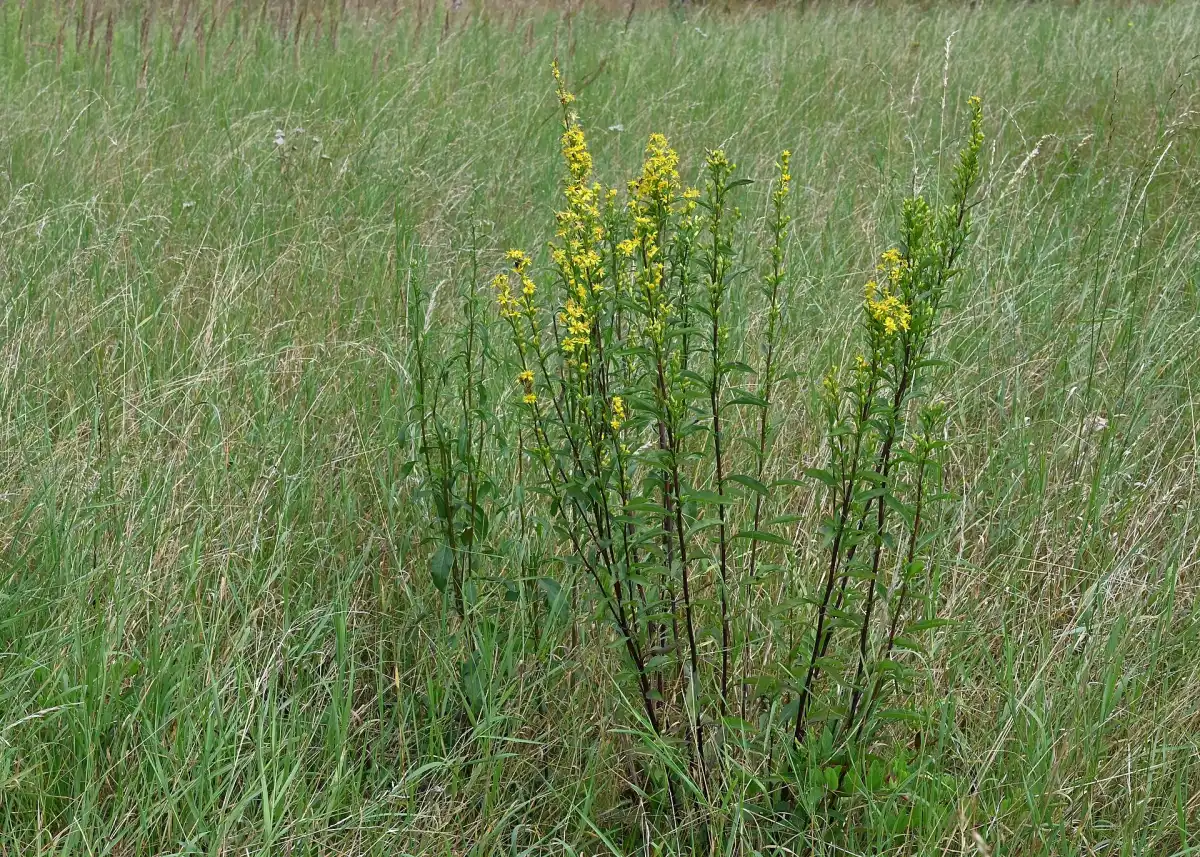 Photo: Krzysztof Ziarnek, Kenraiz, CC BY-SA 4.0, via Wikimedia Commons
European or Canadian goldenrod?
The EMA monograph refers to Solidago virgaurea. In Germany, Commission E also approved S. canadensis and S. gigantea, which have a similar composition (but lack leiocarposide, one of the compounds characteristic of the European species). In practice, health shops sell both; if you want the “textbook” plant, look for Solidago virgaurea on the label.
Harvesting and drying
Cut the flowering stem tips, about 30 cm, at the start of flowering, before the flowers turn to fluff. Dry them in the shade in small bunches or a thin layer. Over-mature flowers burst into fluff as they dry and lower the quality of the herb.
Composition and active compounds
- Flavonoids (rutin, quercitrin, isoquercitrin, astragalin): antioxidant, contributing to the diuretic effect.
- Phenolic glycosides: leiocarposide and virgaureoside, characteristic of S. virgaurea, anti-inflammatory and diuretic in animal studies.
- Triterpene saponins: antifungal and anti-inflammatory activity in the lab.
- Phenolic acids (chlorogenic, caffeic), tannins and a small amount of volatile oil.
Benefits: what tradition says and what studies show
Flushing the urinary tract and mild cystitis
The main use, recognised by the EMA monograph as traditional, is increasing urine volume to “flush” the bladder and urethra in minor urinary complaints. Unlike other herbal diuretics, goldenrod also has experimentally demonstrated anti-inflammatory and mildly antispasmodic effects, which explains why it eases burning and urgency too. Observational studies in patients with mild urinary infections treated with combination products reported symptom relief, but solid randomised trials are few. For a complete approach to urinary infection, read our article on urinary tract infections.
Preventing kidney gravel and stones
European tradition uses goldenrod in courses for kidney “gravel”. Higher urine flow dilutes the substances that crystallise. It does not dissolve stones that have already formed. See also our article on kidney stones.
Irritable bladder and frequent urination
The antispasmodic and anti-inflammatory effects may help an irritated bladder. Very frequent, night-time or urgent urination has many causes, however, and needs medical evaluation; see also our article on overactive bladder.
External uses
As a gargle or mouthwash, goldenrod infusion is astringent on gums and in throat inflammation thanks to its tannins. Compresses were used for slow-healing wounds. These are traditional uses without modern studies.
Rheumatism and gout
Goldenrod features in “anti-rheumatic” teas, on the idea of flushing uric acid through the urine. Plausible, but unproven.
How to prepare goldenrod
Infusion (standard form)
- Put 1-2 teaspoons (3-5 g) of dried, chopped herb into a cup.
- Pour over 150-250 ml of boiling water.
- Cover and steep for 10-15 minutes.
- Strain and drink between meals.
Drink 2-4 cups a day. The taste is slightly bitter and astringent, pleasantly aromatic.
Urinary tract blend
A classic blend in equal parts:
- Goldenrod (anti-inflammatory, diuretic);
- Couch grass (gentle diuretic, soothing);
- Corn silk (soothing for the bladder).
Use 2 teaspoons of the blend per 250 ml, steep 10-15 minutes, 3 cups a day for 7-10 days.
Tincture
Take commercial tincture as directed, usually 20-40 drops 2-3 times a day, diluted in water. For making your own, see our guide to herbal tinctures.
Gargle
2 teaspoons per 200 ml of boiling water, 15 minutes, cooled; gargle 3 times a day.
Dosage guide
| Form | Amount | Frequency | Duration |
|---|---|---|---|
| Infusion | 3-5 g per 150-250 ml, 10-15 min | 2-4 cups/day | 1-2 weeks per episode |
| Urinary blend (goldenrod + couch grass + corn silk) | 2 tsp per 250 ml | 3 cups/day | 7-10 days |
| Commercial tincture | as directed (often 20-40 drops) | 2-3 times/day | 1-2 weeks |
| Total fluids | at least 2 litres/day | throughout the course | needed for the effect |
If symptoms last more than a week or get worse, stop self-treatment and see a doctor.
Contraindications and precautions
- Swelling from heart or kidney failure and any situation where your doctor has advised fluid restriction: contraindicated.
- Allergy to Asteraceae (chamomile, arnica, ragweed, sunflower): risk of reactions; goldenrod pollen is rarely allergenic, but the dried herb can trigger reactions in sensitised people.
- Pregnancy and breastfeeding: insufficient data, not recommended.
- Children under 12: not recommended without a doctor.
- Diuretics and lithium: additive diuretic effect; lithium needs special care.
- Treated high blood pressure: usually not a problem, but tell your doctor you take a herbal diuretic.
When to see a doctor
- Fever, chills, lower back pain (possible kidney infection).
- Blood in the urine or persistently cloudy, foul-smelling urine.
- Urinary symptoms in men, children, pregnant women or people with diabetes.
- Repeated bouts of cystitis (see recurrent cystitis).
- Colicky pain or inability to pass urine.
- Leg swelling that does not go down overnight.
Common mistakes
Drinking the tea without extra water. Flushing the urinary tract depends on total fluid intake.
Harvesting over-mature flowers. They burst into fluff and lose quality; gather at the start of flowering.
Using the invasive species unknowingly. They are not dangerous, but the European monograph refers to S. virgaurea.
Prolonged self-treatment of recurring urinary infections. You need a urine culture and a proper assessment.
Using it for cardiac swelling, thinking a herbal diuretic is “gentler”. This can be dangerous.
Conclusion
Goldenrod is one of the few urinary herbs that combines a diuretic action with anti-inflammatory and antispasmodic effects, and its recognition by the EMA as a traditional remedy confirms its place in the home medicine cabinet. As an infusion, with plenty of water and for short periods, it is a valuable add-on in mild cystitis and in preventing kidney gravel. Fever, blood in the urine and kidney pain, however, are signals for a doctor, not for another cup of tea.
Frequently asked questions
What is goldenrod tea good for? Mainly the urinary tract: it increases urine output and calms inflammation, and is used as an add-on in mild cystitis and to prevent kidney gravel.
Why is it called splinuță in Romanian? The name comes from an old folk belief that the plant helped the spleen. Modern use, supported by the European monograph, concerns the kidneys and bladder.
Is Canadian goldenrod good for tea? Solidago canadensis has a similar composition and was approved in Germany, but the EMA monograph refers to Solidago virgaurea. Both are used in practice.
How long can I drink goldenrod tea? Usually 1-2 weeks for a minor urinary episode. If symptoms persist beyond a week, see a doctor.
Can I drink goldenrod if I am allergic to ragweed? Goldenrod belongs to the same family (Asteraceae), so cross-reactions are possible. Start with a small amount, or avoid it if you have reacted to plants in this family.
Does goldenrod replace antibiotics? No. It is an add-on for minor urinary complaints. A urinary infection with fever, or one that does not settle, needs antibiotics prescribed by a doctor.
What can goldenrod be combined with? Couch grass and corn silk for the urinary tract, or nettle in spring cures. Simple blends of 2-3 herbs are the safest.
Sources and further reading
- EMA / HMPC: European Union herbal monograph on Solidago virgaurea L., herba.
- ESCOP Monographs: Solidaginis virgaureae herba.
- German Commission E: monograph on Solidaginis herba.
- PubMed reviews on the phytochemistry and pharmacology of Solidago species.
This article is for information only and does not replace medical advice. Talk to your doctor or pharmacist before using medicinal plants, especially if you take medication or have a chronic condition.