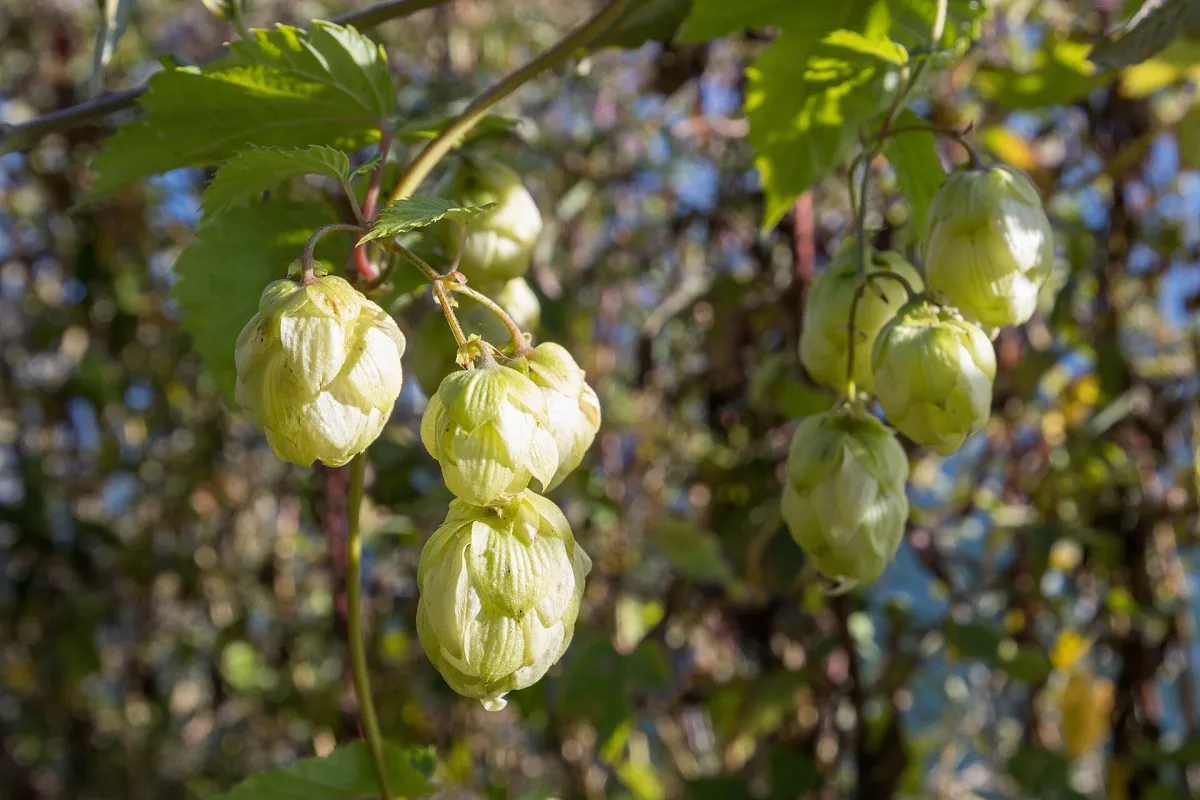
 Photo: JackyM59, CC BY-SA 4.0, via Wikimedia Commons
Hops (Humulus lupulus) have been used for centuries as a calming herb: the dried female cones are taken as a tea, tincture or extract for restlessness and poor sleep. The sedative effect of hops on their own rests mainly on tradition and European herbal monographs, while clinical trials have mostly tested hops combined with valerian, with modest results in mild insomnia. A typical tea dose is about 0.5-1 g of cones per cup, 1-3 times a day, with the evening cup taken 30-60 minutes before bed.
Key takeaways:
- The part used is the female cone (strobile), rich in lupulin, which contains bitter acids, essential oil and flavonoids.
- The European Medicines Agency (EMA) recognises hops as a traditional herbal medicine for mild symptoms of mental stress and to aid sleep, in adults and children over 12.
- Most clinical evidence concerns the hops-plus-valerian combination, not hops alone.
- Hops contain 8-prenylnaringenin, one of the most potent plant estrogens known: possibly helpful for hot flashes, but best avoided in hormone-sensitive conditions.
- Do not combine hops with sleeping pills, alcohol or other sedatives, and avoid them in depression unless your doctor agrees.
- Beer is not a sleep remedy: alcohol disrupts sleep far more than hops can help it.
What hops are
Hops are a perennial climbing plant of the Cannabaceae family that grows wild across Europe, including Romania, along riverbanks, in floodplain woods and damp forest edges. The bines twist around trees or fences and can exceed 6 metres. Plants are either male or female, and only the females produce the papery, pale green cones harvested in late summer.
At the base of the cone’s bracts sit tiny, sticky yellow glands called lupulin. They give beer its typical aroma and bitterness and hold most of the active compounds. In pharmacies and herbal shops hops are sold as ‘hop flowers’ or ‘hop cones’ (pharmaceutical name Lupuli flos), whole or cut.
Active compounds
- Bitter acids (alpha acids such as humulone and beta acids such as lupulone): responsible for the bitter taste. As dried hops age and oxidise, these break down into 2-methyl-3-buten-2-ol, a compound with a sedative effect in animal studies that is thought to contribute to the calming action.
- Essential oil (myrcene, humulene, caryophyllene): aroma and possibly part of the relaxing effect.
- Prenylated flavonoids: xanthohumol, isoxanthohumol and 8-prenylnaringenin (8-PN). 8-PN has marked estrogenic activity, which is why hops are being studied for menopause.
A useful piece of history: as early as the 19th century, people noticed that hop pickers tired quickly and dozed off at work, and some female pickers reported menstrual changes. Both anecdotal observations fit what we now know about the plant’s chemistry.
Hops benefits: tradition versus evidence
Sleep and restlessness (traditional use, officially recognised)
The EMA monograph, prepared by the Committee on Herbal Medicinal Products (HMPC), classifies hops under ’traditional use’: for relief of mild symptoms of mental stress and to aid sleep. This means the indication is based on long-standing use and plausibility, not on robust clinical trials of hops alone. Germany’s Commission E also approved hops for restlessness, anxiety and sleep disturbances.
Laboratory studies show that hop extracts interact with GABA-A receptors (the same targets as some sleeping pills, though far more weakly) and with melatonin receptors. Human data on hops alone are scarce and small, including a few studies of non-alcoholic beer drunk in the evening that hinted at better sleep quality but cannot support firm conclusions.
Hops plus valerian (where most studies are)
The evidence is stronger here. Several randomised trials have tested combined extracts of valerian and hops in mild to moderate insomnia. A trial published in Sleep (Morin et al., 2005) compared a valerian-hops combination with diphenhydramine (an antihistamine used as a sleep aid) and placebo: the combination produced modest improvements in sleep, of limited clinical size, with no significant side effects. Other studies reported faster sleep onset and fewer night-time awakenings, often in small groups.
The realistic takeaway: the combination may help mild, occasional or stress-related insomnia after 2-4 weeks of regular use. It is not as strong as a sleeping pill and does not treat chronic insomnia, for which cognitive behavioural therapy for insomnia (CBT-I) remains first-line. For a full approach, see our guide to insomnia.
Menopause and hot flashes (preliminary evidence)
Because of their 8-PN content, standardised hop extracts have been tested in a few small randomised trials in menopausal women. Results showed a modest reduction in hot flashes and sweating compared with placebo, mainly after several weeks. The findings are encouraging but preliminary, and a cup of hops tea does not match the composition of the standardised extracts used in research. More options are covered in our article on menopause.
Important: the same estrogen-like effect that may ease hot flashes makes hops unsuitable for women with breast cancer, endometriosis or uterine fibroids.
Digestion and other uses
As a bitter herb, hops were traditionally used for poor appetite and sluggish digestion. Xanthohumol is widely researched in the lab for antioxidant and metabolic effects, but there is no clinical evidence to justify taking hops for these purposes. Externally, hop compresses were traditionally applied to mildly irritated skin.
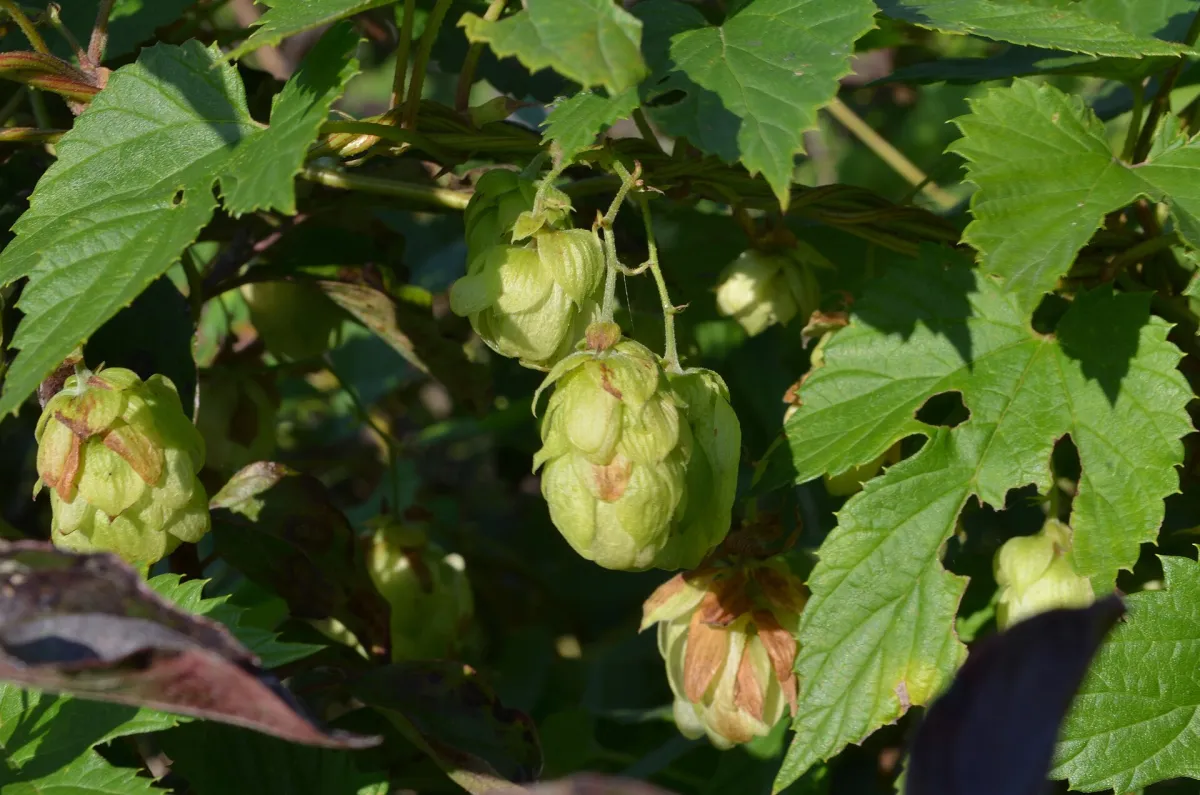 Photo: Manfred Schulenburg, CC BY-SA 4.0, via Wikimedia Commons
How to prepare and use hops
Hops tea (infusion)
Hop cones are very light and bulky, so teaspoons are unreliable. A kitchen scale gives the best result.
- Place 0.5-1 g of cut hop cones (roughly 1-2 heaped teaspoons) in a mug.
- Pour over 150-200 ml of freshly boiled water (close to 100 °C).
- Cover the mug with a saucer so the essential oil does not escape.
- Steep for 10-15 minutes, then strain.
- Drink 30-60 minutes before bed; if needed, add one cup in the afternoon for restlessness.
The taste is bitter. Sweeten with a teaspoon of honey once the tea has cooled below 40 °C, or blend hops with better-tasting herbs.
Bedtime blend
- 1 part hop cones
- 2 parts cut valerian root
- 2 parts lemon balm leaves
Use 1 heaped teaspoon of the blend per 200 ml of boiling water, covered for 10-15 minutes. Valerian smells strong; if you dislike it, swap it for chamomile. For a gentler, hops-free option, try our chamomile and lemon balm tea.
Hops tincture
Commercial tincture (usually 1:5 in alcohol) is typically taken at 1-2 ml (about 20-40 drops, depending on the dropper) in a little water, 1-3 times a day, with the last dose in the evening. Always check the label, as strengths vary. It contains alcohol, so it is not suitable if you avoid alcohol, before driving, or with liver disease.
Hop pillow
An old European remedy: a cotton pouch filled with 50-100 g of dried cones placed beside your pillow. Some find the scent relaxing, others find it unpleasant. There are no trials, but the risk is minimal apart from allergy. Replace the cones every 2-3 months as the aroma fades.
Dosage guide
| Form | Usual adult dose | Frequency | Notes |
|---|---|---|---|
| Tea (cut cones) | 0.5-1 g in 150-200 ml boiling water | 1-3 times daily, last one in the evening | Covered infusion, 10-15 minutes |
| Tincture 1:5 | 1-2 ml (20-40 drops) | 1-3 times daily | Contains alcohol; follow the label |
| Dry extract (capsules) | As directed by manufacturer | Usually in the evening | Prefer standardised products |
| Valerian + hops combination | As directed by manufacturer | Evening, 30-60 min before sleep | The best-studied form |
| Hop pillow | 50-100 g dried cones | Every night | Inhalation only, gentle effect |
A typical course lasts 2-4 weeks. If your sleep has not improved by then, do not increase the dose: talk to your doctor. Do not give hops to children under 12 without medical advice.
Contraindications, interactions and who should avoid hops
Who should not take hops
- People with depression. Sedative herbs can deepen apathy, fatigue and low energy, and older monographs list depression as a contraindication. If insomnia is part of a depressive episode, it needs proper assessment, not just tea. See also our article on mild depression.
- Hormone-sensitive conditions: current or past breast, uterine or ovarian cancer, endometriosis, uterine fibroids, endometrial hyperplasia.
- Pregnancy and breastfeeding: insufficient safety data, and the estrogenic effect adds another reason for caution.
- Children under 12.
- Allergy to hops or other Cannabaceae plants; hop pickers can develop contact dermatitis.
Interactions
- Sleeping pills and anti-anxiety drugs (benzodiazepines, zolpidem), sedating antihistamines, sedating antidepressants, opioids, anti-epileptics: additive sedation.
- Alcohol: increases drowsiness.
- Hormonal treatments (contraceptives, hormone replacement therapy, tamoxifen, aromatase inhibitors): theoretical interaction through the estrogenic effect; do not combine without your doctor.
- Drugs metabolised by the liver: lab studies suggest some hop compounds may affect cytochrome P450 enzymes; the relevance in humans is unclear, but tell your doctor what you take.
- Surgery: stop hops about 2 weeks beforehand, as with any herbal sedative.
Side effects
At usual doses hops are well tolerated. Morning drowsiness, mild dizziness or, rarely, allergic reactions can occur. Do not drive or operate machinery if you feel sleepy.
Warning for dog owners: hops, including those used for home brewing, are toxic to dogs and can cause life-threatening overheating. Keep cones and spent hops away from pets.
 Photo: Adjoka, Public domain, via Wikimedia Commons
When to see a doctor
- insomnia lasting more than 3 months or occurring at least 3 nights a week;
- loud snoring, pauses in breathing during sleep or daytime sleepiness (possible sleep apnoea);
- persistent low mood, loss of pleasure or thoughts of self-harm: seek help immediately;
- palpitations, heavy night sweats or unexplained weight loss;
- vaginal bleeding after menopause or any breast changes;
- you already take medication for sleep, anxiety or depression.
Common mistakes
Thinking beer helps you sleep. Alcohol may help you fall asleep faster, but it fragments sleep in the second half of the night. Beer contains little of the calming compounds and plenty of alcohol-related risk.
Using stale hops. Oxidised cones that look brownish and smell like rancid cheese have lost their essential oil. Store hops in a sealed jar in a cool, dark place and use them within a year.
Steeping uncovered. The essential oil escapes with the steam.
Adding hops to sleeping pills ’to boost them’. The effects stack up unpredictably.
Using hops for hot flashes without checking your history. If you have had breast cancer or have fibroids, ask your doctor first.
Expecting results on night one. Sedative herbs work gently; judge the effect after 2 weeks of regular use alongside good sleep habits.
Conclusion
Hops are a calming herb with a long tradition and official recognition as a traditional remedy for mild stress and sleep. The best data come from combinations with valerian, which show modest benefits in mild insomnia. Their phytoestrogens make hops interesting for menopause but unsuitable for hormone-dependent conditions. Used sensibly, at low doses, for limited periods and without other sedatives, hops are a safe option for most adults.
Frequently asked questions
How quickly does hops tea work? Some people feel mildly relaxed within 30-60 minutes, but the effect on sleep should be judged after 2-4 weeks of regular use.
Can I drink hops tea every night? Yes, for 2-4 week periods followed by a break and a review. Continuous use over many months should be discussed with your doctor.
Do hops raise estrogen levels? They do not increase your own hormones, but they contain 8-prenylnaringenin, which acts like estrogen at its receptors. That is why hops are avoided in breast cancer, endometriosis and fibroids.
Can men take hops? Yes, at usual sleep doses. The estrogenic effect at these doses is small, but long-term, high-dose use is not advisable without a good reason.
Hops or valerian: which is better for sleep? Valerian has more studies on its own, and the combination of the two has the most data overall. Hops add a gentle calming effect and allow a lower valerian dose for people who tolerate it poorly.
Can children drink hops tea? Not under 12. For restless children, lemon balm and chamomile are more suitable choices, after talking to a paediatrician.
Does non-alcoholic beer have the same effect? It contains hop compounds, and a few small studies hinted at better sleep, but amounts vary widely. It is not a treatment, and many ‘alcohol-free’ beers still contain up to 0.5% alcohol.
Can I harvest wild hops? Yes, pick the female cones in late summer when they feel dry and papery and show yellow lupulin inside. Dry them quickly in the shade and wear gloves: the rough bines irritate skin.
Sources and further reading
- European Medicines Agency (HMPC), Community herbal monograph on Humulus lupulus L., flos.
- European Medicines Agency (HMPC), European Union herbal monograph on Valeriana officinalis L., radix.
- Blumenthal M. (ed.), The Complete German Commission E Monographs, Hops (Lupuli strobulus) monograph, American Botanical Council, 1998.
- Morin C.M. et al., ‘Valerian-hops combination and diphenhydramine for treating insomnia: a randomized placebo-controlled clinical trial’, Sleep, 2005.
- Heyerick A. et al., ‘A first prospective, randomized, double-blind, placebo-controlled study on the use of a standardized hop extract to alleviate menopausal discomforts’, Maturitas, 2006.
- NCCIH (National Center for Complementary and Integrative Health), Sleep Disorders and Complementary Health Approaches.
Informative content only; it does not replace a consultation with a doctor or pharmacist.