
Hyssop: Benefits, Uses, How to Prepare It and Side Effects
IMPORTANT: Hyssop (Hyssopus officinalis) is a safe aromatic plant when used in ordinary culinary amounts, but its concentrated essential oil and large doses of infusion can be dangerous. Hyssop essential oil contains ketones (especially pinocamphone) which, in large quantities, can trigger convulsions. For this reason, hyssop in strong medicinal concentrations is contraindicated for people with epilepsy or a predisposition to seizures, pregnant women (the plant has an emmenagogue effect and may stimulate the uterus), and breastfeeding mothers. It should not be given to young children in the form of essential oil. People with high blood pressure should be cautious, as folk tradition attributes a mild blood-pressure-raising effect to hyssop. If you are following any drug treatment, especially with anticonvulsants or antihypertensives, talk to your doctor before using hyssop as a remedy. Hyssop is not a substitute for treating a serious respiratory infection — if a cough lasts more than two weeks, or if you develop high fever or difficulty breathing, see a doctor.
A story from long ago, from a monastery garden
Grandmother Veronica, a frail but tireless woman from near Sibiu, kept a bush of hyssop in the corner of her garden that she had inherited, she said, “from the nuns at the monastery.” Every autumn, when the cold winds began to bring coughs and hoarseness into the house, she would cut bunches of flowering hyssop, tie them with hemp twine and hang them to dry in the attic, above the stove. That strong, slightly bitter and cooling scent, with a note of mint and camphor, filled the whole house. “Hyssop clears the chest,” she used to say, pouring boiling water over a spoonful of dried flowers. The children drank the tea sweetened with linden honey, and by the next day the cough seemed gentler, the chest freer.
Aunt Veronica had never read a treatise on herbalism, but she had inherited a science centuries old. Hyssop was one of the most prized plants of medieval monastery gardens, cultivated by monks not only for remedies but also for its aroma, used to freshen the air and to flavour cordials. Today, as we rediscover the value of old-time plants, hyssop deserves a place once again in the garden and in the remedy cupboard.
What is hyssop
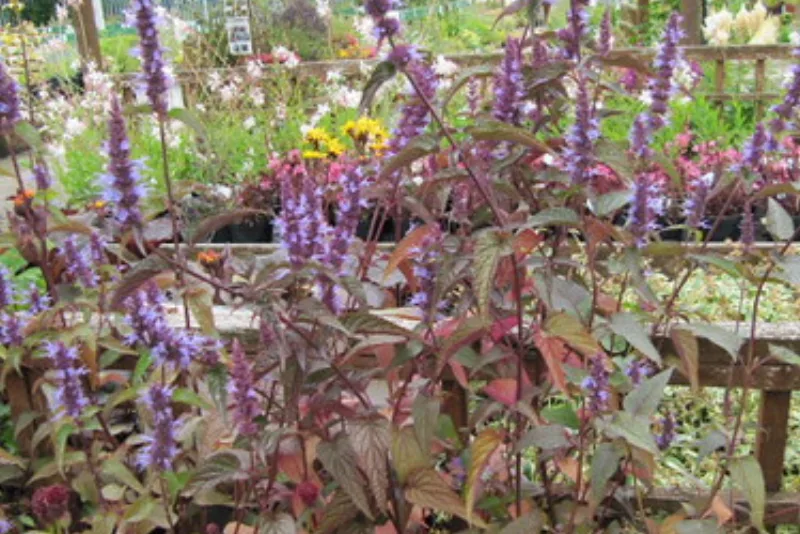
Hyssop (Hyssopus officinalis) is a small semi-woody perennial shrub from the Lamiaceae family — the same family that includes mint, sage, thyme, basil and rosemary. It grows as a dense bush, 30–60 centimetres tall, with upright stems that become woody at the base. The leaves are narrow, lance-shaped, of an intense dark green, and very aromatic when crushed between the fingers. In summer, the plant blooms abundantly, forming elegant spikes of small flowers, usually blue-violet but sometimes pink or white, much sought after by bees and butterflies.
Native to the Mediterranean region and south-western Asia, hyssop spread throughout Europe along with monastery gardens. Its name carries biblical resonances: in ancient texts, “hyssop” was used in purification rituals, although botanists debate whether the plant mentioned in the Bible was exactly the species we know today. Regardless of that controversy, European hyssop earned a solid reputation as a medicinal, culinary and bee-friendly plant.
What makes hyssop remarkable is the combination of its intense, warm, slightly bitter aroma and its rich content of active compounds. Folk tradition has used it for centuries mainly for respiratory ailments, but also for digestion, for cleansing wounds, and as a general tonic.
Table of Contents
- Composition and active principles
- Health benefits
- Traditional uses of hyssop
- How to prepare hyssop (step-by-step recipes)
- Dosage and method of administration
- Hyssop in the kitchen
- How to grow and harvest it
- Practical tips and common mistakes
- Precautions and contraindications
- Conclusion
- Frequently Asked Questions
Composition and active principles
The power of hyssop lies in its wealth of biologically active substances, concentrated mainly in the leaves and the flowering tops. Here are the main categories of compounds that phytochemical studies have identified in the plant:
- Volatile (essential) oil — at around 0.3–1.5%, responsible for the strong aroma. It contains pinocamphone, isopinocamphone, beta-pinene, cineole and other terpenes. These compounds explain the expectorant and antiseptic effect, but also the precautions related to ketones.
- Flavonoids — including diosmin, hesperidin and luteolin, with antioxidant and blood-vessel-supporting roles.
- Phenolic acids — especially rosmarinic acid and caffeic acid, known for their antioxidant and anti-inflammatory properties.
- Tannins — which give hyssop a mild astringency, useful in soothing inflammation of mucous membranes and wounds.
- Marrubiin — a bitter compound with a traditional expectorant effect.
- Vitamins and minerals — modest amounts of vitamin C and mineral salts.
This combination makes hyssop a plant with complex action: at once expectorant, mildly antispasmodic, antiseptic, a digestive tonic and astringent. Studies suggest that hyssop extracts may also have notable antioxidant and antimicrobial activity, which confirms, at least in part, the intuition of herbalists of old.
Health benefits
Supporting the respiratory system
The oldest and most widespread use of hyssop is for respiratory ailments. Folk tradition recommends it for coughs, bronchitis, colds, flu and hoarseness. Hyssop is thought to have a twofold beneficial effect: on one hand, it helps thin and expel mucus (expectorant effect), and on the other, it soothes the spasms that cause coughing fits. Marrubiin and the volatile oil seem to be responsible for this effect. A warm cup of hyssop tea, sipped slowly throughout the day, can bring a sense of relief to the chest and “unblock” the breathing.
Support for digestion
Like many bitter aromatic plants of the Lamiaceae family, hyssop stimulates digestive secretions. The bitter compounds act on the taste buds, reflexively triggering the production of saliva, gastric juice and bile. The result is better digestion, especially after heavy or fatty meals. Tradition uses it for bloating, a feeling of stomach heaviness, lack of appetite and mild colic. A cup of hyssop tea after a meal is a pleasant and useful habit.
Antioxidant action
The high content of rosmarinic acid and flavonoids makes hyssop a source of antioxidants. These help the body neutralise free radicals, unstable molecules involved in the processes of cellular ageing and in numerous chronic conditions. Studies suggest that hyssop extracts display an appreciable antioxidant capacity under laboratory conditions, which supports the plant’s traditional role as a general tonic.
Support for immunity
Thanks to its studied antiseptic and antiviral properties, hyssop has been used traditionally to strengthen the body’s resistance during the cold season. Gargling with hyssop infusion is an old remedy for sore throats and gum inflammation, taking advantage of the astringency of the tannins and the action of the volatile oil on microbes.
A mild calming effect and nerve tonic
Hyssop’s pleasant aroma and its content of volatile compounds give it, according to tradition, a mild balancing effect on mood. It was used in the past for nervous fatigue, melancholy and asthenia. Although this effect is gentler than that of other plants (such as lemon balm or valerian), an aromatic cup of hyssop tea can be a welcome moment of relaxation.
Skin and wound care
Applied externally, in the form of compresses with infusion or decoction, hyssop has been used for cleansing wounds, bruises and contusions. Its astringency and antiseptic action help clean the affected area and reduce local inflammation.
Traditional uses of hyssop
In Romanian and European folk medicine, hyssop has had numerous uses:
- Tea for cough and cold — the most common use, often in combination with thyme, plantain or linden.
- Gargle for sore throats — a lukewarm infusion, used several times a day.
- Digestive tonic — drunk after meals to stimulate digestion.
- Compresses for bruises and wounds — applied locally.
- Hyssop syrup with honey — a sweet and pleasant remedy for children and adults during the cold season.
- Aromatic baths — a bunch of hyssop placed in the bathwater, for relaxation and for the tonic effect of the aroma.
- Seasoning — young chopped leaves flavoured soups, stews, beans and fatty meat, while also aiding digestion.
How to prepare hyssop (step-by-step recipes)
Hyssop infusion (tea)
This is the simplest and most commonly used method.
- Put one heaped teaspoon of dried hyssop (leaves and flowers) or one tablespoon of fresh plant into a cup.
- Pour about 200–250 ml of boiling water over it.
- Cover the cup with a small saucer — this is an important step, because it preserves the volatile oils, which would otherwise evaporate with the steam.
- Leave to infuse for 8–10 minutes.
- Strain and drink the tea warm, optionally sweetened with a teaspoon of linden or acacia honey.
You can drink 2–3 cups a day, in short courses (1–2 weeks), especially during episodes of cold or cough.
Decoction for gargling and external use
For gargling or compresses, you can prepare a slightly more concentrated decoction:
- Put 2 tablespoons of dried hyssop into a pot with 500 ml of cold water.
- Bring to the boil and let it simmer gently for 3–5 minutes.
- Remove from the heat, cover and leave to infuse for another 10 minutes.
- Strain and use the lukewarm liquid for gargling (3–4 times a day) or for compresses applied to the skin.
Hyssop syrup with honey
A pleasant remedy, ideal for seasonal coughs:
- Prepare a concentrated infusion from 3 tablespoons of hyssop in 500 ml of water, left to infuse covered for 15 minutes.
- Strain the cooled infusion well.
- Mix it with an approximately equal amount of honey (preferably linden or mountain honey).
- Put the mixture into a clean jar and store it in the refrigerator, for a maximum of 1–2 weeks.
- Take one teaspoon 2–3 times a day.
Caution: honey should not be given to children under one year of age, regardless of the remedy.
Hyssop tincture
For those who want a long-lasting preparation:
- Half-fill a jar with crushed dried hyssop.
- Pour food-grade alcohol of 40–50 proof over it until the plant is well covered.
- Close the jar and leave it to macerate for 2–3 weeks, in a dark and cool place, shaking daily.
- Strain through cheesecloth and store the tincture in dark glass bottles.
The tincture is used in small doses, usually 10–20 drops diluted in water, 2–3 times a day. Due to its high concentration, the tincture requires greater caution regarding contraindications.
Dosage and method of administration
For infusion, the usual dose is 1–2 g of dried plant (about one teaspoon) per cup of water, 2–3 times a day. Courses are generally taken over short periods, of one to two weeks, followed by a break. Hyssop is not a plant to be consumed continuously, month after month, in medicinal doses — moderation is the key.
Hyssop essential oil should NOT be taken internally without professional supervision and should not be used at all by people with epilepsy, pregnant women or children. For aromatherapy or massage, the essential oil is always heavily diluted in a carrier oil and used with the utmost caution.
Hyssop in the kitchen
Beyond its medicinal role, hyssop is an aromatic seasoning, appreciated in Mediterranean cuisines. Its leaves, with a slightly bitter, minty and camphorous taste, go especially well with fatty dishes, which they help to make easier to digest.
- Add a few finely chopped leaves to bean, lentil or pea soups.
- Use hyssop to season pork, lamb or game.
- A small amount pleasantly flavours tomato-based sauces.
- Hyssop flowers, which are edible, beautifully decorate salads and have a delicate taste.
The important piece of advice is to use hyssop in moderation: its aroma is strong and can easily dominate a dish. Start with a small amount and adjust to taste.
How to grow and harvest it
Hyssop is a rewarding plant, easy to grow in the garden or even in a pot on the balcony. It prefers sunny spots and well-drained soil, even stony or poor — it does not like heavy, waterlogged soils. Once established, it tolerates drought and winter cold well.
- Planting: in spring, from seeds or cuttings. It germinates relatively easily.
- Care: moderate watering; trimming the bush after flowering keeps the plant dense and healthy.
- Harvesting: the flowering tops and leaves are gathered in full bloom, in summer, when the content of aromatic oils is at its peak. Harvest in dry weather, after the dew has lifted.
- Drying: tie into small bunches and hang in the shade, in an airy and dry place. After drying, store in closed jars, away from light.
A hyssop bush not only gives you remedies and seasoning, but also attracts bees and butterflies, making it a valuable nectar plant for any garden.
Practical tips and common mistakes
Mistake no. 1: Boiling the flowers for a long time. Many people boil hyssop for a long time, believing they will get a stronger tea. In reality, boiling destroys the aromatic volatile oils, precisely the compounds that give the tea its value. For flowers and leaves, use infusion (boiling water poured over the plant), not prolonged boiling.
Mistake no. 2: Leaving the cup uncovered. If you do not cover the cup during infusion, the volatile oils evaporate with the steam. Always cover aromatic herbal tea.
Mistake no. 3: Consuming in large doses or for long periods. Hyssop is not a plant for daily consumption, indefinitely. The ketones in the volatile oil can accumulate. Stick to short courses and breaks.
Mistake no. 4: Using the essential oil internally, without supervision. Hyssop essential oil is far more concentrated and riskier than the infusion. Never ingest it on your own.
Mistake no. 5: Ignoring the contraindications. Hyssop in medicinal doses is not suitable for pregnant women, people with epilepsy or young children. Always check these aspects before turning to the plant.
Mistake no. 6: Harvesting from polluted areas. If you harvest hyssop from the wild or by the roadside, you risk gathering pollutants as well. Pick only from clean gardens or areas not exposed to pollution.
Conclusion
Hyssop is a plant with an ancient history and a strong personality — aromatic, bitter, cooling and full of virtues. Folk tradition prized it mainly for its beneficial effect on the chest and breathing, but also for the support it brings to digestion and for its invaluable aroma in the kitchen. Used in moderation and with respect for its contraindications, hyssop can be a pleasant ally during the cold season and a seasoning that ennobles heavy dishes. As with all medicinal plants, wisdom lies in temperance: moderate doses, short courses, attention to situations where the plant is contraindicated and, when needed, a doctor’s advice. As Grandmother Veronica used to say, “hyssop clears the chest” — but she also knew that good remedies are taken with measure.
Frequently Asked Questions
What is hyssop tea good for? Hyssop tea is used traditionally mainly for respiratory ailments — cough, bronchitis, cold, hoarseness — because of its expectorant and soothing effect. It also supports digestion, eases bloating, and can be used as a gargle for sore throats.
How do you prepare hyssop tea correctly? Put one teaspoon of dried hyssop into a cup of boiling water, cover the cup and leave to infuse for 8–10 minutes, then strain. Covering the cup is essential to preserve the aromatic oils. You can drink 2–3 cups a day, in short courses.
Does hyssop have contraindications? Yes. Hyssop in medicinal doses is contraindicated for pregnant and breastfeeding women, for people with epilepsy or a predisposition to seizures, and for young children (especially in the form of essential oil). People with high blood pressure and those under drug treatment should consult their doctor.
Can hyssop be consumed daily, for a long time? It is not recommended. Hyssop’s volatile oil contains ketones that can accumulate in large doses or over long periods. It is best to take short courses, of one to two weeks, followed by breaks.
What is the difference between hyssop and agastache (anise hyssop)? True hyssop (Hyssopus officinalis) is a Mediterranean plant from the Lamiaceae family, with a bitter and camphorous aroma. Agastache foeniculum, also known as “anise hyssop” or “Korean mint,” is a different plant, from North America, with a sweet anise aroma. Although they resemble each other in the appearance of the flowers, they are distinct species with different uses.
Can hyssop be used in cooking? Yes, young hyssop leaves, finely chopped, are an excellent seasoning for fatty dishes — pork, lamb, game, bean or lentil soups. Its intense aroma, however, calls for restraint: use small amounts, as it can easily dominate the taste of a dish.
How do you store dried hyssop? After drying in the shade, in an airy place, hyssop is stored in tightly sealed glass jars, away from light and moisture. This way it keeps its aroma and active principles for about a year.
Does hyssop help strengthen immunity? Folk tradition uses it during the cold season to support the body’s resistance, taking advantage of its antiseptic and antioxidant properties. However, it does not replace a healthy lifestyle, nor medical treatment when this is necessary.