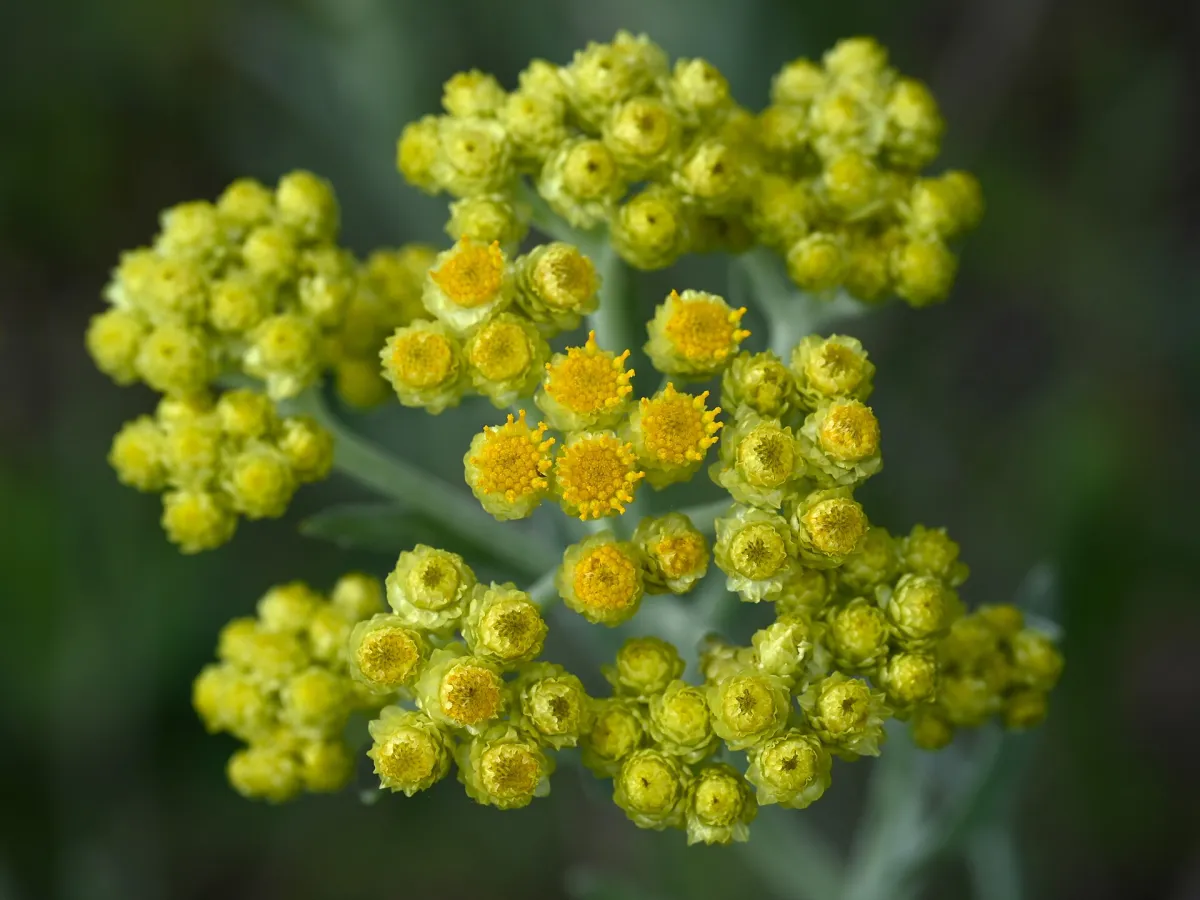
 Photo: Krzysztof Ziarnek, Kenraiz, CC BY-SA 4.0, via Wikimedia Commons
Immortelle, also called sandy everlasting or dwarf everlast (Helichrysum arenarium), is a sand-loving plant with yellow, straw-like flowers that has long been drunk as a tea for the gallbladder: it increases bile production and bile flow and eases heavy digestion, bloating and fullness after fatty meals. The European Medicines Agency (EMA) accepts it only as a traditional remedy for mild digestive complaints, and human studies are few and dated. The most important rule: if you have, or might have, gallstones, do not drink it without an ultrasound and your doctor’s approval.
Key takeaways:
- The dried flower heads are used; they are rich in flavonoids (mainly naringenin derivatives) and bitter compounds.
- The main actions are choleretic (the liver makes more bile) and cholagogue (the gallbladder empties), with a mild antispasmodic effect.
- Usual adult dose: 1 tablespoon (2-3 g) per 200-250 ml cup, 2-3 times a day, about 30 minutes before meals, for no more than 2-3 weeks.
- Experimental evidence comes from animal and lab studies; in humans, use rests mainly on tradition.
- It is contraindicated in bile duct obstruction, acute cholecystitis and jaundice, and in gallstone disease unless a doctor approves.
- Do not confuse it with immortelle essential oil (Helichrysum italicum), which is not for drinking.
What is immortelle (sandy everlasting)?
Sandy everlasting belongs to the Asteraceae (daisy) family, alongside chamomile and calendula. It is a perennial, 10-40 cm tall, with stems and leaves covered in dense hairs that give it a grey-silver look. The small golden to orange flower heads sit in clusters at the stem tips and are surrounded by dry, glossy bracts that keep their shape and colour for months after picking, which is where the names immortelle and everlasting come from.
It grows on dunes, sandy steppe and dry grassland across Central and Eastern Europe. In Romania, where it is called siminoc, it is found in the Danube Delta and on sandy soils in the south and north-west. It flowers from June to August or September, and the flower heads are harvested just before they fully open, otherwise they fall apart on drying. Because it has become scarce and is protected in many areas, buy it from a pharmacy or herbal shop rather than picking it in the wild.
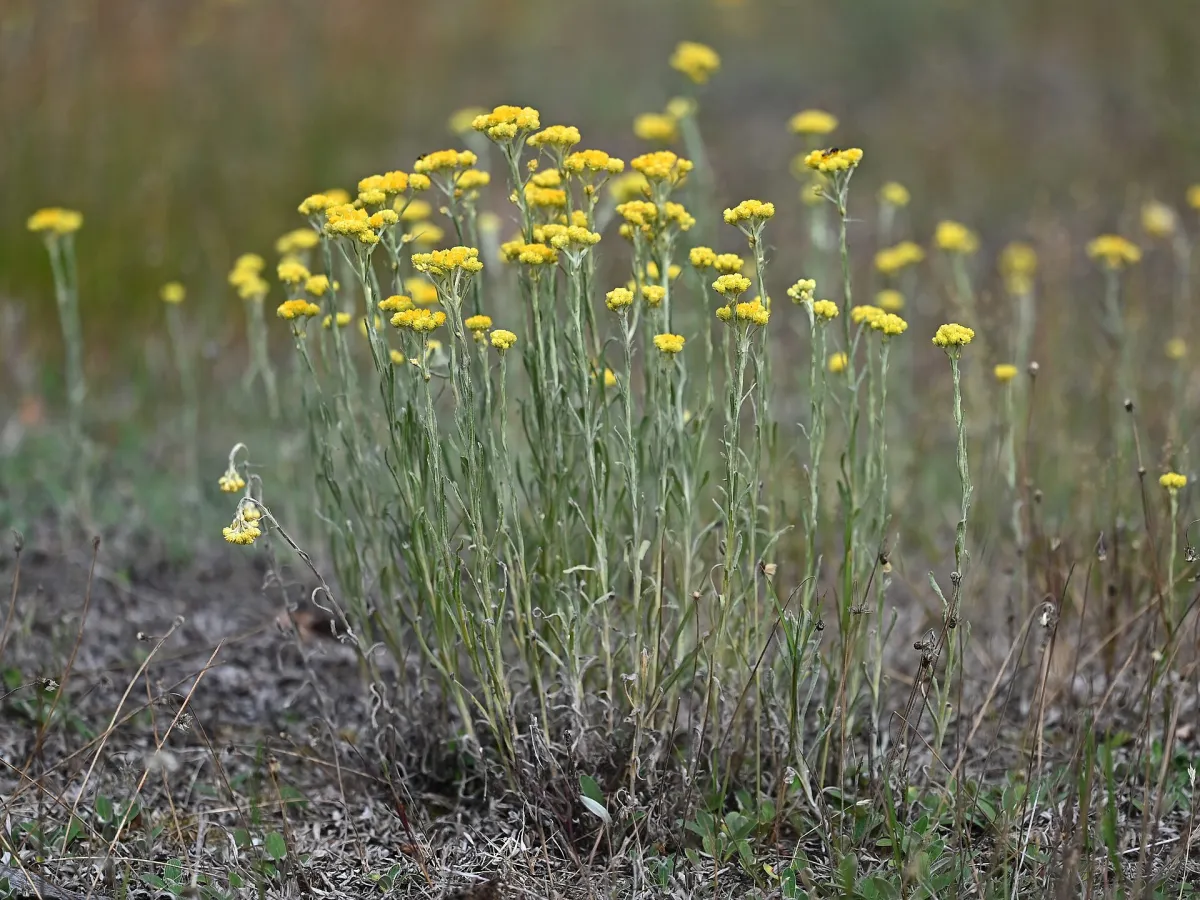 Photo: Krzysztof Ziarnek, Kenraiz, CC BY 4.0, via Wikimedia Commons
Immortelle tea is not immortelle essential oil
The immortelle or helichrysum oil sold for skincare usually comes from Helichrysum italicum, a related Mediterranean species also known as the curry plant. It is a concentrated essential oil for diluted external use only. It has nothing to do with the bile tea and must not be swallowed. When buying the tea, check that the label says Helichrysum arenarium, flos (flower heads).
Active compounds and how it works
Sandy everlasting flowers contain:
- flavonoids: naringenin glycosides (helichrysins), apigenin, kaempferol and isosalipurposide, a chalcone responsible for the yellow colour;
- phenolic acids: chlorogenic and caffeic acid;
- coumarins: scopoletin and umbelliferone;
- bitter substances, phthalides and traces of volatile oil.
Together these compounds have three actions relevant to digestion. The first is choleretic: the liver produces more, and more fluid, bile. The second is cholagogue: the gallbladder contracts and releases its contents into the gut, where bile helps digest fats. The third is a mild relaxing effect on digestive smooth muscle. The bitter taste also stimulates stomach secretions and appetite.
The cholagogue action explains both the benefit and the main risk: a strongly contracting gallbladder can push a stone into the bile ducts.
Benefits: tradition versus evidence
Traditional use
In Central and Eastern European folk medicine, immortelle was the go-to tea for a sluggish gallbladder: heavy digestion after fatty food, bloating, a bitter taste in the morning, mild nausea and pale stools after rich meals. It was also used during recovery from hepatitis, as a gentle diuretic and in liver tea blends. Much of this tradition predates ultrasound, when gallbladder trouble covered very different diagnoses.
What the EMA recognises
The EMA’s Committee on Herbal Medicinal Products (HMPC) has published a monograph on sandy everlasting flowers. It is accepted as a traditional herbal medicinal product for the symptomatic relief of digestive complaints such as dyspepsia, a feeling of fullness and flatulence. Traditional means the decision rests on long-standing use and plausibility, not on controlled clinical trials. The monograph does not recommend use under 18 because of insufficient data.
What research shows
- Animal studies: helichrysum extracts increased bile flow and bile acid output and protected the liver in models of toxic liver injury.
- Lab studies: antioxidant, antispasmodic and moderate antimicrobial activity.
- Human studies: older clinical observations from the former Soviet Union and Eastern Europe used a flavonoid preparation from the plant for biliary complaints. They were small, often uncontrolled and fall short of modern standards.
The honest verdict: immortelle has a plausible mechanism and a long track record for mild, bile-related digestive discomfort, but there is no modern evidence that it treats any disease.
What it does not do
It does not dissolve gallstones, detox the liver, cure hepatitis or fatty liver, or replace treatment for cholecystitis. For the full picture of a gallbladder that empties poorly, see our guide to biliary dyskinesia.
How to make immortelle tea
Classic infusion
- Put 1 tablespoon of dried flower heads (about 2-3 g) in a mug.
- Pour over 200-250 ml of water just off the boil (around 95-100°C).
- Cover the mug with a saucer to keep the volatile compounds in.
- Steep for 10-15 minutes, then strain.
- Drink it warm, unsweetened or with a little honey, about 30 minutes before a meal.
The taste is mildly bitter and aromatic. Do not boil the herb for long: extended boiling concentrates the bitter compounds and makes the tea unpleasant without adding benefit.
Cold soak plus infusion
Some traditional recipes extract more of the compounds this way: in the evening, soak 1 tablespoon of the herb in 250 ml of cold water for 6-8 hours. In the morning, strain, pour another 100 ml of boiling water over the same herb, steep for 10 minutes, strain again and combine both liquids. Divide into 2-3 portions taken before meals.
Blends
Immortelle pairs well with peppermint and chamomile in equal parts (1 tablespoon of the mix per cup) for heavy digestion with bloating and cramps. In traditional liver blends it is often combined with artichoke; see our article on artichoke tea. Avoid stacking several strong bile-stimulating herbs at high doses, as their effects add up.
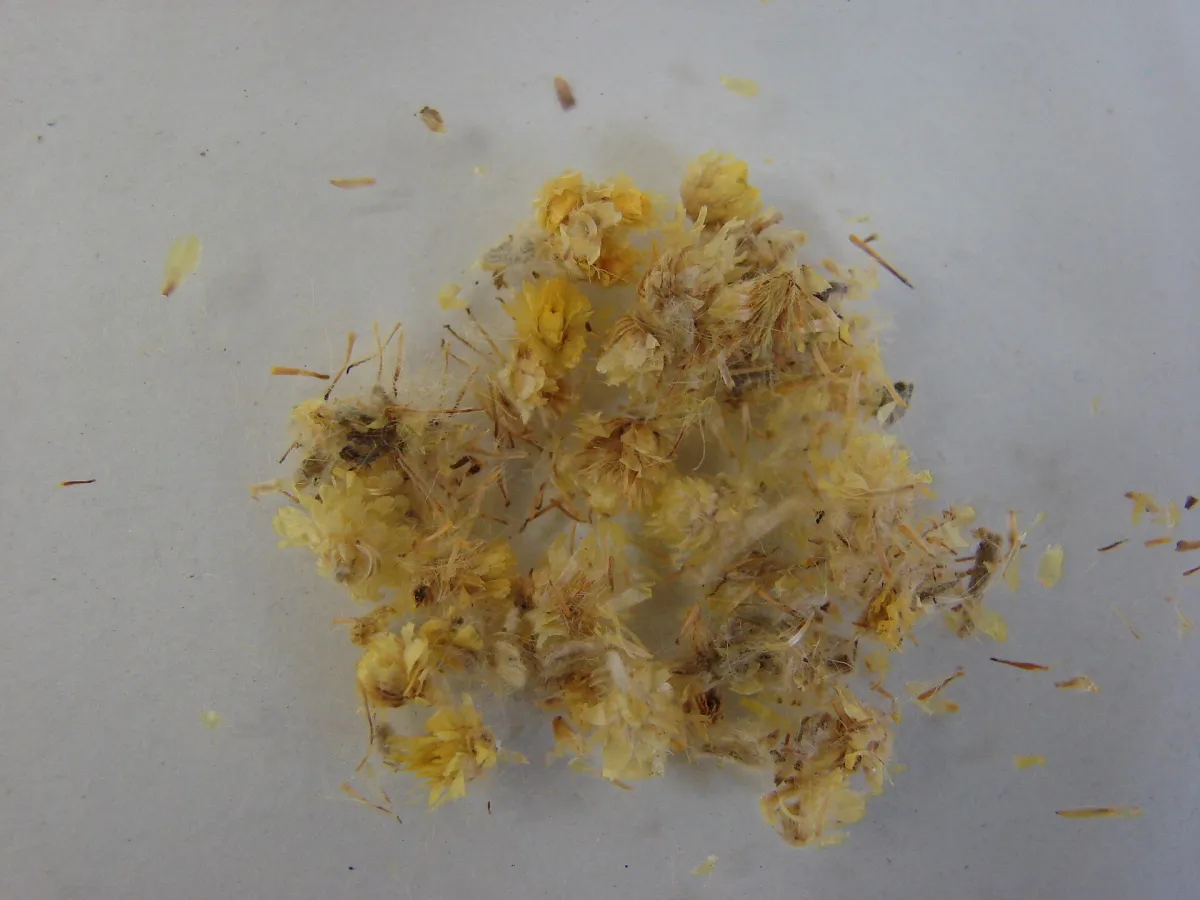 Photo: Maša Sinreih in Valentina Vivod, CC BY-SA 3.0, via Wikimedia Commons
Dosage and length of use
| Form | Amount | Frequency | When | Duration |
|---|---|---|---|---|
| Infusion | 1 tbsp (2-3 g) per 200-250 ml water | 2-3 cups a day | 30 min before meals | 2-3 weeks, then a 1-2 week break |
| Cold soak plus infusion | 1 tbsp per 350 ml total | split into 2-3 portions | before meals | 2-3 weeks |
| Blend with peppermint and chamomile | 1 tbsp of the mix per 250 ml | 2-3 cups a day | before or after meals | up to 2 weeks |
| Capsules, extracts, tinctures | as per the label | as per the label | as per the label | as per the label |
| Under 18, pregnancy, breastfeeding | not recommended | - | - | - |
Doses vary slightly between manufacturers, so check the pharmacy label. If digestive symptoms have not improved within two weeks, stop the tea and look for the cause: ongoing discomfort after meals can come from gallstones, gastritis, an ulcer, irritable bowel syndrome or even the pancreas.
Immortelle and gallstones: the contraindication that matters most
This is the point many recipes leave out. A cholagogue tea makes the gallbladder contract. If it contains stones, especially small ones a few millimetres across, or biliary sludge, the contraction can push them into the cystic duct or the common bile duct. The result may be biliary colic, a trapped stone with jaundice, a bile duct infection (cholangitis) or acute pancreatitis, all of which need hospital care.
So:
- Known gallstones? Do not drink immortelle on your own initiative. Germany’s Commission E accepted its use with gallstones only after medical advice, and the EMA monograph lists bile duct obstruction and biliary disorders requiring medical supervision among its contraindications.
- Symptoms but no ultrasound yet? Get an abdominal ultrasound first. Pain in the upper right abdomen after fatty meals is the classic sign of gallstones, which is exactly when the tea is risky.
- Biliary sludge? Same principle, talk to your doctor. See also our guide to biliary sludge.
- Gallbladder removed? The cholagogue effect no longer applies. Some people tolerate the tea for digestion, but the choleretic effect may loosen stools. Try it only with your doctor’s agreement.
For realistic options in gallstone disease, read our article on gallbladder stones.
Other contraindications, side effects and interactions
Do not use immortelle if you have:
- an allergy to Asteraceae plants (ragweed, chamomile, arnica, chrysanthemum, calendula);
- bile duct obstruction, cholangitis, jaundice or acute cholecystitis;
- acute hepatitis or advanced liver disease;
- an active stomach or duodenal ulcer (bitter compounds increase acid secretion);
- pregnancy or breastfeeding (no safety data);
- age under 18.
Possible side effects: uncommon, usually stomach discomfort, loose stools at high doses or allergic reactions such as itching or a rash. Pain that appears or worsens after the tea is a signal to stop, not a sign of cleansing.
Interactions: no significant interactions are documented in humans. Still, if you take long-term treatment for the liver or gallbladder (such as ursodeoxycholic acid), blood thinners or drugs with a narrow therapeutic range, ask a pharmacist or doctor before starting a course.
When to see a doctor
Go to the emergency department straight away if you have:
- severe pain in the upper right abdomen or below the breastbone that does not settle within a few hours;
- fever or chills together with pain;
- yellowing of the skin or the whites of the eyes, dark urine or pale stools;
- repeated vomiting or pain spreading to the back (possible pancreatitis).
Book an appointment if you have recurrent attacks (see biliary colic), unexplained weight loss, heavy digestion lasting more than two weeks or abnormal liver tests.
Common mistakes
A liver and gallbladder flush with olive oil and lemon after the tea. The green pebbles passed after such flushes are mostly soap-like clumps of oil and digestive juices, not stones. The risk of blocking a bile duct, however, is real.
Tea instead of an ultrasound. Gallbladder-type symptoms have many causes, and treating them blindly delays the right solution.
Drinking it during an attack. In the middle of biliary colic, a cholagogue can make the blockage worse.
Courses lasting months. Tradition favours short courses with breaks, not continuous use.
Brewing it too strong. More herb does not mean more effect, just more bitterness and more digestive upset.
Mixing it up with immortelle essential oil, which is not for internal use.
Conclusion
Immortelle is a valuable traditional herb for sluggish digestion after fatty meals, with a plausible choleretic and cholagogue mechanism and an EMA monograph for traditional use. Modern human studies are lacking, so expectations should stay modest. Used correctly, as 2-3 cups of infusion a day in short courses by adults without gallstones, it is safe for most people. When stones, sludge or warning signs are present, the decision belongs to your doctor.
Frequently asked questions
What is immortelle tea good for? Traditionally for heavy digestion, bloating, fullness and a bitter taste after fatty meals, by stimulating bile production and flow. The EMA accepts it as a traditional remedy for mild digestive complaints.
Can I drink immortelle tea if I have gallstones? Not without your doctor’s approval. Gallbladder contraction can push a stone into the bile ducts and trigger colic, jaundice or pancreatitis.
How long can I drink it? Usually 2-3 weeks, followed by a 1-2 week break. If symptoms have not improved within two weeks, see a doctor.
Can I drink it after gallbladder removal? The gallbladder-emptying effect no longer matters, and the choleretic effect may loosen stools. Try it only with medical approval and at a low dose.
Does helichrysum help fatty liver? There is no human evidence. Fatty liver improves with weight loss, exercise and cutting alcohol and sugar. Herbs are at most an add-on.
Can children drink immortelle tea? No. The EMA monograph does not recommend it under 18 because safety data are lacking.
Can I pick sandy everlasting myself? Better not. It is scarce and protected in many places, and correct harvesting means picking before the flowers fully open and drying in the shade. Pharmacy products have controlled quality.
Is sandy everlasting the same as immortelle oil? The tea comes from Helichrysum arenarium. Immortelle essential oil usually comes from Helichrysum italicum and is for diluted external use only.
Sources and further reading
- European Medicines Agency, HMPC: European Union herbal monograph on Helichrysum arenarium (L.) Moench, flos.
- European Medicines Agency, HMPC: Assessment report on Helichrysum arenarium (L.) Moench, flos.
- Blumenthal M. (ed.), The Complete German Commission E Monographs: Therapeutic Guide to Herbal Medicines, American Botanical Council, 1998.
- European Association for the Study of the Liver (EASL), Clinical Practice Guidelines on the prevention, diagnosis and treatment of gallstones, Journal of Hepatology, 2016.
- NHS, Gallstones: patient information.
Informative content only; it does not replace a consultation with a doctor or pharmacist. Gallbladder pain, fever or jaundice require prompt medical assessment.