
Lady’s Mantle: Benefits, Uses and How to Prepare It
IMPORTANT: Lady’s mantle has a long history in folk herbalism, but its high tannin content makes it unsuitable for some people. Pregnant women should avoid it, because through its action on the uterus the plant was traditionally used to influence contractions, and its safety in pregnancy is not established. People with liver conditions, those taking anticoagulants or medication processed by the liver, and anyone prone to constipation should consult a doctor before using lady’s mantle over long periods. This plant does not replace medical advice and should never delay the diagnosis of a gynecological problem, abnormal bleeding, or any condition that requires professional care.
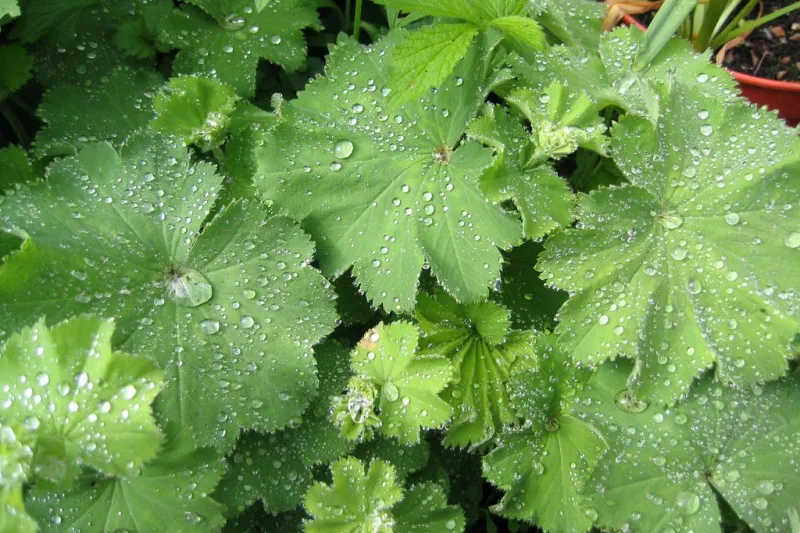
Aunt Veronica, a slim and forever-busy woman from near Sibiu, in Transylvania, kept a shady corner at the bottom of her garden where almost nothing else grew except a few low clumps with round, crinkled leaves shaped like little fans. People trampled them without a second thought, but she guarded them fiercely. “That’s the women’s herb,” she would say, and on every summer morning she went out barefoot into the wet grass to gather the beads of dew collected in the center of the leaves, like little crystal pearls. She scooped them into a spoon and dabbed them on her eyelids, convinced they kept her free of wrinkles. Neighbours came to her when they had belly pains, when their periods came too often or out of rhythm, or after childbirth, and Aunt Veronica would press into their hands a paper bag of the dried plant and tell them exactly how much water to use for the tea.
Many years later, when her granddaughter moved to the city and began leafing through books on medicinal plants, she recognized the leaf with astonishment: it was lady’s mantle, one of Europe’s most valued herbs for women’s health, known to medieval herbalists by a name that speaks for itself about the esteem it enjoyed. Aunt Veronica’s habits were not mere village superstition. Behind her gestures lay knowledge passed from generation to generation, knowledge that modern herbalism takes seriously today.
Lady’s mantle (scientific name Alchemilla, especially Alchemilla vulgaris and related species within the Alchemilla complex) is a perennial herbaceous plant of the Rosaceae family, the same family as the rose, the apple and the wild rosehip. The genus name, Alchemilla, comes from the word “alchemy,” because old scholars believed that the water droplets gathered in the morning at the center of the leaves, droplets of guttation secreted by the plant itself, held magical properties as a pure “celestial water” used in their experiments. Hence the special aura that has always accompanied this modest plant, found today on meadows, at the edges of forests and in gardens, from the lowlands all the way up to the mountains.
Table of Contents
- What lady’s mantle is and where it grows
- Composition and active principles
- Health benefits
- Lady’s mantle and women’s health
- Traditional uses
- How to prepare lady’s mantle
- Dosage and administration
- Lady’s mantle in natural cosmetics
- Lifestyle and practical advice
- Practical tips and common mistakes
- Conclusion
- Frequently asked questions
What lady’s mantle is and where it grows
Lady’s mantle is a small to medium plant, usually between 15 and 50 centimeters tall, with a thin stem that branches in its upper part. Its most recognizable feature is the leaves: round or slightly kidney-shaped, with the margin divided into seven to eleven toothed lobes, pleated like a fan or a gathered skirt. It is precisely these fine folds, which catch the dew and hold it in the middle, that gave the plant its old common names referring to the cloak or mantle of a lady. The flowers are tiny, greenish-yellow and lack visible petals, grouped in loose clusters that do not catch the eye from afar, but reveal a particular delicacy when seen up close.
The plant grows wild across temperate regions of Europe, Asia and North America, and is common in the hills and mountains of Central and Eastern Europe. It is found on damp meadows, at the edges of deciduous forests, along stream banks, in clearings and even by roadsides, wherever the soil stays moist. It prefers places with constant humidity and tolerates partial shade well. The genus Alchemilla is notoriously complicated for botanists, because it often reproduces apomictically (without true fertilization), which has produced hundreds of microspecies that are hard to tell apart. For the herbalist’s practical purposes, however, all these closely related forms are used in the same way and go under the same common name.
The part used medicinally is the flowering aerial part, the leaves and flowering tops, harvested in summer when the plant is in full growth, usually from June to August. It is gathered in dry weather, after the dew has lifted, and dried in the shade in a thin layer, in a well-ventilated place. Proper drying preserves the green color and the active principles; a well-dried plant keeps its properties for about a year if stored in paper bags or jars, away from light and moisture.
Composition and active principles
The therapeutic value of lady’s mantle rests on a well-defined group of compounds that explain most of its traditional uses.
The most important group is the tannins, especially hydrolyzable tannins of the ellagitannin type, among which pedunculagin and related compounds stand out. Tannins are astringent substances, meaning they can “tighten” and firm up tissues, contract small blood vessels and form a protective film over mucous membranes and wounds. This astringent property underlies the plant’s best-known effects: stopping minor bleeding, soothing diarrhea and toning the mucous membranes.
Lady’s mantle also contains flavonoids, including quercetin and quercitrin derivatives, substances with an antioxidant effect that protect cells from oxidative stress and help support the integrity of blood vessels. Alongside these are phenolic acids, small amounts of salicylic acid, phytosterols, traces of volatile oil, as well as mineral salts and vitamin C. The combination of astringent tannins and antioxidant flavonoids gives the plant a balanced profile, effective above all on the mucous membranes and the digestive system.
It is important to stress that the plant’s effect is gentle and cumulative. Lady’s mantle is not a “strong” herb in the sense of a fast, dramatic plant drug, but a baseline herb, traditionally used in courses lasting a few weeks, especially to tone the female system and the digestive tract.
Health benefits
Astringent and toning effect on mucous membranes
Thanks to its richness in tannins, lady’s mantle is first and foremost an astringent herb. This means that on contact with mucous membranes it gently contracts the tissues and reduces excessive secretions. Folk tradition used it as a gargle for inflammation of the throat and gums, for mouth ulcers and for small wounds of the oral cavity, precisely for its tightening and protective effect on irritated mucosa.
Support for the digestive system
The same astringent action makes it useful in mild diarrhea and passing intestinal upsets, where it helps restore the tone of the intestinal lining and reduce fluid loss. Tradition also associates it with calmer digestion, using it for bloating and the feeling of heaviness after meals, as a gentle tonic for the digestive tract.
Action on wounds and skin
Applied externally as compresses or washes, lady’s mantle was widely used to speed the healing of superficial wounds, scratches and slow-healing lesions. The tannins form a protective film, reduce secretions and create an environment less favorable to irritation. The same property makes it useful in sitz baths and washes for local irritations.
Antioxidant support
Through the flavonoids and phenolic acids it contains, lady’s mantle contributes to the body’s antioxidant defenses, helping neutralize free radicals. While it is not a “star” plant in this field, its antioxidant profile usefully complements the astringent action, especially in longer courses.
Lady’s mantle and women’s health
If there is one field in which lady’s mantle has earned its reputation over the centuries, it is women’s health. It was not for nothing that the old women called it “the women’s herb.” European herbal tradition used it for a wide range of issues connected to the female life cycle.
In cases of heavy or irregular periods, lady’s mantle was used as a toning herb believed to help normalize the flow and reduce overly heavy bleeding, again through its astringent effect. Many women turned to it for premenstrual discomfort and mild cramps, in courses begun a few days before the period.
At menopause, lady’s mantle was prized as a balancing herb, traditionally used to ease some of the discomforts of the hormonal transition. Although it contains no hormones and does not replace them, its toning and calming effect made it a popular choice in herbal blends intended for mature women.
In the period after childbirth, the plant was used to support the body’s recovery, regarded as a tonic for the uterus and an aid in returning to normal. Also traditionally, it was associated with intimate care in the form of sitz baths and gentle washes, for its astringent and soothing effect on irritated mucous membranes.
It must be said clearly that these uses come from tradition and the practice of herbalists, not from large clinical trials. For this reason, any abnormal bleeding, persistent pain or change in the cycle should first be investigated by a gynecologist; lady’s mantle can be a support, but never a substitute for diagnosis.
Traditional uses
In Romanian and European folk medicine, lady’s mantle had a wide range of uses. It was taken internally as a tea for mild digestive disturbances, diarrhea, bloating and to support women’s health. It was used externally as a gargle for the throat and gums, as a wash for wounds and skin irritations, as a sitz bath for intimate discomfort, and as compresses applied to superficial lesions.
The dew droplets gathered in the morning from the leaves, which are in fact guttation water secreted by the plant, had a special status. They were considered “living water,” used in folk cosmetics for the complexion and the eyelids, and also in symbolic purification practices. Today we know it is simply clean water secreted by the plant, but the charm of this custom remains and illustrates the high regard in which lady’s mantle was held.
How to prepare lady’s mantle
Lady’s mantle tea (infusion)
The most common form of internal use is the infusion. The dried, crumbled plant is used, the flowering aerial part.
- Measure a heaping teaspoon of dried plant (about 1.5 to 2 grams) for one cup of roughly 200 to 250 ml.
- Heat the water to just below boiling, then take it off the heat.
- Pour the hot water over the plant, in a cup or vessel that can be covered.
- Cover and let it steep for 10 to 15 minutes. Covering retains some of the volatile compounds and keeps the heat in.
- Strain and drink the tea warm, optionally sweetened with a little honey if you are an adult who may have it.
For a course, two cups a day are usually drunk, in the morning and in the evening.
Decoction for external use
For gargles, washes or compresses, a more concentrated decoction is prepared:
- Put two tablespoons of dried plant in half a liter of cold water.
- Bring to a boil and simmer gently, covered, for 5 to 10 minutes.
- Take off the heat and let it infuse for another 10 minutes.
- Strain well and use the liquid warm for gargling, or cooled for washes and compresses.
For a gargle, do it two or three times a day. For compresses, soak a clean cotton cloth in the decoction and apply it to the affected area for 15 to 20 minutes.
Tincture
Those who prefer a concentrated, easy-to-store form can make a tincture: the dried, crumbled plant is placed in a jar and covered with food-grade alcohol of about 40 to 50 percent, in a ratio of roughly 1 part plant to 5 parts alcohol. It is left to macerate for two to three weeks at room temperature, away from light, shaking daily, then strained. It is usually taken as a few drops (20 to 30) diluted in a little water, two or three times a day. The tincture is not given to children, pregnant women or people who avoid alcohol.
Dosage and administration
For internal use as tea, the usual dose for an adult is one to two cups a day, in courses of two to three weeks, followed by a break. Lady’s mantle is a baseline herb, and its effects are noticed mainly after regular use, not after a single cup. Long, uninterrupted courses are not recommended, mainly because of the high tannin content, which in excess can irritate the stomach and interfere with the absorption of iron and other minerals.
For women’s health, many women choose to take the course in the second half of the cycle, beginning a few days before the period, targeting premenstrual discomfort and flow. At menopause, the plant is often used in a blend with other herbs (such as motherwort or yarrow), in cyclical courses. As always, dosage and duration should be adapted individually, ideally with the support of a herbal specialist.
Lady’s mantle in natural cosmetics
Beyond internal uses, lady’s mantle has a well-deserved place in natural skin care. The concentrated, cooled decoction can be used as an astringent toner for oily skin prone to enlarged pores, thanks to its tissue-tightening effect. Applied with a cotton pad after cleansing, it leaves the skin feeling fresh and firm.
In folk tradition, lady’s mantle water was also used for puffy eyelids and tired eyes, in the form of cold compresses. The decoction can also be added to baths for irritated skin or skin prone to excessive sweating, especially on the feet, where the astringent effect helps reduce moisture and odor. For oily hair, a final rinse with lady’s mantle decoction can give the feeling of a cleaner, more toned scalp.
Lifestyle and practical advice
Lady’s mantle gives better results when it is part of a balanced lifestyle. For digestive health, lady’s mantle tea works better alongside a fiber-rich diet, adequate hydration and meals taken at regular times. For menstrual discomfort, the plant pairs well with enough rest, gentle movement and stress management, all factors that deeply influence hormonal balance.
If you like the idea of harvesting the plant yourself, choose clean places far from busy roads, from crops treated with pesticides and from sources of pollution. Gather only on land you know and where you are sure of the plant’s identity. Dry the harvest in the shade and store it labeled with the year of harvest, so you know how fresh it is. If you are not sure you recognize the plant, buy it from a trustworthy herbal shop, where it comes from controlled sources.
Practical tips and common mistakes
Mistake no. 1: Using it indefinitely. Many people believe that because it is “natural,” lady’s mantle can be drunk for months without a break. The high tannin content, however, makes courses of two to three weeks advisable, followed by breaks. Excess tannins can irritate the stomach and reduce iron absorption.
Mistake no. 2: Using it during pregnancy. Because it was traditionally used for its effects on the uterus, lady’s mantle is not a suitable plant during pregnancy. Pregnant women should avoid it entirely, in the absence of clear evidence of safety.
Mistake no. 3: Expecting an immediate effect. Lady’s mantle is a baseline herb with a gentle, cumulative action. Anyone expecting a single cup to fix everything will be disappointed. Benefits appear after regular use, in courses.
Mistake no. 4: Preparing the tea incorrectly. Long boiling of the leaves for an internal infusion is unnecessary and can concentrate the tannins too much, giving a bitter, astringent taste and an effect that is too harsh on the stomach. For internal use, an infusion is preferred over a prolonged decoction.
Mistake no. 5: Replacing medical advice. Lady’s mantle can support, but does not cure serious gynecological problems. Any abnormal bleeding, persistent pain or cycle disturbance must be investigated by a doctor.
Mistake no. 6: Harvesting from unsuitable places. Plants gathered along roadsides or near treated crops can accumulate pollutants and pesticides. Harvesting should be done in clean places, far from sources of pollution.
Conclusion
Lady’s mantle is one of those plants that look modest but are rich in history and uses, deserving a place in any natural remedy kit. “The women’s herb,” as the old women called it, owes its reputation above all to the astringent effect of its tannins and to the long tradition of use in women’s health, from irregular periods to the discomforts of menopause and recovery after childbirth. Beyond this, the plant supports the digestive system, helps soothe inflammation of the throat and gums, and has a well-deserved place in natural cosmetics.
Used in moderation, in courses of a few weeks, and always with respect for its contraindications, especially avoiding it during pregnancy, lady’s mantle can be a gentle and reliable support. But like any medicinal plant, it is no substitute for a doctor’s care when things go beyond mild discomfort. The wisdom of Aunt Veronica, who gathered the dew from the leaves and handed out bags of the plant to her neighbours, is worth keeping, complemented now by the caution and the knowledge we bring today.
Frequently asked questions
What is lady’s mantle mainly good for? Lady’s mantle is known above all as a herb for women’s health, traditionally used for irregular or heavy periods, premenstrual discomfort and the discomforts of menopause. Thanks to its astringent tannins, it is also useful for mild diarrhea, inflammation of the throat and gums, and skin care.
How do you prepare lady’s mantle tea? Put a heaping teaspoon of dried plant in a cup of water that has been boiled and allowed to cool slightly, cover and let it steep for 10 to 15 minutes, then strain. One to two cups a day are usually drunk, in courses.
Can I drink lady’s mantle during pregnancy? No. Because it was traditionally used for its action on the uterus, lady’s mantle is contraindicated in pregnancy. Pregnant women should avoid it and ask their doctor’s advice about any plant.
How long can I take a course of lady’s mantle? A typical course lasts two to three weeks, followed by a break. Long, continuous courses are not recommended because of the high tannin content, which in excess can irritate the stomach and reduce iron absorption.
Does lady’s mantle have side effects? At usual doses and for short periods, it is generally well tolerated. In large amounts or over the long term, the tannins can cause stomach discomfort, nausea and constipation, and may interfere with the absorption of some minerals. People with liver problems or taking medication should consult a doctor.
Does lady’s mantle contain hormones? No, lady’s mantle contains no hormones and does not replace them. Its effects on women’s health are due to its astringent and toning action, not to any actual hormonal activity.
Can I use lady’s mantle externally? Yes. The concentrated decoction is used as a gargle for inflammation of the throat and gums, for washes and compresses on superficial wounds, for sitz baths and as an astringent toner for oily skin.
Where can I get lady’s mantle? You can harvest it yourself from clean places, far from roads and treated crops, if you are sure of its identity, or you can buy it dried from a trustworthy herbal shop. Store it away from light and moisture, labeled with the year of harvest.