
Lavender: Benefits, Uses and How to Prepare It
IMPORTANT: Lavender is generally well tolerated, but it is not without precautions. Lavender essential oil should NOT be swallowed except under the guidance of a specialist, and it should never be applied undiluted to the skin, especially in children. People taking sedatives, anti-anxiety medication or sleeping pills should talk to their doctor, since lavender may add to their effect. Pregnant and breastfeeding women should use lavender cautiously and only after consulting a doctor. Cases of contact allergy have been reported, and there is ongoing discussion about a possible hormonal action of the essential oil when applied repeatedly to the skin of pre-pubertal boys. Lavender does not replace treatment for depression, an anxiety disorder or chronic insomnia — for these, please see a doctor.
Grandmother Veronica, from a village at the foot of the hills, kept a long row of lavender bushes in front of her house, trimming them every summer once the bees had taken their share. She cut whole bunches, tied them with string, and hung them upside down on the beam in the pantry until the entire room smelled of dried summer. In winter, whenever one of the grandchildren could not fall asleep or came home restless from school, she would take out a little cloth sachet full of dried flowers, slip it under the pillow, and say calmly: “This scent untangles your thoughts.” It was no empty saying — within a few minutes, the child would breathe more slowly and the eyelids would grow heavy.
Later, whenever someone scraped a knee or got a small burn at the stove, the same grandmother would dab the spot with a drop of lavender oil mixed into clean fat or sunflower oil. “Lavender doesn’t just smell nice,” she would say, “it cleans and calms the wound too.” Today we know her tradition held a solid grain of truth: lavender is one of the most studied aromatic plants in the world, valued in both folk medicine and modern research.
Lavender (Lavandula angustifolia and related species) is a small, perennial shrub in the mint family (Lamiaceae), native to the Mediterranean region. Its bluish-purple flowers, arranged in elegant spikes, concentrate an essential oil rich in aromatic compounds that give it its unmistakable scent. For thousands of years, people have used it to perfume linens, repel moths, calm the nerves and care for the skin. The name itself comes from the Latin lavare — “to wash” — because the Romans added it to their bathwater.
Table of Contents
- What lavender is and where it grows
- Composition and active principles
- Health benefits
- Traditional uses
- How to prepare lavender (tea, oil, sachets, bath)
- Dosage and how to use it
- Lavender in everyday life
- Practical tips and common mistakes
- Conclusion
- Frequently asked questions
What Lavender Is and Where It Grows
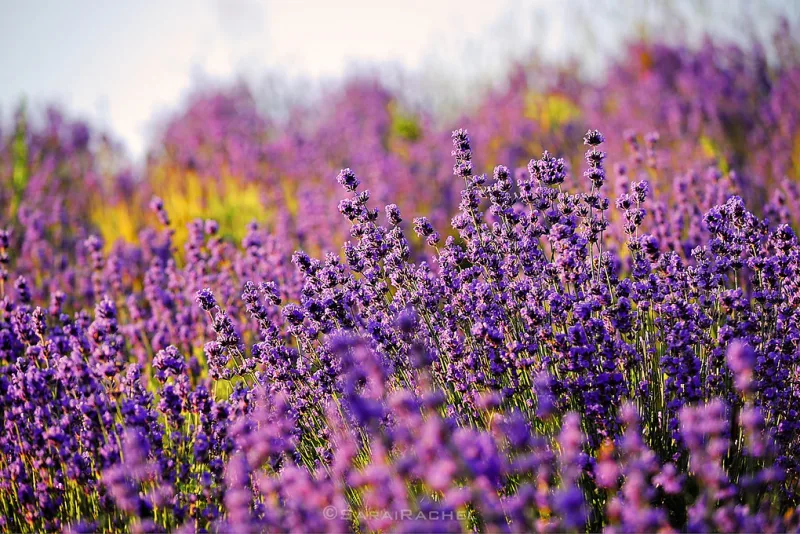
Lavender is a shrub that is woody at the base, with fine stems and narrow, elongated, silvery-green leaves. Its small flowers, clustered into spikes on long stalks, range from deep violet to pale mauve and sometimes white. The species most prized for the quality of its oil is true lavender (Lavandula angustifolia), which grows well at higher altitudes and has a delicate, sweetish scent. Lavandin (Lavandula × intermedia) is a more vigorous hybrid with higher yields but a harsher, more camphorous smell.
The plant loves strong sunshine, poor, stony, well-drained soils, and cannot tolerate standing water at its roots. That is exactly why it thrives on the dry slopes of Provence, in Bulgaria, in Spain, but also in many gardens elsewhere, where it copes well with drought and cold. It blooms in summer, usually from June to August, and at that time the fields become a humming, violet carpet of bees. For medicinal use, the flowers are harvested right at the start of blooming, when the essential oil content is highest, and dried in the shade, in a thin layer, away from direct sun that would bleach them and weaken their scent.
Composition and Active Principles
Lavender’s scent and action come primarily from its essential oil, concentrated in tiny glands on the flowers. The main compounds are linalool and linalyl acetate, two substances to which research attributes the calming and relaxing effects. Alongside these, lavender contains varying amounts of cineole, camphor, terpinen-4-ol, borneol and other terpenes, as well as flavonoids, tannins and phenolic acids with antioxidant roles.
The proportion of these compounds differs depending on the species, the growing region and the time of harvest. True lavender has more linalyl acetate and very little camphor, hence its sweet, gentle smell; lavandin has more camphor and cineole, which makes it better suited to cleaning products and decongestant rubs than to relaxation. This complex chemistry explains why lavender is considered to have calming, mildly antiseptic, carminative (anti-bloating) and skin-soothing properties all at once.
Health Benefits
Calming Anxiety and Nervous Tension
Lavender’s best-known benefit is its effect on mood. Studies suggest that inhaling the scent of lavender or taking certain standardized preparations can reduce feelings of unease and nervous tension. Folk tradition sensed this long ago, recommending flower sachets, evening tea and scented baths for people “with frayed nerves.” The proposed mechanism involves linalool’s action on the nervous system, with a gentle balancing effect rather than the heavy sedation of some medications.
Support for Restful Sleep
Lavender is one of the most appreciated plants for sleep. Its scent seems to lengthen the phases of deep sleep and make falling asleep easier for restless or stressed people. That is why lavender sachets under the pillow, a few drops of oil on a handkerchief beside the bed, or a cup of warm tea half an hour before bedtime are classic folk remedies. For those who wake often at night because of worry, a soothing lavender routine can become a signal that the day is over.
Easing Headaches and Tension Migraines
Many homemakers knew to rub the temples with a touch of diluted oil when their head “felt tight.” Lavender is traditionally used for headaches linked to stress and tiredness. The aromatic coolness and the muscle-relaxing effect can ease the feeling of pressure, especially when paired with rest in a quiet, darkened room.
Skin Care and Healing Minor Irritations
Lavender has a long tradition in skin care. Properly diluted, it is used for mild irritations, insect bites, blemishes, mild sunburn and minor scratches, thanks to its properties considered mildly antiseptic and soothing. Lavender floral water (hydrosol) is a gentle toner, suitable even for sensitive skin.
Digestive Comfort
Like many plants in the mint family, lavender has a mild carminative effect and may help reduce bloating and digestive discomfort tied to nervous tension. Lavender tea, on its own or blended with peppermint or chamomile, is traditionally drunk after heavy meals or during stressful periods, when “the stomach clenches from nerves.”
Easier Breathing and a Lift in Mood
The aromatic steam of lavender is traditionally used to relieve the feeling of a stuffy nose and to soothe an irritating cough during a mild cold. Beyond any physical effect, the simple act of breathing in a pleasant scent, associated with calm and cleanliness, has a real effect of lifting the mood and reducing the feeling of exhaustion.
Traditional Uses
In the rural household, lavender was always more than a medicinal plant. Dried bunches perfumed wardrobes and linen drawers, keeping moths away and giving laundry a fresh smell. Flowers scattered among clothes or sewn into little pillows were a common gift, a sign of care and good taste. In church and in people’s homes, lavender was one of the aromatic plants used on holidays.
As a remedy, it was used mainly in three forms: the evening tea for calm and sleep, oil rubs for headaches and tense muscles, and scented baths for relaxation and skin care. Women added it to the final hair rinse for fragrance and to soothe an irritated scalp. In some areas, the flowers were mixed with honey and taken a teaspoon at a time for coughs and a “heavy heart.”
How to Prepare Lavender
Lavender Tea (Infusion)
Lavender tea is the simplest way to benefit from the dried plant.
- Put one teaspoon of dried lavender flowers into a cup.
- Pour over 250 ml of hot water, but not violently boiling (ideally just below boiling point).
- Cover the cup with a saucer so the aromatic oils are not lost, and let it steep for 5–10 minutes.
- Strain and drink warm. You can sweeten it with a teaspoon of honey, especially in the evening.
Use lavender sparingly: too much gives the tea a bitter, perfumed, soapy taste. For a gentler flavor, blend it with chamomile, lemon balm or linden.
Lavender-Infused Oil (for the Skin)
This is not the concentrated essential oil, but a fatty oil into which the flower compounds have been extracted — gentle and easy to make at home.
- Half-fill a clean, dry jar with dried lavender flowers (damp flowers can mold).
- Cover them completely with a good-quality vegetable oil (cold-pressed sunflower, olive or almond).
- Close the jar and leave it for 3–4 weeks in a warm place, away from direct sun, shaking it occasionally.
- Strain through cheesecloth, squeeze the flowers well, and keep the oil in a dark glass bottle.
This oil is used for soothing massage, for dry or irritated skin, and as a base for homemade salves.
Scented Sachets for Sleep and Wardrobes
- Dry the lavender flowers well in the shade.
- Sew small sachets from thin fabric (cotton or linen) and fill them with flowers.
- Place them under the pillow, in drawers, among clothes or in the car.
When the scent fades, gently squeeze the sachet in your palm: the friction releases the aroma again.
Relaxing Lavender Bath
- Put a generous handful of dried flowers into a cloth bag or directly into a pot.
- Pour over 1–2 liters of hot water and let it steep for 15 minutes.
- Strain and pour the infusion into the warm bathwater.
Such a bath in the evening calms a tired body and prepares the mind for sleep.
Using the Essential Oil (with Caution)
Lavender essential oil should be used diluted only: a few drops in a spoonful of vegetable oil for massage, a few drops in an aromatherapy diffuser, or on a handkerchief by the pillow. It is not applied undiluted to the skin and is not swallowed without expert guidance.
Dosage and How to Use It
For tea, the usual amount is one to three cups a day, made with about one teaspoon of dried flowers per cup. In the evening, a single warm cup half an hour before bedtime is enough for the calming effect. A lavender tea course is generally taken for periods of a few weeks, with breaks, rather than endlessly.
In aromatherapy, a few drops of essential oil in a diffuser or on a handkerchief are enough — more is not better and may cause headaches. For skin applications, follow a cautious dilution (typically a few drops of essential oil per spoonful of carrier oil) and first test on a small patch of skin to make sure no irritation appears. Young children, pregnant women and people with sensitive skin are advised to use even lower dilutions or to avoid the essential oil altogether.
Lavender in Everyday Life
Lavender slips easily into an evening routine that quiets the mind: a cup of warm tea, dimmed lights, a scented sachet under the pillow and a few minutes of calm breathing. Many people also use it as an anti-stress tool during the day — a small bottle of lavender hydrosol misted onto the face and neck, or a few drops of oil on the wrist, can become a little “reset” ritual in tense moments.
In the kitchen, culinary lavender flowers (in small amounts) perfume cakes, biscuits, honey and even some savory dishes. The key is to use a quality variety, grown without chemical treatments, and a small quantity, because too much quickly turns the pleasant aroma into a soapy taste. In the garden, lavender is a star: it attracts bees, blooms spectacularly, withstands drought and perfumes the paths at every touch.
Practical Tips and Common Mistakes
Mistake no. 1: Using too many flowers. Lavender is potent. One teaspoon per cup is enough; if you add more, the tea becomes bitter and “soapy.” With lavender, less is more.
Mistake no. 2: Applying essential oil undiluted to the skin. The essential oil is very concentrated and can cause irritation or sensitization. Always dilute it in a carrier oil and test on a small area.
Mistake no. 3: Swallowing the essential oil “for a faster effect.” Essential oil should not be swallowed on your own. For internal effects, use the flower tea; essential oil is taken internally only on the advice and under the supervision of a specialist.
Mistake no. 4: Drying the flowers in direct sunlight. The sun bleaches the flowers and evaporates the very aromatic oils you want. Dry lavender in the shade, in a well-ventilated spot, in bunches hung upside down.
Mistake no. 5: Using chemically treated ornamental lavender in tea or cooking. Lavender from flower shops or decorative pots may be treated with substances unsuitable for consumption. For internal use, use only lavender grown specifically for consumption, without treatments.
Mistake no. 6: Relying on lavender alone for serious problems. A scented sachet and a cup of tea help with a restless evening, but they do not cure depression, severe anxiety or chronic insomnia. These call for a doctor’s evaluation.
Mistake no. 7: Keeping dried flowers forever. Over time, lavender loses its scent and active principles. Use the flowers within about a year of harvest and store them in closed containers, in the dark.
Conclusion
Lavender is one of the gentlest and most versatile plants in nature’s pharmacy. Its unmistakable scent hides compounds with calming, mildly antiseptic and skin-soothing effects, recognized by both folk tradition and modern research. Whether you use it as an evening tea, a massage oil, a sachet under the pillow or a relaxing bath, lavender can bring you a few precious minutes of calm at the end of a busy day. Used in moderation and with respect for the precautions surrounding the essential oil, it remains a trusted ally — a touch of dried summer, ready to untangle your thoughts, just as Grandmother Veronica used to say.
Frequently Asked Questions
Can I drink lavender tea every evening? Yes, generally a cup in the evening is well tolerated. Even so, it is best to take it in courses of a few weeks with breaks, and not to use large amounts. If you take sedatives or sleeping medication, ask your doctor first.
Does lavender really help with sleep? Studies suggest that the scent of lavender can make falling asleep easier and sleep more restful, especially in stressed people. The effect is gentle, not like a strong sleeping pill, and works best as part of an evening relaxation routine.
Is lavender essential oil safe for children? With caution. It is never applied undiluted, and very low concentrations are used. In infants and young children it is best to avoid the essential oil or use it only on a doctor’s advice. Sachets of dried flowers are a gentler alternative.
Can I use lavender if I am pregnant? Occasional use of the scent or a weak tea is generally considered gentle, but during pregnancy and breastfeeding it is prudent to avoid the essential oil and intensive courses, and to talk to your doctor first.
How do I recognize good-quality lavender? Good lavender has well-colored, violet flowers, a strong and pleasant, sweet scent, with no smell of mold or dust. Crumbled, faded flowers with almost no scent are old and weak.
What is the difference between lavender and lavandin? True lavender (Lavandula angustifolia) has a fine, sweet scent and is preferred for relaxation and internal use. Lavandin is a more productive hybrid, with more camphor, better suited to cleaning products and decongestant rubs.
Can I put lavender in food? Yes, good-quality culinary lavender perfumes cakes, biscuits and honey, but it is used in small amounts. Too much lavender gives a bitter, soapy taste. Avoid ornamental lavender that might be chemically treated.
Can lavender cause allergies? Yes, in some people the essential oil can cause contact irritation or sensitization. That is why it is recommended to test on a small patch of skin before first use and to dilute it properly.