
Lemon Balm: Benefits, Uses and How to Prepare It
IMPORTANT: Lemon balm is considered a gentle, safe herb for most people, but it is not entirely without precautions. People with hypothyroidism should be cautious, as studies suggest that lemon balm may influence thyroid function. Those taking sedatives, sleeping pills or thyroid medication should talk to their doctor before using lemon balm regularly, because of possible interactions. During pregnancy and breastfeeding, it is recommended to consult your doctor or midwife. Lemon balm is not a substitute for medical treatment of severe anxiety, depression or chronic sleep disorders — if symptoms persist, please see a specialist.
Aunt Veta, from my grandmother’s village, kept a corner of garden behind the house that she called “the calm corner.” There, growing side by side, were lemon balm, mint and wild thyme, and whenever restlessness took hold of her or one of the grandchildren, she would step outside, pick a few lemon balm leaves, rub them between her palms and hand them to us to smell. That fresh scent — lemon with a hint of sweetness — had the gift of soothing you almost instantly. In the evening, if a child could not fall asleep, or if an old person complained of a heart beating too fast from worry, Aunt Veta would steep a handful of leaves and bring out a steaming cup, always saying the same thing: “Drink, dear, and let your thoughts settle.”
Later I learned that Aunt Veta had invented nothing — she was drawing on a tradition more than two thousand years old. Lemon balm, known scientifically as Melissa officinalis, was prized in antiquity by the Greeks and Romans for its calming effect and its lemony fragrance. The name “Melissa” comes from the Greek word for “bee,” because its flowers are irresistible to bees, and gardeners would plant it near their hives. In the Middle Ages, monks cultivated it in monastery gardens and used it to drive away “melancholy” and to strengthen the heart and mind. Today, lemon balm remains one of the most beloved medicinal plants, precisely because of the gentleness with which it works.
Table of Contents
- What lemon balm is and where it grows
- Composition and active principles
- Health benefits
- Traditional uses
- How to prepare lemon balm (tea, tincture, oil)
- Dosage and administration
- Lemon balm in everyday life
- Practical tips and common mistakes
- Conclusion
- Frequently asked questions
What Lemon Balm Is and Where It Grows
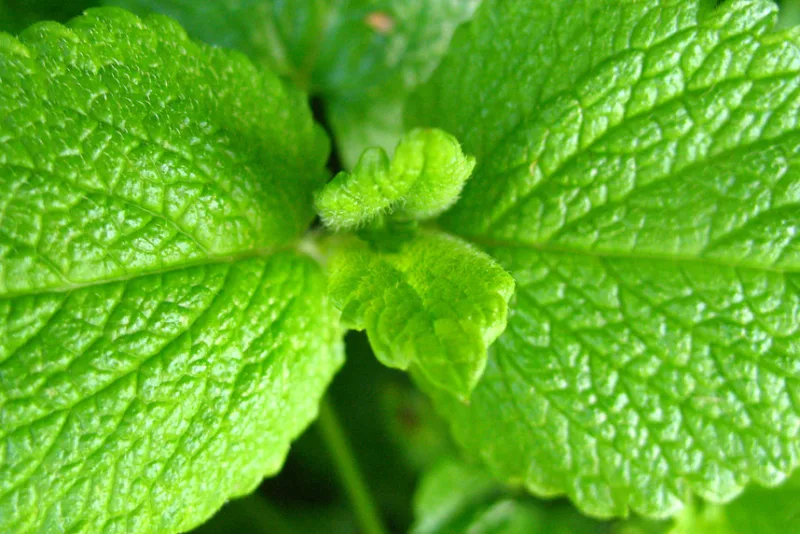
Lemon balm is a perennial plant in the Lamiaceae family, the same family that includes mint, sage, basil and thyme. You can recognise it instantly by its green, oval, slightly toothed leaves with prominent veins, which release an unmistakable lemon fragrance when rubbed between your fingers. The stems are square in cross-section, a trait typical of the whole family, and the flowers — small and white or pale yellow — appear in summer, clustered in the leaf axils.
The plant is native to the Mediterranean region and south-western Asia, but for centuries it has spread throughout Europe, growing both wild in damp, shaded places and cultivated in gardens and specialised plots. Lemon balm is not fussy: it prefers rich, loose, well-drained soils, a spot with partial sun and regular watering, but it also tolerates harsher conditions. Once established in a garden, it multiplies happily, year after year, becoming a steady presence.
For medicinal use, the leaves and flowering tops are used in particular, ideally harvested just before or at the beginning of flowering, when the volatile oil content is at its peak. Harvesting is done in dry weather, in the late morning after the dew has lifted, and drying must be done quickly, in the shade, in a thin layer, to preserve the aroma. This is an essential detail, because the volatile oils responsible for most of the effect are very delicate and are easily lost to heat or light.
Composition and Active Principles
The secret of lemon balm lies in a bouquet of compounds that work together. First comes the volatile oil, rich in citral, citronellal, geraniol and linalool — exactly the substances that give the lemon scent and that contribute to the calming, relaxing effect. These volatile oils also explain the plant’s mild antispasmodic and carminative action on the digestive tract.
In addition to the volatile oil, lemon balm contains phenolic acids, especially rosmarinic acid, a compound with recognised antioxidant and anti-inflammatory properties. Here too we find flavonoids, tannins and triterpenes, each contributing to the plant’s complex profile. Rosmarinic acid and the other polyphenols are considered by many researchers to be among the most important compounds in lemon balm, being associated with protecting cells against oxidative stress.
This combination of aromatic oils and polyphenols explains why lemon balm acts on several levels at once: it calms the nervous system, soothes the stomach, supports a balanced mood and offers antioxidant protection. It is important to note that, unlike stronger sedative plants, lemon balm has a gentle action, which makes it suitable for daily use and for people of all ages, within the bounds of common sense.
Health Benefits
Calming Anxiety and Nervous Tension
The best-known use of lemon balm is as a natural calmative. Folk tradition has recommended it for “nerves” for centuries, and modern studies suggest that lemon balm may help reduce restlessness and nervous tension. Many people describe the effect as a feeling of thoughts “settling” — inner agitation eases, without the mind becoming foggy or drowsy during the day. This is precisely why a cup of lemon balm tea is a valuable support on tense days, before a stressful event, or in the evening when you want to unwind.
Support for Restful Sleep
Lemon balm is one of the most appreciated plants for peaceful sleep, especially when insomnia is rooted in agitation and worry. Unlike classic sleeping pills, it does not “knock you out” but rather prepares the body for rest, reducing the tension that keeps the mind awake. Tradition often combines it with valerian, mint or lavender for a more pronounced effect. Studies suggest that lemon balm may improve sleep quality in people with mild disturbances, especially when used regularly in the evening.
Supporting Digestion
As a member of the mint family, lemon balm has a well-known effect on the digestive system. The volatile oils have an antispasmodic action, which means they can relax the muscles of the digestive tract, helping to ease cramps, bloating and the feeling of heaviness after meals. Traditionally, lemon balm tea is drunk after a meal to aid digestion, especially when the stomach is affected by stress — that familiar “knot in the stomach” we feel when we are tense. The combination of nervous calming and digestive effects makes lemon balm an ideal support for “nervous” digestion.
Balancing Mood
Ever since the days of the medieval monks, lemon balm has been used to drive away melancholy and bring good spirits. Today we understand better why: through its action on the nervous system, lemon balm may contribute to a more balanced emotional state and to reducing irritability. It is not a treatment for depression, but it can be a gentle ally during periods of nervous fatigue, overload and exhaustion.
Antioxidant Protection
The richness in rosmarinic acid and other polyphenols makes lemon balm an appreciable source of antioxidants. These help neutralise free radicals, the unstable molecules that contribute to cell ageing and chronic inflammation. Regular consumption of lemon balm tea, as part of a balanced diet, thus provides an extra supply of protective compounds.
Support for the Skin
Rosmarinic acid and the volatile oils also have external uses. Traditionally, lemon balm infusion was used for compresses on irritated skin, and balms based on lemon balm were valued for cold sores (those “fever blisters”). Studies suggest that lemon balm extracts may have properties that help with cold sores, which is why we now find cosmetic creams that include this extract.
Traditional Uses
In Romanian folk medicine, lemon balm has always been “the herb of calm.” Grandmothers used it for restless children, for the elderly with a “weak heart” (meaning palpitations on a nervous background), and for women worn out by worry. It was a constant part of the “evening tea,” often blended with linden, chamomile or mint.
Beyond internal use, fresh leaves were rubbed on the temples against tension headaches, and bunches of lemon balm were hung around the house for their fresh fragrance and to drive away gnats. In the household, the aromatic leaves went into lemonades, desserts and flavoured vinegars, and skilled housewives even prepared a homemade lemon balm liqueur, known in Europe as “Carmelite water,” a herbal preparation traditionally used as a tonic and calmative.
How to Prepare Lemon Balm
Lemon Balm Tea (Infusion) — Step by Step
This is the simplest and most widespread way to benefit from lemon balm’s properties.
- Put a heaped teaspoon (about 2 grams) of dried lemon balm leaves, or a tablespoon of fresh leaves, into a cup.
- Pour over them 200–250 ml of hot but not boiling water — ideally around 90 degrees Celsius. Water that is too hot destroys some of the delicate volatile oils.
- Cover the cup immediately with a saucer or lid. This step is essential: the cover prevents the aromatic oils from evaporating along with the steam.
- Let it steep for 5–10 minutes.
- Strain and drink warm, optionally sweetened with a little honey (added once the tea has cooled slightly, to preserve the honey’s properties).
For a calming effect and to aid sleep, the last cup is drunk about 30–60 minutes before bedtime.
Lemon Balm Tincture
The tincture is a concentrated version, easy to store and to dose.
- Half-fill a clean jar with finely chopped fresh lemon balm leaves (or one third, if using dried leaves).
- Pour over them food-grade alcohol of 40–50 percent, until the leaves are well covered.
- Close the jar and keep it in a dark, cool place, shaking it daily.
- After 3–4 weeks, strain through cheesecloth and store the tincture in dark dropper bottles.
The tincture is usually taken as 20–40 drops diluted in a little water, two to three times a day.
Lemon Balm Oil and Balm
For external use, lemon balm leaves can be macerated in a vegetable oil (for example, olive oil) for a few weeks, producing an aromatic oil used for relaxing massages or as a base for balms. This oil can be turned into a balm by adding melted beeswax.
Dosage and Administration
For tea, a typical amount is 1–3 cups per day, each prepared from a teaspoon of dried leaves. For sleep support, the emphasis is on the evening cup. With the tincture, the typical dosage is 20–40 drops two to three times a day, though it is wise to start with a smaller amount to see how your body responds.
Lemon balm lends itself well to courses of a few weeks, followed by breaks. Although it is a gentle plant, the principle “more is better” never applies to medicinal herbs. Moderate, consistent use brings better results than large, haphazard quantities.
Lemon Balm in Everyday Life
Beyond the classic preparations, lemon balm fits beautifully into daily habits. A few fresh leaves added to a carafe of cold water, alongside slices of lemon and cucumber, turn plain water into a refreshing, lightly aromatic drink. In the kitchen, chopped leaves add freshness to fruit salads, desserts, homemade ice cream or sauces for fish.
Many people make a little evening ritual of their cup of lemon balm tea: dimmed lights, phone set aside, and a few minutes of calm breathing with the warm cup in their hands. This ritual, beyond the properties of the plant itself, helps “signal” to the brain that the day is over and it is time to rest. Planting a corner of lemon balm in the garden, or even in a pot on the balcony, gives you access to fresh leaves and, on top of that, the scent of the plant lightly crushed between your fingers is in itself a small moment of aromatherapeutic relaxation.
Practical Tips and Common Mistakes
Mistake no. 1: Using boiling water and steeping uncovered. Lemon balm owes much of its effect to its volatile oils, which are very sensitive to heat. Boiling water and an uncovered cup cause these oils to evaporate, leaving behind a weak tea. Use hot but not boiling water, and always cover the cup.
Mistake no. 2: Old, scentless leaves. Dried lemon balm that no longer has a pronounced lemon scent has lost most of its virtues. Buy leaves with an intense aroma and store them in airtight containers, away from light and moisture. Renew your stock every year.
Mistake no. 3: Expecting a “sleeping pill” effect. Lemon balm does not “knock you out” and does not act like a powerful drug. Its effect is gentle and builds over time, especially with regular use. Those who expect a dramatic effect from a single cup may be disappointed; those who use it consistently discover its true value.
Mistake no. 4: Ignoring interactions. Although it is gentle, lemon balm may interact with sedatives, sleeping pills and thyroid medication. If you are following such treatment, talk to your doctor before using it regularly.
Mistake no. 5: Harvesting from unsuitable places. If you gather it from the wild, avoid roadsides, land treated with pesticides and polluted areas. Also make sure you have correctly identified the plant — the strong lemon scent is the surest clue.
Conclusion
Lemon balm is one of the gentlest and most versatile medicinal plants we can have at hand. From calming the nerves and supporting restful sleep to aiding digestion and providing antioxidants, it covers a wide range of life’s minor troubles without the strong effects of more aggressive remedies. Its lemony fragrance, its friendly presence in the garden and the ease with which it is prepared make lemon balm an ideal choice for those who want natural, pleasant and safe support. As Aunt Veta used to say, sometimes all it takes is a warm cup, a quiet place and the patience to let your thoughts settle. Used with common sense and the respect due to any medicinal plant, lemon balm can find a steady place in your life.
Frequently Asked Questions
Are lemon balm and melissa the same plant? Yes. “Lemon balm” is the common English name, while “melissa” is closer to the scientific name, Melissa officinalis. Both refer to the same lemon-scented plant.
Can I drink lemon balm tea every day? In general, yes, within reasonable limits — one to three cups per day are considered safe for most adults. Even so, it is a good idea to take courses with breaks and to listen to how your body responds.
Does lemon balm really help with sleep? Tradition and modern studies suggest that lemon balm may improve sleep quality, especially when insomnia is rooted in agitation and worry. The effect is gentle and is best observed with regular use, possibly combined with valerian or lavender.
Is lemon balm safe for children? Lemon balm is traditionally considered a gentle plant, used even for restless children, but for young children it is always recommended to consult your paediatrician first and to use reduced amounts.
Can I use lemon balm during pregnancy or breastfeeding? During these periods it is recommended to consult your doctor or midwife before using any medicinal plant regularly, including lemon balm, to stay on the safe side.
How do I store lemon balm leaves so they don’t lose their aroma? Dry them quickly, in the shade, in a thin layer, then keep them in airtight jars or bags, away from light and moisture. A strong lemon aroma is the sign that the plant has kept its virtues.
Does lemon balm interact with medication? It may interact with sedatives, sleeping pills and thyroid medication. If you are following such treatment, talk to your doctor before using lemon balm regularly.
Can I grow lemon balm in a pot on the balcony? Yes, lemon balm grows very well in pots, provided it has enough light, well-drained soil and regular watering. That way you always have fresh leaves at hand and a fragrant corner on your balcony.