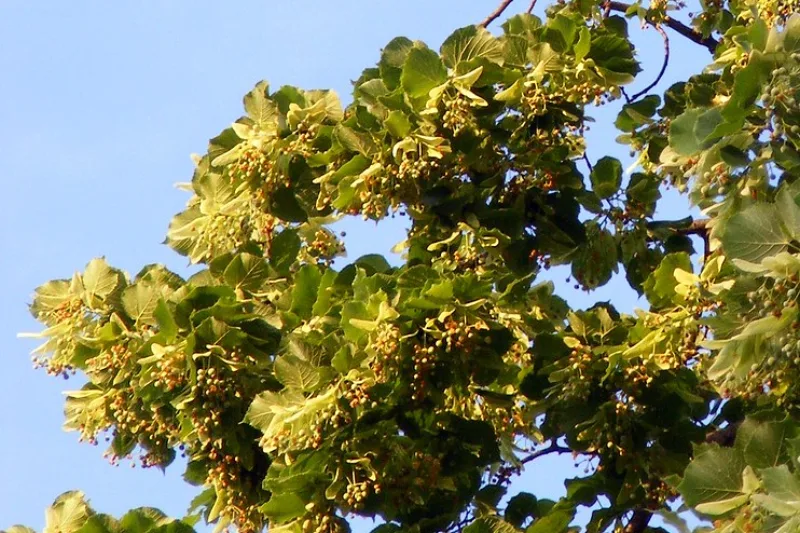

Linden: Benefits, Uses and How to Prepare the Flowers
IMPORTANT: Linden flowers are considered among the gentlest of medicinal plants, yet gentleness does not mean there are no precautions to observe. People with known heart conditions should use linden in moderation and under supervision, because very heavy and prolonged consumption has been associated in folk tradition with an over-stimulating effect on the heart. Linden can have a strong diaphoretic effect (it promotes sweating), so anyone who is dehydrated, running a high fever, or has kidney problems should pay attention to staying well hydrated. If you are taking sedatives, anti-anxiety medication, or blood pressure drugs, talk to your doctor before drinking linden tea regularly, as the effects may overlap. During pregnancy and breastfeeding, occasional consumption of a weak tea is generally well tolerated in tradition, but a doctor’s advice is recommended. This article is for informational purposes and does not replace medical consultation.
A story from the edge of the village
Grandmother Aglaia had an old linden tree in her yard, as tall as the house, under which she kept her summer table. Everyone in the village remembered that when June came and the yellow-green flowers filled the air with their sweet, honeyed scent, she would take a wicker basket, an old ladder, and a tightly tied headscarf, and climb with an agility surprising for her years to pick the flowers early in the morning, “while the dew is still on them, but the sun has dried off the night’s damp.” She said that a flower picked at noon, in the scorching heat, “has lost its soul,” while one picked in the rain “molds in the sack and is good for nothing.”
In the evening, whenever a neighbor’s child had a fever or a cough that kept them awake, the mother would knock at Grandmother Aglaia’s gate. She would take from the attic a cloth pouch full of dried flowers, put a handful in a small pot, pour boiling water over them, and let it “steep for as long as it takes to say the Lord’s Prayer three times.” The child would drink the tea sweetened with a teaspoon of honey from the hives behind the house, wrap up warmly, and by morning the fever had dropped and the child had sweated it out. “Linden doesn’t cure the illness,” she would say, “but it helps the night do its work peacefully.” It is a piece of folk wisdom that modern medicine, in its cautious way, does not contradict.
What is linden
Linden is a tree of the genus Tilia, widely distributed in the forests, parks, and tree-lined avenues of Europe. The best-known species are the large-leaved lime (Tilia platyphyllos), the small-leaved lime (Tilia cordata), and the silver lime (Tilia tomentosa), the last being especially prized for the intense fragrance of its flowers. It is a long-lived tree, capable of living for hundreds of years, with a lush crown, characteristic heart-shaped leaves, and grayish bark.
The part used medicinally is the flowers, together with the bract (the elongated, membranous leaflet to which the clusters of flowers are attached). In pharmaceutical terms, the raw material is called Tiliae flos — linden flower. Linden has been valued for centuries in European folk medicine as a gentle remedy suitable for the whole family, from children to the elderly, especially for cold-season ailments, states of restlessness, and sleep problems. Its sweet, honeyed scent and the pleasant, mildly sweet taste of the tea make it one of the most beloved herbal teas.
Table of Contents
- Where linden grows and what it looks like
- Composition and active compounds
- Health benefits
- Traditional uses
- How to prepare: tea, infusion, tincture, bath
- Dosage and method of use
- Harvesting and drying the flowers
- Lifestyle and practical tips
- Practical Tips and Common Mistakes
- Precautions and contraindications
- Conclusion
- Frequently Asked Questions
Where linden grows and what it looks like
Linden prefers fertile, well-drained soils and is found both in deciduous forests and planted in cities, along boulevards and in parks. Depending on the species and region, flowering occurs between late May and mid-July, a period during which the tree becomes unmistakable: it is wrapped in a cloud of yellow-green flowers and gives off a sweet fragrance that attracts swarms of bees. Indeed, linden honey is one of the most prized monofloral honeys.
The leaves of the linden are asymmetrical, heart-shaped, with a toothed margin, and a fresh green color in summer. The flowers are small, grouped in clusters (cymes), pale yellow to cream in color, and attached to a narrow, light-green bract that serves as a “little wing” to help disperse the seeds in the wind. It is precisely this combination of flowers and bract that is harvested together for tea.
Composition and active compounds
Linden flowers contain a complex of substances that explain their gentle but real effects. Among the most important are:
- Flavonoids (such as quercetin, kaempferol, and their derivatives), substances with an antioxidant role that support the health of blood vessels and have mild anti-inflammatory effects.
- Mucilage, gelatinous substances that, in contact with water, form a protective and emollient layer. They explain linden’s soothing effect on irritated mucous membranes of the throat and respiratory tract.
- Volatile (essential) oils, containing farnesol, largely responsible for the characteristic fragrance and the mild relaxing effect.
- Tannins, with a mild astringent role.
- Phenolic acids and saponins, which round out the phytochemical profile.
Studies suggest that it is precisely the synergy between flavonoids, mucilage, and volatile oils that underlies linden’s action: on one hand sudorific and calming, on the other emollient and mildly anti-inflammatory. Unlike “strong” plants, linden acts gently and gradually, which makes it suitable for frequent use.
Health benefits
Support during colds, flu, and feverish states
The best-known use of linden is for seasonal colds. Linden tea drunk hot has a diaphoretic effect, meaning it stimulates sweating. In folk medicine, this property is considered helpful in “breaking a fever”: through sweating, the body regulates its temperature, and the patient often feels relieved. In addition, the mucilage soothes the irritated throat and the tickle that triggers a dry cough, which is why linden is included in many cough and hoarseness blends.
Calming effect and support for sleep
Linden is, alongside chamomile, lemon balm, and lavender, one of the most widely used plants for calming the nervous system. Folk tradition recommends it for restlessness, agitation, stress-related palpitations, and mild insomnia. A cup of warm linden tea in the evening before bed is a relaxation ritual cherished by generations. Studies suggest that the flavonoids and volatile oils contribute to this mild sedative and anxiolytic effect, without inducing dependence or aggressive next-day drowsiness.
Support for the cardiovascular system
In traditional herbal medicine, linden flowers are associated with a mild supportive action on the heart and circulation, especially when palpitations and fluctuating blood pressure arise against a background of stress and anxiety. The antioxidant flavonoids support the elasticity of blood vessels. This benefit should be viewed as gentle, complementary support, not as a treatment for heart disease, which always requires medical supervision.
Emollient and anti-inflammatory effect on mucous membranes
Thanks to its mucilage, linden has a remarkable emollient effect. It “coats” the irritated mucous membranes of the throat, mouth, and upper digestive tract with a protective layer, soothing the sensation of dryness and irritation. This is why it is used as a gargle for sore throats and laryngitis, as well as a soothing tea for a sensitive stomach.
Mild digestive support
Linden has a mild antispasmodic action, which means it can ease mild cramps of the digestive tract and the feeling of bloating that arises against a nervous background. Many people feel a sense of digestive comfort after a cup of warm linden tea taken after a meal, especially when they have eaten under stress.
Benefits for the skin
Applied externally, in the form of compresses, rinsing infusions, or added to bathwater, linden has calming and emollient effects on irritated, reddened, or sensitive skin. Linden water is traditionally used for rinsing the hair, which it is said to leave soft and shiny.
Traditional uses
In the household of old, linden was a constant presence in the “attic pharmacy.” Here are some of the uses passed down from generation to generation:
- Evening tea for restless children and for adults worn out by nerves.
- Hot tea at the first signs of a cold, drunk wrapped up warmly, to “bring out the sweat.”
- Gargling with linden infusion for sore throats and tonsillitis.
- A bath with linden flowers for nervous children or for relaxing adults after a hard day.
- Compresses with linden infusion on tired eyes or irritated skin.
- Linden honey, harvested from the fragrant flowers, used as a sweetener and a remedy in itself for the throat.
How to prepare: tea, infusion, tincture, bath
Linden flower tea (infusion)
This is the simplest and most widely used form of preparation.
- Put 1-2 teaspoons of dried linden flowers (about 2 grams) into a cup.
- Pour over them 200-250 ml of hot water, but not violently boiling (ideally around 90-95°C).
- Cover the cup with a small saucer — this step is essential, to prevent the fragrant volatile oils from evaporating.
- Let it steep for 8-10 minutes.
- Strain and drink the tea warm. You may sweeten it with a teaspoon of honey (preferably linden honey), but not before it has cooled slightly, to preserve the honey’s properties.
A more concentrated infusion for gargling and compresses
For external use, prepare a stronger infusion: 2-3 teaspoons of flowers to 200 ml of water, steeped for 15 minutes, then strained. It is used lukewarm for gargling 2-3 times a day, or for compresses on irritated skin.
Linden tincture
The tincture is a concentrated form, practical for long periods.
- Fill a clean jar halfway with dried linden flowers.
- Pour in food-grade alcohol of 40-50% until the flowers are well covered.
- Close the jar and let it macerate for 2-3 weeks in a dark, cool place, shaking it daily.
- Strain through cheesecloth and store the tincture in dark glass bottles.
- Take 20-30 drops diluted in a glass of water, 2-3 times a day, for states of restlessness.
Relaxing linden flower bath
Put two handfuls of linden flowers into a liter of water, bring them briefly to a boil, let steep for 15 minutes, strain, and add the liquid to warm bathwater. A 15-20 minute bath in the evening helps with relaxation and a more peaceful sleep.
Dosage and method of use
For an adult, the usual dose is 2-3 cups of linden tea per day, in courses of 2-3 weeks followed by a break. During colds, hot tea may be drunk more often, every few hours, as long as there is sufficient hydration. For children, weaker teas are used (one teaspoon of flowers per cup) and smaller amounts adapted to age. The tincture is taken in doses of 20-30 drops, 2-3 times a day. As a general rule in herbal medicine, it is wise not to use the same plant month after month without breaks, but rather in courses alternated with periods of rest.
Harvesting and drying the flowers
If you have access to an unpolluted linden tree (far from busy roads and areas treated with pesticides), you can make your own supply of flowers:
- Harvest at full bloom, when most of the flowers have opened but before they begin to wilt.
- Choose a sunny morning, after the dew has lifted.
- Pick the flowers together with the bract, avoiding plain leaves and twigs.
- Dry them in the shade, in a thin layer, in a well-ventilated place. Direct sunlight destroys the volatile oils and discolors the flowers.
- Store the dried flowers in paper bags or jars, in the dark. Well-dried flowers keep their aroma for about a year.
Lifestyle and practical tips
Linden fits beautifully into an evening routine oriented toward relaxation. A cup of warm linden tea, taken an hour before bed, away from screens, in a quiet room, can become a signal to the body that the day has ended. Combined with slow breathing, light reading, or a warm bath, linden becomes part of a ritual that calms the mind.
In the cold season, always keep a jar of linden flowers within reach: at the first lump in the throat or the first chill down the back, a cup of hot tea drunk in time can make the difference. Combine linden with other friendly plants — with chamomile for a more pronounced calming effect, with thyme for cough, with elderflower for sweating and immune support, or with lemon balm for calming the nerves.
Practical Tips and Common Mistakes
Mistake no. 1: Boiling the flowers. Linden flowers should not be boiled. Boiling destroys the delicate volatile oils and some of the flavonoids. Always make an infusion: pour hot water over the flowers, not the other way around.
Mistake no. 2: Leaving the cup uncovered. If you leave the cup uncovered while steeping, the aromas and volatile compounds evaporate along with the steam. Always cover the cup.
Mistake no. 3: Adding honey to boiling tea. Honey loses some of its enzymes and properties at high temperatures. Let the tea cool slightly before sweetening it.
Mistake no. 4: Harvesting at the roadside. Lindens in city avenues or beside highways accumulate pollutants and heavy metals in their flowers. Harvest only from clean areas.
Mistake no. 5: Excessive and prolonged consumption. “More” does not mean “better.” Very large amounts, drunk daily for months, bring no additional benefits and may over-stimulate the heart, according to observations from folk tradition. Respect the course-with-breaks approach.
Mistake no. 6: Drying in the sun. Flowers dried in direct sun lose their color, aroma, and a good part of their therapeutic value. Always dry in the shade.
Precautions and contraindications
Although linden is a gentle plant, there are a few situations that call for caution:
- Heart conditions. People with known heart disease should use linden in moderation and seek a doctor’s advice, since very heavy consumption has been associated, in traditional observations, with over-stimulation of the heart.
- Pregnancy and breastfeeding. Occasional consumption of a weak tea is generally well tolerated, but a doctor’s advice is recommended.
- Dehydration and high fever. Because linden promotes sweating, sufficient hydration is essential during feverish states.
- Treatment with sedatives or blood pressure medication. The effects may overlap; consult your doctor.
- Allergies. People sensitive to pollen or plants may develop allergic reactions. On first use, test a small amount.
Conclusion
Linden is perhaps the most beloved of the medicinal trees of our forests and parks — a gentle, fragrant, friendly remedy that has accompanied families for generations. Its flowers, picked carefully at the right moment and prepared patiently as an infusion, offer real support during seasonal colds, in states of restlessness, and on nights when sleep is slow to come. It is not a miracle medicine, but a delicate helper that works in harmony with the body, gently and without haste. Used with moderation, with respect for breaks between courses, and with attention to a few simple precautions, linden keeps its well-deserved place in “nature’s pharmacy.” A cup of warm linden tea, sweetened with honey, remains one of the simplest and wisest gestures of care for one’s own health.
Frequently Asked Questions
How often can I drink linden tea? Usually 2-3 cups a day, in courses of 2-3 weeks followed by a break. During colds, hot tea may be drunk more often, as long as you stay properly hydrated. Avoid very large daily consumption over long periods.
Does linden tea really help with sleep? Folk tradition and the experience of many generations recommend it for calming the nerves and for better sleep, and studies suggest that the flavonoids and volatile oils have a mild calming effect. It does not act like a sleeping pill, but rather aids relaxation, without aggressive next-day drowsiness.
Can I give linden tea to children? Yes, linden is considered one of the gentlest teas for children. It is prepared weaker (one teaspoon of flowers per cup) and given in small amounts adapted to age. For infants and very young children, ask your pediatrician’s advice.
What is the difference between large-leaved, small-leaved, and silver linden? All three have similar medicinal properties. The silver linden (Tilia tomentosa) is prized for the particularly intense fragrance of its flowers, while the small-leaved lime (Tilia cordata) is very widespread. Any of them works well for tea.
Can I harvest linden flowers myself? Yes, if you have access to an unpolluted linden tree, far from roads and chemically treated areas. Harvest at full bloom, in the morning after the dew has lifted, dry in the shade, and store in the dark.
How do I combine linden with other plants? Linden pairs excellently with chamomile (calming effect), thyme (cough), elderflower (sweating and immunity), and lemon balm (calming the nerves). These blends are popular and well tolerated.
Does linden tea lower blood pressure? In folk tradition, linden is used as gentle support when blood pressure fluctuates against a background of stress, thanks to its relaxing effect. However, it does not replace treatment for hypertension; if you are on medication, consult your doctor.
Can linden flowers be used fresh? Yes, but most often they are dried, to have a supply throughout the year and to concentrate the aroma. Fresh flowers can be used immediately after harvesting for a fragrant infusion.