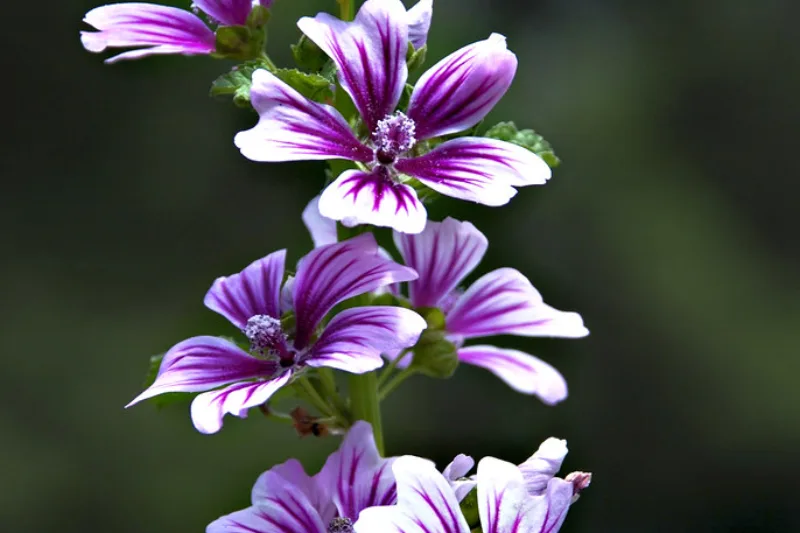

Mallow: Benefits, Uses and How to Prepare It
IMPORTANT: Mallow is generally regarded as one of the gentlest medicinal plants, but its high mucilage content can slow the absorption of other medications taken at the same time. Allow at least one hour between mallow tea and any medication. People with diabetes should talk to their doctor, since sweetened mallow preparations may affect blood sugar. Pregnant and breastfeeding women, as well as young children, can usually use mallow without problems, but it is wise to ask a doctor or pharmacist before taking it regularly. Mallow is not a substitute for medical treatment in severe infections, pneumonia or other serious conditions; consult a doctor if symptoms persist for more than a few days or worsen.
Grandmother Maria, who lived in a village at the foot of the hills, had a habit no one in the family ever forgot. Every late spring, when mallow opened its violet flowers along the roadside and through the garden overrun with useful weeds, she would head out with a wicker basket and carefully gather the leaves and flowers. “Mallow is the poor person’s doctor,” she used to say, “because it costs nothing and heals everything that burns and dries up inside.” Whenever one of her grandchildren came home with a throat raw from shouting or a dry cough that kept them awake, she would soak a few mallow leaves in cold water overnight, strain them in the morning, and give the child the liquid to sip, spoonful by spoonful. The cough would ease, the throat would stop scratching, and the child would fall peacefully asleep.
Aunt Elena, her neighbor, swore by a mallow gargle for mouth sores and ulcers. And when one of the women had dry, cracked skin from working in the fields, they would use warm poultices of boiled leaves, pressing them over their calloused hands. These simple gestures, passed down from generation to generation, conceal a folk wisdom largely confirmed by modern herbalism as well: mallow is an emollient, soothing plant, one of the most precious in nature’s pharmacy.
Mallow (from the genus Malva) is a herbaceous plant found throughout Europe and Asia, common in many temperate regions, growing along roadsides, in gardens, on waste ground and on sunny plots. Under the name “mallow” hide several related species, the best known being common mallow or high mallow (Malva sylvestris), dwarf mallow (Malva neglecta) and, separately, marshmallow (Althaea officinalis), a close relative from the same mallow family (Malvaceae). All share a richness in mucilage — plant substances that, in contact with water, form a fine, protective gel. It is precisely this gel that underlies most of the benefits mallow has offered people for centuries.
Table of Contents
- What mallow is and where it grows
- Composition and active principles
- Health benefits
- Traditional uses
- How to prepare mallow (step-by-step recipes)
- Dosage and method of use
- Mallow in everyday life
- Practical tips and common mistakes
- Conclusion
- Frequently asked questions
What mallow is and where it grows
Mallow belongs to the Malvaceae family, the same family that includes hibiscus, cotton and okra. Depending on the species, it can be annual, biennial or perennial. Common mallow (Malva sylvestris) grows tall, up to about a meter and a half, with erect stems and beautiful flowers of an intense violet-pink, streaked with darker lines. Dwarf mallow (Malva neglecta) is a more modest, creeping plant, with pale, white-pink flowers that spread along fences and over trodden ground. Marshmallow (Althaea officinalis), the most prized in traditional medicine, has delicate white-pink flowers and a thick, fleshy root extremely rich in mucilage.
The plant prefers sunny or partially shaded spots and rich, loose soils, but it is so hardy that it grows practically anywhere — which is why we often find it as a weed in gardens and on vacant lots. The leaves are rounded, slightly lobed, with a toothed margin, and the flowers appear from May to September, offering a display of color that attracts bees and butterflies. For medicinal use, the young leaves and flowers are gathered (in the case of common and dwarf mallow), or the root (in the case of marshmallow), usually in autumn, when the concentration of active principles is at its peak.
Harvesting is done away from busy roads and land treated with pesticides. The flowers are gathered in the morning after the dew has lifted, and drying must take place in the shade, in a thin layer, in well-ventilated spaces, to preserve the color and the quality of the mucilage. Drying in strong sun or at too high a temperature destroys precisely the substances that give the plant its value.
Composition and active principles
The therapeutic power of mallow comes first and foremost from its richness in mucilage — complex polysaccharides that absorb water and form a gelatinous, protective layer. This gel coats irritated mucous membranes, soothes them and shields them from irritants, whether it is an inflamed throat, the stomach lining or dry skin. Mucilage makes up, by some estimates, a significant part of the mass of marshmallow root and is also found abundantly in the leaves and flowers.
Besides mucilage, mallow contains:
- Flavonoids — compounds with antioxidant effects that help protect cells against oxidative stress.
- Anthocyanins — the pigments that give the flowers their characteristic violet color; these too have antioxidant properties.
- Tannins in moderate amounts — which contribute a mild astringent effect, useful in calming irritation.
- Vitamins (especially vitamin C and provitamin A) and minerals present in the young leaves.
- Phenolic acids and other plant compounds that support the gentle anti-inflammatory effects.
This combination makes mallow a plant with predominantly emollient (softens and soothes tissues), demulcent (protects mucous membranes) and mildly anti-inflammatory action, without the strong side effects of more active plants. Its very gentleness is what makes it suitable for children, the elderly and sensitive individuals.
Health benefits
Soothes dry and irritating cough
Mallow’s best-known benefit is its effect on the respiratory tract. The mucilage forms a protective layer over the irritated lining of the throat and pharynx, reducing the dryness and scratchiness that trigger coughing. Folk tradition has recommended mallow tea and syrup for centuries for dry cough, hoarseness and throat irritation caused by dry air or prolonged speaking. Studies suggest that mucilage-rich plants may have a genuine soothing effect on irritative cough, by coating and protecting the nerve endings in the throat.
Supports digestive health
The same mucilage that protects the throat also acts gently on the digestive tract. Mallow is traditionally used to calm irritation of the stomach and intestines, in cases of mild gastritis, heartburn or a sensation of discomfort. The protective gel coats the lining and helps soothe it. In addition, mucilage has a mild regulating effect on transit and can help with mild constipation by softening the intestinal contents without irritating.
Calms the throat and oral cavity
A mallow gargle is a traditional remedy for inflamed throat, mild tonsillitis, mouth ulcers and irritated gums. The demulcent effect soothes inflamed tissues, while the tannins bring a small astringent bonus that helps small mouth sores heal. Many grandmothers used a warm mallow gargle several times a day during colds with a sore throat.
Cares for sensitive and irritated skin
Externally, mallow is valued for its calming effect on the skin. Compresses and poultices made with boiled leaves or with concentrated infusion are traditionally used for dry, reddened, irritated skin, for minor inflammation, mild eczema or calloused areas. The mucilage gel hydrates and forms a fine film that soothes the sensation of stinging.
Mild antioxidant effect
The flavonoids and anthocyanins in mallow contribute an antioxidant effect that supports the body’s overall health. Although mallow is not an antioxidant “super-plant” comparable to berries, its contribution adds to a balanced diet and the use of medicinal plants.
Support in mild urinary discomfort
Folk tradition also uses mallow tea for mild discomfort of the urinary tract, thanks to its emollient and slightly diuretic effect. Fluids consumed as tea help maintain good hydration, and the mucilage may have a soothing effect on irritated mucous membranes.
Traditional uses
In folk medicine, mallow has always held a place of honor. It was “the plant that softens” — used whenever something was dry, irritated or inflamed. Some of the uses handed down from the elders:
- Tea for cough and colds, drunk warm, sweetened with honey.
- Mallow syrup made with honey or sugar, for children’s throats.
- Gargle for tonsillitis, mouth ulcers and sore throat.
- Warm poultices on irritated skin, on boils (to “ripen” them more gently) or on insect stings.
- Sitz baths or compresses for local irritation.
- Young leaves in salads and soups — mallow was also a food plant in hard times, the tender leaves being edible and nourishing.
How to prepare mallow (step-by-step recipes)
A very important point: the mucilage in mallow is best extracted in cold or lukewarm water, not boiling water. Hot water can degrade part of the mucilage, which is why the traditional method prefers cold maceration.
Cold-macerated mallow (the best method for mucilage)
- Place 1-2 teaspoons of dried leaves and flowers (or one teaspoon of chopped marshmallow root) in a cup.
- Pour over them 250 ml of cold or room-temperature water.
- Leave to macerate 6-8 hours (ideally overnight), stirring from time to time.
- Strain, then gently warm the liquid (without boiling it) if you want to drink it warm.
- Sweeten to taste with honey.
Quick mallow infusion
- Place 1 teaspoon of dried plant in a cup.
- Pour over 250 ml of hot but not boiling water (let it cool for 2-3 minutes after boiling).
- Cover and leave to infuse for 10-15 minutes.
- Strain and drink lukewarm.
Mallow cough syrup
- Prepare a concentrated cold macerate from 3-4 tablespoons of plant in 500 ml of water, left overnight.
- Strain well and squeeze out the plant.
- Gently warm the liquid (without intense boiling) and add honey or sugar, about one part sweetener to two parts liquid, stirring until dissolved.
- Pour into clean bottles and keep refrigerated.
- Take one teaspoon several times a day, especially in the evening.
Mallow gargle
- Prepare a stronger infusion (2 teaspoons to 250 ml of water).
- Let it cool until it is lukewarm.
- Strain and use as a gargle 3-4 times a day, especially after meals.
Skin poultice
- Boil a few mallow leaves in a little water until they soften.
- Let them cool until bearably warm.
- Apply the leaves to the affected area, secure with gauze and leave for 15-20 minutes.
Dosage and method of use
For internal use, the general recommendation is 2-3 cups of tea or macerate per day, drunk between meals. For cough and sore throat, warm tea sipped slowly, swallow by swallow, brings the greatest benefit, because the mucilage stays in prolonged contact with the throat lining. Syrup is taken in doses of one teaspoon, repeated 3-5 times a day.
A mallow course can be followed for periods of 1-3 weeks, followed by a break. Being a gentle plant, the risk of adverse effects is low, but, as with any plant, it is best to keep consumption moderate and to monitor the body’s reactions. For children, doses are reduced in proportion to age, and for infants and very young children a doctor’s advice is essential.
Mallow in everyday life
Beyond its medicinal uses, mallow can become part of a healthy, balanced lifestyle. Young mallow leaves, gathered in spring, are edible and can be added to salads, soups and broths, bringing a bonus of digestion-friendly mucilage and a slightly velvety texture to dishes. In some Mediterranean cuisines, mallow leaves are boiled and eaten as a green vegetable, much like spinach.
Mallow flowers can decorate salads or be used to color teas and lemonades — the infusion takes on a fascinating bluish-violet hue which, when a drop of lemon is added, shifts toward pink, a small natural spectacle that delights children. Growing mallow in the garden is simple: the plant is hardy, attracts pollinators and offers beautiful flowers throughout the summer. Having mallow in your own garden means always having a gentle remedy for throat and cough close at hand.
To weave mallow into a healthy routine, many combine it with good hydration, enough sleep and a diet rich in vegetables and fruit. In the cold season, a cup of warm mallow macerate with honey, drunk in the evening, can become a small comforting ritual that soothes the throat and prepares the body for restful sleep.
Practical tips and common mistakes
Mistake no. 1: Boiling mallow. This is the most common mistake. The mucilage, the plant’s main active component, degrades at high temperatures. Use cold maceration or an infusion with hot but not boiling water.
Mistake no. 2: Straining too soon. Mucilage needs time to release into the water. If you strain too quickly, the tea will be poor in active principles. Let the cold macerate stand for at least several hours.
Mistake no. 3: Harvesting from roadsides. Plants gathered next to busy roads or on chemically treated land accumulate heavy metals and pesticides. Gather mallow from clean places, away from pollution.
Mistake no. 4: Drying in strong sun. Direct sun and excessive heat destroy the flowers’ color and the quality of the mucilage. Dry the plant in the shade, in ventilated spaces.
Mistake no. 5: Expecting spectacular, immediate effects. Mallow is a gentle plant that works by soothing and protecting, not by powerful action. The benefits appear gradually, through consistent use.
Mistake no. 6: Taking it together with medication. Mucilage can slow the absorption of medicines. Leave at least an hour between mallow tea and your pills.
Mistake no. 7: Ignoring serious symptoms. Mallow soothes, but it does not cure serious infections. If fever persists, the cough worsens or breathing difficulties appear, see a doctor.
Conclusion
Mallow is one of those humble plants that grow at the roadside and that many trample underfoot without knowing what treasure they hide. Rich in soothing mucilage, it is a gentle and safe remedy for dry cough, sore throat, minor digestive issues and sensitive skin. The wisdom of grandparents, who called it “the poor person’s doctor,” is largely confirmed by modern herbalism: mallow protects, soothes and calms, without aggressive effects. Prepared correctly — by cold maceration, to preserve the precious mucilage — mallow can become a trusted ally in the home’s natural pharmacy. As always, however, it complements but does not replace a doctor’s advice in serious conditions.
Frequently asked questions
How do I prepare mallow tea correctly to preserve the mucilage? The best way is by cold maceration: place the plant in cold or room-temperature water and leave for 6-8 hours, ideally overnight. Then gently warm the liquid without boiling it. Boiling water degrades the mucilage, which is the plant’s main benefit.
Can I give mallow tea to children? Yes, mallow is one of the gentlest plants and is traditionally used for children’s cough and sore throat, usually as a macerate sweetened with honey (honey, however, should not be given to infants under one year). For young children and infants, ask a doctor first and reduce doses in proportion to age.
What is the difference between mallow and marshmallow? Common mallow (Malva sylvestris) and dwarf mallow are species of the genus Malva, used mainly for leaves and flowers. Marshmallow (Althaea officinalis) is a close relative whose root is even richer in mucilage. Both have similar emollient and soothing effects.
Does mallow help with a productive cough or only a dry one? Mallow is most effective for dry, irritating cough, because it forms a protective layer over the irritated throat. For a productive cough with mucus, it is often combined with expectorant plants such as thyme or plantain.
How long can I follow a mallow course? Generally 1-3 weeks, followed by a break. Being a gentle plant, the risk of adverse effects is low, but it is best to keep consumption moderate and monitor the body’s reactions.
Can I use mallow on the skin? Yes, mallow compresses and poultices are a traditional remedy for dry, irritated or reddened skin. The mucilage gel hydrates and calms the sensation of stinging. For serious skin conditions, however, consult a doctor.
Are mallow leaves edible? Yes, the young leaves are edible and can be added to salads, soups and broths. They have a slightly velvety texture and bring a bonus of digestion-friendly mucilage. They are gathered in spring, from clean places.
Are there situations where mallow is contraindicated? Mallow is generally very well tolerated. The main precaution is not to take it at the same time as medication, since the mucilage can slow its absorption. People with diabetes should be careful with sweetened preparations, and pregnant and breastfeeding women should ask a doctor before regular use.