
Motherwort: Heart Benefits, Uses and How to Prepare It
IMPORTANT: Motherwort (Leonurus cardiaca) is a herb that acts on the heart and nervous system, which means it should never be used carelessly. It is contraindicated during pregnancy (it can stimulate uterine contractions) and while breastfeeding. Anyone taking heart medication, blood-pressure drugs, anticoagulants, sedatives or thyroid medication must speak to a doctor before using it, as motherwort may amplify the effects of these drugs. It is not a replacement for prescribed treatment of arrhythmias, high blood pressure or other heart conditions. If you experience frequent palpitations, chest pain, dizziness or shortness of breath, see a doctor — these can be signs of serious problems requiring professional evaluation. Use the plant as a supportive aid only, in moderate doses and for limited periods.
Grandmother Vasilica, a slight woman who always wore her headscarf knotted tightly, had a corner of her garden behind the house that no one was allowed to weed. There, year after year, grew motherwort — a tall plant with a square stem and serrated leaves that the neighbors pulled out like a thorn. “You don’t know what a treasure you have at your fence,” she would tell them, shaking her head. When her older sister’s heart started racing before a storm or some piece of bad news, grandmother would boil a handful of the dried herb and have her sip it slowly, by the spoonful, like an expensive medicine.
I remember how she said that, in her youth, the village believed motherwort “ties the heart in place” — meaning it stops it from its unnatural turmoil. This was not superstition but a folk observation passed down through generations: this humble weed, scorned by many, had the gift of soothing a disordered heartbeat and bringing sleep to the troubled. Today we know that tradition was not far from the truth — even the botanical name, cardiaca, points directly to the heart.
Motherwort is a perennial herbaceous plant in the Lamiaceae family (the mint and dead-nettle family), recognized for centuries in European and Asian folk medicine as a support for the heart and the nervous system. Its English name reflects its traditional use in women’s health. It grows wild along fences, on uncultivated land, at the edges of roads, and in neglected gardens, which makes it one of the most accessible folk remedies around.
Table of Contents
- What Motherwort Is and Where It Grows
- Composition and Active Compounds
- Health Benefits
- Traditional Uses
- How to Prepare Motherwort (Step-by-Step Recipes)
- Dosage and Administration
- Motherwort in a Modern Lifestyle
- Practical Tips and Common Mistakes
- Conclusion
- Frequently Asked Questions
What Motherwort Is and Where It Grows
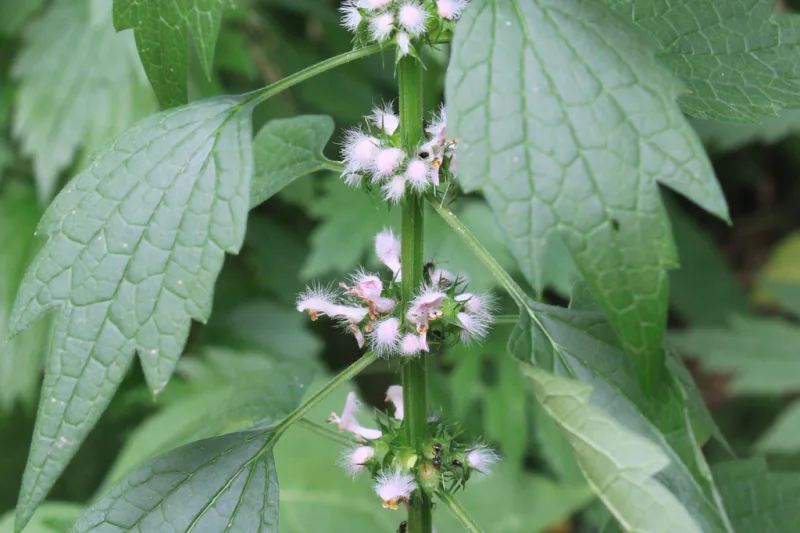
Motherwort (Leonurus cardiaca) is a vigorous plant that can reach up to a meter and a half in height. It has a square cross-section stem — a typical feature of the Lamiaceae family — palmately lobed, toothed leaves that are dark green on top and lighter underneath, and small, pale pink to white flowers arranged in whorls (rings) in the leaf axils along the stem. The flowers have a fuzzy, hairy appearance that makes them easy to recognize.
The plant blooms from June to September and gives off a slightly bitter smell, unpleasant to grazing animals, which is why it is often left untouched in pastures. Native to Central Asia and Southeastern Europe, motherwort has naturalized across most of Europe, in temperate Asia, and in North America. It can be found from lowlands to hill country, preferring nitrogen-rich soils and sunny or partly shaded locations.
For medicinal use, the flowering aerial part (the herb) is harvested during full bloom, when the concentration of active compounds is highest. You cut the flowering tops — roughly the upper third of the plant — avoiding the thick, woody stems at the base. Harvesting is done in dry weather, after the dew has evaporated, and drying must take place in the shade, in a thin layer, in well-ventilated spaces.
Composition and Active Compounds
The strength of motherwort lies in a complex mixture of substances that act especially on the heart and nervous system. Phytochemical studies suggest the plant contains:
- Alkaloids (such as leonurine and stachydrine), thought to be responsible for some of the effects on heart rhythm and vascular tone;
- Flavonoids (rutin, quercetin, apigenin), with antioxidant and blood-vessel-protecting roles;
- Iridoid glycosides, with a mildly bitter, tonic action;
- Phenolic acids (caffeic acid, chlorogenic acid), antioxidants;
- Tannins, with a mild astringent effect;
- A small amount of volatile oil, which gives the characteristic aroma;
- Mineral salts and traces of vitamins.
This natural cocktail explains why motherwort is valued simultaneously as a “heart herb” and as a calming plant. Many of the effects observed over the centuries in folk medicine fit the profile of these compounds: relaxation of smooth muscle, soothing of the nerves, and support for a steady heartbeat.
Health Benefits
Heart Support and Calming Palpitations
Motherwort’s best-known benefit relates to the heart, as its Latin name suggests. Folk tradition used it for palpitations of nervous origin, for the sensation of a “heart beating too hard” in moments of emotion, stress, or anxiety. Studies suggest the plant may help to settle the heartbeat when it is sped up by nervous tension, without being a substitute for prescribed cardiac medication. For many people it brings a sense of calm and steadiness during agitated periods.
A Calming Effect on the Nervous System
Motherwort is considered a gentle sedative herb, suited to states of restlessness, irritability, and agitation. In herbal tradition, it was recommended for those who “can’t find peace,” who worry excessively, or who feel their inner tension reflected in the body — through palpitations, a lump in the throat, or shallow breathing. Its relaxing effect also makes it useful before bedtime for those whose sleep is disturbed by racing thoughts.
Support During Stress-Related High Blood Pressure
In folk medicine, motherwort was also used as a helper in mild forms of high blood pressure associated with stress and anxiety. The general relaxation it induces is believed to contribute indirectly to a more balanced blood pressure. This benefit must be viewed with caution, however: high blood pressure is a serious condition, and the plant can be at most a supportive aid, never a replacement for treatment and medical monitoring.
Regulating the Cycle and Easing Menstrual Discomfort
The name “motherwort” points to the plant’s traditional use in women’s health. It was used to calm menstrual cramps, help regulate irregular cycles, and ease the tension and irritability of the days before menstruation. In some traditions it was also recommended for the discomforts of menopause, especially for hot flashes accompanied by palpitations and unease. (Note: the plant is not used during pregnancy.)
Mild Digestive Support
Thanks to the bitter principles it contains, motherwort can gently stimulate digestion and help calm digestive spasms of nervous origin — that “knotted stomach” many people feel when stressed. Tradition associated it with a more settled digestion during tense periods.
Antioxidant Action
The flavonoids and phenolic acids in the plant have antioxidant properties, helping to protect cells against oxidative stress. This general health-supporting aspect rounds out the plant’s profile as a gentle tonic for the body.
Traditional Uses
Over time, motherwort was one of the staple plants in the village housewife’s “pharmacy.” Here are some of its traditional uses:
- “Heart tea” — drunk daily in short courses to calm nervous palpitations and states of unrest;
- Tincture — kept in small bottles, taken in drops in moments of strong emotion or before stressful events;
- Calming blend — combined with valerian, hawthorn, lemon balm, or St. John’s wort to strengthen the soothing and heart-supporting effect;
- Women’s tea — during periods of difficult cycles or premenstrual tension;
- Relaxing baths — added to bathwater as part of an evening relaxation ritual.
In some regions, the dried plant was even placed under the pillow or in scented sachets, in the belief that it brings peaceful sleep and drives away unease.
How to Prepare Motherwort (Step-by-Step Recipes)
Motherwort Tea (Infusion)
This is the simplest and most widely used preparation method.
You need:
- 1 teaspoon (about 1.5–2 g) of dried, crumbled herb;
- 250 ml of hot water (not at a rolling boil);
- a cup with a lid or a small saucer.
Steps:
- Place the dried herb in the cup.
- Pour the hot water over it.
- Cover the cup with a lid or saucer to keep the volatile oils from evaporating.
- Let it steep for 10–15 minutes.
- Strain and drink the tea warm, optionally sweetened with a little honey (if there are no contraindications).
The taste is bitter, so many prefer to combine it with gentler-tasting herbs such as lemon balm or mint.
Motherwort Tincture
The tincture is a concentrated form that is easy to store and dose.
You need:
- crumbled dried herb (or fresh, if you have it);
- food-grade alcohol at 40–50% (for example, good-quality vodka);
- a clean jar with an airtight lid.
Steps:
- Fill a jar about halfway with dried herb (or nearly full if using fresh plant).
- Pour alcohol over the herb until it is fully covered, with a finger’s width of liquid above.
- Close the jar and place it in a dark, cool spot.
- Let it macerate for 2–4 weeks, shaking the jar every few days.
- Strain through cheesecloth, squeeze the herb well, and store the tincture in dark dropper bottles.
The tincture is generally taken as drops diluted in a little water, at the dose recommended by a specialist.
Poultice or Compress (External Use)
For local discomfort or as part of a relaxation ritual, the plant can also be used externally.
Steps:
- Prepare a stronger infusion (2 teaspoons per 250 ml of water).
- Let it cool until lukewarm.
- Soak a piece of clean cheesecloth or a soft cloth in the infusion.
- Apply to the desired area (for example, the abdomen for cramps) for 15–20 minutes.
Dosage and Administration
As a general rule, herbal tradition recommends:
- Tea: 1–2 cups per day, in courses of 2–3 weeks, followed by a break. Continuous, open-ended use is not recommended.
- Tincture: the usual dose mentioned by tradition is a few drops up to half a teaspoon, diluted in water, 1–3 times a day — but the exact dose should be set together with a herbalist or doctor.
- Courses: it is wise to take regular breaks, to avoid habituation and to observe how your body responds.
Always start with small doses, especially if you have never used the plant before, and pay attention to how you feel. If dizziness, excessive drowsiness, or other unusual reactions appear, stop using it.
Motherwort in a Modern Lifestyle
We live in a hurried world where our hearts and nerves are constantly tested: deadlines, notifications, lack of sleep, meals eaten on the run. In this context, calming plants like motherwort regain a well-deserved place — not as a cure-all, but as a small balancing ritual.
A cup of tea sipped in the evening, in quiet, away from screens, can become a moment of respite — a signal to the body that the day is ending and that it is allowed to relax. Combined with deep breathing, a gentle walk, or a few minutes of silence, motherwort can support the sense of calm we all seek.
It is important, though, not to hide behind plants from real problems. If chronic stress, anxiety, or palpitations become frequent, they deserve a serious conversation with a doctor. Motherwort can be a gentle companion on the road to balance, but never a substitute for the care we truly need.
Practical Tips and Common Mistakes
Mistake no. 1: Using the plant during pregnancy. This is the most important precaution. Motherwort can stimulate uterine contractions and is strictly contraindicated throughout pregnancy. Do not use it while breastfeeding either.
Mistake no. 2: Combining it with medication without medical advice. Because the plant acts on the heart and nervous system, it can amplify the effects of heart medication, sedatives, anticoagulants, or blood-pressure drugs. Do not add it on top of treatment without asking your doctor.
Mistake no. 3: Self-treating serious symptoms. Persistent palpitations, chest pain, or dizziness should not be “covered up” with teas. These can be signs of heart problems that require a medical diagnosis.
Mistake no. 4: Continuous use without breaks. Calming herbs are usually used in courses, with breaks in between. Uninterrupted use brings no extra benefit and may dull the body’s sensitivity.
Mistake no. 5: Harvesting from polluted places. Because motherwort often grows along roadsides, there is a risk that the plant may be exposed to exhaust fumes and pollutants. Harvest only from clean places, far from traffic and pesticide-treated land.
Mistake no. 6: Drying in the sun. Direct sunlight degrades the active compounds and the color. Dry the plant in the shade, in a thin layer, in ventilated spaces.
Mistake no. 7: Expecting immediate results. Plants act gently and gradually. The calming effect is often felt after several days of regular use, not from the very first cup.
Conclusion
Motherwort is a plant modest in appearance, scorned by many as a mere fence weed, yet treasured by generations for its gift of soothing the heart and the nerves. From Grandmother Vasilica and her sisters to modern herbalists, people have noticed the same quality: this plant’s ability to bring a touch of calm where unrest and turmoil reign. Used sensibly, in moderate doses and with respect for precautions — especially avoiding it during pregnancy and consulting a doctor in case of heart conditions — motherwort can be a valuable natural support. It is not a miracle cure, but a gentle companion that reminds us that peace sometimes grows in the very places where we never thought to look for it.
Frequently Asked Questions
Is motherwort safe for everyone? No. The plant is contraindicated during pregnancy and breastfeeding, and people with heart conditions or those taking heart, blood-pressure, sedative, or anticoagulant medication must consult a doctor before using it. For a healthy person, in moderate doses and for limited periods, it is generally well tolerated.
How many times a day can I drink motherwort tea? Tradition usually recommends 1–2 cups per day, in courses of 2–3 weeks, followed by a break. Start with one cup and see how you feel.
How quickly will I feel the effects? The calming effect may be felt gradually, after a few days of regular use. Don’t expect dramatic results from the first cup — herbs work gently.
Can motherwort replace heart medication? No. Motherwort can be at most a supportive aid, never a substitute for prescribed treatment. Never stop cardiac medication without your doctor’s approval.
What does motherwort tea taste like? It is bitter, which is why many people combine it with sweeter or more aromatic plants such as lemon balm, mint, or a little honey.
Can I harvest motherwort myself? Yes, if you can identify it confidently (square stem, serrated leaves, fuzzy pink-white flowers) and gather it from clean places, far from roads and chemically treated land. Harvest the flowering aerial part and dry it in the shade.
Can motherwort be used for sleep? Yes, many people use it in the evening as a soothing tea, to calm racing thoughts and ease falling asleep. It can be combined with valerian or lemon balm for a stronger effect.
Which other plants does it blend well with? Tradition often pairs it with hawthorn (for the heart), valerian and lemon balm (for calming and sleep), and St. John’s wort (for mood), in balanced blends.