
Mullein: Benefits, Uses and How to Prepare It
IMPORTANT: Mullein is generally well tolerated, but a few precautions are essential. The flowers and leaves are covered in fine hairs that can irritate the throat and mucous membranes, which is why mullein tea MUST always be strained twice, through a double layer of cheesecloth or a fine coffee filter, to remove these hairs. Mullein seeds are toxic and must never be consumed in any form. People with chronic illnesses, pregnant or breastfeeding women, young children, and anyone on medication should consult a doctor or pharmacist before using the plant. Mullein is a support for the body, not a substitute for medical care — a cough lasting more than two to three weeks, persistent fever, blood in the sputum, or severe difficulty breathing REQUIRE medical evaluation.
Grandmother Veronica, from the villages along the Olt Valley, had a habit she never abandoned: at the end of summer, when mullein raised its yellow spears along dusty roadsides and on grazing pastures, she would set off with a little wicker basket and pick the flowers one by one, in the morning, after the dew had lifted. “These we gather for winter, for the cough, for the chest,” she would say, spreading them out on a clean cloth, in the shade, in the loft of the house. When the cold weather came and the grandchildren began to cough, she would bring out the jar of dried flowers and brew a golden tea, which she carefully strained twice through a thin handkerchief, “so none of the fluff stays in.”
That care with the straining was not an old woman’s whim but wisdom gathered across generations. Mullein (the Verbascum genus, most often Verbascum thapsus or Verbascum phlomoides), known in Romanian folk tradition by several poetic names, is one of the most treasured plants of traditional medicine when it comes to respiratory complaints. In this article you will discover everything you need to know about this striking plant: what it is, what it contains, how it works, how to prepare it correctly, and which mistakes to avoid.
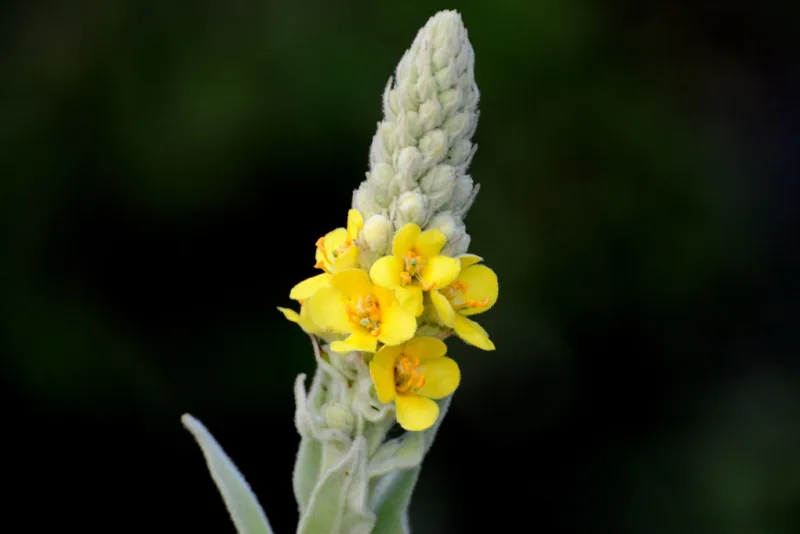
Mullein is a tall biennial herb of the Scrophulariaceae family, instantly recognizable by its straight, candle-like stem, which can reach one to two meters in height, crowned with a dense spike of soft, velvety yellow flowers. Its English name refers to the soft, woolly texture of the leaves, while the candle-like form gave rise to old uses too: in former times, the dried stems, dipped in tallow or wax, served as torches at processions. Beyond its spectacular appearance, the plant has been valued for centuries as a foundational remedy for the lungs, throat, and skin.
Table of Contents
- What mullein is and where it grows
- Composition and active principles
- Health benefits
- Traditional uses in folk medicine
- How to prepare mullein (step-by-step recipes)
- Dosage and how to take it
- Mullein in everyday life
- Practical tips and common mistakes
- Conclusion
- Frequently Asked Questions
What mullein is and where it grows
Mullein is a biennial herbaceous plant, meaning it completes its life cycle over two years. In the first year it forms only a basal rosette of large, oval, thick leaves, velvety to the touch, spread out close to the ground. In the second year, a tall, straight stem rises from the center of the rosette and flowers gradually, from the bottom upward, from late June through to September.
The flowers are golden-yellow, with five petals, packed tightly on the terminal spike. They do not all open at once but a few each day, which makes harvesting a test of patience: you must return to the same plant for several days in a row to gather a useful quantity.
Mullein is a plant of dry, sunny places. You will find it along roadsides, on stony ground, on pastures, embankments, fallow land, and waste places, from the lowlands up into the hills. It prefers poor, sandy, or stony soils and tolerates drought very well. Precisely because it is so common and hardy, many people overlook it, never suspecting what therapeutic treasure it hides.
The flowers (the most prized material), the leaves, and, more rarely, the root are harvested. Flowers are picked in the morning, in dry weather, and dried quickly in the shade with good airflow, because they blacken easily if they get damp or are piled up too thickly. A well-dried flower should keep its golden-yellow color; blackened ones have lost much of their value.
Composition and active principles
Mullein’s effectiveness in folk tradition is explained by its wealth of active compounds. Phytochemical research has identified several categories of substances in the flowers and leaves that work together:
- Mucilages — viscous substances that, in contact with water, form a protective gel. These are the stars of the plant: they coat the irritated mucous membranes of the throat and airways with a soothing film, reducing dryness, itching, and the urge to cough.
- Saponins — compounds with an expectorant effect, helping to thin and clear bronchial secretions.
- Flavonoids (such as verbascoside) — with antioxidant and anti-inflammatory roles, helping to protect the tissues.
- Iridoids — bitter substances with anti-inflammatory action.
- Volatile oils in small amounts, giving the tea its pleasant aroma.
- Sugars and pectins that reinforce the emollient effect.
This combination of soothing mucilages and expectorant saponins is exactly what makes mullein such a fitting remedy for a dry, irritating cough as well as a productive one: on one hand it soothes the irritation, on the other it helps clear phlegm. Laboratory studies also suggest antimicrobial and antiviral properties in Verbascum extracts, which at least partly confirms the trust folk medicine has always placed in this plant.
Health benefits
Support for the lungs and airways
This is, without a doubt, mullein’s main use. In folk tradition, mullein flower tea was always the first thought when someone caught a cold, coughed, or had a “heavy chest.” The mucilages coat the inflamed membranes, while the saponins help loosen and clear secretions. For this reason the plant is used as support in dry and irritating coughs, bronchitis, tracheitis, hoarseness, and a sensation of dryness in the throat. Many consider it a staple ally of the cold season.
Soothing for an irritated throat and hoarseness
Thanks to its emollient effect, gargling with mullein tea, or simply sipping a warm tea sweetened with honey, soothes an inflamed throat, painful swallowing, and hoarseness. Singers and people who strain their voices often turned, in the past, to such soothing infusions.
Emollient and soothing effect for the skin
Applied externally, in the form of compresses, baths, or infused oil, mullein extract has a soothing effect on irritated, reddened skin or small scratches. Flowers macerated in oil yield a traditional preparation used especially for ear discomfort (see the precautions below).
Support for ear discomfort
One of the best-known folk uses of mullein flower oil is for ear discomfort and pain, often in combination with garlic. A warning, however: this remedy should be used ONLY if the eardrum is intact and never in the presence of ear discharge; any ear pain, especially in children, requires medical advice first, to rule out a perforation or an infection that needs treatment.
General anti-inflammatory action
The flavonoids and iridoids in the plant contribute to a mild anti-inflammatory effect, which is why mullein appears in many “chest” and “throat” tea blends, alongside linden, mallow, plantain, or thyme.
Support for mild urinary discomfort
In some traditions, mullein’s mildly diuretic tea has also been used as support for urinary tract discomfort, although the respiratory use remains by far the most widespread and the best documented by folk experience.
Traditional uses in folk medicine
In the households of old, mullein had a firmly established place in the “pharmacy” in the loft. Most often, the dried flowers were kept in paper bags or closed jars, away from light, for winter tea. Here are some of the traditional ways it was used:
- Flower tea — drunk warm, sweetened with honey, for cough, bronchitis, and irritated throat.
- The “chest” blend — mullein flowers combined with linden flowers, plantain leaves, mallow, and thyme, to support the airways on several fronts.
- Gargle — a concentrated, cooled tea used to rinse an inflamed throat.
- Inhalations — the steam from the warm infusion, breathed in with the head covered by a towel, to soothe the airways.
- Macerated flower oil — for external applications and for ear discomfort (with the precautions mentioned).
- Leaf poultices — leaves scalded and applied warm to the chest or painful areas.
How to prepare mullein (step-by-step recipes)
Mullein flower tea (infusion)
This is the basic and most-used form.
- Place one to two teaspoons of dried mullein flowers in a cup.
- Pour over them 250 ml of boiling water (freshly boiled).
- Cover the cup with a saucer and let it steep for 10-15 minutes. Covering is important so the volatile oils are not lost in the steam.
- Strain TWICE: first through a sieve, then through a double layer of cheesecloth or a fine coffee filter. This step is mandatory, to remove the fine hairs that would otherwise irritate the throat.
- Sweeten, if you like, with a teaspoon of honey (after the tea has cooled a little, to preserve the honey’s properties).
Drink the tea warm, in small sips.
A more concentrated decoction (for gargling)
For gargling, make a stronger infusion: use a heaped tablespoon of flowers per 250 ml of water, let it steep for 15 minutes, strain very well twice, and use the cooled liquid to rinse the throat several times a day.
Macerated mullein flower oil
- Half-fill a clean, perfectly dry jar with fresh mullein flowers, lightly wilted (or, with dried flowers, up to three-quarters full).
- Pour olive oil or sunflower oil over them until the flowers are completely covered.
- Close the jar and leave it in the sun or a warm place for 2-4 weeks, shaking it gently from time to time.
- Strain through a double layer of cheesecloth and store the oil in a dark glass bottle, in a cool, dark place.
This oil is for external use. For ear discomfort, only with a doctor’s approval and only if the eardrum is intact.
Inhalation
Place a handful of flowers in a bowl, pour boiling water over them, lean over (at a safe distance, so as not to scald yourself), cover your head with a towel, and breathe in the steam for 5-10 minutes. Useful for soothing irritated airways.
Dosage and how to take it
For respiratory support, the traditional way to take mullein is 2-3 cups of tea a day, drunk warm, preferably between meals, for a few days until symptoms ease. Drinking it in large amounts or for very long periods without breaks is not recommended.
For children, the tea is given more diluted and in small amounts, and ONLY after speaking with a pediatrician, especially for infants and pre-school children. The double straining is all the more important in their case.
Remember that mullein is a natural support, not a cure. If symptoms worsen or persist, see a doctor.
Mullein in everyday life
Beyond moments of illness, mullein can find a quiet place in your cold-season routine. Many people make up a “winter” blend in advance, in which mullein sits alongside linden, chamomile, and thyme, so that at the first scratch in the throat the remedy is already at hand.
A lifestyle that supports respiratory health beautifully complements the plant’s effect: good hydration (water and warm teas keep the mucous membranes moist), clean and humidified indoor air in winter, avoiding smoking and second-hand smoke, sufficient sleep, and a diet rich in seasonal vegetables and fruit. Mullein works no miracles on its own, but in such a context it becomes a discreet and reliable ally.
If you have a sunny, poor corner of the garden, you can even grow the plant: it is hardy, decorative thanks to its tall yellow spikes, and gives you clean raw material, far from the dust and pollution of the roadside.
Practical tips and common mistakes
Mistake no. 1: Straining the tea carelessly. This is the most common and most important mistake. The fine hairs on the flowers and leaves can irritate the throat at the very moment you want to soothe it. Always strain twice, through double cheesecloth or a fine coffee filter.
Mistake no. 2: Using the seeds. Mullein seeds are toxic and are never used medicinally. Harvest and use only the flowers and leaves.
Mistake no. 3: Picking flowers along busy roads. The flowers absorb dust and pollutants. Pick from clean places, far from highways and chemically treated land.
Mistake no. 4: Drying incorrectly. Flowers piled together or left in the damp turn black and lose their value. Dry them quickly, spread in a single layer, in the shade and in the air.
Mistake no. 5: Using the oil in the ear without precautions. Never in the presence of discharge or a possibly perforated eardrum, and never in children without prior medical advice.
Mistake no. 6: Skipping medical care. Mullein eases symptoms, but a cough lasting weeks, a high fever, or difficulty breathing call for medical evaluation. Do not delay.
Mistake no. 7: Misidentifying the plant. Make sure you are truly harvesting mullein (Verbascum) and not another plant. If you are not certain, buy the flowers from a reliable herbalist.
Conclusion
Mullein, this stately plant that raises its yellow candles on dry, forgotten places, remains one of the most reliable allies of Romanian folk medicine for the lungs, throat, and cough. Rich in soothing mucilages and expectorant saponins, it eases irritation and helps clear secretions, offering gentle, natural support in the cold season. The key to using it correctly lies in the details: harvesting from clean places, careful drying, avoiding the seeds, and above all straining the tea twice. Used with common sense and as a complement — not a substitute — to medical care, mullein can take its rightful place in the natural pharmacy of any household, exactly as our grandmothers kept it in the jar up in the loft.
Frequently Asked Questions
What is mullein most often good for? It is most often used to support the airways: dry or productive cough, bronchitis, irritated throat, and hoarseness. The mucilages soothe the mucous membranes, while the saponins help clear secretions.
Why must the tea be strained twice? The flowers and leaves have fine hairs that, if they get into the tea, can irritate the throat. Double straining, through cheesecloth or a fine filter, removes them and makes the tea pleasant and safe to drink.
Are mullein seeds toxic? Yes. The seeds are toxic and are never used. Only the flowers and leaves, properly harvested, are used.
Can I give mullein tea to a child? Only diluted, in small amounts, and only after speaking with a pediatrician, especially for young children and infants. Double straining is mandatory.
How many cups of tea can I drink a day? Traditionally, 2-3 cups a day for a few days, until symptoms improve. Large amounts over very long periods are not recommended.
Is mullein safe during pregnancy and breastfeeding? During these periods, as a precaution, use the plant only with a doctor’s approval. The data is limited, so it is better to be cautious.
How do I recognize a quality dried flower? A well-dried flower keeps its golden-yellow color and pleasant aroma. Blackened or moldy flowers were dried incorrectly and should not be used.
Can I use mullein for earache? Macerated flower oil has been used traditionally for ear discomfort, but only with an intact eardrum, no discharge, and, especially in children, only after medical advice. Any persistent ear pain calls for a doctor’s evaluation.