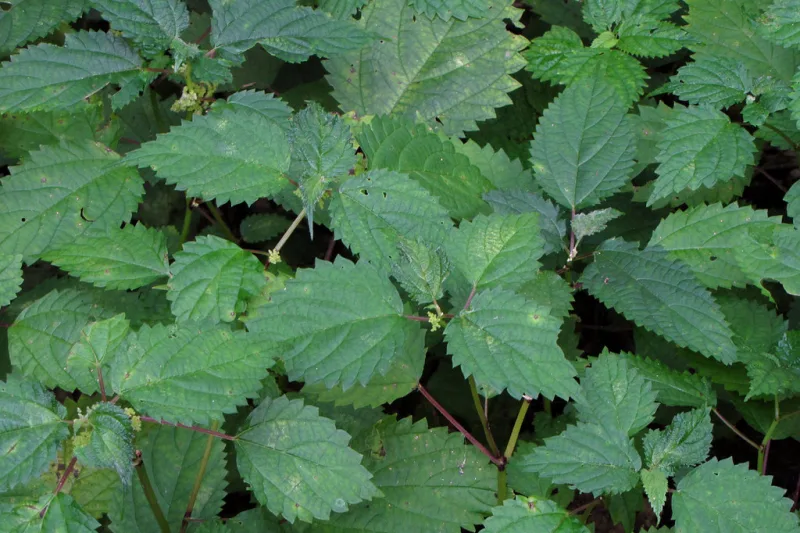

Nettle: Benefits, Uses and How to Prepare It
IMPORTANT: Although nettle is one of the gentlest and most cherished medicinal plants in Romanian tradition, it is not entirely free of precautions. People taking diuretics, blood pressure medication, anticoagulants (such as warfarin) or diabetes medication should talk to their doctor before consuming large amounts of nettle, as the plant can enhance or alter the effect of these drugs. Pregnant women should avoid the therapeutic use of nettle, since folk tradition attributes to it effects that may stimulate the uterus. People with severe kidney disease or with fluid retention caused by heart problems should also be cautious. Nettle never replaces a prescribed medical treatment — it is a support, not a substitute. At the first sign of an allergic reaction, stop consuming it and consult a specialist.
Grandma Floarea, from the village at the foot of the mountains, would go out every early spring with a wicker basket on her arm and thick woolen gloves, to gather the “first nettles.” She always said, with a light in her eyes, that “March nettle raises you from the dead” and that no plant in the world cleanses the blood better after a long winter spent on bacon, sauerkraut and too few greens. Before Easter, her house always smelled of nettle soup, and for her grandchildren she prepared a simple “remedy”: a spoonful of fresh nettle juice mixed with honey, given in the morning on an empty stomach “to build up strength.”
She was convinced that nettle worked wonders for hair — she rinsed her long tresses, still black at seventy, with a strong nettle decoction, and she would not have traded this habit for any shampoo in the world. This story, repeated in thousands of Romanian households, is not just nostalgia: behind it lies a whole body of folk wisdom, largely confirmed by modern research as well. Nettle remains, to this day, one of the most valuable plants nature offers us, practically for free, at the side of the road.
Nettle (Urtica dioica) is a perennial herbaceous plant, known to everyone for its leaves that “sting” on contact. It grows wild almost everywhere in Romania — along fences, in damp areas, at the edge of forests and in places rich in nitrogen, that is, where the soil is fertile. Although many consider it a mere annoying weed, nettle is in reality a true nutritional and medicinal treasure, used for thousands of years in food, in folk medicine and even in the textile industry, being one of the first plants from which cloth was woven.
Table of Contents
- What nettle is and where it grows
- The composition and active principles of nettle
- The health benefits of nettle
- Traditional uses of nettle in the Romanian village
- How to prepare nettle: step-by-step recipes
- Dosage and method of administration
- Nettle for hair and skin
- How to harvest and store it correctly
- Practical tips and common mistakes
- Conclusion
- Frequently Asked Questions
What nettle is and where it grows
Nettle belongs to the Urticaceae family and is represented in our region mainly by the great nettle (Urtica dioica), a perennial plant that can reach heights of a meter and a half, and by the small nettle (Urtica urens), a shorter, annual variety. The stem is upright, four-angled, covered with stinging hairs that, at the slightest touch, release a mixture of formic acid, histamine and other irritating substances that cause the characteristic burning sensation.
The plant prefers rich, moist and slightly shaded soils, which is why we often find it near human settlements, beside barns, old fences, ditches and riverbanks. Precisely because it “senses” the nitrogen in the soil, nettle has always been considered an indicator of fertile ground. It blooms from May to September, and for culinary and medicinal purposes it is usually harvested in early spring, when the young leaves are the most tender and the richest in active substances.
An important detail: the sting of nettle disappears completely with boiling or scalding, as well as after drying. Thus, the plant that “stings” in the field becomes perfectly edible and pleasant on the plate.
The composition and active principles of nettle
Nettle’s value comes from its remarkable concentration of nutrients and active compounds. Nettle leaves contain:
- Vitamins: it is very rich in vitamin C (sometimes more than citrus fruits, relative to the amount consumed), vitamin A (in the form of beta-carotene), vitamin K and B-complex vitamins.
- Minerals: nettle is a true treasure trove of iron, but it also contains calcium, magnesium, potassium, silicon, manganese and phosphorus. It is precisely the iron content, together with vitamin C, which helps its absorption, that makes it so precious in fighting anemia.
- Chlorophyll: in large amounts, which is why nettle has been called the “green of life” and used as a general tonic.
- Plant proteins: dried leaves can contain a surprising percentage of protein, which made nettle a staple food in times of scarcity.
- Organic acids and flavonoids: with antioxidant roles, among them quercetin.
- Formic acid, histamine, serotonin and acetylcholine: the substances in the stinging hairs, responsible for the irritant effect, but also for certain therapeutic effects when the plant is used in a controlled way.
- Silicon: an important mineral for the health of hair, nails and connective tissue.
This combination of nutrients explains why nettle has been used simultaneously as food, as a remedy and as a strengthening tonic.
The health benefits of nettle
Support in fighting anemia and fatigue
Thanks to its high iron and vitamin C content, nettle is, by tradition, one of the most recommended plants for anemic people or for those who feel exhausted, especially after illness, after winter or during periods of stress. Vitamin C helps the body absorb iron better, and chlorophyll has an invigorating effect on the blood. Many herbalists recommend nettle cures in spring precisely to “refresh” the body and restore its vitality.
Diuretic effect and kidney support
Nettle has a mild diuretic effect and is traditionally used to stimulate the elimination of water and toxins from the body. Studies suggest that it can support kidney function and help eliminate uric acid, which is why it was used in the past as a remedy for gout and for rheumatic conditions. It is precisely this “cleansing” effect that lies at the heart of the old spring detox cures.
Joint support and anti-inflammatory effect
Folk tradition attributes anti-inflammatory properties to nettle, which has been used to ease joint and rheumatic pain. In some regions there was even the custom of “nettling” — touching painful areas with fresh nettle to stimulate local circulation. Modern studies suggest that certain compounds in nettle may modulate inflammatory processes.
Balancing blood sugar
Some preliminary research suggests that nettle may help maintain normal blood sugar values. For this reason, people taking diabetes medication should be cautious and consult their doctor, to avoid too sudden a drop in blood sugar.
Prostate health
Nettle root, in particular, is used in modern phytotherapy as support for prostate problems, especially in benign prostatic hyperplasia. Many natural preparations intended for prostate health contain nettle root extract.
Support for skin and seasonal allergies
Due to its histamine content, paradoxically, nettle is also traditionally used to ease seasonal allergic reactions (such as hay fever), acting as a kind of gentle “acclimatization” of the body. Nettle tea is also valued for its beneficial effect on problem skin, such as acne or eczema.
General tonic and strengthening the body
Beyond all its specific benefits, nettle remains, par excellence, a general tonic. Its wealth of minerals and vitamins makes it a valuable support for convalescents, for exhausted people and for all those who wish to strengthen their bodies naturally.
Traditional uses of nettle in the Romanian village
In the peasant household, nettle had dozens of uses. It was, first of all, a precious spring food, from which sour soup, stew and pies were made, or it was mixed with polenta and cheese. It was the “greenery” that brought health back after the lean months of winter.
Then, nettle was a remedy within everyone’s reach. The fresh juice was given to anemic children, the decoction was used to rinse the hair, and poultices of scalded leaves were applied to aching joints. Women used nettle decoction to strengthen their hair and give it shine.
In the household, nettle also had a practical role: it was given to poultry and animals to improve their health and make hens lay better, and from its dried fibers a coarse but durable cloth was sometimes spun. Last but not least, nettle was a natural dye, from which a beautiful shade of green was obtained for wool and for Easter eggs.
How to prepare nettle: step-by-step recipes
Nettle tea (infusion)
Nettle tea is the simplest and most common form of preparation.
- Put 1-2 teaspoons of dried nettle leaves (or a handful of fresh, washed leaves) into a cup.
- Pour over 250 ml of hot water, but not boiling (ideally around 90°C, to preserve the vitamins).
- Cover the cup and let it steep for 8-10 minutes.
- Strain and drink warm, optionally sweetened with a little honey.
You can drink 2-3 cups a day, in cures of no more than 3-4 weeks, followed by a break.
Nettle decoction (for hair)
For external use, especially for rinsing the hair, a more concentrated decoction is used.
- Put 2-3 handfuls of fresh leaves (or 4-5 dried tablespoons) into a pot.
- Add 1 liter of water and bring to a boil.
- Let it simmer over low heat for 10-15 minutes.
- Strain and let it cool until lukewarm.
Use this decoction as a final rinse, after washing your hair.
Fresh nettle juice
This is the preparation most concentrated in vitamins and chlorophyll.
- Wash a good handful of fresh nettle leaves well (use gloves!).
- Put them in a blender with a little water, or pass them through a juicer.
- Strain through cheesecloth.
- Consume 1-2 tablespoons a day, optionally mixed with apple juice or honey, to improve the taste.
Nettle tincture
- Fill a jar with chopped fresh nettle leaves.
- Pour over 40-50° food-grade alcohol until it completely covers the plant.
- Close the jar and let it macerate for 2-3 weeks, in a dark place, shaking it daily.
- Strain and store in dark glass bottles.
Take 20-30 drops, 2-3 times a day, diluted in a little water.
Nettle soup
To turn the remedy into a meal, scald the young leaves, chop them finely and add them to a soup with a light roux, vegetables and a stalk of lovage. Sour it with fermented bran liquid (borș) or lemon juice. It is the quintessential dish of Romanian spring.
Dosage and method of administration
For internal use, the general recommendation is 2-3 cups of tea a day or the equivalent in juice or tincture, in cures of 3-4 weeks, followed by a break of at least one week. Longer cures can overload the kidneys due to the diuretic effect. For external use (hair, skin, poultices), nettle can be used more frequently, without particular restrictions.
It is important not to exceed the recommended doses, on the assumption that “more is better.” With medicinal plants, balance and consistency are more valuable than quantity.
Nettle for hair and skin
One of the best-known uses of nettle is hair care. Thanks to its content of silicon, iron and sulfur, nettle is considered a true ally against hair loss and dandruff. Regular rinsing with nettle decoction helps strengthen the hair shaft, reduces excess sebum and gives shine. Many women of past generations had healthy, thick hair precisely because of this simple habit.
For the skin, nettle tea, consumed internally or applied as compresses, helps with oily, acne-prone skin, due to its cleansing and balancing effect. Tradition also recommends baths with nettle decoction for irritated skin or to relieve the sensation of itching.
How to harvest and store it correctly
Nettle is preferably harvested in early spring, when the young leaves are most tender, or from the young tops throughout the season. Choose clean places, away from busy roads, from land treated with pesticides or from polluted areas. Always use thick gloves to avoid the sting.
After harvesting, the leaves can be used fresh or dried. For drying, spread the leaves in a thin layer in an airy, shaded place, away from direct sunlight. Once completely dry (the leaves should crumble at the touch), store them in paper bags or glass jars, in a dry, dark place. Prepared this way, nettle retains its properties for about a year.
Practical tips and common mistakes
Mistake no. 1: Picking nettle from roadsides or polluted areas. The plant easily absorbs heavy metals and harmful substances from the soil. Always choose clean places, away from traffic and from chemically treated crops.
Mistake no. 2: Boiling the tea. Many people put nettle directly to boil for an infusion, thus destroying a good part of the vitamin C and the sensitive enzymes. For tea, use hot but not boiling water, and steep it covered.
Mistake no. 3: Consuming it in excess and over long periods. The strong diuretic effect can lead to dehydration and overload the kidneys. Stick to cures of 3-4 weeks with breaks.
Mistake no. 4: Handling it without gloves. It seems obvious, but many underestimate the sting of fresh nettle. Always use thick gloves when picking and preparing it.
Mistake no. 5: Ignoring drug interactions. If you take diuretics, anticoagulants or medication for blood pressure or diabetes, do not start a nettle cure without talking to your doctor.
Mistake no. 6: Using nettle during pregnancy without medical advice. Folk tradition attributes to it effects that may be unsuitable during this delicate period.
Conclusion
Nettle is, without a doubt, one of the most generous plants nature places at our disposal. From the slightly sour spring soup, to the invigorating tea and the hair rinses, it has accompanied the Romanian household for centuries, being at the same time food, remedy and a symbol of renewal after winter. Its wealth of iron, vitamins and minerals makes it a real support for the tired, anemic body, or one that needs a natural “refreshing.”
Nevertheless, as with any natural remedy, the key lies in using it with measure and wisdom. Nettle is not a cure-all and does not replace medical treatment, but used correctly, in balanced cures, it can be a valuable ally for health. As Grandma Floarea used to say, “nettle raises you from the dead” — provided you respect it and use it sensibly.
Frequently Asked Questions
How often can I drink nettle tea? It is recommended to drink 2-3 cups a day, in cures of 3-4 weeks, followed by a break of at least one week. Continuous, very long-term consumption is not advisable due to the strong diuretic effect.
Does nettle really help with hair loss? Tradition and the experience of entire generations confirm the beneficial effects of nettle on hair, thanks to its content of silicon, iron and sulfur. Regular rinsing with nettle decoction strengthens the hair, reduces dandruff and gives shine, although results vary from one person to another.
Can I consume nettle during pregnancy? The therapeutic use of nettle during pregnancy is not recommended without medical advice, because folk tradition attributes to it effects that may stimulate the uterus. Always consult a specialist.
Does nettle still sting after I cook it? No. The sting disappears completely after scalding, boiling or drying, because heat destroys the irritating substances in the stinging hairs. Cooked nettle is perfectly edible and pleasant.
Which part of the nettle is used? The young leaves and stems are used for tea, juice and food, while the root is valued especially for prostate health. Each part has its own specific uses.
How do I store nettle for winter? You can dry it in an airy, shaded place, then keep it in paper bags or jars, or you can scald it and freeze it in portions, ready to use in soups and dishes.
Is nettle good for anemia? Thanks to its high content of iron and vitamin C, which helps its absorption, nettle is traditionally recommended as support in anemia and in states of fatigue. However, it does not replace prescribed medical treatment.
Can I give nettle to children too? In small amounts and in the form of food (soup, stew), nettle is suitable for children too. For concentrated preparations, such as tincture or pure juice, it is best to consult a pediatrician.