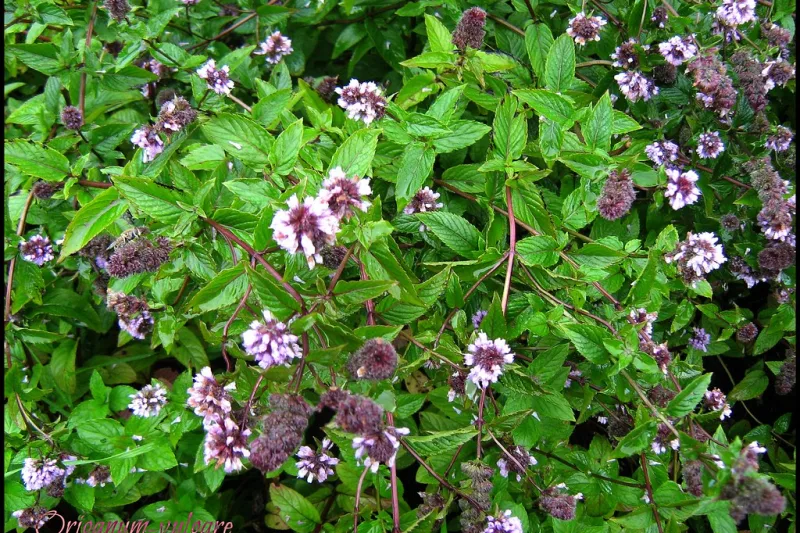

Oregano Herb (Origanum vulgare): Benefits, Uses and How to Prepare It
IMPORTANT: Oregano is generally safe when used as a spice or as a tea in everyday amounts. However, oregano essential oil is highly concentrated and should never be used undiluted, whether internally or on the skin. Pregnant women should avoid consuming oregano in medicinal quantities, as folk tradition regards it as a herb that stimulates uterine contractions. People who are allergic to plants in the Lamiaceae family (basil, mint, thyme, sage), those taking blood-thinning medication, or those undergoing treatment for diabetes should talk to a doctor before using oregano therapeutically. This article is for informational purposes and does not replace medical advice.
Grandmother Floarea, from the hill villages of Oltenia, had a habit that no one in the family ever questioned: every year, toward the end of July, when the oregano bloomed on the sunny slopes at the edge of the forest, she would take her bag and set out early in the morning to gather it. She said it had to be picked “when it is in flower and the sun has risen, but the earth still smells of dew,” because that is when the plant “has all its power in it.” She tied small bundles and hung them upside down in the attic, where the air was dry and dark. In winter, when someone caught a cold or had a cough, she would brew a fragrant tea from that dried oregano, with a warm aroma that, as she swore, “cleared the chest better than any medicine.”
Later I learned that what grandmother called by its old Romanian name is the very same plant the world knows today by its Italian name, “oregano” — the spice that is indispensable on pizza and in Mediterranean sauces. I found it fascinating that a herb so ordinary to modern cooking was, in fact, a remedy respected by entire generations of Romanian country folk. This dual identity — savory spice and folk medicine — makes oregano one of the most precious plants we can keep within reach.
Oregano, scientifically named Origanum vulgare, is a perennial aromatic plant in the Lamiaceae family, the same family that includes mint, thyme, and basil. It grows wild on sunny hills, at the edges of forests, in meadows, and on rocky ground throughout Europe, including across all of Romania. The name “oregano” comes from the Greek oros ganos, meaning “joy of the mountain” — a poetic name that reflects both where it grows and the inviting fragrance it releases. For centuries, people have valued oregano not only for its aroma but also for its antimicrobial, digestive, and expectorant properties.
Table of Contents
- What oregano is and where it grows
- Composition and active principles
- Health benefits of oregano
- Traditional uses in folk medicine
- How to prepare oregano: tea, tincture, flavored vinegar
- Dosage and method of use
- Oregano in the kitchen
- How to harvest and store it
- Practical tips and common mistakes
- Conclusion
- Frequently Asked Questions
What oregano is and where it grows
Oregano is a perennial herbaceous plant that reaches heights of 30 to 80 centimeters. Its stems are upright, branched at the top, and often tinged with reddish-purple. The leaves are small, oval, opposite, slightly downy, and highly aromatic when rubbed between the fingers. The peak of flowering, which usually occurs between July and September, is spectacular: the plant becomes covered in numerous small flowers, grouped in dense clusters of pink-purple, that attract bees and butterflies.
In Romania, oregano grows abundantly in hilly and mountainous areas, on sunny slopes, at the edges of oak and beech forests, on rocky hillsides, and in dry meadows. It prefers calcareous, well-drained soils and sunny locations. It is precisely these conditions — poor soil and exposure to strong sunlight — that cause the plant to develop a high concentration of essential oils, giving it its intense aroma and medicinal properties.
It is worth knowing that the aroma and potency of wild Romanian oregano may differ from those of oregano cultivated in the Mediterranean region. Varieties grown in the warm, dry climates of Greece and Italy tend to have a more penetrating aroma and a higher content of volatile oils. Nevertheless, our wild oregano remains a valuable plant, used since ancient times both in food and in household remedies.
Composition and active principles
The strength of oregano lies in its rich essential oil, which is the key to most of its benefits. Studies suggest that the main compounds responsible for the plant’s properties are:
- Carvacrol — considered the star compound of oregano, credited with most of its antimicrobial and antioxidant properties. Carvacrol is what gives the plant its warm, slightly spicy aroma.
- Thymol — a compound related to the one found in thyme, known for its antiseptic and antifungal action.
- Para-cymene and gamma-terpinene — terpenes that contribute to the plant’s aroma and support the antioxidant action of the other compounds.
- Phenolic acids (rosmarinic acid, caffeic acid) — substances with strong antioxidant activity.
- Flavonoids — plant pigments associated with anti-inflammatory effects and protection of blood vessels.
- Vitamins and minerals — oregano contains appreciable amounts of vitamin K, vitamin E, iron, calcium, and manganese, especially when consumed as a fresh green.
This combination of volatile oils and antioxidants explains why oregano has been used since ancient times as a “cleansing” and strengthening herb, especially during the cold season.
Health benefits of oregano
Antimicrobial and antibacterial support
The best-known and most studied property of oregano is its antimicrobial action. Carvacrol and thymol, the two main compounds of the essential oil, have demonstrated in laboratory conditions the ability to inhibit the growth of a wide range of bacteria and fungi. Folk tradition intuited this property long before modern research, using oregano to “cleanse” the body and to support the healing of infections. Studies suggest that oregano extracts may also have an effect on certain resistant microorganisms, which is why the plant has aroused particular interest among researchers.
Help for the respiratory system
Oregano is a trusted traditional remedy for respiratory ailments. Thanks to its expectorant properties, oregano tea helps thin secretions and make them easier to expel, easing a productive cough. The steam from an oregano infusion has been used since ancient times for inhalations in cases of colds, nasal congestion, and bronchitis. The plant’s warm aroma has a soothing effect on irritated airways.
Support for digestion
In folk medicine, oregano has always been considered a herb that is “good for the stomach.” Its bitter and aromatic compounds stimulate the secretion of digestive juices, supporting better digestion. Oregano tea is traditionally used to ease bloating, abdominal cramps, and the feeling of heaviness after heavy meals. Its carminative properties help expel intestinal gas, while its mild antispasmodic action soothes the muscles of the digestive tract.
Antioxidant action
Its wealth of phenolic acids and flavonoids makes oregano one of the most powerful sources of antioxidants among aromatic herbs. Antioxidants help the body neutralize free radicals — the unstable molecules that contribute to cellular aging and oxidative stress. Regularly including oregano in the diet can therefore be a simple and tasty way to support the overall health of the body.
Support for immunity
The combination of antimicrobial and antioxidant compounds makes oregano a natural ally of the immune system, especially during the cold season. Romanian folk tradition recommended oregano tea at the first signs of a cold, as a way to “strengthen” the body and help it cope better with infections.
Calming and antispasmodic effect
In addition to its action on digestion, oregano was also used in the past to ease certain pains. Poultices of warm oregano were traditionally applied to painful areas, and the tea was drunk to soothe mild menstrual cramps. Its pleasant aroma also has a slightly relaxing effect on the mind.
Traditional uses in folk medicine
In the Romanian peasant household, oregano had many uses. Here are some of the most widespread:
- Tea for colds and cough — the most frequent use, drunk warm, often sweetened with honey.
- Inhalations — the hot steam of a strong infusion, inhaled under a towel, to unblock the nose and soothe the chest.
- Gargle — the cooled infusion was used as a gargle for sore throats and inflammations of the mouth.
- Poultices — scalded leaves wrapped in a cloth were applied to painful joints or to abscesses.
- Aromatic baths — oregano added to bathwater for its relaxing and fragrant effect.
- Protective herb — in some regions, dried oregano was placed in cupboards and around the house, both for fragrance and to keep moths away.
How to prepare oregano: tea, tincture, flavored vinegar
Oregano tea (infusion)
This is the simplest and most commonly used method of preparation. Here are the steps:
- Place one teaspoon of dried oregano (or two teaspoons of chopped fresh herb) in a cup.
- Pour about 200-250 ml of boiling water over it.
- Cover the cup with a small plate — this step is essential, so that the valuable volatile oils do not evaporate along with the steam.
- Let it infuse for 8-10 minutes.
- Strain and drink the tea warm. You can sweeten it with a teaspoon of honey, especially if you are drinking it for a cough.
For cough and colds, 2-3 cups a day are usually drunk. The tea has a warm, slightly spicy aroma that sets it apart from ordinary sweet teas.
Oregano inhalation
- Place 2-3 tablespoons of dried oregano in a large bowl.
- Pour about a liter of boiling water over it.
- Lean over the bowl, at a safe distance to avoid scalding yourself, and cover your head with a large towel.
- Inhale the aromatic steam for 5-10 minutes, breathing deeply through the nose and mouth.
This method is highly valued for clearing the airways and soothing the chest during colds.
Oregano tincture
The tincture is a concentrated form with a long shelf life:
- Fill a clean jar halfway with dried, crushed oregano.
- Pour food-grade alcohol of about 40-50 percent over it, until it completely covers the plant.
- Close the jar and let it macerate for 2-3 weeks in a dark place, shaking it from time to time.
- Strain through cheesecloth and store the tincture in a dark glass bottle.
The tincture is used in small amounts, a few drops diluted in water, and is not given to children or pregnant women.
Oregano-flavored vinegar
For those who prefer a light culinary option:
- Place a few sprigs of fresh oregano in a bottle of apple cider vinegar.
- Let it macerate for 1-2 weeks.
- Use the flavored vinegar in salads and marinades — this way you benefit from the aroma and some of the plant’s compounds in a tasty and safe manner.
Dosage and method of use
As a general rule, oregano used as a spice in everyday food is completely safe and requires no restrictions. For medicinal use, the traditional recommendations are:
- Tea: 1 teaspoon of dried herb per cup, 2-3 cups a day, for short periods (generally no more than one to two weeks at a time).
- Tincture: a few drops (10-20), diluted in water, 2-3 times a day, for adults only.
- Oregano essential oil: extremely concentrated, used only heavily diluted and, ideally, under the guidance of a specialist. Never apply it pure to the skin or swallow it undiluted.
It is wise to take breaks between courses and not to use oregano in medicinal amounts for very long periods.
Oregano in the kitchen
Beyond its medicinal properties, oregano is one of the most versatile spices. Its warm, slightly spicy aroma pairs wonderfully with tomatoes, cheese, chicken and lamb, legumes, and roasted vegetables. Here are a few ideas for using it:
- Sprinkled over pizza, pasta, and tomato sauces.
- In marinades for meat and fish.
- Added to soups and stews, especially those with beans or lentils.
- Mixed into olive oil to flavor salads.
- In homemade bread or focaccia dough.
An important tip: dried oregano is often more aromatic than fresh, because drying concentrates the volatile oils. Add it toward the end of cooking to preserve as much of the aroma as possible.
How to harvest and store it
If you have access to wild oregano or grow it in your garden, the ideal time to harvest is just before or at the beginning of full flowering, when the concentration of essential oils is highest — exactly as grandmother Floarea used to say. Cut the sprigs from the middle of the stem, allowing the plant to regrow.
To dry it, tie the sprigs into small bundles and hang them upside down in a dry, airy place, away from direct sunlight. After a few days, when the leaves rustle to the touch, strip them from the stems and store them in an airtight jar, in the dark. Properly dried oregano keeps its aroma for about a year.
Practical tips and common mistakes
Mistake no. 1: Boiling oregano instead of infusing it. Many people put the herb directly to boil, thereby destroying the valuable volatile oils. Oregano is prepared by infusion — pouring boiling water over it and leaving it covered, not by boiling it.
Mistake no. 2: Leaving the cup uncovered during infusion. If you leave the cup uncovered, the aromatic steam that rises carries away the very beneficial compounds. Always cover the cup during infusion.
Mistake no. 3: Using pure oregano essential oil. This is a dangerous mistake. The essential oil is extremely concentrated and can cause skin burns and severe irritation of the mucous membranes. It is used only heavily diluted.
Mistake no. 4: Consuming it for very long periods. Like any medicinal herb, oregano is used in courses, with breaks. Continuous consumption in large amounts is not recommended.
Mistake no. 5: Ignoring the contraindications during pregnancy. Oregano in medicinal amounts is not recommended for pregnant women. The amount used in food, however, is safe.
Mistake no. 6: Storing it in open containers or in the light. Dried oregano loses its aroma and properties if left in open bags or exposed to light. Store it in closed jars, in the dark.
Conclusion
Oregano — the very herb that folk medicine called by its old name — is much more than a simple spice on the kitchen shelf. It is a plant with a rich tradition in Romanian folk medicine, valued for its antimicrobial, digestive, and expectorant properties. From grandmother’s warm tea for a cough, to inhalations for clearing the chest, to the antioxidants that support overall health, oregano fully earns its place as the “joy of the mountain.” Used in moderation and with respect for its contraindications, it remains one of the most accessible and tasty remedies that nature places within our reach.
Frequently Asked Questions
Are oregano and the herb my grandmother used the same plant? Yes, the traditional Romanian name refers to Origanum vulgare, the plant known internationally as oregano. Wild Romanian oregano may have a slightly milder aroma than cultivated Mediterranean varieties, but it is the same species.
Can I drink oregano tea every day? For short periods (one to two weeks), during a cold or to support digestion, oregano tea is generally safe at 2-3 cups a day. For long-term use it is wise to take breaks and, ideally, to consult a specialist.
Is oregano safe during pregnancy? Used as a spice in food, in the usual culinary amounts, oregano is safe. In medicinal amounts (strong tea, tincture, essential oil), however, it should be avoided during pregnancy, as tradition regards it as a herb that stimulates the uterus.
What is the difference between oregano and marjoram? Marjoram (Origanum majorana) is a close relative of oregano, with a sweeter and more delicate aroma. Oregano has a stronger, spicier, and more penetrating aroma. Both belong to the same botanical genus.
Can I use oregano essential oil internally? Oregano essential oil is very concentrated and potentially irritating. It should not be used internally undiluted. If you wish to use it, do so only heavily diluted and, preferably, under the guidance of a specialist.
Is fresh or dried oregano better? It depends on the purpose. For cooking, dried oregano often has a more concentrated aroma. For tea, both versions work well. For salads and fresh dishes, freshly picked green oregano has a distinctive fragrance.
Does oregano help with a sore throat? Folk tradition recommends gargling with cooled oregano infusion for sore throats, thanks to its antiseptic and anti-inflammatory properties. Warm tea with honey is also soothing for an irritated throat.
How do I recognize wild oregano in nature? Oregano has branched, often reddish stems, small, oval, highly aromatic leaves, and pink-purple flowers grouped in dense clusters that appear in summer. The surest sign is the intense, characteristic aroma it releases when you rub the leaves between your fingers.