
Peppermint: Benefits, Uses, Preparation and Side Effects
IMPORTANT: Peppermint is generally safe when consumed in ordinary amounts, as a tea or culinary herb. However, peppermint essential oil is highly concentrated and should NEVER be applied undiluted to the skin or taken internally without guidance. Peppermint can worsen gastroesophageal reflux (heartburn) in susceptible people because it relaxes the esophageal sphincter. Peppermint oil should not be given to infants and young children (menthol can trigger laryngeal spasm). People with gallstones, hiatal hernia, those taking medications metabolized by the liver, or women who are pregnant or breastfeeding should talk to their doctor before using peppermint in therapeutic amounts. Peppermint is not a substitute for medical treatment.
Grandmother Veta, who lived in a village in the Olt valley, had an enormous bush of mint right beside the well, where the soil stayed perpetually moist. She used to say, “You don’t plant mint — you invite it, and afterward it never leaves.” She was right: once it took root, the plant spread across the entire garden, so that by July the whole yard smelled of coolness. Whenever someone came to her with a bloated belly after too rich a meal, with a headache, or simply worn out by the summer heat, she would pluck a few leaves, rub them between her fingers to release the aroma, and pour boiling water over them. “Drink it slowly, as hot as you can stand, and sit quietly for a quarter of an hour,” she would say. Most of the time it worked — not because she was a witch, but because peppermint is one of the best-documented soothing herbs for the stomach in the entire world.
Mint (the genus Mentha) is an aromatic perennial herb in the Lamiaceae family, the same family as basil, thyme, sage, and lemon balm. There are dozens of species and countless hybrids, but the best known and most widely used are peppermint (Mentha × piperita) and spearmint (Mentha spicata). Peppermint is actually a natural hybrid between water mint and spearmint, and it is far richer in menthol — the compound that gives it that unmistakable cooling sensation. Used for thousands of years in folk medicine across ancient Egypt, Greece, Rome, and later in households throughout Europe, peppermint has remained to this day a symbol of freshness, easy digestion, and a clear mind.
Table of Contents
- What peppermint is and where it grows
- Composition and active compounds
- Health benefits
- Traditional uses
- How to prepare peppermint: tea, tincture, inhalations
- Dosage and administration
- Peppermint in the kitchen and daily life
- Practical Tips and Common Mistakes
- Conclusion
- Frequently Asked Questions
What peppermint is and where it grows
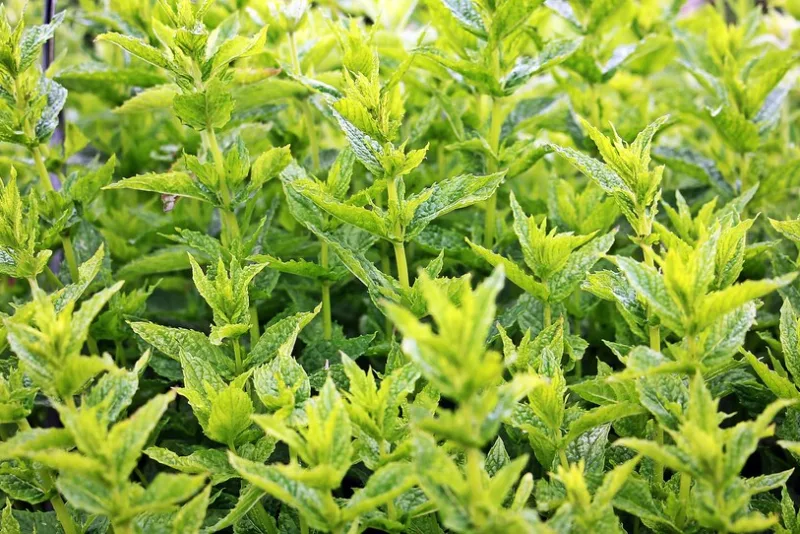
Peppermint is a perennial herbaceous plant that forms dense clumps, with square stems (a hallmark of the Lamiaceae family) and opposite, oval leaves with serrated margins and a slightly crinkled surface. The leaves are covered with microscopic glands that hold the volatile oil — when you crush them between your fingers, these glands rupture and release the powerful menthol scent. The flowers are small, white-pink or lilac, clustered in spikes at the tips of the stems, and appear in midsummer.
Mint is an extremely vigorous, even invasive, plant under good conditions. It prefers moist, humus-rich soils and partially shaded spots, although it will grow in full sun if given enough water. It spreads mainly through stolons (creeping rhizomes that travel underground), which is why a single plant can colonize a considerable area in a single season. For this reason, many gardeners grow it in pots or contained beds so it does not smother neighboring plants.
Mint grows both wild — in damp places, along watercourses, and in meadows — and cultivated, in gardens and on whole fields destined for industry. Leaves are ideally harvested just before flowering, in the morning after the dew has lifted, when the concentration of volatile oils is at its peak. The leaves are then dried in the shade, in a thin layer, protected from direct sunlight, which would destroy their aroma.
Composition and active compounds
What makes peppermint so special is the richness of its volatile oil. The main components are:
- Menthol — the terpene alcohol that produces the cooling sensation by stimulating the cold receptors in the skin and mucous membranes; it has antispasmodic, mild analgesic, and decongestant properties.
- Menthone — a ketone with a fresh aroma, present alongside menthol.
- Menthyl acetate — responsible for the sweet, fruity note of the aroma.
- Cineole (eucalyptol), limonene, pinenes — terpenes that contribute to the expectorant and aromatic effect.
Beyond the volatile oil, mint leaves contain flavonoids (such as luteolin, hesperidin, and menthosides), phenolic acids (especially rosmarinic acid), mildly astringent tannins, vitamins (A, C, some of the B complex), and minerals such as potassium, calcium, magnesium, and iron. Rosmarinic acid and the flavonoids have recognized antioxidant effects, which explains part of the plant’s protective properties.
Studies suggest that menthol acts on the smooth muscle of the digestive tract, relaxing it and thereby reducing spasms. Menthol is also credited with soothing the sensation of nausea and with opening the airways through the sensation of “freer” breathing.
Health benefits
Supports digestion and soothes the stomach
The best-known and best-supported benefit of peppermint is digestive. Menthol relaxes the smooth muscle of the stomach and intestines, which helps reduce cramps, bloating, and the feeling of fullness after heavy meals. Folk tradition uses peppermint tea for exactly this purpose — a cup drunk after a rich meal “settles the food.” Studies suggest that peppermint oil, taken as enteric-coated capsules, can significantly help people with irritable bowel syndrome (IBS), reducing abdominal pain and bloating.
Eases nausea
The aroma and antispasmodic effect of mint can calm the sensation of nausea, whether from motion sickness, pregnancy-related nausea (with caution and medical advice), or discomfort following certain treatments. Many people find that simply inhaling the scent of fresh mint or sipping a little warm tea settles their stomach.
Eases breathing and clears nasal passages
The cooling sensation produced by menthol creates the impression of easier breathing and helps decongest a stuffy nose. Mint inhalations are a classic remedy for colds and flu with nasal congestion. This is why menthol is a frequent ingredient in chest rubs, throat lozenges, and nasal drops.
Relieves tension headaches
Applied externally, as a heavily diluted oil massaged onto the temples and forehead, peppermint can ease tension-type headaches. The cooling sensation and the mild analgesic effect of menthol relax and distract from the pain. Tradition also recommended simply placing a crushed fresh leaf on the temple.
Freshens breath and supports oral health
It is no accident that mint is the favorite flavor for toothpaste and chewing gum. Beyond its pleasant aroma, mint has mild antibacterial properties that may help combat the bacteria responsible for bad breath. A gargle with mint infusion refreshes and cleanses the mouth.
Calming and mind-clearing effect
Although mint is not a sedative, many people use it for its gentle “awakening” effect — the fresh aroma reduces the feeling of mental fatigue and helps with concentration. A warm cup of mint tea in the evening, on the other hand, has a soothing effect through the warm, relaxing ritual it involves.
Antioxidant and anti-inflammatory properties
The rosmarinic acid and flavonoids in the leaves help neutralize free radicals and reduce mild inflammation. These effects are more a matter of general health support than targeted treatments, but they are part of the plant’s overall value.
Traditional uses
In traditional rural households, mint always held a place of honor. It was never missing from the chest of dried herbs put away for winter, alongside linden, chamomile, and St. John’s wort. Here are some of the traditional uses:
- For the stomach and “a chill in the belly”: warm mint tea, sipped in small amounts.
- For headaches: crushed fresh leaves placed on the temples, or a compress with cold infusion.
- For colds: steam inhalations with mint, or tea sweetened with honey.
- In the kitchen: with roast lamb, in summer salads, in yogurt-garlic sauces, in lemonade, and in sweets.
- For freshening the home: bunches of dried mint hung in the pantry and cupboards, both for the aroma and to keep moths and certain insects at bay.
- In herbal baths: a handful of mint in the bathwater for a cooling, relaxing effect on sweltering days.
How to prepare peppermint: tea, tincture, inhalations
Peppermint tea (infusion)
The simplest and most common form of preparation.
- Put one teaspoon of dried mint leaves (or one tablespoon of fresh leaves) into a cup.
- Pour over them 250 ml of boiled water, but not violently boiling — the optimal water temperature is around 90-95°C (195-205°F).
- Cover the cup with a small saucer (very important — otherwise the volatile oils, the ones that do all the work, evaporate along with the steam).
- Let it steep for 5-7 minutes.
- Strain and drink warm. You can sweeten it with a little honey once the tea has cooled slightly (honey should not be added to boiling water).
For digestion, the tea is ideally drunk after a meal. For a more refreshing summer drink, the infusion can be left to cool and served over ice with a slice of lemon.
Peppermint tincture
A tincture is a concentrated form, preserved in alcohol, useful for keeping mint on hand all year.
- Half-fill a clean jar with lightly bruised fresh mint leaves (or one-third full with dried leaves).
- Pour over them food-grade alcohol of 40-50% (80-100 proof), such as good-quality vodka, until the plants are fully covered.
- Close the jar and let it macerate for 2-3 weeks in a dark, cool place, shaking it daily.
- Strain through cheesecloth, squeeze the plant matter well, and store the tincture in dark glass bottles.
It is usually taken as 10-20 drops diluted in a glass of water, once or twice a day.
Mint inhalations
For a stuffy nose and colds:
- Put a handful of mint leaves (or a few drops of essential oil, if you have it) into a bowl of hot, steaming water.
- Lean over the bowl, at a safe distance so you don’t scald yourself, and cover your head with a towel.
- Inhale the fragrant steam for 5-10 minutes, with your eyes closed.
Caution: menthol inhalations should not be used with young children.
Cold compress for headaches
Soak a clean cloth in cold mint infusion and apply it to the forehead and temples for 15-20 minutes.
Dosage and administration
For general use, 2-3 cups of mint tea per day are considered safe for a healthy adult. For digestive discomfort, the tea is drunk after meals. The tincture is taken in doses of 10-20 drops, once or twice a day, diluted in water.
Peppermint essential oil is an entirely different matter: it is extremely concentrated and should never be taken internally without guidance, nor applied undiluted to the skin. For external use, always dilute it in a carrier oil (such as almond or coconut oil), typically 1-2 drops per teaspoon of carrier oil.
As a general rule, mint as a tea and culinary herb is safe over the long term, but concentrated forms (oil, capsules) should be used in short courses and with caution.
Peppermint in the kitchen and daily life
Mint is not only a remedy but also a versatile culinary ingredient. In Mediterranean and Eastern European cooking it appears with roast lamb and mutton, in summer salads, in yogurt sauces, in lemonade, and in desserts. A few fresh leaves added to a tomato salad or a cold cucumber soup completely transform the dish.
For cooling drinks, mint is the star of homemade lemonade and infused waters — simply put a few bruised leaves in a pitcher of cold water with slices of lemon or cucumber, and chill for an hour. In summer, nothing is more refreshing.
In addition, fresh mint can be frozen: finely chopped into ice cube trays, covered with water or olive oil, it becomes a handy reserve for winter. Dried leaves keep in airtight jars, protected from light, and retain their aroma for 6-12 months.
Practical Tips and Common Mistakes
Mistake no. 1: Steeping mint uncovered. This is the most common mistake. The volatile menthol oils — the very substances that give the digestive effect and the aroma — evaporate quickly with the steam. Always cover the cup while steeping.
Mistake no. 2: Using violently boiling water. Water that is too hot can destroy some of the delicate compounds and make the tea more bitter. Let the water “settle” for a few seconds after boiling.
Mistake no. 3: Drinking mint tea despite frequent heartburn. Because it relaxes the esophageal sphincter, peppermint can worsen gastroesophageal reflux. If you notice that heartburn intensifies after the tea, stop drinking it.
Mistake no. 4: Applying peppermint essential oil undiluted. Concentrated menthol can cause irritation, a burning sensation, or allergic reactions on sensitive skin. Always dilute it.
Mistake no. 5: Giving mint tea or oil to young children. Menthol can cause breathing spasms in infants and very young children. Avoid it entirely at this age.
Mistake no. 6: Letting mint take over your garden. If you plant it freely in the ground, mint will smother other plants within a few seasons. Grow it in pots or contained beds.
Mistake no. 7: Drying the leaves in the sun. Direct light destroys the volatile oils. Dry mint in the shade, in a well-ventilated spot.
Conclusion
Peppermint is a humble-looking plant but a generous one in its benefits: it aids digestion, calms nausea, eases breathing, freshens the mouth, and clears the mind, all with an aroma almost everyone loves. It is one of the safest and most versatile medicinal herbs, easy to grow and prepare at home. With a few simple precautions — especially attention to reflux, young children, and the concentrated essential oil — peppermint deserves a place of honor both in the natural medicine cabinet and in every household kitchen. As Grandmother Veta used to say, once invited into the garden, mint remains a faithful friend for every summer that follows.
Frequently Asked Questions
How many cups of mint tea can I drink per day? For a healthy adult, 2-3 cups a day are generally safe. If you use it specifically for digestion, drink a cup after heavier meals. Avoid excessive long-term consumption of very concentrated forms.
Does mint really help with bloating and cramps? Yes, this is one of the best-documented effects of peppermint. Menthol relaxes the smooth muscle of the digestive tract, reducing spasms and the feeling of bloating. Studies suggest that peppermint oil in capsules can help with irritable bowel syndrome.
Can I drink mint tea if I have heartburn? With caution. Mint relaxes the sphincter between the esophagus and the stomach, which can encourage acid reflux. If you often suffer from heartburn or reflux, mint may worsen your symptoms — pay attention to how you react and stop if necessary.
Is mint safe during pregnancy? Mint tea in ordinary amounts is generally considered safe and sometimes even helpful against pregnancy nausea, but concentrated forms (essential oil, capsules) should be avoided. Always consult your doctor or midwife before using mint therapeutically during pregnancy.
What is the difference between peppermint and spearmint? Peppermint (Mentha × piperita) is richer in menthol, has a more intense and “colder” aroma, and is preferred for therapeutic effects. Spearmint (Mentha spicata) is sweeter and milder, used more often in cooking and drinks.
Can I use fresh mint instead of dried? Yes. Use roughly two to three times as much fresh mint as dried, because fresh leaves contain water and have a lower concentration per unit of volume. Bruise them gently before steeping to release the aroma.
How long does dried mint keep? Stored in airtight jars, protected from light and moisture, dried mint retains its aroma and properties for 6-12 months. After this period, the aroma noticeably fades and the effect diminishes.
Can peppermint essential oil be taken internally? Only in the form of products specifically designed for it (such as enteric-coated capsules) and ideally with guidance. Raw essential oil is very concentrated and can be irritating or even toxic in large doses. Do not swallow it directly.