
Rosemary: Benefits, Uses, Preparation and Precautions
IMPORTANT: Rosemary used as a culinary seasoning is safe for almost everyone. However, in large doses, in the form of concentrated essential oil or tincture taken in unmeasured amounts, rosemary can become problematic. Pregnant women should avoid medicinal doses (strong teas, tinctures, internal essential oil), because folk tradition and medical caution associate it with uterine stimulation. People with epilepsy, with very high blood pressure, or who are taking anticoagulant medication (such as warfarin) should talk to their doctor before using rosemary therapeutically. Rosemary essential oil should never be applied undiluted to the skin and should not be taken internally without the guidance of a specialist. In young children, rosemary essential oil should be avoided entirely around the face.
A story from grandmother’s yard
Grandma Veta had a huge rosemary bush right next to the front steps, one she had brought, she said, from a journey to the south of the country, from a village where it “grew as tall as the fence.” Every morning, before she set about her chores, she would pinch off a few tips and rub them between her fingers, then bring her palms to her nose and breathe in deeply. “That’s how I clear my head,” she would say, “so I don’t forget where I put my glasses.” We laughed at her as children, but now, when I read about the link between rosemary and memory, I realize the old woman knew a truth she had learned from experience, not from books.
That same grandmother put rosemary on the roast lamb, boiled dried sprigs in water for rinsing hair after washing, and kept a cloth pouch of dried leaves in the clothes cupboard, “so the moths stay away and it smells nice.” For her, rosemary was not merely a seasoning: it was medicine, perfume, tonic, and memory, all in one. This Mediterranean plant, which arrived long ago in our lands too, holds an entire folk pharmacy within its slender leaves.
What is rosemary
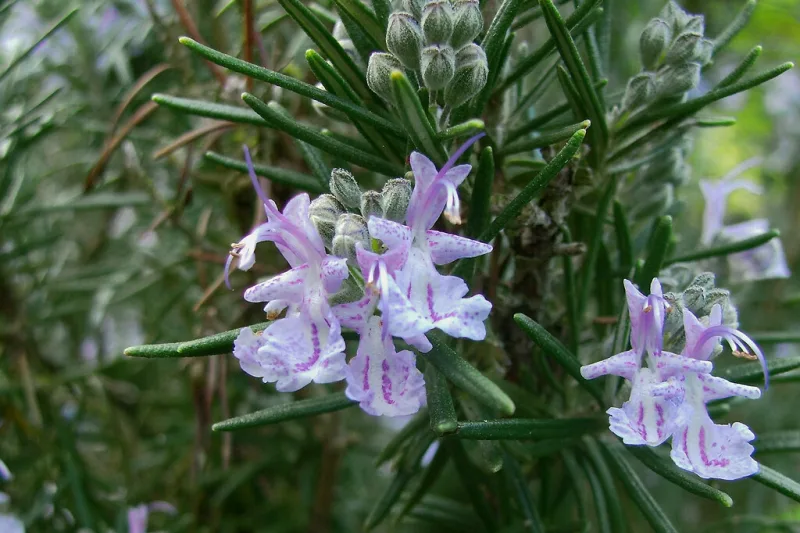
Rosemary (Rosmarinus officinalis, recently reclassified botanically as Salvia rosmarinus) is a perennial, evergreen shrub from the Lamiaceae family — the same family that includes sage, thyme, basil, and mint. Its Latin name translates loosely as “dew of the sea,” a poetic allusion to its natural coastal habitat, where it grows on cliffs swept by the salty breeze of the Mediterranean. Its leaves are narrow, needle-like, dark green on top and silvery underneath, while the small flowers, lilac or bluish, appear in spring and summer, attracting bees.
Prized since Antiquity by Greeks and Romans, rosemary was considered a plant of memory and fidelity. Greek students wove sprigs of rosemary into their hair during exams, and the plant appeared at both weddings and funerals as a symbol of remembrance. Beyond the symbolism, generations of herbalists have used rosemary for its tonic, digestive, and circulation-stimulating effects, while Mediterranean cuisine turned it into one of the best-loved aromatic seasonings.
Table of Contents
- Composition and active principles
- Health benefits of rosemary
- Traditional uses
- How to prepare rosemary (tea, tincture, oil, vinegar)
- Dosage and administration
- Rosemary for hair and skin
- Rosemary in the kitchen and lifestyle
- Practical tips and common mistakes
- Precautions and contraindications
- Conclusion
- Frequently Asked Questions
Composition and active principles
Rosemary’s power lies in the richness of its volatile oils and polyphenolic compounds. Among the main constituents recognized traditionally and mentioned in the specialist literature are:
- Rosmarinic acid — a polyphenol with antioxidant and anti-inflammatory properties, present abundantly and giving the plant its very name.
- Carnosic acid and carnosol — phenolic diterpenes considered responsible for a good part of the plant’s protective effects.
- Cineole (1,8-cineole), camphor, alpha-pinene, and borneol — components of the essential oil that explain the strong, balsamic aroma and part of its action on breathing and circulation.
- Flavonoids (such as apigenin and diosmin) — with an antioxidant role.
- Triterpenic acids (ursolic acid, oleanolic acid).
These compounds act synergistically. Studies suggest that rosemary extracts have a remarkable antioxidant capacity, which is why rosemary is also used as a natural preservative in the food industry. Its characteristic woody-resinous aroma, with notes of pine and camphor, comes precisely from this cocktail of volatile oils.
Health benefits of rosemary
Support for memory and concentration
Rosemary’s most famous reputation is that of the “plant of the mind.” Folk tradition has always associated it with memory, and modern studies suggest that simply inhaling its aroma might have a mild stimulating effect on attention and alertness. The volatile components, especially 1,8-cineole, are being researched for their role in supporting cognitive function. Many people keep a pot of rosemary on their desk for exactly this reason: a leaf rubbed between the fingers and smelled offers a sense of freshness and mental clarity.
Supporting digestion
Rosemary is a well-known digestive tonic. In herbalist tradition, rosemary tea is drunk after heavy meals to ease bloating, to stimulate appetite, and to support bile flow. Its bitter, aromatic compounds gently stimulate digestive secretions, helping to break down fats. This is why rosemary pairs so well with fatty roasts of lamb, pork, or poultry — not only for the flavor, but also to make the food easier to digest.
Stimulating circulation
Traditionally, rosemary is considered a “warming” plant that gets the blood moving. Rosemary baths and rubs with diluted rosemary oil have been used since ancient times for cold feet and hands, for muscle fatigue, and for the sensation of heaviness in the limbs. This tonic, energizing effect makes it an ally of sluggish mornings and states of exhaustion.
Antioxidant properties
Thanks to its high content of rosmarinic acid, carnosic acid, and flavonoids, rosemary is one of the most powerful antioxidant herbs in the kitchen. Antioxidants help the body cope with oxidative stress, a process involved in cellular aging. Consumed regularly as a seasoning, rosemary contributes to a daily intake of protective compounds.
Support for breathing
Rosemary’s balsamic aroma, rich in cineole, has always been valued for mild respiratory complaints. Rosemary inhalations or warm tea are traditionally used to ease breathing during seasonal colds and to help decongest the airways.
General tonic effect
Above any specific action, rosemary is prized as a general tonic, a plant that “lifts the spirit.” Its energizing scent is used in aromatherapy to combat mental fatigue, apathy, and feelings of sluggishness.
Traditional uses
In Romanian and Mediterranean folk medicine, rosemary has had many uses:
- Tonic tea drunk in the morning for mental clarity and energy.
- Hair rinse, to strengthen the hair, give it shine, and stimulate growth.
- Rubs and massage oils for tired muscles and joints.
- Aromatic baths, both relaxing and invigorating.
- Flavored vinegar used both in cooking and as a tonic.
- Scented pouches for cupboards, against moths.
- Rosemary wine, a traditional preparation considered a tonic for the heart and circulation.
How to prepare rosemary
Rosemary tea (infusion)
The simplest way to benefit from rosemary is the infusion.
Ingredients and method:
- Place one teaspoon of dried rosemary leaves (or a fresh sprig about 5–7 cm long) in a cup.
- Pour over it about 250 ml of boiled water that has been allowed to cool slightly (not at a violent boil, to preserve the volatile oils).
- Cover the cup with a small saucer — this step is essential, so the aromatic vapors are not lost.
- Let it infuse for 5–10 minutes.
- Strain and drink lukewarm. You may sweeten with a little honey if you wish.
This tea is usually drunk after meals, for digestion, or in the morning as a tonic.
Rosemary tincture
The tincture concentrates the active principles in alcohol and keeps for a long time.
- Fill a clean jar halfway with fresh rosemary leaves (or one-third with dried leaves).
- Cover completely with food-grade alcohol of 40–50 percent.
- Close the jar and let it macerate for 2–4 weeks, in a dark place, shaking it daily.
- Strain through cheesecloth and store the tincture in dark glass bottles.
Usually 10–20 drops diluted in a little water are used, once or twice a day, but only after consulting a specialist, especially if chronic conditions are present.
Rosemary oil (cold macerate)
This is not the concentrated essential oil, but a gentle aromatic oil, suitable for massage and for hair.
- Place rosemary leaves (preferably slightly wilted) in a jar.
- Cover with olive or sunflower oil.
- Leave it in the sun for 2–3 weeks, then strain.
Rosemary vinegar
Place rosemary sprigs in a bottle of apple cider vinegar and let it flavor for 2 weeks. Excellent in salads and, diluted, as a hair tonic.
Dosage and administration
As a general rule, rosemary used culinarily requires no dosage precaution. For medicinal use:
- Tea: 1–2 cups per day are generally considered safe for a healthy adult.
- Tincture: 10–20 diluted drops, 1–2 times per day.
- Concentrated essential oil: used exclusively externally and diluted (usually a few drops in a tablespoon of carrier oil); not taken internally without guidance.
As with any therapeutic plant, it is wise to take breaks. Herbalist tradition recommends courses of 2–3 weeks, followed by a pause.
Rosemary for hair and skin
One of rosemary’s most beloved uses is hair care. A rosemary rinse is a traditional remedy for lifeless hair. It is made by boiling a handful of rosemary in about a liter of water, leaving it to infuse until cool, then using the strained liquid for the final rinse after shampooing. Folk tradition says this strengthens the strands, adds shine, soothes the scalp, and may stimulate growth. For dark hair, rosemary also has the advantage of accentuating dark reflections.
On the skin, rosemary macerated in oil is used in toning massages, and its aroma is often included in natural cosmetic products for its invigorating effect.
Rosemary in the kitchen and lifestyle
Beyond its medicinal virtues, rosemary remains one of the world’s great seasonings. It pairs wonderfully with:
- roast lamb, pork, and chicken;
- baked potatoes and grilled vegetables;
- homemade bread and focaccia;
- flavored oils and butter;
- meat marinades.
A sprig of rosemary placed in a bottle of olive oil turns an ordinary ingredient into a gourmet product. And having a pot of rosemary in the kitchen or on the windowsill means always having both a fresh seasoning and a plant with a tonic effect on mood — because it is hard to feel apathetic next to its energizing scent.
Practical tips and common mistakes
Mistake no. 1: Prolonged boiling of the leaves. The volatile oils responsible for the aroma and a good part of the effects evaporate during prolonged boiling. Rosemary tea is made by covered infusion, not by long, uncovered boiling.
Mistake no. 2: Confusing the essential oil with the macerate. Rosemary essential oil is extremely concentrated and is never taken internally without guidance, nor applied undiluted to the skin. Rosemary macerated in olive oil is an entirely different story, gentle and safe for external use.
Mistake no. 3: Excessive doses “to make it work faster.” More does not mean better. Large doses of medicinal rosemary can cause gastric irritation and, in extreme cases, unpleasant effects on the nervous system.
Mistake no. 4: Using it during pregnancy. As a seasoning in food, rosemary is safe, but medicinal doses (strong teas, tinctures) should be avoided during pregnancy.
Mistake no. 5: Harvesting from roadsides. Rosemary absorbs pollutants. Harvest only from clean places or buy from trusted sources.
Mistake no. 6: Improper storage. Dried leaves lose their aroma if kept in the light or in open containers. Store them in closed jars, in the dark.
Precautions and contraindications
Rosemary is safe in the quantities used in cooking. At a medicinal level, however, a few precautions must be observed:
- Pregnancy and breastfeeding: therapeutic doses should be avoided.
- Epilepsy: concentrated essential oil may, in theory, lower the seizure threshold; people with epilepsy should be cautious.
- Severe hypertension: the tonic-circulatory effect calls for caution.
- Anticoagulant treatments: rosemary may interact; talk to your doctor.
- Allergies: rare, but possible, especially in people sensitive to Lamiaceae plants.
- Young children: essential oil is not used around the face.
In the case of chronic conditions or medication, always consult your doctor before using rosemary therapeutically.
Conclusion
Rosemary is a generous plant that combines aroma with benefit. From the tonic tea drunk in the morning, to the rinse that revives the hair, to the simple leaf rubbed between the fingers to clear the mind, this Mediterranean plant has long become part of our tradition. Used in moderation and with respect for its precautions, rosemary remains a trustworthy ally of health, of the kitchen, and of good cheer. Grandma Veta was right: a rosemary bush by the house is worth more than it seems.
Frequently Asked Questions
Can I drink rosemary tea every day? For a healthy adult, one to two cups per day are generally considered safe. Still, it is wise to take periodic breaks and not turn medicinal tea into an unlimited habit. If you have chronic conditions, ask your doctor.
Does rosemary really help memory? Folk tradition has associated it with memory for thousands of years, and studies suggest that its aroma might have a mild stimulating effect on attention and alertness. It is not a miracle treatment, but a gentle, pleasant, and natural support.
How do I use rosemary for hair? Boil a handful of rosemary in a liter of water, let it infuse until cool, strain, and use the liquid as a final rinse after shampooing. Tradition says it strengthens the strands and gives shine to dark hair.
What is the difference between essential oil and rosemary macerate? The essential oil is very concentrated, obtained by distillation, and is used only externally and diluted. The macerate is vegetable oil (olive, for example) in which rosemary leaves have steeped; it is gentle and suitable for massage and hair.
Can I use fresh rosemary instead of dried? Yes. The general rule is that one teaspoon of dried herb is equivalent to about a fresh sprig of 5–7 cm. Fresh rosemary has a livelier aroma.
Is rosemary dangerous during pregnancy? As a seasoning, in the normal amounts used in food, no. But medicinal doses — concentrated teas, tinctures, internal essential oil — should be avoided during pregnancy.
How long does dried rosemary last? Stored correctly, in airtight jars, in the dark and dry, dried rosemary keeps its aroma for about a year. After that, it does not become dangerous, but it loses much of its intensity and effectiveness.
Can I keep rosemary in a pot indoors? Yes, rosemary can be grown in a pot, as long as it has plenty of sun and well-drained soil. It loves light and tolerates overwatering poorly. A bush on the kitchen windowsill gives you fresh seasoning all year round.