
Sage: Benefits, Uses and How to Prepare It
IMPORTANT: Sage (Salvia officinalis) contains thujone, a compound that can be toxic to the nervous system in large amounts and over long periods. For this reason, sage should not be taken during pregnancy or breastfeeding (it may reduce milk supply and has a mild stimulating effect on the uterus), should not be given to young children without medical advice, and should not be used in prolonged, uninterrupted courses. People with epilepsy, those taking sedatives, anticoagulants or antidiabetic medication, as well as those with hormone-dependent tumors, should speak to a doctor before using sage internally. Sage essential oil must never be swallowed. This article is for informational purposes only and does not replace medical advice.
A velvety leaf from grandmother’s garden
Aunt Veta, from a village at the foot of the hill, kept a bed of sage in front of her house that she tended as if it were a member of the family. She used to say that “the plant with the velvety leaf” had saved her countless times. Whenever one of the grandchildren came home from school with a red, raspy throat, she would pick a few leaves, steep them in a mug, let the liquid cool a little and have the child gargle until “it felt like it was burning.” More often than not, the pain eased by the next day.
Later, when she grew older and her nights began to be troubled by sweats that woke her from sleep, Aunt Veta turned once again to her sage. In the evening she would drink a cup of warm, slightly bitter tea, saying that it “dried her out from the inside just enough.” The neighbors looked at her with a certain admiration, because the old name of the plant felt as though it came from another world, from a time when every housewife knew what to gather and when. Her story is not a medical prescription, but a testimony to how deeply rooted sage is in folk tradition.
What is sage
Sage, known botanically as Salvia officinalis and commonly as garden sage or common sage, is a small perennial shrub in the Lamiaceae family, the same family as mint, thyme and basil. It originates in the Mediterranean region, where it grows wild on sunny, rocky hillsides, but it has long been naturalized in gardens throughout Europe. Its Latin name comes from the verb salvare, “to save” or “to heal,” a sign of the prestige this plant has enjoyed since antiquity. The Romans gathered it with a true ceremony, and in the Middle Ages there was a famous saying: “Why should a man die who has sage in his garden?”
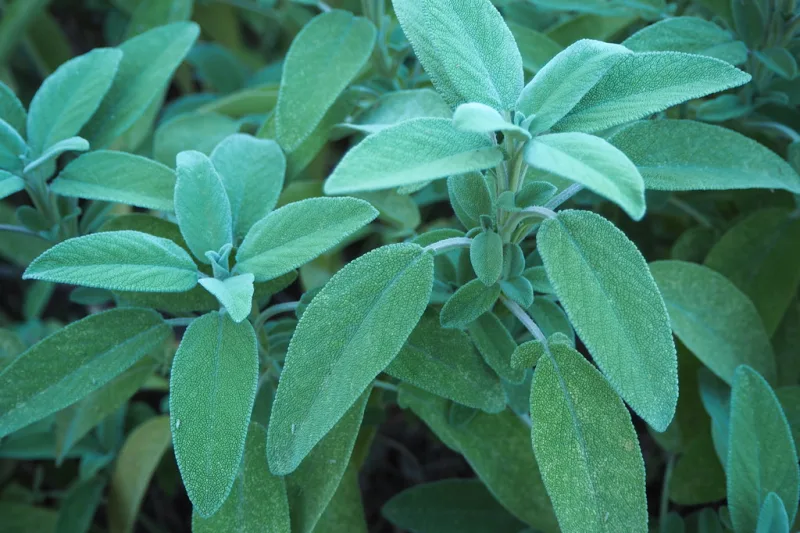
Sage leaves are easy to recognize: elongated and oval, with a wrinkled surface covered in fine down that gives them a silvery-green hue and a velvety texture. They have a strong, aromatic, slightly camphor-like scent and a bitter, astringent taste. In summer, the plant produces small, violet-blue flowers grouped in spikes, much sought after by bees. Both in the kitchen and in the traditional apothecary, the part used is the leaf, ideally harvested just before or at the start of flowering, when the content of aromatic oils is at its peak.
Table of Contents
- Composition and active principles
- Health benefits
- Traditional uses
- How to prepare sage (step-by-step recipes)
- Dosage and administration
- Sage in the kitchen and in everyday life
- Practical tips and common mistakes
- Conclusion
- Frequently Asked Questions
Composition and active principles
The power of sage lies in the richness of its essential oil and its polyphenolic compounds. The leaves contain a volatile oil composed mainly of thujone (alpha and beta), cineole (eucalyptol), camphor and borneol — substances responsible both for the intense aroma and for the antiseptic and antispasmodic effects. Thujone is, at the same time, the active principle that calls for caution, because in large doses it becomes neurotoxic.
In addition to the essential oil, sage is rich in phenolic acids, especially rosmarinic acid and caffeic acid, recognized for their antioxidant and anti-inflammatory properties. It also contains flavonoids (apigenin, luteolin), tannins that explain the astringent effect so useful in gargles, bitter principles that stimulate digestion, as well as small amounts of vitamins (A, the B complex, vitamin C, vitamin K) and minerals such as calcium, magnesium, potassium and iron. This combination of aromatic oils, tannins and antioxidants makes sage a plant with complex action, especially on the mucous membranes and the body’s secretions.
Health benefits
Folk tradition and the observations of herbalists attribute a wide range of uses to sage. Modern studies suggest that many of these have a real basis in the plant’s compounds, although the effects vary from person to person.
Support for the throat and mouth
This is probably the oldest and most appreciated use of sage. Thanks to its astringent tannins and antiseptic essential oil, gargling with sage infusion has always been used to soothe sore throats, hoarseness, inflamed gums and mouth ulcers. The astringency “tightens” the irritated mucous membranes, while the aromatic components help fight surface microbes. This is why sage is still included today in many products for oral and throat hygiene.
Regulating excessive sweating
Sage is renowned for its anti-sweating effect. Tradition recommends it for people who sweat heavily, especially at night, and for women in menopause, when hot flushes and night sweats become troublesome. Studies suggest that sage may reduce the intensity of these symptoms, which is why it is one of the classic plants recommended during this stage of life. The effect is not immediate but builds up gradually, after a few days of use.
Support for digestion
Like many bitter aromatic plants, sage stimulates digestive secretions and helps relieve bloating, mild cramps and the feeling of heaviness after rich meals. The bitter principles “wake up” the stomach and liver, while the essential oil has a mild antispasmodic effect on the intestinal muscles. A cup of warm sage tea after a fatty meal is a traditional habit in many regions.
Antioxidant effect and memory support
The rosmarinic acid and flavonoids in sage have antioxidant properties, helping to neutralize free radicals. In traditional medicine, sage has always been associated with “clearing the mind” and with memory — it is no coincidence that the English used to say a garden with sage keeps the mind sharp. Modern studies suggest a possible role for sage in supporting cognitive function, although research is still ongoing.
Skin and hair care
Applied externally, a concentrated sage infusion has a mild astringent and antiseptic effect, traditionally used for oily skin, enlarged pores and minor irritations. Rinsing the hair with sage tea is an old remedy for oily hair and for strengthening the roots, and in dark-haired people it can deepen the dark shade of the hair.
Traditional uses
In the peasant household, sage had many purposes. Besides the throat gargle and the tea for sweating, dried leaves were placed in scented pillows, burned to “cleanse” the air in the house after illness, and used to smoke meat and cheeses to give them aroma and aid their preservation. In some areas, the fresh leaf was rubbed directly on the teeth and gums to freshen the breath and strengthen the gums — a kind of natural toothbrush.
Sage was also considered a “remedy plant for women,” recommended for regulating the cycle and for the period of transition toward menopause. In addition, sitz baths and compresses with sage infusion were used for minor irritations and for intimate hygiene. Many of these uses survive to this day in villages where the herbalist tradition has not died out.
How to prepare sage (step-by-step recipes)
Sage infusion (tea)
This is the simplest and most common form.
- Place one teaspoon of dried sage leaves (or 4-5 fresh leaves) in a mug.
- Pour 250 ml of hot water over them, but not water at a hard boil, so that too much essential oil does not evaporate.
- Cover the mug with a small plate — this step is essential, as it traps the volatile aromatic oils.
- Let it steep for 8-10 minutes.
- Strain and drink the tea warm, sweetened if you like with a little honey (after it has cooled below 40°C, so as not to destroy the honey’s enzymes).
Gargle for throat and mouth
- Prepare a more concentrated infusion: 2 teaspoons of sage to 250 ml of water.
- Let it steep for 10-15 minutes and strain it well.
- Let it cool to a pleasant, warm temperature.
- Gargle for 30-60 seconds, 3-4 times a day, then spit out the liquid (gargle liquid is not swallowed).
- You can add a pinch of salt for an additional effect on inflamed mucous membranes.
Sage tincture
- Place 20 g of crushed dried leaves in a clean jar.
- Pour 100 ml of food-grade alcohol at 60-70° over them.
- Close the jar and leave it to macerate for 2-3 weeks in a dark, cool place, shaking daily.
- Strain through cheesecloth and store the tincture in dark glass bottles.
- It is used diluted — a few drops in water for gargling or internally, with caution and only for short periods.
Aromatic sage vinegar
Sage leaves macerated in apple cider vinegar for two weeks yield an aromatic vinegar, excellent for rinsing oily hair (diluted in water) or as a toner for oily skin.
Dosage and administration
For internal use, the usual traditional dose is 1-3 cups of tea per day, in courses of no more than 1-2 weeks, followed by a break. Sage is not a plant for unlimited daily use, precisely because of the thujone. For gargling, the frequency can be higher, 3-4 times a day, since the liquid is not swallowed.
The tincture is taken in small doses, usually 1-2 ml diluted in water, no more than 2-3 times a day, for short periods. Regardless of the form, the basic principle of using sage is moderation: a powerful plant, very effective in small doses and for the short term, but one that should not be forced. If symptoms persist for more than a few days, medical advice is needed.
Sage in the kitchen and in everyday life
Beyond its medicinal role, sage is an exceptional seasoning. Its warm, slightly camphor-like aroma pairs wonderfully with fatty meats — pork, duck, goose — which it also helps to digest. In Italian cuisine, sage leaves fried in butter are a classic alongside pasta and gnocchi, and in autumn dishes sage accompanies pumpkin, beans and sausages.
A few simple ideas for working sage into your everyday diet: sprinkle finely chopped leaves over an omelet, add a leaf or two to the water in which you boil potatoes, flavor melted butter with sage to pour over roasted vegetables, or place a sprig in olive oil to perfume it. Used as a food seasoning, in the usual kitchen amounts, sage is safe and brings, along with flavor, a dose of antioxidants and digestive help. Growing it is, by the way, very easy: it likes sun and well-drained soil and needs little water, being a drought-resistant plant, ideal for an herb garden.
Practical tips and common mistakes
Mistake no. 1: Long, uninterrupted use. Many people, seeing that sage does them good, turn it into a daily tea for months on end. Because of the thujone, sage should be used in short courses, with breaks. It is not a plant to “drink all year round.”
Mistake no. 2: Boiling the leaves. Boiling sage over heat, instead of steeping it and leaving it covered, leads to the loss of the volatile aromatic oils — precisely the most valuable part. A covered infusion is the correct method.
Mistake no. 3: Swallowing the essential oil. Sage essential oil is very concentrated in thujone and is never taken internally. It is used only externally, highly diluted, and not even then during pregnancy or by people with epilepsy.
Mistake no. 4: Use during pregnancy and breastfeeding. This is one of the most important contraindications. Sage can affect pregnancy and reduce lactation, so it must be avoided during these periods.
Mistake no. 5: Swallowing the gargle liquid. Gargling uses a more concentrated infusion intended for local action. The liquid is spat out, not swallowed, to avoid taking too high a dose of active principles.
Mistake no. 6: Improper harvesting. Sage is gathered in dry weather, in the morning after the dew has lifted, and is dried in the shade, in a thin layer, away from direct sunlight that destroys its oils. The dried leaves are kept in closed jars, in the dark.
Conclusion
Sage is one of those plants that fully deserves the name our ancestors gave it — “the one that saves.” With its velvety leaf and strong aroma, it combines the role of throat remedy, regulator of sweating and friend of digestion with that of a noble seasoning in the kitchen. Precisely because it is so powerful, sage demands respect and moderation: small doses, short courses and attention to contraindications, especially in pregnancy. Used wisely, it remains a trustworthy ally, exactly as it was for Aunt Veta and for the generations of housewives before her. Before including it in a more serious regimen, especially if you take medication or have chronic conditions, talk to your doctor.
Frequently Asked Questions
How long can I drink sage tea without a break? In general, courses of no more than 1-2 weeks are recommended, followed by a break. Sage contains thujone, which in large amounts and over long periods can be harmful, so it should not be consumed uninterrupted for months.
Does sage really help with menopausal sweating? Tradition and some studies suggest that sage may reduce the intensity of sweating and hot flushes. The effect builds up gradually, after a few days. Still, for severe menopausal symptoms, medical advice is recommended.
Can I use sage if I am pregnant? No. Sage is contraindicated in pregnancy because of the thujone and its mild stimulating effect on the uterus. It is also avoided during breastfeeding, as it can reduce milk production.
How do I gargle correctly with sage? Prepare a more concentrated infusion (2 teaspoons to 250 ml of water), let it cool until it is warm, strain it well, and gargle for 30-60 seconds 3-4 times a day. The liquid is spat out, not swallowed.
Do fresh and dried sage have the same properties? Both are valuable. Dried sage is more concentrated in aroma and more practical for teas throughout the year, while fresh sage is excellent in the kitchen. For tea, use about one teaspoon of dried sage or 4-5 fresh leaves per cup.
Can I give sage tea to children? For young children, internal use is not recommended without medical advice, because of the thujone. Diluted sage gargle can be used for older children who already know not to swallow the liquid, but even here caution is the best rule.
Does sage interact with medications? Yes, it may interact with sedatives, anticoagulants and diabetes medication, and it may influence blood sugar levels. If you are undergoing treatment, consult your doctor before using sage internally.
How do I store sage so it does not lose its properties? Dry it in the shade, in a thin layer, away from direct sunlight, then keep it in well-sealed jars, in a dark, cool place. This way it retains its aromatic oils for a long time.