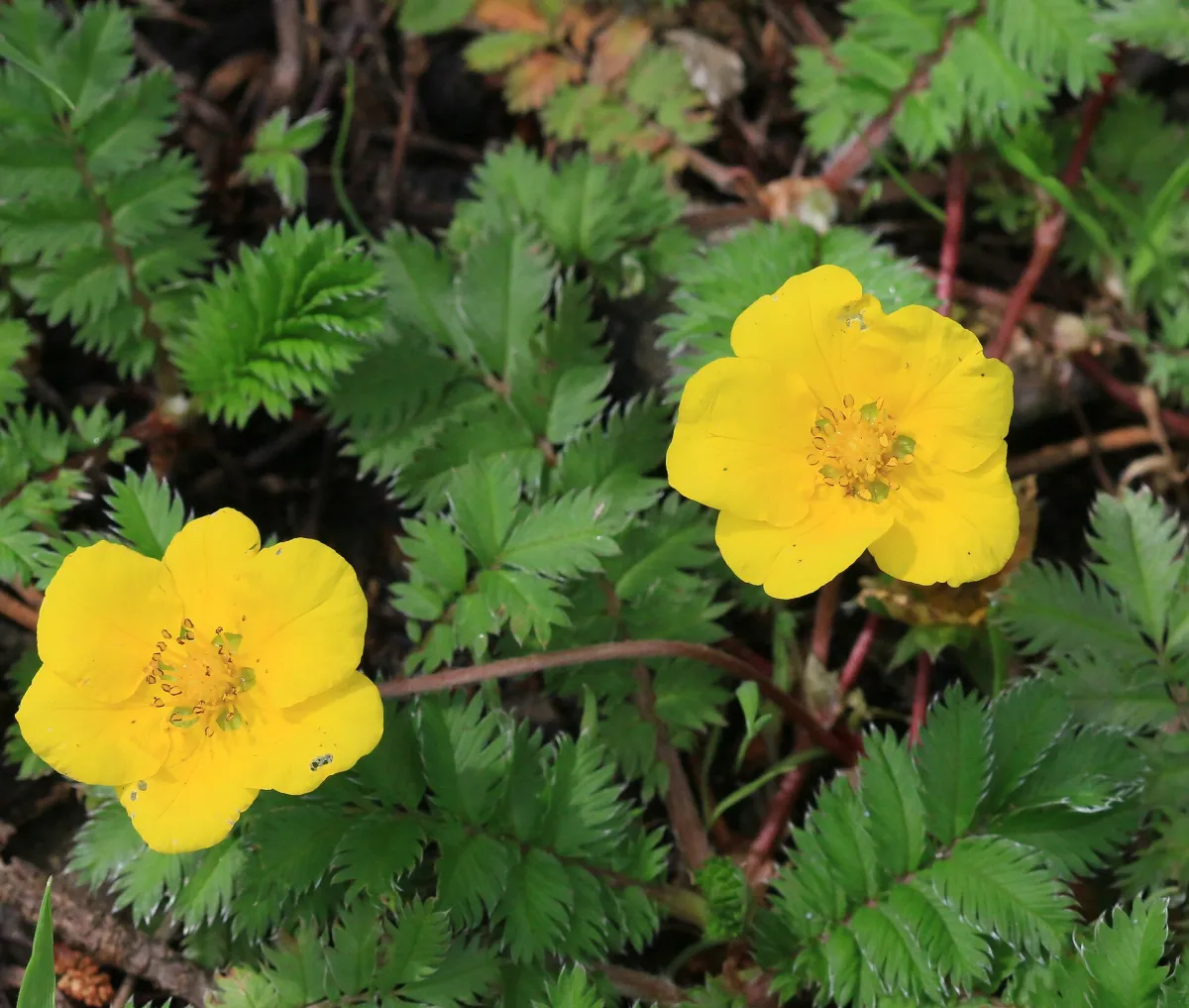
 Photo: S. Rae from Scotland, UK, CC BY 2.0, via Wikimedia Commons
Silverweed (Potentilla anserina, also classified as Argentina anserina) is a small plant with yellow flowers and silvery leaves, used in folk medicine mainly for menstrual cramps, mild diarrhoea and inflammation of the mouth and throat. It is taken as an infusion (1-2 teaspoons per cup, 2-3 times a day) or used as a gargle. Its main action comes from tannins, which are astringent, while the antispasmodic effect so praised by tradition is still poorly documented.
It is a gentle and easy-to-find herb, but it does not replace a medical check-up when period pain is severe or diarrhoea lingers. Below is everything you need to use it correctly.
Key takeaways
- The aerial parts (leaves and flowers) are used, harvested during flowering, May to August.
- It contains 5-10% tannins (mainly ellagitannins), flavonoids and phenolic acids.
- Germany’s Commission E accepted it for mild diarrhoea, inflammation of the mouth lining and as an add-on in mild dysmenorrhoea.
- For cramps: start 2-3 days before your period, 2-3 cups a day.
- In people with a sensitive stomach it can cause gastric irritation because of the tannins.
What silverweed is and how to recognise it
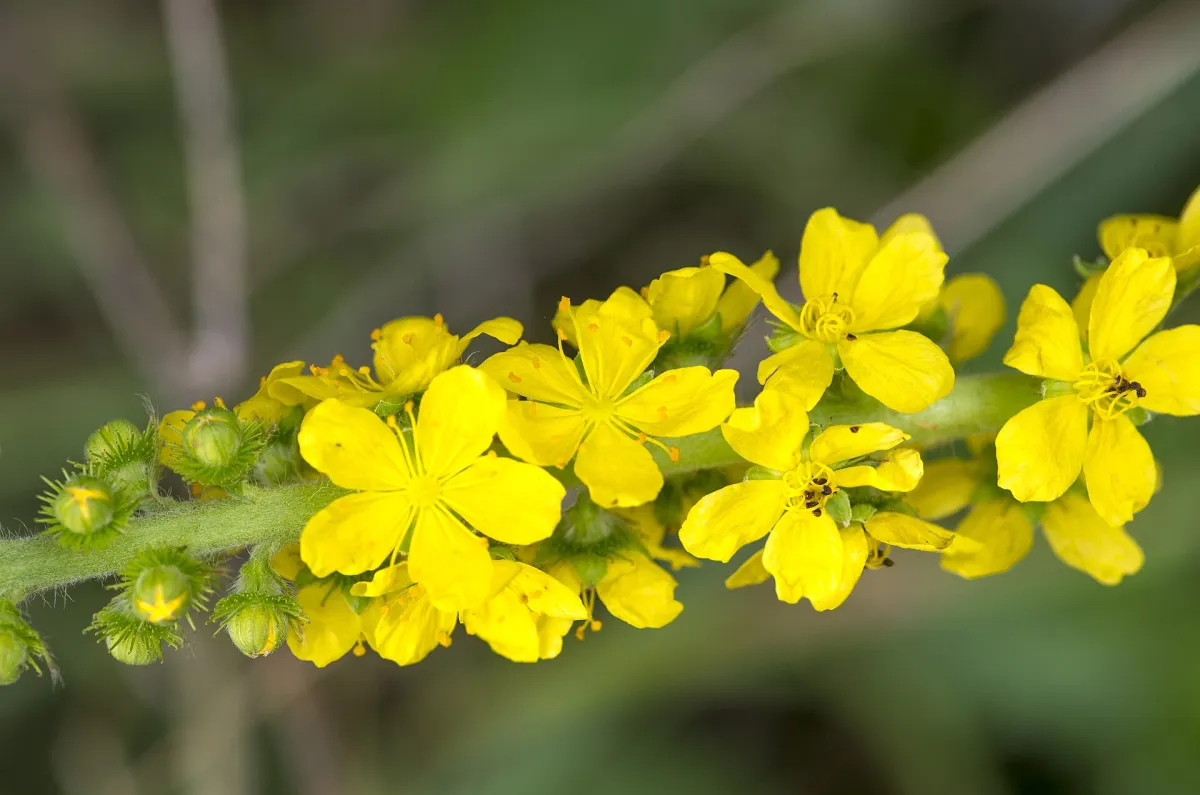
Silverweed is a low perennial in the rose family (Rosaceae) that spreads along the ground with long reddish runners, much like a strawberry. The leaves are pinnate, with 15-25 toothed leaflets, green on top and silky silver underneath, which makes them easy to spot when the wind turns them over. The flowers are solitary, golden yellow, with five rounded petals on long stalks.
It grows in damp places: country lanes, grazed meadows, riverbanks and around farmyards with poultry. That explains its old name “goose grass”, mirrored in the Latin “anserina” (from “anser”, goose). In Romanian it is called “coada-racului” (crayfish tail) and should not be confused with horsetail (Equisetum) or yarrow (Achillea), completely different plants whose Romanian names sound similar.
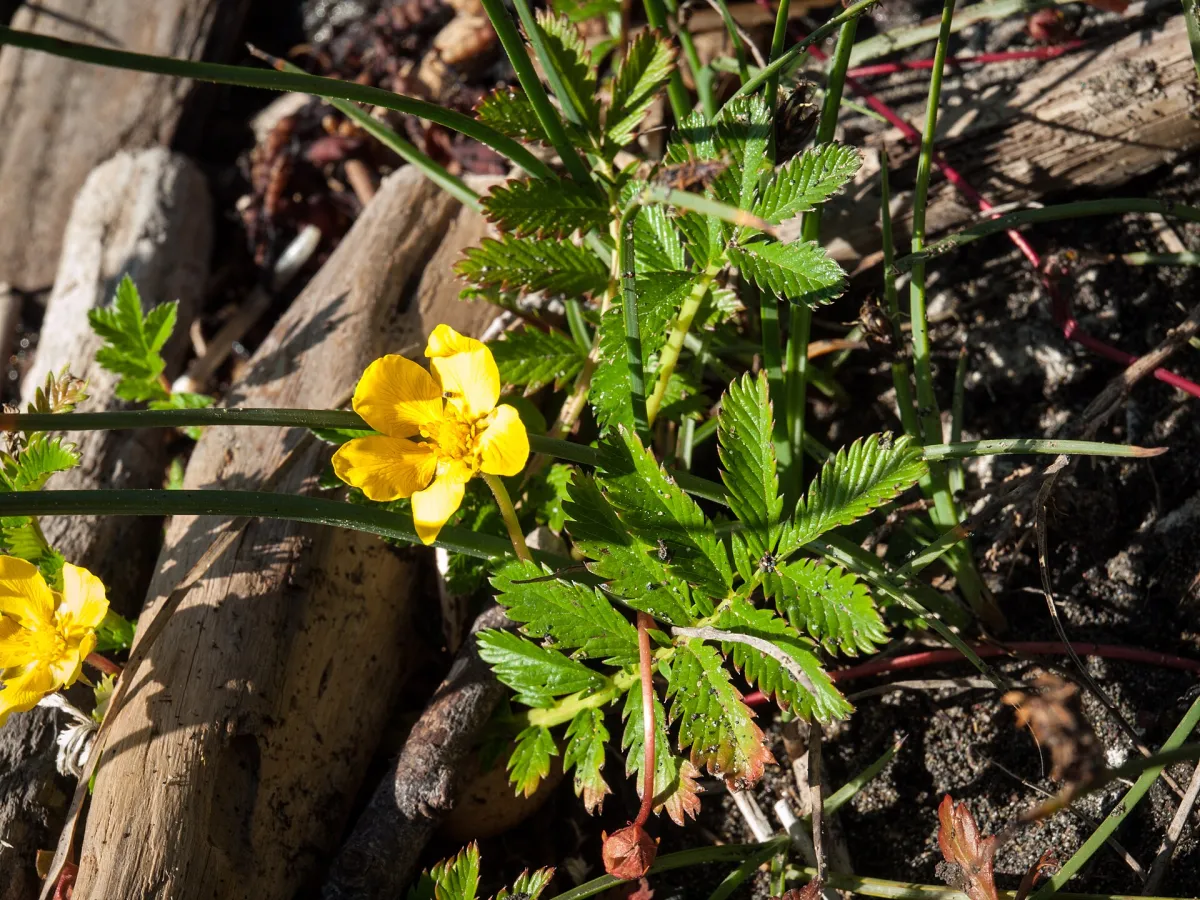 Photo: Franco Folini from San Francisco, USA, CC BY-SA 2.0, via Wikimedia Commons
Harvesting and drying
Gather the whole plant without the root from May to August, on sunny days after the dew has lifted. Dry it in the shade in a thin layer or in small hanging bunches. The dried herb should keep its silvery-green colour. The root, also rich in tannins, was traditionally used for diarrhoea but is harder to find commercially.
Composition and active compounds
- Tannins (ellagitannins, 5-10%): responsible for the astringent action that “tightens” mucous membranes and reduces secretions.
- Flavonoids (quercetin, kaempferol and their derivatives): antioxidant and anti-inflammatory.
- Phenolic acids (ellagic, caffeic): antioxidants.
- Triterpenes, phytosterols, choline: in small amounts; older literature linked choline to the antispasmodic effect, but evidence is limited.
- Mucilage and mineral salts.
Benefits: what tradition says and what studies show
Menstrual cramps
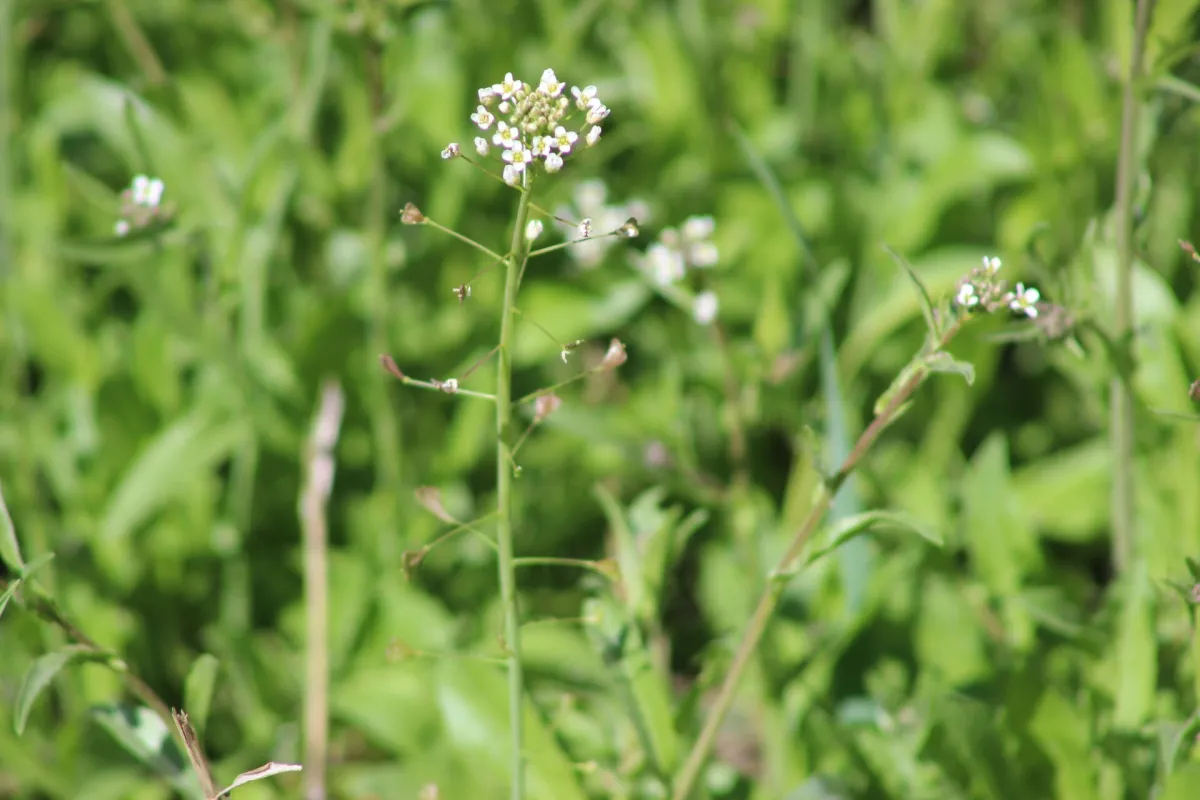
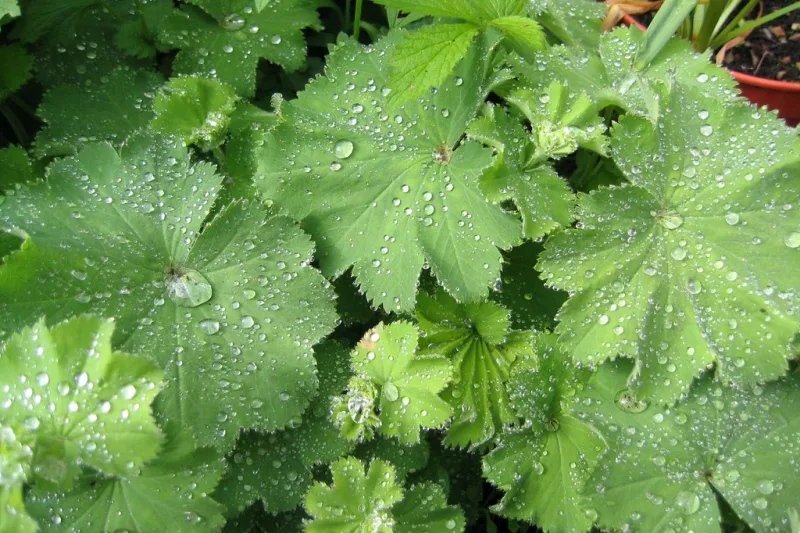
In Central European tradition silverweed is one of the “women’s herbs”, and in Germany it was even nicknamed “cramp herb”. Commission E accepted it as an adjuvant treatment for mild dysmenorrhoea based on traditional experience. Modern research is scarce: antispasmodic activity has been seen in some isolated-tissue experiments but not in others, and rigorous clinical trials are lacking. In practice, many women find it useful for mild cramps, especially combined with local warmth and the other measures described in our article on menstrual cramps. A traditional pairing is with lady’s mantle and with shepherd’s purse when periods are also heavy.
Mild diarrhoea
Here the mechanism is clearer. Tannins bind to proteins on the surface of the gut lining, forming a protective layer that reduces fluid secretion and irritation. It is the same principle behind strong black tea or dried bilberries. For mild acute diarrhoea in adults silverweed can help, provided you rehydrate properly. Rehydration advice is in our article on diarrhea.
Gargle for throat and gums
As a gargle or mouthwash, a stronger silverweed infusion has an astringent effect on inflamed gums, mouth ulcers and an irritated throat. This is a well-established use for tannin herbs, including agrimony, which is used the same way.
External uses
Compresses for superficial cuts, irritated haemorrhoids and weeping eczema: tannins dry and soothe. These are traditional uses, reasonable on intact skin or very minor lesions.
How to prepare silverweed
Infusion for internal use
- Put 1-2 teaspoons (2-4 g) of dried, chopped herb into a cup.
- Pour over 200-250 ml of boiling water.
- Cover and steep for 10 minutes.
- Strain and drink warm, preferably between meals.
For cramps: 2-3 cups a day, starting 2-3 days before your period and continuing through the first 2 days of bleeding.
Silverweed milk (traditional recipe)
In Central Europe, for cramps, 1 tablespoon of herb is simmered in 250 ml of milk for 2-3 minutes, strained and drunk warm. Milk binds part of the tannins and makes the preparation gentler on the stomach. A good option if you do not tolerate the infusion.
Gargle
2 teaspoons in 200 ml of boiling water, 15 minutes, strained and cooled. Gargle 3-4 times a day without swallowing.
Compress
Double-strength infusion (2 tablespoons per 250 ml), cooled; soak a gauze pad and apply for 15-20 minutes, twice a day.
Dosage guide
| Use | Preparation | Dose | Duration |
|---|---|---|---|
| Mild menstrual cramps | infusion 2-4 g/250 ml or simmered in milk | 2-3 cups/day | from day -3 to day 2 of the cycle |
| Mild acute diarrhoea | infusion 2-4 g/250 ml | 3 cups/day | max 3-4 days |
| Throat, gums, mouth ulcers | infusion 4-6 g/200 ml | gargle 3-4 times/day | until better, max one week |
| External compresses | concentrated infusion | 2 applications/day | a few days |
Total daily intake for internal use should not exceed 4-6 g of herb.
Contraindications and precautions
- Sensitive stomach, gastritis, reflux: tannins can irritate; choose the milk version or avoid the herb.
- Constipation: the astringent effect can make it worse.
- Pregnancy and breastfeeding: insufficient data, not recommended without medical advice.
- Children: for diarrhoea in children, rehydration and a paediatric check come first.
- Iron medicines and supplements: tannins reduce absorption; keep at least 2 hours apart.
When to see a doctor
- Period pain so strong it keeps you in bed or does not respond to usual painkillers (possible endometriosis or fibroids).
- Period pain starting for the first time after 25-30, or getting worse cycle after cycle.
- Very heavy bleeding, large clots, bleeding between periods.
- Bloody diarrhoea, high fever, dehydration (dry mouth, little urine), or diarrhoea lasting more than 3 days.
- Diarrhoea in babies, young children or frail older adults.
Common mistakes
Mixing up names. In Romanian, silverweed, horsetail and yarrow have similar folk names but are three different plants with different uses.
Drinking large amounts on an empty stomach. Tannins can cause nausea and heartburn; drink between meals, not fasting, or use the milk version.
Expecting a pill-like effect. Silverweed suits mild cramps; for intense pain it does not replace painkillers and investigations.
Forgetting rehydration in diarrhoea. Tea does not replace oral rehydration solutions.
Using it long term. Tannin herbs are for short-term use.
Conclusion
Silverweed looks modest but has a solid reputation in European tradition. Its tannins explain its usefulness in mild diarrhoea and mouth and throat inflammation, while its use for mild menstrual cramps is backed by experience, even if modern studies are few. With sensible doses, short courses and attention to your stomach it can be a real help. Severe period pain and diarrhoea that will not settle, however, are matters for a doctor.
Frequently asked questions
Does silverweed tea help with period pain? Tradition and Germany’s Commission E support it as an add-on for mild cramps. Scientific evidence is limited, but the herb is safe at usual doses. For intense pain, see a gynaecologist.
When should I start drinking it for cramps? 2-3 days before your expected period, 2-3 cups a day, and continue through the first 2 days of bleeding.
Is silverweed the same as horsetail? No. Silverweed is Potentilla anserina, with yellow flowers and silvery leaves. Horsetail is Equisetum arvense, a flowerless plant used for different purposes.
Why does my stomach hurt after the tea? Because of the tannins, which can irritate the stomach lining. Drink it after meals or try the milk version. If discomfort continues, stop.
Can I take silverweed with iron supplements? Yes, but at least 2 hours apart, because tannins reduce iron absorption.
Can children gargle with silverweed? Older children who can gargle without swallowing usually tolerate a weak infusion well. For young children, ask a paediatrician.
How long can I use silverweed? For diarrhoea, a few days. For cramps, about 5 days per cycle over several consecutive cycles, if well tolerated.
Sources and further reading
- German Commission E: monograph on Potentillae anserinae herba (Blumenthal M. et al., “The Complete German Commission E Monographs”).
- European Pharmacopoeia: monographs on tannin-containing herbal drugs.
- Specialist literature on ellagitannins and their astringent action (reviews available on PubMed).
This article is for information only and does not replace medical advice. Talk to your doctor or pharmacist before using medicinal plants, especially if you take medication or have a chronic condition.