
Speedwell: Benefits, Uses and How to Prepare It
IMPORTANT: Speedwell (Veronica officinalis) is regarded as a gentle plant in folk medicine, but it is not without precautions. Pregnant and breastfeeding women should avoid it unless advised by a doctor, because its effects during pregnancy are not sufficiently studied. People with chronic liver or kidney conditions, those undergoing drug treatments (especially anticoagulants, antidiabetic medication, or blood-pressure medicine), and young children should not use speedwell without first speaking to a doctor or pharmacist. Speedwell does NOT replace prescribed treatment and is not a remedy for serious illness; a persistent cough, prolonged fever, blood in the sputum, or breathing difficulties require urgent medical attention. Use only correctly identified plants, gathered from clean, unpolluted areas, well away from roadsides.
Grandma Veta from the village below the hill kept a wooden cupboard full of her “medicines” – bundles of dried plants tied with string and hung upside down. Among the St. John’s wort, yarrow, and linden, there always hung a small bunch with little oval leaves and tiny bluish flowers. “That’s speedwell, my dear,” she would tell me, “I put it in tea when that dry autumn cough takes hold of me, when my chest dries out from the cold.” She gathered it in early summer, from the sunny slopes of the forest, where the plant spread like a small carpet among the ferns and moss.
I remember how, on cold evenings, she would put a teaspoon of the dried herb into a cup, pour boiling water over it, and cover the cup with a small saucer “so the power doesn’t escape.” She drank the tea sweetened with a teaspoon of acacia honey and said it “opens up the chest” and “draws out the phlegm.” For Grandma Veta, speedwell was not a spectacular plant, but a trustworthy one – discreet yet present every winter, like an old friend who never lets you down.
Speedwell, known botanically as Veronica officinalis, is also called “common speedwell,” “heath speedwell,” or simply “veronica.” It is a small perennial herbaceous plant from the Plantaginaceae family, found throughout the deciduous forests, dry meadows, woodland edges, and sunny slopes of Europe, including all the hilly and mountainous regions of Romania. Folk tradition values it above all for its effects on the respiratory tract – as an expectorant and cough soother – but also as a tonic, depurative, and mildly astringent plant, used in countless “healing tea” blends.
Table of Contents
- What speedwell is and where it grows
- Composition and active principles
- Health benefits
- Traditional uses
- How to prepare it: tea, tincture, poultice
- Dosage and administration
- Harvesting, drying, and storage
- Lifestyle and practical tips for the cold season
- Practical tips and common mistakes
- Conclusion
- Frequently asked questions
What speedwell is and where it grows
Speedwell is a low-growing plant that rarely exceeds 15-30 centimeters in height. The stem is creeping at the base, rooting at the nodes, then rising gently, and is covered with fine hairs that give it a velvety appearance. The leaves are oval or elliptical, arranged opposite each other, with a slightly toothed margin and a soft, hairy texture. The small flowers are grouped in slender spikes that emerge from the leaf axils; they are bluish-lilac to pale violet in color, with darker veins, and are extremely delicate. It generally blooms from late spring to midsummer, in the months of May through August.
The plant prefers sunny or partly shaded spots and poor, acidic, well-drained soils. You will often find it in the clearings of oak and beech forests, along mountain paths, in thickets, and on dry meadows. Precisely because it is such a modest plant, many gatherers overlook it, even though it was once highly prized. In some parts of Europe, in past centuries, speedwell leaves were even used as a substitute for black tea, under the name “Europe’s tea” – a sign of the popularity it once enjoyed.
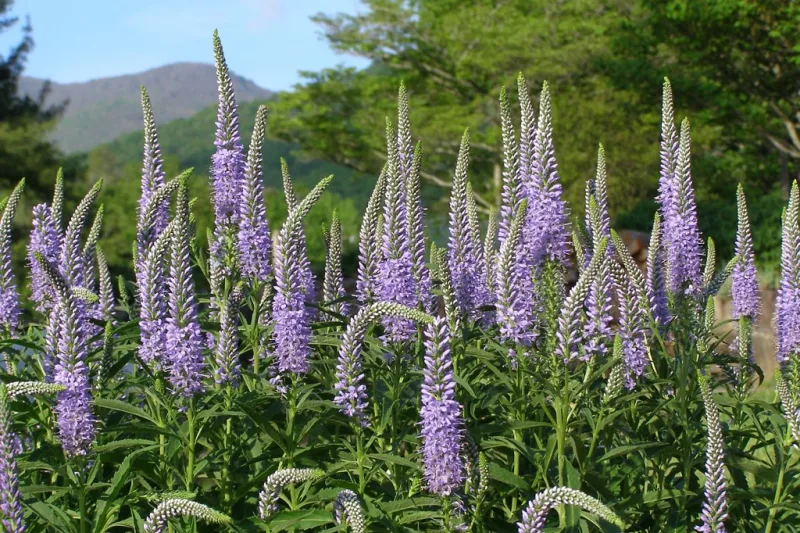
There are many species of veronica, and not all share the same tradition of medicinal use. Veronica officinalis is the one classically used in herbalism for its effects on breathing and digestion. Other species, such as Veronica chamaedrys (germander speedwell, with larger, deep-blue flowers) or Veronica spicata (spiked speedwell, with tall, decorative spikes), are more ornamental or meadow plants. For this reason, correctly identifying the plant is essential before any internal use.
Composition and active principles
Although speedwell has not benefited from the extensive scientific research given to more “fashionable” plants, phytochemical studies suggest that this herb contains a range of active compounds that help explain its traditional use. Among the most important are:
- Iridoid glycosides (such as aucubin and catalpol), thought to be responsible for the plant’s mild anti-inflammatory and protective effects.
- Flavonoids, antioxidant compounds that help neutralize free radicals and support tissue protection.
- Tannins, which give the plant astringent properties – a “tightening” effect on tissues – useful for soothing irritation and mild inflammation of the mucous membranes.
- Phenolic acids (including caffeic acid and chlorogenic acid derivatives), with antioxidant and mild antimicrobial effects.
- Saponins, in small quantities, which tradition says help thin bronchial secretions.
- Bitter substances and small amounts of volatile oils, which gently stimulate digestion and appetite.
This combination of active principles explains why speedwell was used in the past not only for coughs, but also as a general tonic, a “blood-cleansing” (depurative) plant, and a remedy for mild digestive troubles. It must be stressed, however, that most of these effects come from traditional observations and preliminary studies, not from large clinical trials in humans.
Health benefits
Supporting the respiratory tract and soothing coughs
The best-known use of speedwell is for respiratory complaints. Folk tradition recommends it for dry, irritating coughs as well as productive ones, when phlegm needs to be cleared. The tannins and iridoids are believed to soothe the inflamed lining of the throat and bronchi, while the saponins are thought to help thin and expel secretions. Combined with other expectorant plants (such as thyme, plantain, or coltsfoot), speedwell was one of the components of the old-fashioned “chest tea.”
Tonic and depurative effect
In Romanian and European folk medicine, speedwell was considered a “spring” plant, used in “cleansing” cures after winter. It was said to help eliminate toxins by gently stimulating kidney function and perspiration, thus supporting what tradition called “blood cleansing.” These depurative cures were usually carried out as a tea drunk daily for two to three weeks.
Support for digestion
Thanks to its bitter substances and volatile oils, speedwell was used as a gentle remedy for digestive troubles: poor appetite, sluggish digestion, and bloating. Bitter substances stimulate gastric secretions and bile flow, helping a “lazy” stomach. It was often included in bitter tea blends, alongside wormwood, artichoke, or yarrow.
Astringent properties for skin and mucous membranes
The tannins in speedwell give it astringent properties, which is why the decoction was used externally as compresses or washes to soothe mild skin irritations and itching, or as a gargle for a sore throat. Tradition also mentions it as an ingredient in lotions for skin prone to mild eczema.
General antioxidant action
The flavonoids and phenolic acids in its composition give the plant antioxidant capacity, which, in a traditional context, was associated with a “strengthening” and vitality-preserving effect. Studies suggest that plants rich in such compounds may help protect cells against oxidative stress, although for speedwell specifically the data remain limited.
Traditional uses
In the rural household, speedwell had a well-defined place in the “winter pharmacy.” Here are some of the most widespread traditional uses:
- Tea for cough and colds – the most common use, often blended with linden, thyme, and honey.
- Spring depurative cure – a tea drunk daily, considered a “tonic” for the body.
- Digestive remedy – for a sluggish stomach, poor appetite, or bloating.
- Gargle – for a sore throat or inflamed gums, using a more concentrated decoction.
- Compresses and washes – applied externally to irritated skin, chafing, or minor superficial wounds, thanks to its astringent effect.
- An ingredient in “Europe’s tea” – in the past, as a substitute for ordinary tea.
In many villages, speedwell was one of the “poor man’s healing plants” – easy to find, free, and reliable, used when there was no money for medicine but the small ailments of the cold season were never in short supply.
How to prepare it: tea, tincture, poultice
Speedwell tea (infusion)
This is the simplest and most widely used form. Here is the step-by-step recipe:
- Place 1-2 teaspoons of the dried herb (the aerial parts: leaves, stems, flowers) in a cup of about 250 ml.
- Pour boiling water over it (about 90-95°C, left to stand a few seconds after coming to a boil).
- Cover the cup with a small saucer or lid to preserve the volatile oils, and let it infuse for 10-15 minutes.
- Strain and drink the tea warm, optionally sweetened with a teaspoon of honey (if you have no contraindications).
For a cough, you generally drink 2-3 cups a day, between meals. Add honey only after the tea has cooled a little (below 40°C), to preserve its properties.
Concentrated decoction (for external use and gargling)
For gargling or compresses, prepare a stronger decoction:
- Place 2 tablespoons of dried herb in a pot with 500 ml of cold water.
- Bring to a boil and let it simmer gently, covered, for 5-7 minutes.
- Remove from the heat and let it infuse for another 10 minutes, then strain.
- Use the lukewarm decoction for gargling (2-3 times a day) or for compresses applied to the skin.
Speedwell tincture
A tincture allows long-term preservation of the active principles and convenient dosing:
- Half-fill a clean jar with chopped dried herb.
- Pour 40-50% food-grade alcohol (for example, diluted grain alcohol) over it until the plant is completely covered.
- Close the jar, label it with the date, and keep it for 2-3 weeks in a dark, cool place, shaking it daily.
- Strain through cheesecloth and store the tincture in dark glass bottles.
Traditional dosage: 20-30 drops diluted in a glass of water, 1-2 times a day. The tincture is not recommended for children, pregnant women, or people who avoid alcohol.
Poultice and compresses
In folk tradition, fresh leaves, lightly crushed, can be applied directly to irritated skin or minor chafing. For a gentler version, soak a piece of clean gauze in the speedwell decoction and apply it to the affected area for 15-20 minutes.
Dosage and administration
As a general rule, herbal tradition recommends:
- Tea (infusion): 1-2 teaspoons of dried herb per cup, 2-3 times a day, for cures of no more than 2-3 weeks, followed by a break.
- Tincture: 20-30 drops in water, 1-2 times a day.
- Decoction for external use: as needed, in gargles or compresses.
It is important not to exceed the recommended doses and not to use speedwell for long periods without breaks. Plants that contain tannins, if consumed in excess over long periods, can irritate the stomach and reduce the absorption of certain nutrients. For any longer cure or for use in children, always seek the advice of a specialist.
Harvesting, drying, and storage
If you want to harvest speedwell yourself, choose clean spots, far from roads, crops treated with pesticides, or industrial areas. The optimal harvesting period is during flowering, usually in June-July, when the plant contains the highest concentration of active principles. Harvest the aerial parts – the stems with leaves and flowers – by cutting them with scissors, leaving the root in the ground so the plant can regenerate.
Drying is done in the shade, in thin layers, on sheets of paper or screens, in a well-ventilated place out of direct sunlight (which destroys the active principles and discolors the plant). Once fully dry (when the stems break easily), the plant is stored in paper bags or glass jars, in a dry, dark place. Always label it with the name and harvest date. Dried plants retain their qualities for about a year.
Lifestyle and practical tips for the cold season
Speedwell gives the best results when it is integrated into a healthy lifestyle, especially in the cold season, when colds and coughs are common. Here are some tips that complement the use of the plant:
- Stay well hydrated. Warm fluids – teas, soups, broth – help thin secretions and soothe an irritated throat.
- Keep the air humid in your home, especially at night, to avoid drying out the mucous membranes and worsening a dry cough.
- Get plenty of rest. Sleep is the most powerful ally of the immune system; speedwell tea, drunk warm in the evening, can help with a sense of comfort.
- Combine plants wisely. Speedwell pairs very well with thyme (expectorant), linden (soothing and sweat-inducing), plantain (emollient), and rosehips (vitamin C). A balanced blend can be more effective than a single plant.
- Eat a balanced diet, with an emphasis on vegetables, seasonal fruit, nourishing soups, and sources of vitamin C, which support immunity.
These simple habits, alongside herbal remedies, reflect folk wisdom: no miracle plant solves everything; what matters is the whole set of small attentions to your own body.
Practical tips and common mistakes
Mistake no. 1: Misidentifying the plant. There are many species of veronica, and some resemble other meadow plants. Use only plants you can identify with certainty, or buy them from a reliable herbalist or pharmacy. Never consume a plant you are unsure about.
Mistake no. 2: Prolonged boiling of flowers and leaves. For tea, speedwell is prepared by infusion (boiling water poured over the herb), not by long boiling. Boiling destroys the volatile oils and some of the active principles. The decoction (boiling) is used only for external use.
Mistake no. 3: Adding honey to hot tea. Honey loses some of its enzymes and properties at high temperatures. Add it only after the tea has cooled below 40°C.
Mistake no. 4: Using it for too long. Speedwell cures should last no more than 2-3 weeks, followed by a break. Continuous, uninterrupted use is not recommended because of the tannin content.
Mistake no. 5: Ignoring serious symptoms. Speedwell is for mild discomforts. If a cough lasts more than 2 weeks, or if high fever, breathing difficulties, or blood in the sputum appear, see a doctor urgently. Do not rely on plants for serious conditions.
Mistake no. 6: Harvesting from polluted areas. Plants absorb heavy metals and toxic substances from the soil and air. Avoid roadsides, chemically treated land, and industrial areas.
Mistake no. 7: Storing in improper conditions. Moisture and light destroy the dried plant. Keep it in closed containers, in the dark and dry, and use it within a year.
Conclusion
Speedwell (Veronica officinalis) is one of those modest plants, easy to overlook, yet deeply rooted in folk wisdom. Valued above all for its beneficial effects on the respiratory tract – as an expectorant and cough soother – it was also used as a depurative tonic, a digestive remedy, and an astringent plant for external use. Its composition, rich in iridoids, flavonoids, tannins, and phenolic acids, helps explain, at least in part, the reputation it has enjoyed over the centuries.
As with all herbal remedies, the key lies in responsible use: correct identification, harvesting from clean places, moderate dosing, short cures, and, above all, the common sense to recognize a plant’s limits. Speedwell can be a gentle and pleasant support during the cold season, but it does not replace medical advice and treatment when these are truly needed. Used with care and knowledge, it remains, as it was in Grandma Veta’s day, a quiet friend of our winters.
Frequently asked questions
What is speedwell primarily good for? Speedwell is traditionally used mainly for respiratory complaints – dry or productive coughs, throat irritation, and bronchial discomfort. It is believed to have an expectorant and soothing effect. Beyond that, it was used as a depurative tonic, a gentle digestive remedy, and an astringent plant for external use.
How do you prepare speedwell tea correctly? Put 1-2 teaspoons of dried herb in a cup, pour boiling water over it, cover, and let it infuse for 10-15 minutes, then strain. For a cough, drink 2-3 cups a day. Important: the tea is prepared by infusion, not by prolonged boiling.
Can pregnant women drink speedwell? It is not recommended during pregnancy or breastfeeding without medical advice, since its effects during pregnancy are not sufficiently studied. For any medicinal plant during this period, consult your doctor first.
Can children drink speedwell tea? In children, any medicinal plant should be used only on the recommendation of a pediatrician, in age-appropriate doses. The tincture, which contains alcohol, is not suitable for children.
How long can speedwell be used without a break? In general, cures last no more than 2-3 weeks, followed by a break. Prolonged, uninterrupted use is not recommended, mainly because of the tannin content, which in excess can irritate the stomach.
What other plants can speedwell be combined with? It blends very well with thyme, linden, plantain, coltsfoot, and rosehips for respiratory complaints, or with wormwood and artichoke for a digestive effect. Balanced blends can be more effective than a single plant.
Are there any side effects or drug interactions? At normal doses, speedwell is considered a gentle plant, but excessive consumption can irritate the stomach. People taking anticoagulants, diabetes or blood-pressure medication, as well as those with liver or kidney disease, should consult a doctor before use.
When and how is speedwell harvested? It is harvested during flowering, usually in June-July, from clean, unpolluted areas. Cut the aerial parts, dry them in the shade in a ventilated place, and store them in closed containers, in the dark and dry, for no more than a year.