
Valerian: Benefits, Uses, How to Prepare It and Side Effects
IMPORTANT: Valerian is a herb with a genuine sedative action on the nervous system. Do not combine it with sleeping pills, sedatives, antidepressants, anti-anxiety medication (such as benzodiazepines), or alcohol, because the effects can dangerously amplify one another. Do not drive or operate machinery after taking it, especially at first, until you know how your body reacts. Pregnant and breastfeeding women, children under 3, people with liver disease, and anyone about to undergo surgery (at least two weeks before anesthesia) should avoid it or use it only under medical supervision. If you suffer from chronic sleep problems or severe anxiety, valerian is a support, not a substitute for proper medical care.
I still remember how Grandma Veta, a short and sprightly woman from the north of Moldavia, kept a small cloth pouch of dried roots in a kitchen drawer. They gave off a penetrating, almost unpleasant smell, like damp earth mixed with something sour. “That’s my odolean,” she would say, using the old folk name for valerian. Whenever one of the grandchildren came home agitated after a day of work in the fields, or whenever an aunt couldn’t sleep for worry, Grandma would take out a spoonful of those roots, soak them in cold water overnight, and in the morning give everyone a small cup. “It won’t knock you out by force,” she explained. “It just quiets the thoughts that keep racing, so that sleep can come to you on its own.”
I later learned that what Grandma did was no village superstition or coincidence. Valerian (Valeriana officinalis) is one of the most studied and most respected calming plants in the world, used for thousands of years — going all the way back to ancient Greece and Rome, where Hippocrates and Dioscorides mentioned it for its soothing effects. Its name comes, according to some researchers, from the Latin “valere,” meaning “to be healthy, to have strength” — a sign of the respect our ancestors held for this humble plant.
Table of Contents
- What valerian is and where it grows
- Composition and active principles
- The health benefits of valerian
- Traditional uses in folk medicine
- How to prepare valerian: tea, cold infusion, tincture
- Dosage and how to take it
- Valerian in daily life: an evening routine
- Practical tips and common mistakes
- Conclusion
- Frequently Asked Questions
What valerian is and where it grows
Valeriana officinalis is a perennial herbaceous plant of the family Caprifoliaceae (once classified under the family Valerianaceae). It grows wild in damp areas across temperate Europe and Asia — along streams, in moist meadows, at the edge of forests, and beside ditches. In Romania it is frequently found in the hill and mountain regions, where the soil retains moisture.
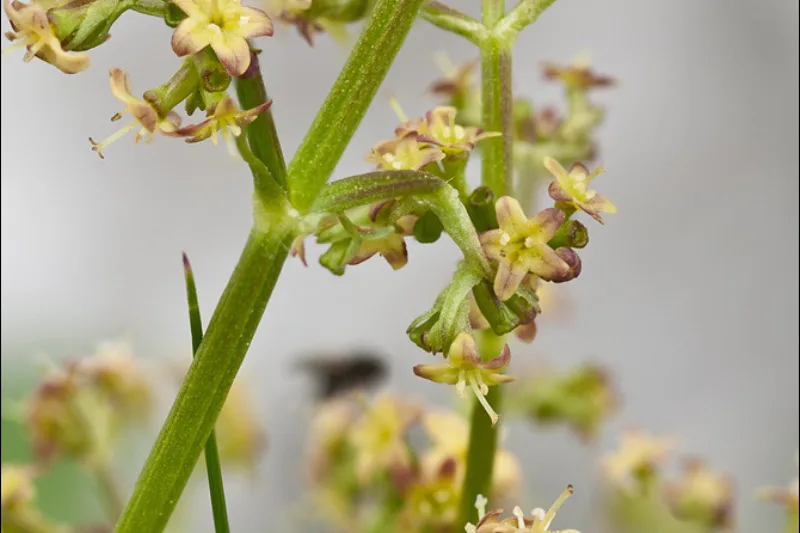
The plant can reach a considerable height, sometimes over a meter and a half. The stem is upright and grooved lengthwise, while the leaves are compound, pinnate, with several pairs of toothed leaflets. In summer, in June and July, valerian flowers, forming clusters (inflorescences) of small flowers in pale white-pink shades, with a delicate, sweetish fragrance — very different from the strong smell of the root.
This is precisely where the paradox of the plant lies: the part used medicinally is not the sweet-smelling flower but the rhizome and roots, which, once dried, take on that characteristic, intense odor that some describe as “old socks” or rancid earth. Interestingly, cats are drawn to this smell almost as much as to catnip, which is why valerian is sometimes called “cat’s herb.”
Harvesting is done in autumn (September-October) or in early spring, from plants at least two years old, when the roots have accumulated enough active substances. The rhizomes are washed thoroughly, cut into pieces, and dried at temperatures below 40 degrees Celsius, so as not to destroy the volatile compounds.
Composition and active principles
Valerian’s calming power does not come from a single substance but from a combination of compounds that work in synergy. Studies suggest that its effects are mainly due to the following groups:
- Valerenic acids (valerenic acid and its derivatives) — considered among the most important compounds responsible for the sedative effect. They are thought to influence how the brain uses a neurotransmitter called GABA, the main “brake” of the nervous system, which induces relaxation.
- Valepotriates — unstable substances, present mostly in the fresh plant, contributing to the soothing effect.
- Volatile (essential) oil — rich in bornyl acetate and other aromatic components, partly responsible for the characteristic smell and for the spasmolytic (muscle-relaxing) action.
- Flavonoids (such as linarin and hesperidin) — with a possible role in improving sleep quality.
- Amino acids such as GABA, glutamine, and arginine, present in small amounts.
This combination means valerian acts gently, without “knocking out” the person, but rather reducing agitation and helping the body slide naturally toward rest.
The health benefits of valerian
Support for restful sleep
Valerian’s best-known benefit is the help it offers with mild sleep problems. Unlike synthetic sleeping pills, valerian does not force sleep but, according to tradition and many observations, shortens the time needed to fall asleep and improves the feeling of rest on waking. Many people choose it precisely because it does not leave that “heavy head” or grogginess in the morning. Studies suggest that the effect becomes more noticeable after consistent use over a few weeks, rather than from the very first cup of tea.
Easing anxiety and nervous tension
Valerian is traditionally used to soothe restlessness, inner agitation, and the nervousness that arises during stressful periods. Its action on the GABA system explains why the plant can bring a sense of calm without causing excessive daytime drowsiness, when used in moderate doses. Herbalists recommend it to people who “can no longer switch off their thoughts” in the evening.
Muscle relaxation and relief of cramps
Thanks to the essential oil with its spasmolytic effect, valerian has been used in folk medicine to ease abdominal cramps of nervous origin, menstrual pain, and the muscle tension associated with stress. It relaxes the smooth muscle of the digestive tract, which makes it useful for those stomach aches that come “from nerves.”
Support during periods of chronic stress
In modern life, many people live in a state of permanent alertness. Valerian, used in moderation, can be an ally in short courses, helping the body step out of “fight or flight” mode and regain its balance. Folk tradition associated it with “calming the heart,” referring to palpitations of nervous origin.
Help when giving up stimulating habits
Some herbal traditions use valerian as support during transition periods, when a person is trying to cut back on coffee or other stimulants — times when nervousness and insomnia temporarily flare up.
Traditional uses in folk medicine
In Romanian villages, valerian — or “odolean,” as it was known — had a well-established place in the “medicine cupboard.” The elders used it as a cold macerate for “heart flutters,” for the “frights” of older children, and for the heavy sleep of the elderly. It was said that a pouch of valerian root placed under the pillow would bring peaceful dreams, although this belongs more to folk belief than to pharmacology.
Valerian tincture, prepared at home with rustic brandy or food-grade alcohol, was a fixture in households that had a woman skilled in remedies. A few drops in a glass of water were given to those overwhelmed by worry or to those who could not find sleep after bad news. Valerian also frequently went into blends of calming herbs, alongside linden, St. John’s wort, lemon balm (melissa), and chamomile.
How to prepare valerian: tea, cold infusion, tincture
The method of preparation strongly influences both effectiveness and taste. Worth knowing: high heat can degrade some of the volatile compounds, which is why herbalists often prefer a cold infusion for the root.
Valerian tea (classic infusion)
Ingredients:
- 1 teaspoon (about 2-3 g) of shredded, dried valerian root
- 250 ml of water
Step-by-step preparation:
- Boil the water and let it cool for 1-2 minutes (it should not be at a rolling boil).
- Pour the hot water over the shredded root in a cup.
- Cover the cup with a small plate — this step is essential to retain the volatile oils that would otherwise evaporate.
- Let it steep for 10-15 minutes.
- Strain and drink warm, about 30-60 minutes before bedtime.
The cold infusion (macerate) — the traditional method
This is the method preferred by many herbalists, because it gently extracts the active principles without degrading them through heat.
Ingredients:
- 1 teaspoon of shredded root
- 250 ml of cold water (room temperature)
Preparation:
- Put the root into a glass of cold water in the evening.
- Leave it to macerate overnight (8-10 hours), or in the morning for the evening.
- Strain before drinking.
- The macerate can be consumed as is or slightly warmed. Many people prefer it because the taste is milder.
Valerian tincture
Ingredients:
- 20 g of dried, shredded root
- 100 ml of food-grade alcohol at 60-70 proof
Preparation:
- Put the root into a clean jar and pour the alcohol over it.
- Seal the jar tightly and keep it for 10-14 days at room temperature, away from direct light.
- Shake the jar once a day.
- Strain through cheesecloth and store the tincture in a dark glass bottle with a dropper.
- Label the bottle with the name and date of preparation.
Dosage and how to take it
- Tea or macerate: one cup in the evening, before bed. For daytime anxiety, a cup can also be taken in the morning or at midday, but in a smaller dose, to avoid drowsiness.
- Tincture: as a rule, 15-30 drops diluted in a glass of water, 1-2 times a day, or in the evening. Always follow the instructions on the product bought from a pharmacy or herbal shop.
- Capsules/standardized extract: strictly follow the manufacturer’s instructions.
Valerian is usually used in courses of 2-4 weeks, followed by a break. Continuous, very long-term use is not recommended without supervision. The full effect on sleep may appear gradually, after a few days of regular use.
Valerian in daily life: an evening routine
Valerian works best when it is built into a healthy evening routine, not used as an isolated magic fix. Here are some practical tips that bring out its effects:
- Drink your cup of tea or macerate about an hour before bed, in a quiet setting.
- Reduce bright light and screens (phone, television) an hour before sleep — blue light works against relaxation.
- Avoid coffee, black tea, and energy drinks in the afternoon.
- Pair valerian with a calming ritual: a warm bath, a few pages of light reading, or slow breathing.
- Keep as regular a sleep schedule as possible, going to bed and waking at similar times.
In this way, valerian becomes a signal that the body learns over time: “now is the moment to settle down.”
Practical tips and common mistakes
Mistake no. 1: Expecting an instant, sleeping-pill-like effect. Valerian does not knock a person out in a few minutes. Its action is gentle and builds over time. Anyone expecting a sudden effect will be disappointed and may needlessly increase the dose.
Mistake no. 2: Using it long-term without breaks. Long, continuous courses are not advisable. Respect the rest periods to keep the body responsive to the plant.
Mistake no. 3: Combining it with alcohol or sedative medication. This is the most dangerous mistake. The amplification of effects can lead to excessive drowsiness and depression of the central nervous system.
Mistake no. 4: Boiling the root for a long time. Aggressive boiling destroys the valuable volatile oils. Prefer the covered infusion or the cold macerate.
Mistake no. 5: Improper storage. Root kept in light, moisture, or open containers loses its properties. Use sealed, labeled jars kept in a dark, cool place.
Mistake no. 6: Taking too large a dose “to make it work better.” Paradoxically, excessive doses can cause the opposite effect in some people — agitation, headaches, or nausea. More does not mean better.
Mistake no. 7: Ignoring your own reactions. Every body is different. Some people respond strongly, others barely at all. Watch your own response carefully, especially with the first doses.
Conclusion
Valerian is one of the most trustworthy calming plants that tradition has handed down to us, validated by centuries of use and still valued in modern herbal medicine. Its strength lies in its gentleness: it does not force sleep but prepares the ground for rest; it does not numb the mind but quiets the racing thoughts. The strong-smelling root that Grandma Veta kept so carefully in her cloth pouch remains a reliable support for restless nights and tense days. Used in moderation, in short courses, and with the precautions respected, valerian can restore the balance our nervous system so badly needs in today’s hectic world. And when the problems are persistent or serious, it remains an ally that goes hand in hand with a doctor’s advice, not against it.
Frequently Asked Questions
How long does it take for valerian to start working? For immediate calming, some people feel a slight relaxation 30-60 minutes after drinking it. For a real improvement in sleep, the full effect usually appears gradually, after a few days up to two weeks of regular use.
Can I take valerian every evening? Valerian is generally used in courses of 2-4 weeks, followed by a break. Continuous long-term use is not recommended without the supervision of a specialist. Take breaks to maintain its effectiveness.
Is valerian addictive? Unlike synthetic sleeping pills, valerian is not considered a substance that causes physical dependence. Still, it is best used in courses rather than permanently, and tapered off gradually if used for a longer time.
Why does the root smell so bad? The characteristic, strong smell is due to compounds in the volatile oil that form as the root dries. Although it may seem unpleasant, this smell is a sign that the plant contains its active principles. The flowers, on the other hand, smell pleasant and sweetish.
Can I give valerian to children? Valerian is not recommended for young children, especially under the age of 3. For older children, it should be used only on the recommendation and under the supervision of a pediatrician, never on your own initiative.
Can I combine valerian with other calming herbs? Yes, valerian traditionally blends very well with lemon balm (melissa), linden, chamomile, and St. John’s wort, in mixtures for relaxation and sleep. These combinations are also popular in ready-made herbal teas.
Is valerian safe during pregnancy? No. Pregnant and breastfeeding women should avoid valerian, because its safety during these periods is not sufficiently established. Always consult your doctor before using any herb during pregnancy.
Can I drive after taking valerian? It is recommended that you do not drive or operate machinery, especially at the start of a course, until you see how your body reacts. Valerian can cause drowsiness in some people, and safety behind the wheel comes first.