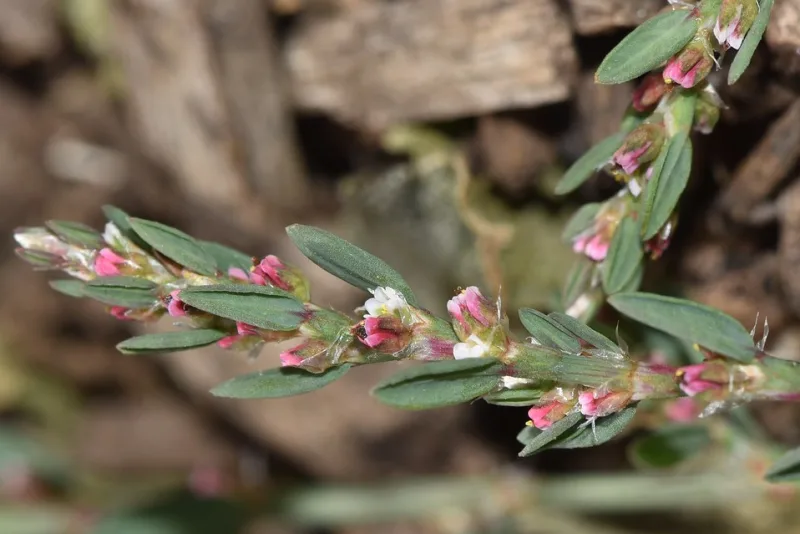
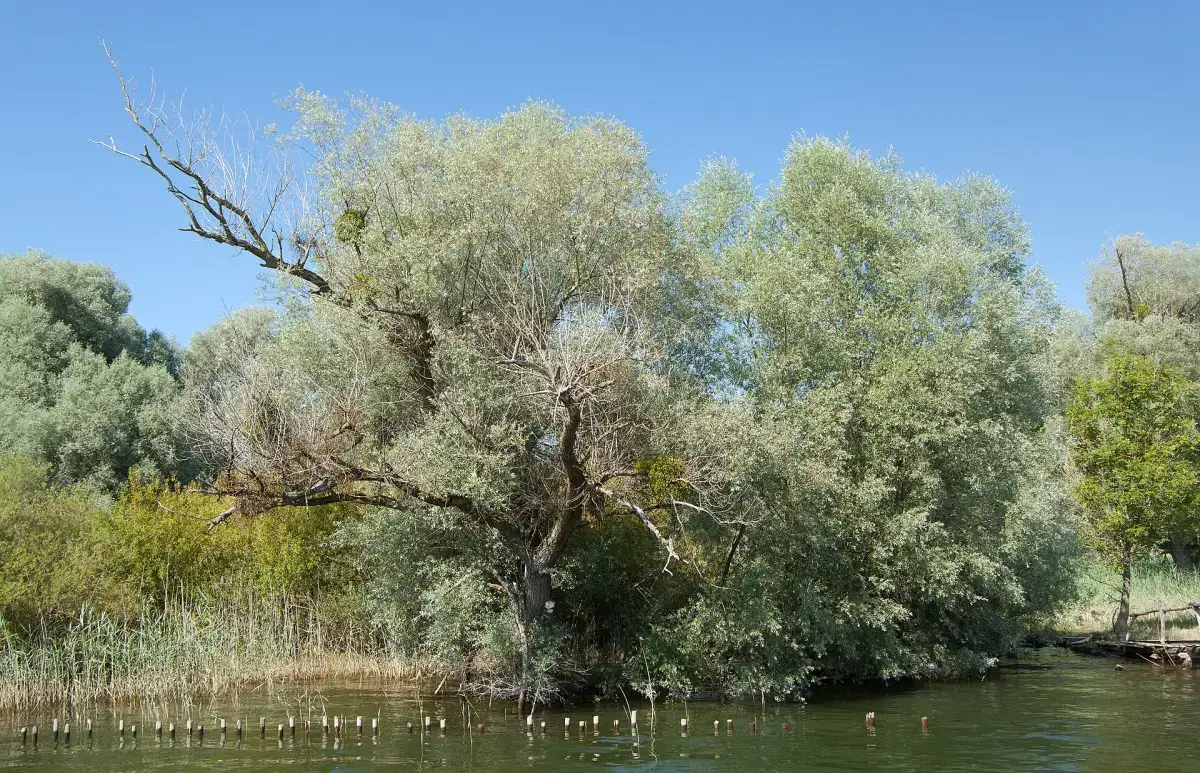
 Photo: H. Zell, CC BY-SA 3.0, via Wikimedia Commons
White willow bark contains salicin, a compound the body converts into salicylic acid, a close relative of aspirin. The strongest evidence supports standardized extracts for short-term low back pain, while its use for headache, fever and minor joint pain is mainly traditional. It is not suitable for children, pregnant women, people allergic to aspirin or anyone taking blood thinners.
Key takeaways:
- Salicin is not aspirin: it only becomes active after absorption and conversion in the liver, so it is gentler on the stomach but slower to work.
- Extracts providing 120-240 mg of salicin a day have the best data, for acute or recurring low back pain.
- Homemade willow bark tea contains far less salicin than extracts and has a mild effect that is hard to dose precisely.
- It is contraindicated with salicylate allergy, in children and teenagers (risk of Reye’s syndrome), in pregnancy and while breastfeeding.
- With anticoagulants, antiplatelet drugs or other anti-inflammatories, use it only with your doctor’s approval.
What willow bark is
The medicinal part is the bark of young branches, two to three years old, harvested in early spring when the sap rises and the bark peels away easily. It is dried in the shade and chopped. The European Pharmacopoeia accepts bark from several species: white willow (Salix alba), purple willow (Salix purpurea), crack willow (Salix fragilis) and Salix daphnoides.
These species differ a lot in salicin content. White willow, the best known, is actually among the poorest sources, while purple willow and S. daphnoides are much richer. That is why the Pharmacopoeia sets a minimum content of total salicylic derivatives, expressed as salicin, for pharmaceutical-grade bark. Bark stripped at random from a garden willow can vary enormously.
The plant’s history explains the ’nature’s aspirin’ nickname. Willow decoctions were used for fever and pain since antiquity. In the 19th century salicin was isolated from the bark, salicylic acid followed, and in 1897 chemists synthesized acetylsalicylic acid, better known as aspirin. The family link is real, but as you will see, the two do not behave the same way.
 Photo: Flocci Nivis, CC BY 4.0, via Wikimedia Commons
Active compounds
- Salicin and other phenolic glycosides (salicortin, tremulacin, fragilin): mainly responsible for the pain-relieving and fever-lowering effect.
- Flavonoids and proanthocyanidins (condensed tannins): add anti-inflammatory and antioxidant activity and give the astringent taste.
- Phenolic acids and other polyphenols.
Laboratory research suggests the whole extract does more than salicin alone could explain, so the polyphenols matter. That is one reason the bark or its full extract is used rather than isolated salicin.
Salicin vs aspirin: the difference that matters
Salicin passes through the stomach largely unchanged. In the gut, bacteria break it down into saligenin (salicyl alcohol), which is absorbed and oxidized in the liver into salicylic acid, the active form. Aspirin is acetylsalicylic acid: its acetyl group irreversibly blocks the COX-1 enzyme in platelets. That gives aspirin its strong blood-thinning effect, along with its risk of bleeding and stomach irritation.
| Feature | Willow bark (salicin) | Aspirin (acetylsalicylic acid) |
|---|---|---|
| Nature | Natural precursor, activated after absorption | Synthetic drug, active directly |
| Onset | Slow, a few hours; full effect after several days of regular use | Fast, usually 30-60 minutes |
| Effect on platelets | Weak at usual doses | Strong and irreversible, lasts days |
| Stomach irritation | Lower, but possible | Common, risk of ulcers and bleeding |
| Heart attack and stroke prevention | Cannot replace prescribed aspirin | Used only on medical advice |
| Salicylate allergy | Contraindicated | Contraindicated |
Pharmacokinetic studies have shown that a daily dose of 240 mg of salicin produces blood salicylic acid levels comparable to a low dose of aspirin, theoretically too low for strong pain relief. The fact that the extract still eases pain in clinical trials again points to the role of the polyphenols.
The practical takeaway: willow bark is not a ‘gentler aspirin’ you can take any time instead of medication. It is a slow-acting herbal pain reliever suited to moderate, recurring pain, not to sudden severe pain.
What the research shows
Low back pain
This is where the evidence is strongest. Randomized, placebo-controlled trials, mostly from Germany, found that willow bark extracts delivering 120 or 240 mg of salicin daily reduced non-specific low back pain in the short term better than placebo, with a clearer effect at the higher dose. One trial comparing the extract with a synthetic anti-inflammatory from the coxib class found similar results. The Cochrane review of herbal medicine for low back pain judged this evidence encouraging but based on few studies of moderate to low quality.
On that basis, the herbal medicines committee of the European Medicines Agency (EMA/HMPC) granted dry willow bark extracts ‘well-established use’ status for the short-term treatment of low back pain, a level of recognition few herbs achieve. For a complete approach including movement, local heat and exercise, see our guide to back pain.
Headache
Use for headache appears in European monographs as traditional use, meaning it rests on long experience rather than solid clinical trials. There are no good studies in migraine, and the slow onset makes willow bark a poor choice during an attack. It may play a modest role in mild, recurring tension headaches. More options are covered in our article on headaches.
Fever with a cold
Willow bark tea is traditionally taken for colds with fever, and the EMA recognizes this as traditional use in adults only. It is never used in children. Safe alternatives and warning signs are explained in our article on fever.
Joint pain and osteoarthritis
Results are mixed. Some small trials found modest pain relief in knee and hip osteoarthritis, others found no difference from placebo, and in one trial the extract performed worse than diclofenac. The EMA accepts only traditional use for minor joint pain. In osteoarthritis, regular movement and weight control remain the foundation.
How to make willow bark tea properly
The bark is tough and its glycosides do not extract well by steeping alone, so you need a decoction (simmering), not a regular infusion.
For one cup you need:
- 2-3 g of dried, chopped bark (about one heaped teaspoon; the bark is light, so weighing it is best);
- 200-250 ml of cold water.
Steps:
- Put the bark in cold water in an enamel or stainless steel pan with a lid.
- Optionally, let it soak for 1-2 hours: the fibres soften and extraction improves.
- Bring to the boil and simmer gently, covered, for 5-10 minutes.
- Remove from the heat and let it steep for another 10-15 minutes.
- Strain through a fine sieve and drink warm.
Drink 2-3 cups a day after meals, not on an empty stomach, to reduce stomach upset. The taste is bitter and astringent; you can add a teaspoon of honey once the tea has cooled below 40°C, or a slice of lemon. Keep the decoction in the fridge for no more than 24 hours.
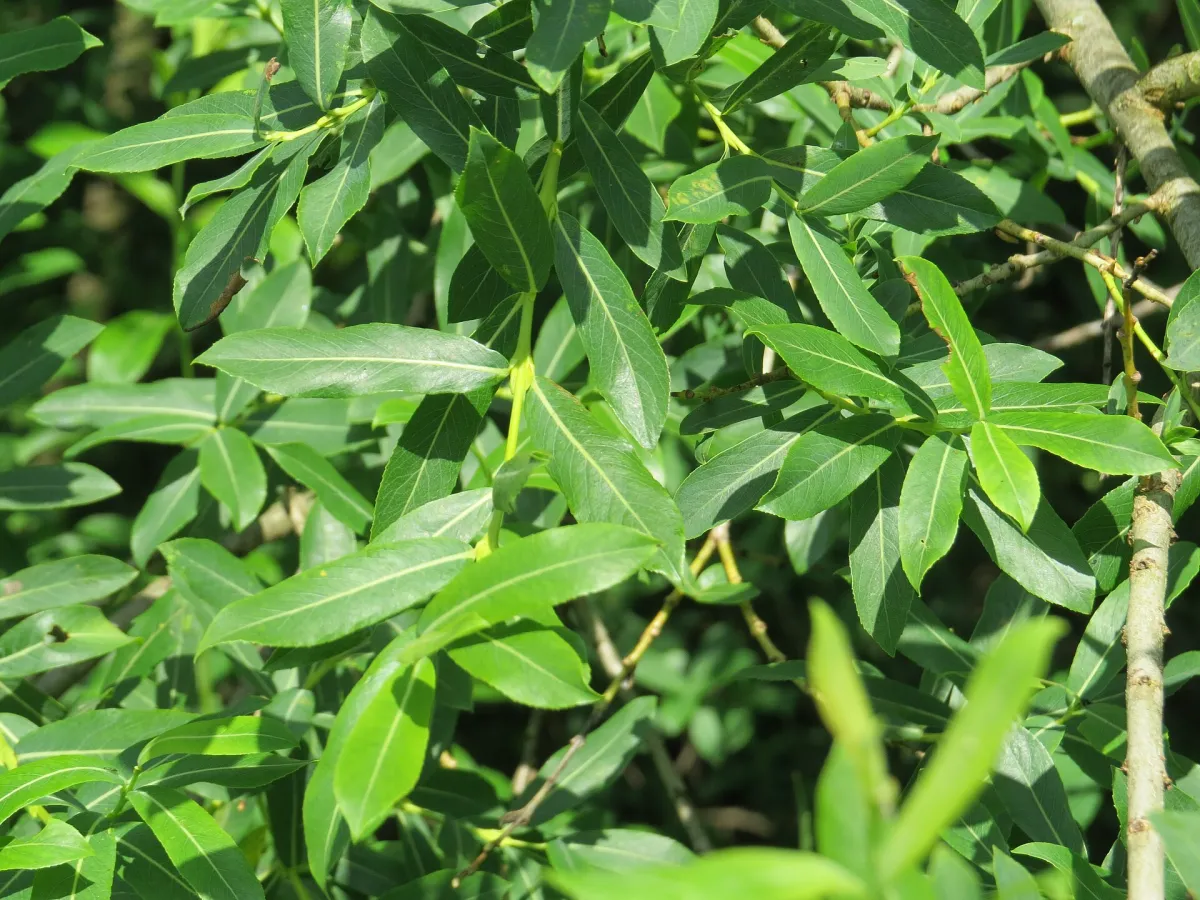 Photo: MPF, CC BY-SA 4.0, via Wikimedia Commons
The limit of the tea: salicin content varies widely with species, branch age and harvest. A cup made from white willow bark may contain only a few tens of milligrams of salicin, so even three cups usually fall short of the doses used in back pain trials. If you want the documented effect, choose a standardized extract with the salicin content stated on the label.
Other forms
- Standardized dry extract (capsules, tablets): the best-studied form and the easiest to dose.
- Tincture: use according to the product leaflet; preparation and dilution basics are in our guide to herbal tinctures.
- External use: traditionally, a strong decoction is used in compresses or foot baths for sweaty feet, thanks to its astringent tannins.
Dosage guide
| Form and purpose | Daily adult dose | Maximum without seeing a doctor | Level of evidence |
|---|---|---|---|
| Decoction, mild pain or fever | 2-3 g bark per cup, 2-3 cups (no more than 4) | Fever: 3 days; pain: 1 week | Traditional use |
| Standardized extract, low back pain | Equivalent of 120-240 mg salicin, in 2 doses | Short-term, reassess if no improvement after 1 week | Clinical trials, EMA well-established use |
| Extract or decoction, minor joint pain, headache | As per leaflet or decoction above | 1 week | Traditional use |
| Children and teenagers under 18 | Not used | - | Contraindicated |
Do not stack several willow products or exceed the label dose hoping for faster relief: salicin does not work quicker at higher doses, it only raises the risk of side effects.
Contraindications: who should not use willow bark
- Allergy to aspirin, salicylates or other NSAIDs, including asthma triggered by these drugs, which often comes with nasal polyps.
- Children and teenagers under 18. Reye’s syndrome is a rare but serious illness affecting the brain and liver, linked to aspirin given to children with viral infections such as flu or chickenpox. Although no cases have been clearly proven with willow, salicylates are related and the precaution applies without exception.
- Pregnancy, especially the third trimester (salicylates can affect fetal circulation and increase bleeding risk at delivery), and breastfeeding, since salicylates pass into milk.
- Active stomach or duodenal ulcer, severe gastritis, past digestive bleeding.
- Bleeding disorders, low platelets, haemophilia.
- Severe kidney or liver impairment and G6PD deficiency.
- Gout: low-dose salicylates can reduce uric acid excretion.
- Surgery or dental procedures: stop at least 1-2 weeks beforehand and tell your doctor.
Interactions
- Anticoagulants (warfarin, acenocoumarol, newer oral anticoagulants) and antiplatelet drugs (aspirin, clopidogrel): higher bleeding risk.
- Other NSAIDs (ibuprofen, diclofenac, naproxen) and corticosteroids: added stomach risk. Do not combine them with willow for a ‘stronger’ effect.
- Methotrexate: salicylates can increase its toxicity.
- Diuretics and some blood pressure medicines: their effect may be reduced, as with other NSAIDs.
- Herbs that affect clotting, such as ginkgo, meadowsweet or concentrated garlic supplements.
- Alcohol worsens stomach irritation.
Side effects
They are uncommon and usually mild: stomach discomfort, nausea, diarrhoea or, because of the tannins, constipation, plus allergic skin reactions (itching, hives). Stop immediately at any sign of allergy; facial swelling or difficulty breathing is an emergency.
When to see a doctor
- back pain with fever, unexplained weight loss or night pain that does not ease with rest;
- numbness around the buttocks and genitals, leg weakness, or bladder or bowel problems (emergency);
- back pain after a fall or in people with osteoporosis;
- a sudden, extremely severe headache, or headache with fever, stiff neck, vision or speech problems;
- fever lasting more than 3 days or very high fever;
- black stools, vomiting blood or unusual bruising while using willow;
- any pain that has not improved after a week.
Common mistakes
Giving it to children for fever because it is ’natural’. The risk of Reye’s syndrome rules willow out for children.
Using it instead of prescribed heart aspirin. Its antiplatelet effect is weak and offers no cardiovascular protection.
Combining it with ibuprofen or aspirin. Stacking salicylates and NSAIDs raises the risk of ulcers and bleeding.
Steeping it like ordinary tea. Without simmering, the already low salicin extraction drops even further.
Expecting instant relief. Willow suits recurring pain when taken regularly for a few days, not an acute attack.
Harvesting bark from roadside or sprayed trees. You will not know the species, the salicin content or the pollutants it carries.
The bottom line
Willow bark is one of the few herbal pain relievers with European regulatory recognition, but only for a specific use: short-term low back pain, as a standardized extract. The decoction remains a gentle traditional remedy for mild pain and cold-related fever in adults. It is not a harmless aspirin: salicylate allergy, age under 18, pregnancy and blood-thinning treatments all rule it out.
Frequently asked questions
Is willow bark the same as aspirin? No. It contains salicin, which becomes salicylic acid in the body, but it lacks aspirin’s acetyl group. That is why it works more slowly, is easier on the stomach and has only a weak effect on platelets.
How long does willow bark take to work? First effects appear after a few hours, and in back pain trials the benefit became clearer after several days of regular use. It is not the right choice when you need fast relief.
Can I take willow bark if I am on aspirin for my heart? Not without your doctor’s approval. The combination increases the risk of bleeding and stomach irritation, and willow cannot replace cardiac aspirin.
Does willow bark help with migraine? No studies support it in migraine, and its slow onset makes it unsuitable for attacks. It may help modestly with mild, recurring headaches.
Can I give willow bark tea to a child with fever? No. Salicylates are linked to Reye’s syndrome in children with viral infections, and the European monograph does not recommend willow under 18. Follow your paediatrician’s advice for a child’s fever.
Can I harvest the bark myself? You can if you are certain of the species, choose young branches from unpolluted areas and harvest in spring. Salicin content will still be unpredictable; pharmacy products give a more consistent effect.
Why is willow bark in weight loss supplements? It is sometimes combined with caffeine or other stimulants on the idea of a synergistic effect. There is no good evidence it helps with weight loss, and stimulant blends can be risky for the heart and blood pressure.
Sources and further reading
- European Medicines Agency, HMPC: European Union herbal monograph on Salix [various species including S. purpurea L., S. daphnoides Vill., S. fragilis L.], cortex, 2017.
- Blumenthal M. (ed.), The Complete German Commission E Monographs: Willow bark monograph, American Botanical Council, 1998.
- ESCOP Monographs: Salicis cortex (Willow bark), second edition, 2003.
- Oltean H. et al., ‘Herbal medicine for low back pain’, Cochrane Database of Systematic Reviews, 2014.
- NHS: Reye’s syndrome, patient information.
Informative content only; it does not replace a consultation with a doctor or pharmacist. Severe, persistent pain or pain with fever needs medical assessment.