
Wormwood: Digestive Benefits, Traditional Uses and How to Prepare It
IMPORTANT: Wormwood is one of the most powerful bitter herbs in nature’s pharmacy, but also one of the most delicate when it comes to dosage. It contains thujone, a compound that in large amounts can be neurotoxic and may trigger seizures. It must NOT be used during pregnancy or breastfeeding (it can stimulate uterine contractions), should not be given to small children, or used by people with epilepsy or serious kidney or liver disease. Never use it for more than 2-3 weeks in a row, and never exceed the recommended dose. If you take medication or have a chronic condition, consult your doctor or a pharmacist before using wormwood. This article is for informational purposes only and does not replace medical advice.
I still remember old Auntie Veta from the far end of the village, a thin woman as straight as a reed, who kept in her attic a bundle of dried wormwood hanging from a beam — it smelled so bitter that it stung your nostrils just to walk past it. When someone from the village came complaining that “their stomach had gone lazy,” that “they had lost their appetite,” or that “the child had worms,” Auntie Veta would cut a few stems from the bundle, drop them into a mug, and always say the same words: “Bitter on the tongue, sweet on the gut.” Her husband, a man who had worked the fields his whole life, drank a teaspoon of wormwood tincture every morning for a week each autumn, “to clean out his bile,” as he put it.
That bitterness which every child in the village tried to avoid was, in fact, the plant’s secret. Wormwood is not a herb you love at the first sip — it is a herb you learn to respect. In Romanian folk tradition, wormwood has always been the “bitter remedy” par excellence: a herb for the sluggish stomach, the tired liver and the lost appetite. Today, as we rediscover the value of bitter herbs for digestion, wormwood is reclaiming its rightful place among the serious medicinal plants.
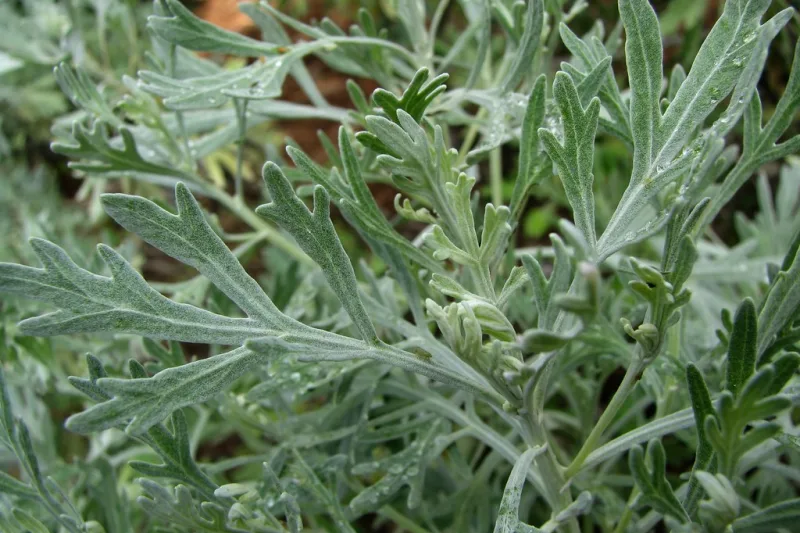
Wormwood (Artemisia absinthium) is a perennial plant of the Asteraceae family, recognized instantly by its silvery-green, finely divided leaves covered in silky hairs, and by its strong, aromatic and intensely bitter scent. It is the plant that gave its name to the famous spirit absinthe, and that for thousands of years has been used as a bitter tonic, vermifuge and digestive stimulant. The genus name “Artemisia” is said to come from the goddess Artemis, protector of women and of health — a sign of how highly the plant has always been valued.
Table of Contents
- What wormwood is and where it grows
- Composition and active principles
- Health benefits of wormwood
- Traditional uses in the Romanian village
- How to prepare wormwood: tea, tincture, powder and wine
- Dosage and how to take it
- Wormwood in a modern lifestyle
- Practical tips and common mistakes
- Conclusion
- Frequently Asked Questions
What wormwood is and where it grows
Wormwood is a vigorous plant that grows in clumps 60-120 cm tall, with a woody stem at the base and branching toward the top. The whole plant has a characteristic silvery hue, given by the fine hairs that cover its leaves and stems — an adaptation to poor, dry soils that helps reflect light and reduce water loss. The leaves are greyish-green and deeply lobed, while the small yellow flowers appear in summer, grouped in loose panicles.
In Romania, wormwood grows wild on uncultivated land, along roadsides, on rocky slopes, near fences and on waste ground, especially in the plains and hilly regions. It is a rustic, drought-resistant plant that prefers well-drained soils and sunny spots. Many households grow it in the garden, both for its medicinal uses and for its ability to repel insects and moths.
The flowering tops and leaves are harvested in midsummer, when the concentration of aromatic oils is at its peak. Tradition holds that the best harvest is gathered on a sunny day, once the dew has lifted. The plants are dried in the shade, tied in bundles and hung in an airy place away from direct sunlight, which would degrade their active principles.
Composition and active principles
Wormwood’s pronounced bitterness is no accident — it is in fact its “calling card” and the source of its benefits. The plant contains:
- Bitter compounds (absinthin and anabsinthin) — among the most bitter natural substances known, these are the main reason wormwood is used as a digestive tonic. They stimulate the taste receptors and, by reflex, the digestive secretions.
- Volatile oil — rich in thujone (alpha and beta), the compound that gives the plant its characteristic scent but is also responsible for its toxicity in large doses. The volatile oil also contains other aromatic components.
- Flavonoids — compounds with antioxidant properties.
- Phenolic acids and tannins — with astringent and antimicrobial effects.
- Mineral salts and traces of vitamins.
Folk tradition and classical herbalism observed that this combination of bitter substances and aromatic volatile oil gives wormwood its classic qualities: appetite stimulant, gastric tonic, choleretic (stimulating bile production), vermifuge and general bitter tonic. It is precisely the presence of thujone, however, that makes strict adherence to dosage essential.
Health benefits of wormwood
Stimulating the appetite
The best-known use of wormwood, from time immemorial, is to reawaken the appetite. Bitter substances, when they reach the tongue, reflexively trigger the secretion of saliva and gastric juices, preparing the stomach for digestion. This is why, in folk tradition, a small cup of bitter wormwood tea or a few drops of tincture were given about half an hour before meals to weak, convalescent or appetite-less people. Modern studies on bitter herbs (“digestive bitters”) suggest that this reflex mechanism is real and that bitters can support a healthy appetite.
Support for digestion and the sluggish stomach
Beyond stimulating appetite, wormwood was traditionally used to help with slow digestion, the feeling of heaviness after meals, bloating and acidity linked to insufficient gastric secretion. Its bitter action stimulates the whole digestive tract — from the stomach, through bile secretion, to intestinal motility. Grandparents reached for wormwood when the stomach “no longer wanted to work,” especially after heavy, fatty meals.
Supporting the liver and gallbladder
Wormwood has choleretic and cholagogue properties, meaning it stimulates both the liver’s production of bile and its release from the gallbladder. In folk medicine it was considered a “bile herb,” used to support a tired liver and the sluggish digestion of fats. Bile that flows well helps break down fats and makes digestion easier. This property must, however, be used with caution by people with gallstones.
Action against intestinal parasites
The very name “wormwood” shows how ancient its use against intestinal parasites is. From intestinal worms to pinworms, wormwood was one of the staple anti-parasite herbs of the Romanian village, often combined with other bitter plants. The mechanism is thought to be linked to the unfavorable effect of the bitter substances and volatile oil on parasites. The traditional treatment was carried out in short courses, never prolonged, precisely because of the plant’s toxicity.
Tonic and antimicrobial properties
The tannins and volatile oil give wormwood astringent and antimicrobial properties, which is why it was also used traditionally externally, for washing wounds, or internally, to tonify a weakened body. Studies suggest that Artemisia extracts have antioxidant and antimicrobial activity, which partly supports the traditional uses.
Effect on menstruation
In folk tradition, wormwood was used as an emmenagogue, that is, to encourage delayed menstruation. It is precisely for this reason that the plant is strictly contraindicated in pregnancy — the effect that “starts” the cycle can also stimulate uterine contractions.
Traditional uses in the Romanian village
In the peasant household, wormwood led a double life: one medicinal and one practical. Besides the bitter remedies, bundles of dried wormwood were placed in cupboards and clothes chests to keep moths away, and were used in stables and pantries to repel insects. Its powerful scent was seen as a natural “guardian.”
Medicinally, wormwood was never missing from the autumn and spring cure — the times when villagers felt the need to “cleanse” the body after winter’s excesses, or to tone it up for the work of the fields. Wormwood wine, made by macerating the plant in wine, was drunk in small amounts as a bitter aperitif before meals and was considered an excellent digestive tonic for the elderly.
Folk tradition also used wormwood-decoction compresses and washes for the skin, while women used the infusion as a final rinse for the hair, believing it gave shine and removed dandruff.
How to prepare wormwood: tea, tincture, powder and wine
Wormwood tea (infusion)
This is the gentlest form, but take care — wormwood is so bitter that it is rarely drunk on its own, and never in large amounts.
- Place half a teaspoon of dried, crushed herb (about 1 gram) in a cup.
- Pour 200 ml of boiling water over it.
- Cover and let it steep for 5-10 minutes — no longer, so as not to extract too many bitter substances and volatile oil.
- Strain.
The tea is drunk unsweetened (or lightly sweetened with honey, although tradition asks that it stay bitter), about 30 minutes before a meal for its aperitif effect. Do not exceed one cup per day, and do not drink it for more than 1-2 weeks at a time.
Wormwood tincture
The tincture concentrates the active principles and allows precise dosing by drops.
- Place 20 g of dried, crushed wormwood in a clean jar.
- Pour 100 ml of food-grade alcohol at 40-50% ABV (for example, good-quality vodka) over it.
- Close the jar and leave it to macerate for 10-14 days in a dark, cool place, shaking it daily.
- Strain through cheesecloth, squeeze well, and store the tincture in a dark glass bottle fitted with a dropper.
The tincture is taken in very small doses: 10-20 drops, diluted in a glass of a little water, before meals. The bitter taste is strong, but that is exactly what produces the effect.
Wormwood powder
The dried plant can be finely ground in a mill and taken on the tip of a knife (less than a quarter of a teaspoon), mixed with a little honey, before meals. This is the most concentrated form and the one that keeps the whole plant — which is why dosage must be handled with great care.
Wormwood wine (digestive tonic)
- Macerate 30-40 g of dried wormwood in one liter of dry white wine for 8-10 days.
- Strain.
- Drink a small glass (30-50 ml) before the main meals, as a bitter tonic and aperitif.
Wormwood wine is a pleasant and traditional option, but should be avoided by those who must not consume alcohol.
Dosage and how to take it
The golden rule of wormwood is: little, for short periods, before meals. Unlike gentle herbs that you can drink for weeks on end, wormwood demands restraint:
- Length of the course: a maximum of 2-3 weeks, followed by a break at least as long.
- Timing: 20-30 minutes before meals, for the appetite- and digestion-stimulating effect.
- Amount: a small cup of weak tea or 10-20 drops of tincture per serving.
- Never in large amounts, and never “as concentrated as possible to make it more effective” — quite the opposite, overdosing on wormwood is dangerous because of thujone.
Always start with small doses and observe how your body reacts. If you experience headaches, dizziness, nausea or any unusual reaction, stop immediately and consult your doctor.
Wormwood in a modern lifestyle
Today, when so many people suffer from sluggish digestion, bloating and a lack of genuine appetite due to processed food and stress, bitter herbs like wormwood are finding their place again. The culture of “digestive bitters,” present in Europe for centuries, is based on exactly this principle: a small dose of bitterness before a meal prepares the body for better digestion.
Wormwood works best as a short-term ritual, not as a permanent daily drink. A cure of a few days at the change of seasons, a few drops of tincture before a heavier meal, or a cup of bitter tea when the stomach “stops working” — these are the uses that suit the spirit of the plant. Wormwood is not a relaxing tea but a precise digestive tool that must be used with respect.
For those who find it too bitter, combining it with aromatic herbs such as mint, aniseed or fennel can make the taste more bearable while preserving the effect. The important thing is not to turn a tonic herb, meant for short courses, into an uncontrolled daily habit.
Practical Tips and Common Mistakes
Mistake no. 1: Drinking wormwood “as much as possible to make it more effective.” This is the most dangerous mistake. Wormwood does not work “better” in large amounts — on the contrary, it becomes toxic. Stick to small doses and short periods.
Mistake no. 2: Using it for long periods. Wormwood is not an everyday herb to be used for years. Long, uninterrupted courses raise the risk of thujone build-up and neurological effects. Always take breaks.
Mistake no. 3: Taking it during pregnancy or breastfeeding. Wormwood can stimulate uterine contractions and is strictly forbidden in pregnancy. It should not be used while breastfeeding either.
Mistake no. 4: Steeping it too long. Left to steep for 20-30 minutes, the tea becomes excessively bitter and more concentrated in potent substances. 5-10 minutes is enough.
Mistake no. 5: Confusing wormwood with other Artemisia species. There are several Artemisia species. Use only correctly identified plants, bought from trustworthy sources (pharmacy, herbal shop), not gathered at random.
Mistake no. 6: Ignoring chronic conditions and medication. People with epilepsy, kidney or liver disease, active gastric ulcers, or those taking medication should consult their doctor first. Wormwood may interact with some treatments.
Mistake no. 7: Giving it to small children without medical advice. Thujone makes children especially vulnerable. Wormwood should not be given to small children on your own initiative.
Conclusion
Wormwood is a plant that symbolizes folk wisdom: bitter, powerful and demanding of respect. Used correctly — in small doses, for short periods, before meals — it remains one of the most valuable bitter tonics in traditional herbalism, supporting appetite, sluggish digestion, and the activity of the liver and bile. Used wrongly — in large amounts, for long periods, or by those for whom it is contraindicated — it becomes dangerous. It is precisely this duality that makes it a plant for responsible people. As Auntie Veta used to say, “bitter on the tongue, sweet on the gut” — but only if you respect the measure. Before starting a wormwood cure, especially if you have a chronic condition or are on medication, speak with your doctor or a pharmacist.
Frequently Asked Questions
Is wormwood dangerous? Wormwood is not dangerous when used correctly — in small doses and for short periods. The risk comes from thujone, a compound in the volatile oil that, in large amounts or with prolonged use, can be neurotoxic. Within the recommended dosage, the plant is safe for most healthy adults.
How long can I take wormwood tea or tincture? The recommended course is a maximum of 2-3 weeks, followed by a break at least as long. Wormwood is not a herb for permanent daily use, but a short-course bitter tonic.
Can I drink wormwood during pregnancy? No. Wormwood is strictly contraindicated in pregnancy because it can stimulate uterine contractions. It should also be avoided while breastfeeding.
Why is wormwood so bitter? The bitterness comes from the bitter substances called absinthin and anabsinthin, among the most bitter natural compounds known. It is precisely this bitterness that produces the digestive tonic effect: it reflexively stimulates the secretion of saliva and gastric juices.
Does wormwood really help against intestinal parasites? Folk tradition used it for centuries as a vermifuge, and its very name confirms this use. Studies suggest that Artemisia extracts have activity against some parasites, but serious anti-parasite treatment should be carried out under medical guidance, especially in children.
Can I sweeten wormwood tea? Yes, you can add a little honey to make the taste more bearable, although tradition asks that the bitter plant keep its bitterness for maximum effect. Combining it with mint or fennel can also partly mask the taste.
What is the difference between wormwood and absinthe? Absinthe is a strong alcoholic drink flavored with wormwood (Artemisia absinthium) and other plants. Wormwood is the plant itself. The controversial reputation of absinthe in the 19th century was linked precisely to the thujone in wormwood, consumed in excess.
How do I recognize good-quality wormwood? Good-quality wormwood has silvery-green, finely divided leaves, a very strong, aromatic scent, and an intensely bitter taste. Buy it from a pharmacy or herbal shop, from trustworthy sources, and store it in a closed container away from light and moisture.