
Bergamot Essential Oil: Benefits, Uses and How to Use It Safely
IMPORTANT: Bergamot essential oil obtained by cold pressing contains bergapten (5-MOP), a strongly phototoxic compound. This means that if applied to the skin and then exposed to sunlight or a tanning bed, it can cause serious burns, persistent pigment spots and irritation. Never apply bergamot oil to skin that will be exposed to sunlight within the next 12 to 18 hours. Always use it diluted in a carrier oil, never neat on the skin. Essential oils should not be ingested without the guidance of a qualified professional. During pregnancy, breastfeeding, in young children, and in people with epilepsy, low blood pressure or those taking photosensitizing medication, use should be discussed in advance with a doctor. This article is informational and does not replace medical advice.
Aunt Veronica, a slim and ever-chatty woman from the outskirts of Sibiu, kept a row of little brown bottles on her kitchen windowsill, shielded from the sun by a small linen curtain. She said each one had its purpose, but she called the bergamot bottle her “remedy for a heavy heart.” When autumn weariness caught up with her, when her spirits sank and a quiet gloom settled over the house for no reason, she would put two drops in a bowl of hot water, bring her face close, and breathe deeply. “This scent,” she would say, “unties the knot in your chest.” Her grandchildren watched as, after a few minutes of breathing in the fragrant steam, she would begin to smile and tell stories again.
Years later, when one of those grandchildren moved to the city and met the difficulties of adult life, he remembered his grandmother’s little bottle. He bought a bergamot oil, placed a few drops in a diffuser, and found, in that fresh and faintly bitter scent, a piece of the calm from his childhood. This is how simple remedies are passed on: not through elaborate recipes, but through gestures repeated with gentleness.
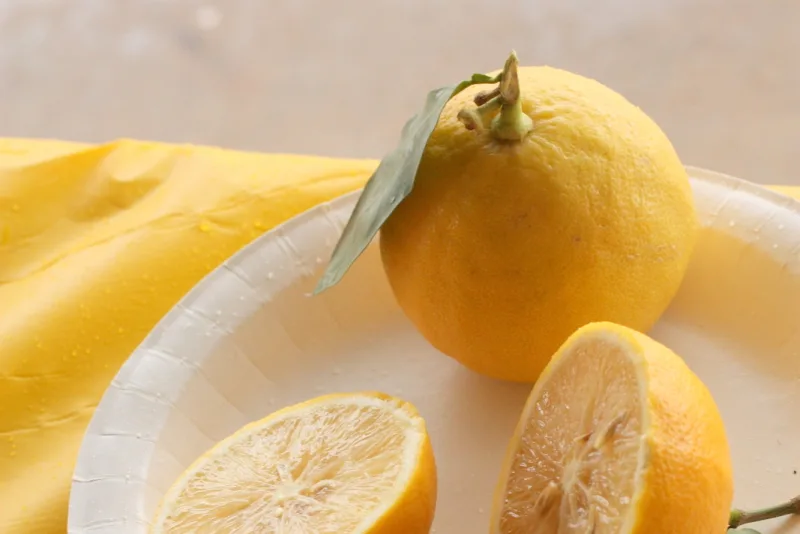
Bergamot essential oil is obtained from the peel of the bergamot fruit (Citrus bergamia), a small, greenish-yellow citrus grown almost exclusively in the Calabria region of southern Italy. It is not eaten, because the pulp is sour and bitter, but its peel hides an aromatic oil of rare beauty: fresh, citrusy, floral and slightly spicy all at once. It is one of the most prized oils in aromatherapy, also famous for giving Earl Grey tea its unmistakable aroma. In Mediterranean tradition it is linked to good spirits, mental clarity and the care of blemish-prone skin.
Table of Contents
- What bergamot is and where it comes from
- Composition and active compounds
- Benefits for health and mood
- Traditional and modern uses
- How to use bergamot oil correctly (step-by-step recipes)
- Dosage and how to use
- Lifestyle: weaving bergamot into your daily routine
- Practical Tips and Common Mistakes
- Conclusion
- Frequently Asked Questions
What bergamot is and where it comes from
Bergamot is a hybrid fruit, thought to be a cross between sour lemon and bitter orange (or lime). The tree is sensitive to cold and fussy about soil, which is why it thrives in a narrow coastal strip of Calabria, where the mild climate and sea breezes suit it perfectly. There it is harvested in winter, and the fresh peel is mechanically pressed to release the essential oil held in the tiny glands on its surface.
Unlike many other essential oils, bergamot is usually obtained by cold pressing, just like orange or lemon peel oil. This method preserves the lively, complex aroma, but it has a drawback: it also extracts the phototoxic compounds from the peel. There is also a “bergapten-free” version (labeled FCF or bergapten-free), treated to remove the phototoxic substance, which is safer for application to the skin.
The name “bergamot” comes, by some accounts, from the Turkish town of Bergama, and by others from the Turkish phrase for “the lord’s pear.” Whatever its origin, the fruit has become a symbol of fragrant refinement: it is a foundation note in fine perfumery, including the famous original eau de cologne.
Composition and active compounds
Bergamot oil is a complex blend of dozens of volatile compounds, each contributing to its aroma and effects. The main constituents are:
- Limonene – a citrus monoterpene present in many citrus oils, associated with a feeling of freshness and with cleansing effects.
- Linalyl acetate – an ester with a sweet, floral scent, considered responsible for much of the oil’s calming and relaxing effect.
- Linalool – a floral terpene alcohol, pleasant and soothing, also found in lavender.
- Gamma-terpinene and beta-pinene – terpenes that round out the green, fresh note.
- Bergapten (5-MOP) – the furocoumarin responsible for phototoxicity; absent in the FCF version.
It is precisely the combination of lively citrus notes (limonene) and calming floral notes (linalyl acetate, linalool) that gives bergamot its distinctive character: it is at once energizing and soothing, a rare balance that explains why it is so prized for regulating mood.
Benefits for health and mood
Support for good spirits and relaxation
Bergamot’s best-known benefit relates to mood. Preliminary studies and a long tradition of use suggest that inhaling bergamot’s aroma may help reduce feelings of tension and improve one’s state of mind. The fresh, floral scent appears to act on the regions of the brain involved in emotion, offering a sense of relief and optimism. This is why bergamot is one of the most widely used aromas in aromatherapy for mild anxiety, nervous fatigue and passing low spirits.
Help for more restful sleep
Although it is a citrus, and therefore unexpectedly associated more with energizing, bergamot also has a sedative side thanks to linalyl acetate. Many people use it in the evening, alone or combined with lavender, to create an atmosphere conducive to sleep. Tradition holds that a bergamot diffuser switched on half an hour before bed helps a restless mind settle.
Support for blemish-prone skin
In folk tradition and in natural cosmetics, bergamot (especially the bergapten-free version) is used to care for oily, blemish-prone skin. It has astringent properties and a “cleansing” scent, and studies suggest antibacterial effects useful against the bacteria involved in acne. Properly diluted, it can be added to products for oily skin.
Digestive comfort
In Mediterranean folk medicine, citrus aromas, including bergamot, were associated with stimulating appetite and improving digestive comfort. A gentle abdominal massage with diluted bergamot oil is a traditional practice for feelings of bloating and discomfort, though here caution and correct dilution are essential.
Fresher air and a sense of cleanliness
Thanks to its rich limonene content, bergamot has a deodorizing and air-freshening effect. Diffused around the home, it leaves a clean, mood-lifting aroma, which is why it features in many daytime aromatherapy blends.
Traditional and modern uses
Over time, bergamot has been used in several ways:
- In perfumery – as a bright top note in countless perfumes and colognes.
- In gastronomy – to flavor Earl Grey tea, certain Italian sweets and liqueurs.
- In aromatherapy – to regulate mood, relax and freshen the air.
- In natural cosmetics – in products for oily skin, in lotions and creams (FCF version only, in small concentrations).
- In folk tradition – in evening aromatic baths and in inhalations to clear the mind.
How to use bergamot oil correctly (step-by-step recipes)
1. Diffusing into the air (room aromatherapy)
This is the safest and simplest method, with no risk of phototoxicity (it does not touch the skin).
Steps:
- Fill the diffuser reservoir with water, following the device’s instructions.
- Add 3 to 5 drops of bergamot essential oil for an average-sized room.
- Turn on the diffuser and run it for 20 to 30 minutes, not continuously for hours.
- For evening relaxation, combine 2 drops of bergamot with 2 drops of lavender.
2. Direct inhalation (for mood and mental clarity)
Steps:
- Put 1 to 2 drops on a paper tissue or a cotton handkerchief.
- Bring it close to your nose and breathe deeply a few times, eyes closed.
- Repeat whenever you feel the need for a calming pause during the day.
Steam variation (mind your eyes): 1 to 2 drops in a bowl of hot water, head above at a comfortable distance, breathing for a few minutes.
3. Relaxing massage oil (correctly diluted)
Caution: Use the FCF (bergapten-free) version and do not expose the massaged area to the sun for at least 12 to 18 hours.
Steps:
- In a 30 ml bottle, pour carrier oil (sweet almond, jojoba or sesame).
- Add 6 to 9 drops of FCF bergamot oil (a concentration of about 1 to 1.5%).
- Shake gently and label the bottle.
- Apply to shoulders, neck or back with gentle movements, in the evening.
4. Evening aromatic bath
Steps:
- Mix 3 to 4 drops of bergamot with a spoonful of milk, honey or a bath base (oils do not dissolve directly in water).
- Add the mixture to a tub of warm water and stir well.
- Soak for 15 to 20 minutes, breathing in the aroma. In the evening, keep your skin out of the sun afterward.
5. Air-freshening spray
Steps:
- In a 100 ml spray bottle, put distilled water and a teaspoon of alcohol or witch hazel (as an emulsifier).
- Add 15 to 20 drops of bergamot.
- Shake well before each use and spray into the air, not onto delicate fabrics or sun-exposed skin.
Dosage and how to use
Essential oils are highly concentrated, so “less is more.” The basic rules:
- Diffusing: 3 to 5 drops for a room, sessions of 20 to 30 minutes.
- On the skin: dilution of 1 to 2% (about 6 to 12 drops per 30 ml of carrier oil), FCF version only.
- Never neat on the skin and never near the eyes or mucous membranes.
- No sun exposure for 12 to 18 hours after applying the cold-pressed version to the skin.
- Ingestion is not recommended without the guidance of a qualified professional.
Before first use on the skin, do a patch test: apply a small amount of the diluted blend to the inner forearm and wait 24 hours to watch for any reaction.
Lifestyle: weaving bergamot into your daily routine
Bergamot fits beautifully into a daily “reset” ritual. In the morning, a few drops in a diffuser can set the tone for a brighter day; it is a pleasant alternative to a quick coffee, offering a boost of clarity without the jitters. At the office, a handkerchief with a drop of bergamot, breathed in discreetly between tasks, can serve as a mental breather.
In the evening, bergamot shows its other face: combined with lavender and diffused half an hour before bed, it helps the transition from the bustle of the day to the calm of night. A warm bath with a few drops, followed by some reading, is a day’s-end ritual that many people love.
For those who care about their skin, a light serum with FCF bergamot (in low concentration) can join the evening routine for oily skin, complemented by proper moisturizing. The key is consistency and moderation: the pleasant effects come from regular, gentle use, not from large amounts.
Practical Tips and Common Mistakes
Mistake no. 1: Applying the oil neat to the skin. Essential oils are extremely concentrated. Neat bergamot can irritate, sensitize and, in the case of the cold-pressed version, cause sunburn. Always dilute in a carrier oil.
Mistake no. 2: Sun exposure after application. This is the most dangerous mistake. The bergapten in cold-pressed oil reacts with UV rays and causes spots and burns. Use the FCF version on the skin, or avoid the sun entirely for 12 to 18 hours.
Mistake no. 3: Diffusing continuously for hours. Aromatherapy works better in short sessions. Uninterrupted diffusing can cause headaches and overwhelm the senses. Air out the room and take breaks.
Mistake no. 4: Storing in light and heat. Citrus oils oxidize quickly. Keep the bottle tightly closed, in a cool, dark place away from heat sources, ideally for under a year after opening.
Mistake no. 5: Ingesting it “for health.” Swallowing drops of essential oil without professional supervision can irritate the mucous membranes and interact with medications. It is not a safe practice for home use.
Mistake no. 6: Using it on young children and pets without precautions. Strong essential oils are not suitable for infants and can be toxic to cats. Seek professional advice.
Conclusion
Bergamot essential oil is a little jewel of aromatherapy: with an aroma that is at once fresh and calming, it helps lift the mood, relax and care for oily skin. Like the one in Aunt Veronica’s little bottle, it is a simple remedy that, used gently and consistently, can bring calm to hectic days. The key, however, is caution: correct dilution, attention to the sun because of phototoxicity, and moderation. Used wisely, bergamot becomes a fragrant ally of well-being. For any real medical condition, though, it remains a support, not a substitute for professional advice.
Frequently Asked Questions
Is bergamot oil safe for the skin? Yes, but with conditions. It must be diluted in a carrier oil (1 to 2%), and if it is cold-pressed (containing bergapten), it must not be exposed to the sun for 12 to 18 hours after application because of phototoxicity. For the skin, the FCF (bergapten-free) version is safer.
Why can’t I go in the sun after using bergamot on my skin? Because the bergapten (5-MOP) in cold-pressed oil is phototoxic: it reacts with UV rays and can cause serious burns and persistent pigment spots. This is bergamot’s main risk.
How does bergamot help with mood and anxiety? Its aroma, rich in linalyl acetate and limonene, appears to influence the regions of the brain linked to emotion, offering a sense of relaxation and optimism. Preliminary studies and tradition associate it with reduced nervous tension and a better state of mind.
Can I put bergamot oil in tea or food? The Earl Grey aroma comes from bergamot, but the tea is flavored industrially, under control. Adding pure essential oil to food or drink at home is not recommended without a professional’s guidance, because it is very concentrated and can irritate.
What is the difference between regular bergamot and “FCF” bergamot? FCF (furocoumarin-free) means oil treated to remove the phototoxic bergapten. It is safer for application to the skin, but the aroma may be slightly different. For diffusing into the air, the regular version is perfectly suitable.
How do I choose a quality bergamot oil? Look for the botanical name (Citrus bergamia), the extraction method (cold pressing), the origin (usually Italy, Calabria) and packaging in dark glass. Avoid products vaguely labeled “fragrance oil.”
How long does bergamot oil keep? Being a citrus oil, it oxidizes relatively quickly. Used within a year of opening and stored cool, dark and well sealed, it best retains its qualities.
Can I use bergamot during pregnancy or on children? Caution requires that during pregnancy, breastfeeding and in young children, the use of essential oils be discussed in advance with a doctor. Gentle, short diffusing in a ventilated room is usually the mildest option, but professional advice remains essential.