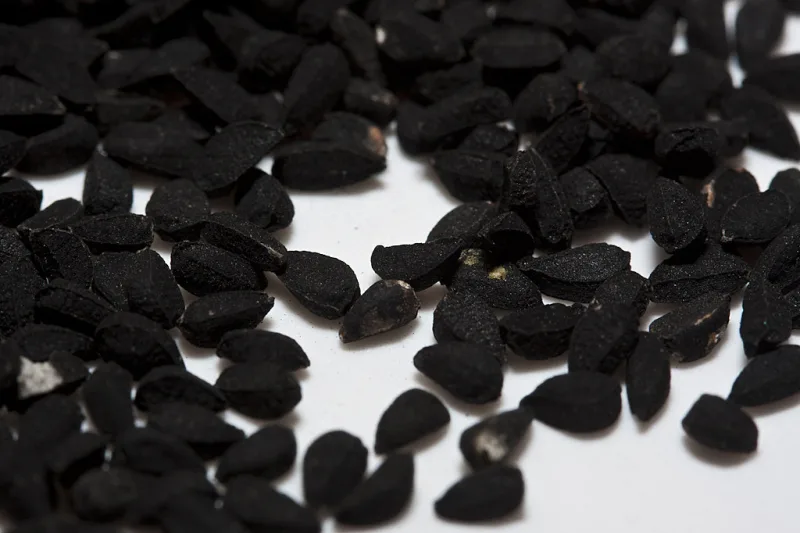
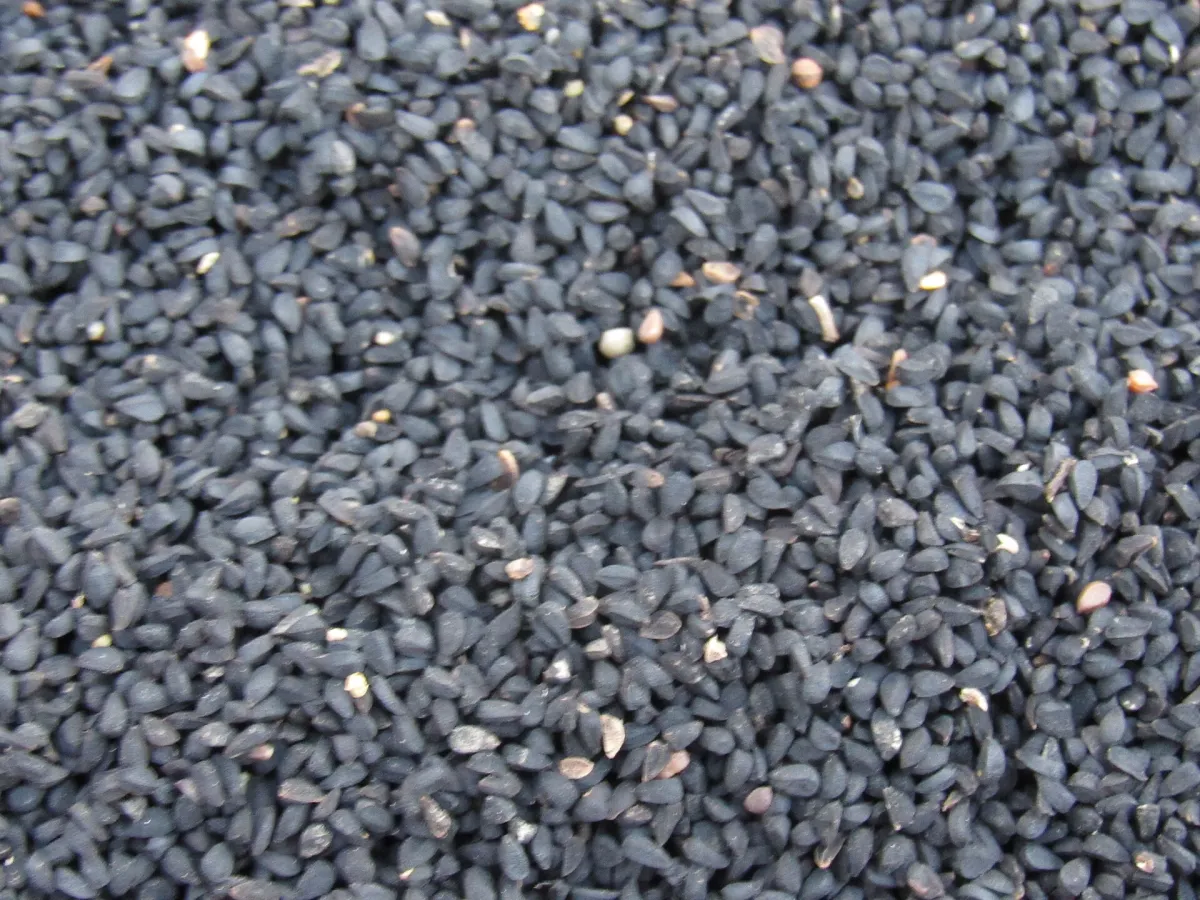
 Photo: Afifa Afrin, CC BY-SA 4.0, via Wikimedia Commons
Black seed oil (also called black cumin seed oil or Nigella sativa oil) is cold-pressed from the seeds of Nigella sativa. It is usually taken by mouth, 1-2 teaspoons a day (5-10 ml), or applied diluted to the skin. Clinical studies show modest effects on cholesterol, blood sugar and allergy symptoms. It does not “cure everything”, and in some people it causes skin reactions or interacts with medication.
It is one of the best-selling oils in health food shops, helped by a saying from Islamic tradition that black seed “heals every disease except death”. This guide separates tradition from evidence and shows you how to use the oil without harming yourself.
Key takeaways
- Good black seed oil is cold-pressed, tastes peppery and slightly bitter, and has a strong spicy smell.
- The most studied compound is thymoquinone; its content varies widely between brands.
- Meta-analyses show small drops in LDL cholesterol, triglycerides and blood sugar, useful only as an add-on.
- Usual dose: 1/2-1 teaspoon once or twice a day after meals, in 8-12 week courses.
- On skin, use it diluted (10-20% in a carrier oil); it can cause contact dermatitis.
- Avoid medicinal doses in pregnancy and check with your doctor if you take blood thinners, diabetes or blood pressure drugs.
What black seed oil is
Black seed (Nigella sativa, buttercup family, Ranunculaceae) is an annual plant with pale blue-white flowers, grown from Egypt and the Middle East to India. Its small, black, angular seeds were found in Tutankhamun’s tomb. In Romanian bakeries they are sprinkled on pretzels and bread. We covered the spice, the tea and seeds with honey separately in our article on black cumin; here we focus only on the oil.
Watch out for name confusion: black seed is not botanically related to caraway (Carum carvi) or to cumin (Cuminum cyminum). Always check for the Latin name Nigella sativa on the label.
Two different products are sold under the same name:
- Cold-pressed fixed oil: an oily, golden-brown or greenish liquid used internally and externally. Almost all clinical studies refer to this one.
- Black seed essential oil: produced by distillation, highly concentrated, with far more volatile thymoquinone. It is NOT taken by the teaspoon and never applied undiluted.
Composition and active compounds
The cold-pressed oil contains roughly 50-60% linoleic acid (omega-6), 20-25% oleic acid, saturated fatty acids, phytosterols and tocopherols. The “medicinal” part comes from a small but very active volatile fraction:
- Thymoquinone: the most researched compound, antioxidant and anti-inflammatory in the lab.
- p-cymene, carvacrol, alpha-pinene: aromatic components with antimicrobial activity in vitro.
- Nigellone and dithymoquinone: linked to effects on the airways.
Thymoquinone content differs hugely between products, from traces to more than 1-2%, depending on origin, pressing and storage. That is why two bottles with the same label can behave differently. Serious producers state the thymoquinone percentage on the label.
Benefits: tradition versus evidence
In traditional Arabic, Persian and Indian medicine, black seed was used for cough, asthma, indigestion, headaches and skin conditions. Modern research has focused on a handful of areas. Here is what we know and how confident we can be.
Cholesterol and triglycerides
Several meta-analyses of randomized trials found that black seed supplements (oil or powder) slightly lower total cholesterol, LDL and triglycerides. The effect is small, closer to a dietary change than to a drug. The oil can support someone with mildly raised cholesterol, alongside diet and exercise, never instead of prescribed treatment.
Blood sugar
In studies of people with type 2 diabetes or prediabetes, black seed modestly reduced fasting glucose and HbA1c. Most trials are small and short. If you take diabetes medication, the combination may lower your blood sugar more than expected, so test more often at first.
Blood pressure
Some studies show small drops in systolic and diastolic pressure. Again, this is an add-on effect that stacks with medication and can cause dizziness in people whose pressure is already low.
Allergies and breathing
A few small clinical trials reported fewer allergic rhinitis symptoms (sneezing, blocked nose) and slightly better asthma control when black seed was added to standard treatment. It never replaces prescribed inhalers.
Skin: acne and eczema
Applied topically, the oil has been tested in small studies for mild acne (as a lotion or gel) and for hand eczema, with encouraging results. Paradoxically, the same oil is a known cause of allergic contact dermatitis, sometimes with blisters, mostly when used undiluted. For skin prone to eczema, the patch test is not optional.
Hair
Black seed oil is popular for scalp massage, but evidence for hair loss is very limited. It may nourish a dry scalp and have a mild antimicrobial effect, yet there is no solid proof that it stops alopecia.
How to use it: recipes and directions
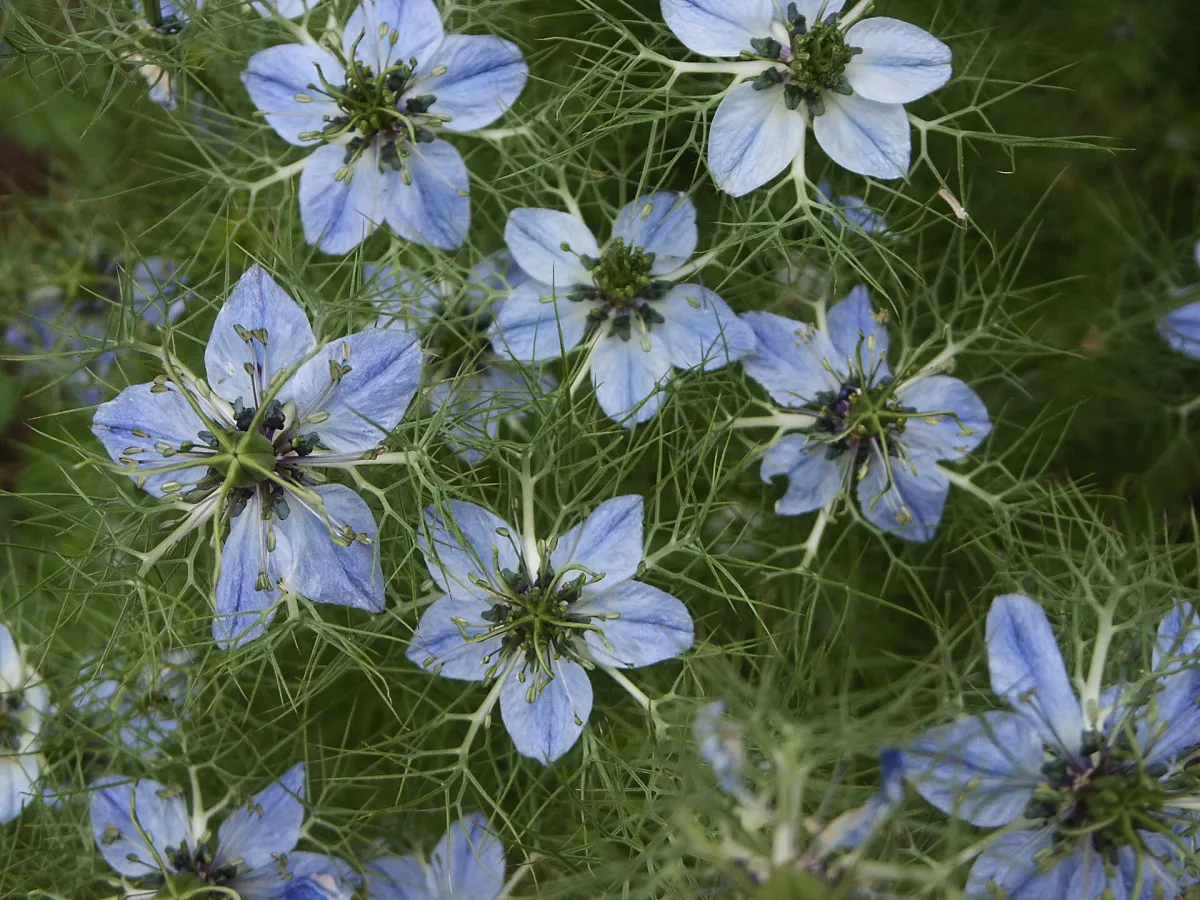 Photo: Pamla J. Eisenberg, CC BY-SA 2.0, via Wikimedia Commons
Internally, by the teaspoon
- Start with 1/2 teaspoon (2.5 ml) once a day after a meal for 3-4 days to check how you tolerate the taste and your digestion.
- Then increase to 1 teaspoon (5 ml) once or twice a day, still after meals.
- To soften the peppery taste, mix the oil with a teaspoon of honey or into 50 ml of yogurt or kefir.
- Follow an 8-12 week course, then take a 2-4 week break.
Capsules
Oil capsules (usually 500 mg) avoid the taste and give a consistent dose. Studies typically used 1 to 3 g of oil a day, split into 2 doses. Follow the label and do not combine capsules with the teaspoon.
On the skin
- For blemish-prone spots: 2 ml black seed oil in 8 ml jojoba oil (20% dilution), applied in the evening to small areas after a patch test.
- For dry, rough skin: 1 teaspoon black seed oil to 4 teaspoons almond or grapeseed oil, massaged in gently after a shower.
On the scalp
Mix 1 tablespoon black seed oil with 2 tablespoons warmed coconut or castor oil. Massage into the scalp for 5 minutes, leave for 30-60 minutes, then shampoo twice. Once a week is enough.
Patch test (mandatory before external use)
Apply 2-3 drops of the diluted blend to the inside of your forearm, cover with a plaster and wait 48 hours. If you see redness, itching, swelling or blisters, do not use the oil on your skin, even diluted.
Dosage and dilution table
| Use | Amount | Frequency | Notes |
|---|---|---|---|
| Internal, starting | 2.5 ml (1/2 tsp) | Once a day | After a meal, 3-4 days |
| Internal, maintenance | 5 ml (1 tsp) | 1-2 times a day | 8-12 week courses |
| Oil capsules | 500 mg | 2-4 capsules a day | Max 3 g/day without medical advice |
| Skin, face | 10% dilution (1 ml in 9 ml carrier) | Evening | Only after a 48 h patch test |
| Skin, body | 20% dilution (2 ml in 8 ml) | Once a day | Not on irritated or broken skin |
| Scalp | 1 tbsp + 2 tbsp carrier oil | Once a week | Double shampoo |
| Children 6-12 years | Food amounts only | Occasionally | No medicinal doses without a paediatrician |
How to choose a good black seed oil
- Cold-pressed, unrefined, in a dark glass bottle.
- Latin name Nigella sativa and country of origin on the label (Egypt, Ethiopia, Turkey, India).
- Pressing date or a clear best-before date; oils rich in omega-6 go rancid easily.
- Peppery, slightly bitter taste that catches the back of your throat: a sign of volatile compounds. A bland oil may be old or diluted.
- Keep the bottle in the fridge once opened and finish it within 2-3 months.
Contraindications, interactions and who should avoid it
- Pregnancy: the seeds were traditionally used to “bring on” menstruation. Culinary amounts are considered safe, but medicinal doses of the oil should be avoided in pregnancy. During breastfeeding data are lacking, so skip courses.
- Children under 6: do not give oil by the spoon. Older children only with a paediatrician’s approval.
- Anticoagulants and antiplatelets (warfarin, clopidogrel, high-dose aspirin): black seed may affect clotting. Stop the oil at least 2 weeks before surgery.
- Diabetes and blood pressure drugs: risk of excessive drops in glucose or pressure.
- Kidney disease: isolated reports describe acute kidney injury linked to high doses of black seed. People with kidney disease should not do courses without a doctor.
- Allergy to buttercup-family plants or a previous reaction to black seed.
- Pets: do not give the oil to dogs or cats without a vet. Never diffuse black seed essential oil in a room where a cat lives.
When to see a doctor
Stop the oil and seek medical help if you notice blisters or spreading redness, swelling of the lips or face, difficulty breathing, unusual bleeding (gums, unexplained bruises), dark urine or passing much less urine, or severe dizziness. Likewise, a cough lasting more than 3 weeks, consistently high blood sugar or uncontrolled blood pressure need a check-up, not another oil.
Common mistakes
- Taking essential oil instead of cold-pressed oil. The essential oil is dozens of times more concentrated and can irritate mucous membranes.
- “Loading” doses. More is not better: 2-3 tablespoons a day raise the risk of nausea, reflux and interactions.
- Applying it neat to the face. This is the most common route to contact dermatitis.
- Stopping medication. The effects on cholesterol and glucose are small and do not replace treatment.
- Storing it somewhere warm. Oxidised oil loses its active compounds and can upset the stomach.
- Expecting miracles. Black seed oil is a supportive remedy with modest evidence, not a universal cure.
If you want an omega-3-rich oil for heart health, read our guide to flaxseed oil; for skin care, compare black seed with the much gentler grapeseed oil.
Conclusion
Black seed oil has a long history and an interesting scientific profile: modest evidence for cholesterol, blood sugar, blood pressure and allergies, plus some local potential for the skin. Taken in sensible doses, in courses with breaks, bought cold-pressed and stored correctly, it can be a useful addition to your routine. Respect the contraindications, patch test before external use and talk to your doctor if you take long-term medication.
Frequently asked questions
Should I take black seed oil on an empty stomach or after food? After food is the safer choice, because on an empty stomach it can cause heartburn or nausea. If you tolerate it well, you can try it in the morning with a little yogurt or honey.
How long can I take black seed oil? Studies usually lasted 8-12 weeks. After a course, take a 2-4 week break. Safety data for continuous long-term use are lacking.
Does black seed oil boost immunity? Lab studies show immune-modulating effects, but clinical evidence that it prevents colds is weak. Sleep, diet and recommended vaccines matter more.
Can I put black seed oil straight on pimples? Not undiluted. Use a 10% dilution in a non-comedogenic oil such as jojoba and do the 48-hour patch test first. Acne-prone skin is often sensitive and reacts easily.
Is black seed oil the same as cumin oil? No. Black seed oil comes from Nigella sativa. Caraway (Carum carvi) and cumin (Cuminum cyminum) are different plants with different oils and uses.
Why does my oil taste so peppery? The peppery, bitter taste comes from volatile compounds including thymoquinone and is a sign of freshness. A paint-like or rancid nut smell means oxidation: throw the bottle away.
Can I take black seed oil while breastfeeding? Culinary use (seeds on bread) does not seem to be a problem, but there are not enough data on oil courses. Talk to your doctor or avoid them while breastfeeding.
Sources and further reading
- Ahmad A. et al., “A review on therapeutic potential of Nigella sativa: A miracle herb”, Asian Pacific Journal of Tropical Biomedicine, 2013.
- Meta-analyses of randomized trials on Nigella sativa and lipid profile, blood glucose and blood pressure (PubMed search: “Nigella sativa meta-analysis”).
- Tisserand R., Young R., Essential Oil Safety, 2nd edition, Churchill Livingstone, 2014 (black seed essential oil profile).
- Case reports of allergic contact dermatitis from Nigella sativa oil (PubMed, “Nigella sativa contact dermatitis”).
Informational content: this article does not replace advice from your doctor or pharmacist. Consult a professional before starting a course, especially if you have a chronic condition, are pregnant or take medication.