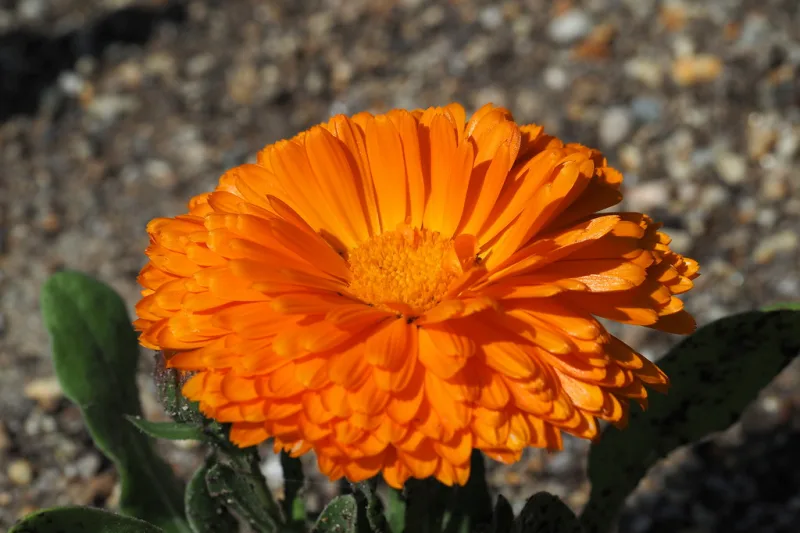

Calendula Oil: Benefits, Uses and How to Apply It for Irritated Skin
IMPORTANT: Calendula oil is generally well tolerated and safe for topical use, but people allergic to plants in the Asteraceae family (daisies, chamomile, arnica, ragweed, chrysanthemums) should first do a patch test on a small area of skin and avoid the product if redness, itching or a rash appears. Do not apply it to deep, infected or heavily bleeding wounds without medical advice. Pregnant or breastfeeding women should consult a doctor before using calendula preparations internally. Calendula oil is a care and support remedy, not a substitute for medical treatment of infections, serious burns or diagnosed chronic skin diseases. If an irritation does not improve within a few days, worsens, or is accompanied by fever or pus, see a doctor.
Grandmother Veta from the hills of Transylvania kept a jar on the top shelf of her pantry filled with a golden-orange liquid that she reached for whenever one of her grandchildren scraped a knee, got a small burn from the stove, or came home from play with skin red and stinging from the sun. She called it “the butter of flowers,” even though it was not butter at all but calendula oil that she made herself, summer after summer, from the orange flowers she grew along the edge of her tomato bed. She picked them in the morning, once the dew had lifted, let them wilt for a day on a sheet of newspaper, and then drowned them in sunflower oil in a jar she kept on the south-facing windowsill.
After a few weeks in the sun, the oil took on a warm, amber color and smelled faintly of resin and hay. With it she anointed her hands when they cracked in winter, the wind-chapped cheeks of the children, and even the cow’s udder when it became irritated. Back then no one spoke of “anti-inflammatory” properties or “cellular regeneration,” but everyone knew one simple thing: Grandmother Veta’s butter of flowers calmed angry skin. Today, when pharmacy shelves are full of creams with complicated names, many people are rediscovering this humble remedy proven over generations.
Calendula oil is an oleic macerate obtained by extracting the active principles of marigold flowers (Calendula officinalis) into a vegetable oil. Unlike essential oils, which are produced by distillation, calendula oil is an “infused” or “macerated” oil: the flowers sit submerged in oil for weeks, and the fat-soluble compounds slowly migrate into the fat. The result is a gentle, soothing oil that has been prized for centuries in European folk medicine for its ability to calm irritated skin, support the healing of minor wounds, and moisturize dry, cracked areas.
Table of Contents
- What calendula is and where it comes from
- How calendula oil is made
- Composition and active principles
- Benefits for skin and health
- Traditional and modern uses
- How to make calendula oil at home (step-by-step recipes)
- How to apply it and dosage
- How to store it correctly
- Lifestyle and skin care
- Practical tips and common mistakes
- Conclusion
- Frequently asked questions
What calendula is and where it comes from
Calendula, known scientifically as Calendula officinalis, is an annual plant of the Asteraceae family, native to the Mediterranean region but now cultivated throughout Europe, including in gardens across Romania. It is easy to recognize by its bright orange or yellow flowers, with numerous petals arranged around a central disc, and by its slightly resinous fragrance. In folk speech it is also known as “pot marigold.”
The plant blooms from spring until late autumn, which is the origin of its Latin name “calendula,” derived from “calendae” — the first day of each month for the Romans, an allusion to the fact that it seems to bloom almost every month. Calendula is extremely hardy, grows undemandingly in almost any garden, and self-seeds from one year to the next. It is precisely this availability that made it, over time, one of the most beloved “garden-gate” medicinal plants, within reach of any household.
The part used for medicinal purposes is the flower — either the whole flower head or just the petals (ligules). These are gathered on sunny days, when the content of active substances is highest, and dried in the shade, in a thin layer, to be stored over winter. From them people prepare teas, tinctures, ointments and, of course, the macerated oil we are discussing here.
How calendula oil is made
Calendula oil is not an essential oil and is not produced by cold pressing, because the flower contains too little oil of its own. Instead, the maceration method is used: the flowers (freshly wilted or dried) are completely covered with a base vegetable oil — usually sunflower, olive, sweet almond or jojoba oil — and left to “infuse” for an extended period.
There are two main methods. Cold maceration (in the sun) involves leaving the jar of flowers and oil in natural light and warmth for three to six weeks, shaking it daily. Hot maceration speeds up the process: the mixture is kept in a water bath at low temperature for a few hours, so that the fat-soluble compounds pass into the oil more quickly. Whatever the method, the principle is the same — extracting the carotenoid pigments, flavonoids and other fatty substances from the petals into the carrier oil.
Finally, the oil is filtered to remove the plant residue, leaving a clear liquid of a yellow-orange to golden color, with a subtle, pleasant scent. The quality of the oil depends on the freshness of the flowers, the quality of the carrier oil, and the avoidance of moisture, which can spoil the preparation.
Composition and active principles
Although calendula oil has not been studied as intensively as synthetic medicines, folk tradition and modern research suggest that its effectiveness comes from a blend of fat-soluble compounds extracted from the flower. Among the most important are:
- Carotenoids and flavonoids — pigments that give the orange color and that, according to studies, have antioxidant properties, helping to protect skin cells against oxidative stress.
- Triterpenoids (especially faradiol and its esters) — considered responsible for calendula’s anti-inflammatory effect, which is why the plant is so prized for calming irritated skin.
- Fatty acids from the carrier oil — which form a protective film on the skin, reduce water loss and maintain hydration.
- Soothing and regeneration-supporting compounds — which, in traditional medicine, explain the use of the oil for minor wounds, scratches and cracked skin.
The concentration of these substances varies depending on the preparation method, but their combination makes calendula oil a gentle product, suitable even for sensitive skin.
Benefits for skin and health
Soothes irritated and reddened skin
The best-known use of calendula oil is calming irritated skin. Thanks to its anti-inflammatory compounds, the oil helps reduce the stinging sensation, redness and discomfort caused by mild irritations, friction, wind or sun exposure. Applied to upset skin, it forms a protective, emollient layer that reduces the feeling of tightness and itching.
Supports the healing of minor wounds and scratches
Folk tradition and some studies suggest that calendula supports the natural process of skin regeneration. The oil has long been used for grazes, superficial scratches, skin cracks and small wounds that heal slowly. It keeps the area hydrated and supple, which may help achieve more harmonious healing.
Moisturizes and repairs dry, cracked skin
In winter, the skin of the hands, elbows, heels and lips dries out and cracks. Calendula oil, rich in fatty acids, deeply nourishes the skin, restores the lipid barrier and softens rough areas. It is an excellent choice for dehydrated skin that needs an extra layer of protection.
Helps with mild eczema and dermatitis
Many people with eczema, atopic dermatitis or irritation-prone skin use calendula oil as a supportive remedy. Its soothing effect can reduce itching and discomfort, without the dryness left by some creams. Be careful, however: in severe forms of eczema, the oil does not replace doctor-prescribed treatment.
Soothes babies’ skin (with caution)
In traditional baby care, calendula oil was used to calm diaper-irritated skin or redness from friction. Being gentle, it is often recommended today as well for delicate skin, but for infants it is essential to ask the pediatrician before use.
Supports mature skin and restores suppleness
Thanks to the antioxidants in carotenoids and flavonoids, calendula oil is also valued in mature skin care. Used regularly, it helps maintain elasticity and a velvety appearance, combating the dryness that accentuates fine lines.
Relieves minor skin discomforts
From cracked skin around the nails, to shaving irritation, to areas chafed by footwear, calendula oil is a versatile “first aid” for the small daily troubles of the skin.
Traditional and modern uses
In Romanian folk medicine, calendula has always been the plant of wounds and skin. Calendula ointment could be found in every peasant household, and the macerated oil was the lighter version, better suited to massage and dry skin. Grandmothers used it to anoint hands cracked from work, children’s cheeks, animals’ udders, and even to calm insect bites.
In modern cosmetics, calendula oil has become popular again as a “clean,” natural ingredient in creams, lip balms, massage oils and products for sensitive or baby skin. It is used on its own or in combination with other oils (coconut, almond, jojoba) and with soothing essential oils such as lavender. Many people prefer it precisely because it is simple, without synthetic fragrances and harsh preservatives.
How to make calendula oil at home (step-by-step recipes)
Making calendula oil at home is surprisingly simple and satisfying. Here are two proven methods.
Recipe 1: Cold macerate (in the sun)
You will need: dried calendula flowers (or fresh ones, left to wilt for a day), a base vegetable oil (sunflower, olive or sweet almond), a clean, dry jar with a lid, cheesecloth or a fine strainer.
- Prepare the flowers. If using fresh flowers, let them wilt for 12-24 hours so they lose some of their water (moisture can spoil the oil). Dried flowers are even safer.
- Fill the jar. Place the flowers in the jar, without packing them, up to about three-quarters full.
- Pour in the oil. Completely cover the flowers with oil, so that at least 1-2 cm of oil remains above them. The flowers must always be submerged.
- Close and label. Put the lid on and note the date.
- Let it macerate. Keep the jar in light and warmth (a sunny windowsill) for 3-6 weeks, shaking it gently every day.
- Filter. Strain the oil through cheesecloth, squeeze the flowers well, and transfer the clear oil into a clean bottle, preferably dark glass.
Recipe 2: Hot macerate (quick)
You will need: the same ingredients, plus a pot for a water bath.
- Place the flowers and oil in a heat-resistant jar or directly in a metal bowl.
- Set it in a pot of hot water (water bath) over low heat.
- Keep the mixture at a low temperature (below boiling) for 2-4 hours, taking care not to overheat it. The oil should not sizzle.
- Let it cool, then filter through cheesecloth.
- Transfer into a clean bottle.
Recipe 3: Soothing calendula balm
For a more solid balm, gently heat 100 ml of macerated calendula oil with 10-15 g of grated beeswax until it melts. Pour into small containers and let it set. You get an ointment ideal for chapped lips, rough elbows and dry skin.
How to apply it and dosage
Calendula oil is applied externally, directly onto clean, dry skin. Here are the usage recommendations:
- For irritated or reddened skin: apply a thin layer of oil to the affected area, massaging gently, 1-2 times a day.
- For dry, cracked skin: massage a few drops in the evening, after a bath, when the skin is clean.
- For massage: it can be used as a massage oil, alone or mixed with other vegetable oils.
- For the face: a few drops in the evening, avoiding the eye area; especially suitable for dry and mature skin.
- For minor wounds and scratches: after the area has been cleaned, apply the oil gently, without rubbing.
There is no strict “dosage,” since it is an external product. The important thing is to use small amounts, enough to hydrate without leaving the skin greasy. For internal use (rare and only on specialist advice), do not improvise — calendula is usually taken internally as a tea or tincture, not as a macerated oil.
How to store it correctly
Calendula oil should be kept in a cool place, away from direct light, preferably in a dark glass bottle. Well prepared and stored, it generally lasts 6-12 months. The signs that the oil has spoiled are a rancid smell, a change in color, or the appearance of mold (a sign of moisture left in the flowers). To prolong freshness, some people add a few drops of vitamin E oil, which acts as a natural antioxidant.
Lifestyle and skin care
Calendula oil gives the best results when it is part of a complete skin care routine. Internal hydration — that is, drinking enough water — is just as important as external application: skin that is well hydrated from within responds much better to soothing oils. A diet rich in vegetables, colorful fruits and healthy fats (avocado, nuts, fatty fish) supports the skin barrier and amplifies the effects of topical care.
Protecting the skin from aggressive factors — wind, cold, excessive sun, hot water and very degreasing soaps — reduces the need for later “repairs.” Using the oil in the evening, after gentle cleansing, allows for natural overnight restoration. And for irritation-prone skin, simplifying the routine — fewer, gentler products — is often the key. Calendula oil fits perfectly into this philosophy of minimalist, natural care.
Practical tips and common mistakes
Mistake no. 1: Using wet flowers. The most common cause of spoiled macerated oil is moisture. Fresh flowers must be allowed to wilt, and dried ones must be completely dry. Remaining water leads to mold and rancidity.
Mistake no. 2: Flowers sticking out of the oil. If the flowers are not completely submerged, the part exposed to air molds. Always make sure a layer of oil remains above them.
Mistake no. 3: Overheating during hot maceration. If the oil boils or gets too hot, the active principles are destroyed and the oil takes on a fried taste. Keep the temperature low and constant.
Mistake no. 4: Applying to infected or deep wounds. Calendula oil is for irritations and superficial wounds. Deep, infected or non-healing wounds need medical evaluation.
Mistake no. 5: Skipping the allergy test. Even though it is gentle, the oil can cause reactions in people sensitive to plants in the daisy family. Test first on a small area of skin.
Mistake no. 6: Unrealistic expectations. Calendula oil soothes and supports, but it is not a miracle medicine. For chronic or severe conditions, it is a complement, not a replacement for medical treatment.
Mistake no. 7: Storing in light and heat after preparation. Once filtered, the oil should be kept in the dark and cool, otherwise it oxidizes quickly.
Conclusion
Calendula oil is one of those simple, gentle remedies proven over generations that deserve a place in any natural skin care kit. Soothing, moisturizing and easy to make at home from the orange flowers that grow undemandingly in the garden, it stays true to the philosophy of folk medicine: using what nature offers in abundance, with measure and wisdom. Whether you use it for irritated skin, cracked hands, mild eczema or simply as a daily care oil, calendula oil offers gentleness and protection, just like Grandmother Veta’s “butter of flowers.” Used correctly, with attention to precautions, it is a trustworthy ally for healthy, calm skin.
Frequently Asked Questions
Can calendula oil be used on the face? Yes, especially on dry or mature skin. Apply a few drops in the evening, avoiding the eye area. Oily or acne-prone skin should test it cautiously, starting with small amounts.
How long until you see an effect on irritated skin? For mild irritations, many people notice a soothing sensation almost immediately and a visible improvement within a few days of regular use. If the irritation persists beyond a week, consult a doctor.
Can I use calendula oil for babies? Traditionally yes, for delicate skin, but infant skin is very sensitive, so it is essential to ask the pediatrician before any use.
What is the difference between calendula oil and calendula essential oil? In practice, “calendula essential oil” barely exists commercially, because the flower contains very little volatile oil. The product used is the macerated (infused) oil, obtained by extraction into vegetable oil, not by distillation.
Can it be used on hair? Yes, as a treatment for an irritated or dry scalp. Massage it into the skin, let it act, then wash it out. It soothes itching and nourishes the scalp.
Does calendula oil help with scars? Tradition suggests that, by supporting hydration and regeneration, it can help recent scars stay supple. For old or large scars, the effects are limited.
How can I tell if the oil has gone bad? A rancid smell, a change in color, or any trace of mold are clear signs. Spoiled oil should not be used.
Can I combine calendula oil with other oils? Yes. It blends very well with coconut, almond or jojoba oil, or with a few drops of lavender essential oil for an extra soothing effect.