
Coconut Oil: Benefits, Uses and How to Apply It for Skin, Hair and Cooking
IMPORTANT: Coconut oil is generally safe for external use (skin and hair), but for internal consumption it should be used in moderation, as it is very high in saturated fats. People with high cholesterol, cardiovascular disease, or those on restricted diets should talk to their doctor before including it daily in their meals. When applying it to the skin, always do a patch test on a small area (the inside of the forearm) 24 hours beforehand, especially if your skin is acne-prone, because coconut oil is comedogenic and can clog pores in some people. Do not use coconut oil as a lubricant with latex condoms, as it can degrade them. This article is informational and does not replace the advice of a doctor, dermatologist, or nutritionist.
A tropical story that conquered our kitchens
Aunt Florica, a lady from Constanța who had spent years working on commercial ships sailing to Asian ports, first brought home a jar of coconut oil in the early 2000s, when it was still an exotic rarity here. She told how, on the Pacific islands, she had seen women with skin smooth as silk and long, glossy hair, even though they lived under a scorching sun and the salty sea wind. Their secret, she said, was the coconut, which they used for everything — from cooking, to caring for hair and skin, to massaging babies.
At first, the neighbors looked with suspicion at that white, solid fat that smelled of vacation. But Aunt Florica showed them how she would warm it slightly in her palms until it melted and applied it to the dry ends of her hair, how she rubbed it on her elbows and knees in winter, when the skin cracked from the cold, and how she fried pancakes in it that took on a fine, sweetish aroma. Little by little, the jar of coconut oil made its way into many pantries in the neighborhood, proving that a remedy from far away can become a beloved habit of our own.
Coconut oil is the fat extracted from the kernel (copra) of the coconut, the fruit of the coconut palm (Cocos nucifera). It has been prized for centuries in the kitchens and beauty traditions of tropical regions — India, the Philippines, Indonesia, Sri Lanka, Thailand — where the coconut is called the “tree of life” because it provides food, drink, oil, fiber, and building materials. Over the past two decades, coconut oil has become extremely popular in the West as well, both as a food and as a natural cosmetic ingredient, thanks to its remarkable versatility and its distinctive composition of medium-chain fatty acids.
Table of Contents
- What coconut oil is and how it is made
- Types of coconut oil: virgin, refined, cold-pressed
- Composition and active compounds
- Health benefits
- Coconut oil for hair
- Coconut oil for skin
- Coconut oil in the kitchen
- How to use it: step-by-step recipes and methods
- Dosage and how to use
- Practical Tips and Common Mistakes
- Conclusion
- Frequently Asked Questions
What coconut oil is and how it is made
Coconut oil is obtained from the white, fatty flesh of the mature coconut. There are two main extraction methods. The first, considered superior, is cold-pressing the fresh coconut meat (the “wet” method) or dried copra, without using intense heat or chemical solvents. This method preserves the flavor, fragrance, and most of the beneficial compounds, resulting in virgin or extra-virgin coconut oil. The second method involves refining, bleaching, and deodorizing the dried copra, producing an oil that is neutral in taste and smell but poorer in aromatic compounds and some nutrients.
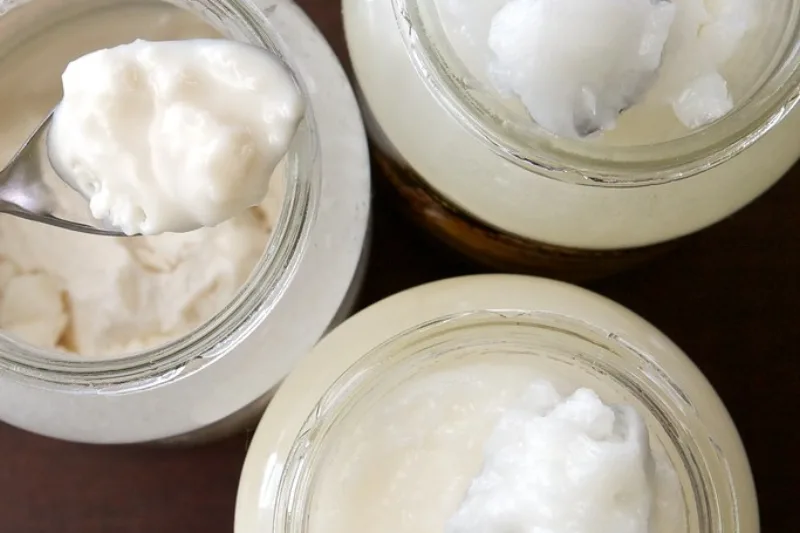
A fascinating characteristic of coconut oil is its low melting point, around 24-25°C (76°F). This means that at room temperature, in winter, or in cool spaces, the oil is solid, white, and creamy, while in summer or when warmed gently it becomes liquid and transparent. This transition is perfectly natural and does not affect quality — a good coconut oil moves from one state to another countless times without spoiling, thanks to its remarkable resistance to oxidation.
Types of coconut oil: virgin, refined, cold-pressed
When you buy coconut oil, you will come across several labels that can be confusing. Virgin (or extra-virgin) coconut oil is made from fresh coconut meat, retains the intense coconut aroma, and is recommended for cosmetics, for “raw” consumption (in smoothies, drizzled over cooked food), and for preparations at moderate temperatures. Refined coconut oil has a neutral taste, withstands higher frying temperatures, and is cheaper, but has lost some of its beneficial compounds. Cold-pressed coconut oil indicates the heat-free extraction method, and it is usually virgin as well.
For hair and skin care, the ideal choice is virgin, cold-pressed, organic, chemical-free coconut oil. For high-temperature cooking, many people prefer the refined version precisely for its neutral flavor and higher smoke point. Always read the label and look for the least processed product if you are after maximum cosmetic and nutritional benefits.
Composition and active compounds
What makes coconut oil so special is its unique fatty acid profile. About 90% of its content is saturated fat, but these are largely medium-chain triglycerides (MCTs), which behave differently in the body compared to the long-chain saturated fats found in fatty meat or lard.
The main components are:
- Lauric acid — makes up nearly half of the fatty acid content. Folk tradition and studies suggest that lauric acid has antimicrobial and antifungal properties, which is why coconut oil is so prized in hygiene and cosmetics.
- Caprylic and capric acid — medium-chain fatty acids with potential antimicrobial properties.
- Myristic and palmitic acid — long-chain saturated fatty acids present in smaller amounts.
- Vitamin E (tocopherols) — a natural antioxidant that protects the skin and the oil itself from oxidation, found in virgin oil.
- Polyphenols — antioxidant compounds found especially in virgin, cold-pressed oil.
Medium-chain triglycerides are absorbed and metabolized faster than other fats, being converted by the liver into a quick source of energy. For this reason, coconut oil is popular in ketogenic diets and among athletes.
Health benefits
A quick source of energy
Thanks to its medium-chain triglycerides, coconut oil provides a source of energy that is rapidly metabolized by the liver, without requiring the same digestive processes as long-chain fats. Many people use it in the morning, added to coffee or smoothies, for a boost of vitality and a lasting feeling of satiety.
Supporting skin and hair health
Applied externally, coconut oil creates a protective barrier that reduces water loss from the skin, contributing to long-lasting hydration. Lauric acid and the other fatty acids penetrate the hair shaft and help reduce protein loss, leaving hair stronger and shinier.
Traditional antimicrobial properties
Folk tradition in tropical regions prizes coconut oil for its antimicrobial and antifungal properties, attributed especially to lauric acid. It is used in oral rinsing (“oil pulling”), for caring for irritation-prone skin, and as a gentle remedy for dry or irritated areas.
Supporting satiety
Healthy fats contribute to the feeling of fullness. Moderately replacing other fats with coconut oil within a balanced diet may help with better appetite management, although the amount must be controlled because of its high caloric density.
Supporting cognitive function
Studies suggest growing interest in medium-chain triglycerides and their potential to provide an alternative source of energy for the brain. Although research is ongoing, many people include coconut oil in their diet for this very reason.
Supporting the immune system
The antimicrobial compounds in coconut oil are prized in folk tradition for the support they may offer the body in fighting unwanted microorganisms, although it does not replace an immune system supported by a varied diet and a healthy lifestyle.
Coconut oil for hair
One of the most popular uses of coconut oil is in hair care. Unlike many other vegetable oils that merely coat the hair shaft on the surface, coconut oil has the ability to penetrate the inner structure of the hair thanks to its small molecules and affinity with hair proteins. This explains why it is so effective at reducing damage.
The benefits for hair include deep hydration of dry and damaged strands, reduced frizz and split ends, added shine and softness, and protection against damage caused by frequent washing and heat styling. Some people also use it on the scalp to soothe mild itching and flaking.
Coconut oil for skin
On the skin, coconut oil acts as an excellent emollient. It is valued for moisturizing very dry areas — elbows, knees, cracked heels, hands chapped by the cold. Many parents use it gently for baby massage or for dry areas of children’s skin, due to its natural composition, although a patch test is recommended here too.
Coconut oil is also used as a natural makeup remover (especially for waterproof makeup), as a lip balm, as a soothing aftershave, as a massage oil, and as a cuticle treatment. Be careful, however: coconut oil is comedogenic, which means it can clog pores in people with oily or acne-prone skin, especially on the face. For these skin types it is better to use it on the body, not on the face.
Coconut oil in the kitchen
In cooking, coconut oil brings a subtle, exotic note, especially the virgin version. It is excellent for sautéing, frying at moderate temperatures, baking, and for desserts. Due to its resistance to oxidation, it stands up well to heat without degrading as quickly as oils rich in polyunsaturated fats. It pairs beautifully with Asian cuisine, curries, pancakes, cakes, and warm drinks.
For those following ketogenic or low-carb diets, coconut oil is a staple ingredient due to its high fat content and absence of carbohydrates. Still, being calorically dense (about 9 calories per gram, like any fat), it should be used in moderation.
How to use it: step-by-step recipes and methods
Hydrating hair mask with coconut oil
- Take 1-3 tablespoons of virgin coconut oil (depending on hair length).
- Warm it gently in your palms or over a steam bath until it becomes liquid and lukewarm (not hot).
- Apply it to dry or slightly damp hair, starting from the mid-lengths toward the ends. Avoid the roots if your hair is oily.
- Comb through with a wide-tooth comb for even distribution.
- Gather your hair and cover it with a shower cap or a warm towel.
- Let it work for 30 minutes to an hour (or overnight for an intensive treatment).
- Rinse well and shampoo 1-2 times to remove the oil completely.
Recommended once a week for dry and damaged hair.
Natural makeup remover
- Take a hazelnut-sized amount of coconut oil.
- Warm it between your fingers until it melts.
- Gently massage onto dry skin, focusing on areas with makeup.
- Wipe off with a cotton pad or a warm, damp cloth.
- Wash your face with your usual cleanser to remove any residue.
Oil pulling (oral rinse)
- Take a tablespoon of virgin coconut oil.
- Swish it around your mouth, between your teeth, for 10-15 minutes (without swallowing it).
- Spit it into the trash (not the sink, to avoid clogging the pipes when it solidifies).
- Rinse your mouth with warm water and brush your teeth as usual.
Coffee with coconut oil (energizing)
- Make your usual coffee.
- Add a teaspoon of virgin coconut oil.
- Stir well or blend with a hand blender for a creamy, frothy texture.
Hydrating body scrub
- Mix 1/2 cup of melted coconut oil with 1 cup of brown sugar or fine sea salt.
- Add a few drops of essential oil (lavender, orange) if you like.
- Massage onto damp skin in circular motions, then rinse.
Dosage and how to use
For internal consumption, a reasonable amount is 1-2 tablespoons per day (about 15-30 ml), introduced gradually into the diet. Start with one teaspoon per day to avoid digestive discomfort (coconut oil can sometimes cause loose stools or cramps in those unaccustomed to it). Gradually increase the amount over one to two weeks.
For external use, there is no strict limit, but use small amounts and apply a thin layer — more oil does not mean more benefits, only a greasy, hard-to-remove appearance. For hair, dose according to length and thickness.
Practical Tips and Common Mistakes
Mistake no. 1: Using refined coconut oil for cosmetics. For skin and hair, the virgin, cold-pressed version offers more beneficial compounds. Refined oil is only suitable for high-temperature cooking.
Mistake no. 2: Applying it to the face if you have oily or acne-prone skin. Coconut oil is comedogenic and can clog pores. For these skin types, use it only on the body.
Mistake no. 3: Consuming it in large amounts. Being very caloric and rich in saturated fats, overdoing it can harm your dietary balance. Moderation is key.
Mistake no. 4: Applying too much to your hair. Excess oil makes hair greasy, heavy, and hard to wash out. Start with a little and add more only if needed.
Mistake no. 5: Storing it incorrectly. Coconut oil is kept at room temperature, away from direct sunlight and sources of excessive heat. The refrigerator is not necessary.
Mistake no. 6: Pouring the oil down the sink after oil pulling. It solidifies and clogs pipes. Always spit it into the trash.
Mistake no. 7: Unrealistic expectations. Coconut oil is a wonderful and versatile ingredient, but it is not a cure-all. The benefits come with consistent use and within a healthy lifestyle.
Conclusion
Coconut oil is one of the most versatile natural ingredients you can have at home — a single jar can serve you in the kitchen, in the bathroom, and on the nightstand. From deep hydration of hair and skin, to preparing aromatic dishes and natural care rituals, the possibilities are almost endless. The key is to choose a quality product — virgin and cold-pressed for cosmetics — and to use it with moderation and common sense. As Aunt Florica discovered on her travels, sometimes the most precious remedies come in simple, natural forms, straight from nature’s gifts.
Frequently Asked Questions
Does coconut oil make you gain weight? Like any fat, coconut oil is caloric (about 9 calories per gram). Consumed in moderation, in place of other fats, it does not cause more weight gain than they do. The problem only arises when it is added in excess to an already calorie-rich diet.
Can I use coconut oil on my face? It depends on your skin type. For dry and normal skin it can be an excellent emollient. For oily or acne-prone skin, however, it is comedogenic and can clog pores, so it is better to avoid it on the face.
Why did my coconut oil harden / melt? This is completely normal behavior. Coconut oil solidifies below 24°C and melts above this temperature. Quality is not affected in any way.
How often can I do a coconut oil hair mask? For dry and damaged hair, once a week is ideal. For normal or oily hair, once every two weeks or only on the ends is enough.
Does coconut oil expire? Due to its high resistance to oxidation, coconut oil has a long shelf life, usually 1-2 years if stored properly, away from light and heat. Always check the date on the label and the smell — a rancid oil smells unpleasant.
Can I cook at high temperatures with coconut oil? Yes, coconut oil withstands heat relatively well due to its high content of stable saturated fats. The refined version has a higher smoke point and is preferred for intense frying.
Is coconut oil good for babies? Many mothers use it for massage and for dry areas of children’s skin, due to its natural composition. Still, always test on a small patch of skin and consult your pediatrician if the baby has sensitive skin or allergies.
What is the difference between coconut oil and MCT oil? MCT oil is a concentrated product containing only medium-chain triglycerides, extracted from coconut (or palm) oil. Coconut oil contains MCTs, but also other fatty acids, plus the aromatic compounds. MCT oil is used mainly for quick energy, while coconut oil is more versatile.