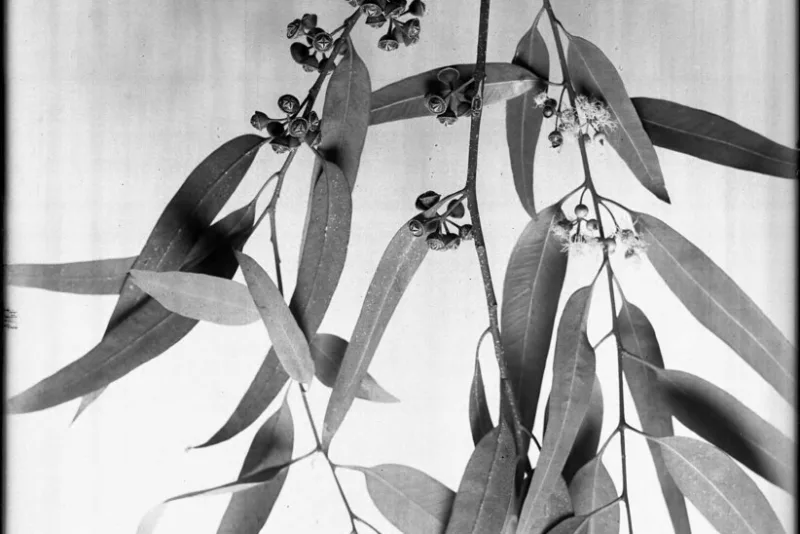

Eucalyptus Essential Oil: Benefits, Uses and How to Use It
IMPORTANT: Eucalyptus essential oil is highly concentrated and must NEVER be swallowed undiluted — even a few ingested drops can be toxic, especially for children. Do not apply it to the skin or under the nose of babies and children under 2-3 years old, because eucalyptol (cineole) can trigger laryngeal spasm and serious breathing problems in young children. Always use it diluted in a carrier oil on the skin, and avoid it during pregnancy and breastfeeding, in people with unstable asthma, epilepsy, or known allergies to plants in the myrtle family. If you have a chronic respiratory illness, high fever, or symptoms lasting more than a few days, see a doctor. This article is for informational purposes and does not replace medical advice.
Grandma Veronica from Bran kept, in a little wooden cabinet beside the chamomile mugs and the honey jars, a small brown bottle she only brought out in winter, when the wind carried colds across the village. Whenever one of us started a dry cough and struggled to breathe through the nose, she would set a basin of hot water on the table, add a few drops from that bottle, and cover our heads with a big towel. “Lean over and breathe deeply through your nose until the water cools,” she would say, and that sharp, clean smell opened our noses almost instantly. Only later did I learn that the bottle held eucalyptus oil, her trusted remedy for a stuffy nose and a heavy chest.
Aunt Veronica was not the only one. In many of our households over the past century, eucalyptus oil became a kind of “first aid” for the cold season. Its unmistakable, fresh, cooling scent is tied, in many people’s memories, to childhood inhalations, to mentholated chest balms rubbed on at night, and to the warm evening bath in which a drop or two was added. Today, when pharmacy shelves are full of essential oils, eucalyptus remains one of the most used and most appreciated, precisely because its effect on the airways is felt almost immediately.
Eucalyptus essential oil is the volatile, aromatic liquid extracted by steam distillation from the leaves and young branches of the eucalyptus tree — especially the species Eucalyptus globulus, but also Eucalyptus radiata and others. Native to Australia, where it grew on the lands of the Aboriginal peoples who had used its leaves for thousands of years, eucalyptus was brought to Europe and the Mediterranean in the 19th century and spread quickly thanks to its fast growth and aromatic properties. It is prized for its strong, fresh, “medicinal” aroma, and above all for its ability to clear breathing and cool the body.
Table of Contents
- What eucalyptus oil is and how it is made
- Composition and active compounds
- Health benefits
- Traditional uses
- How to use it correctly: step-by-step recipes
- Dosage and method of use
- Eucalyptus oil in everyday life
- Practical tips and common mistakes
- Conclusion
- Frequently Asked Questions
What eucalyptus oil is and how it is made
Eucalyptus is an evergreen tree, sometimes enormous, with smooth bark that peels off in strips and long, sickle-shaped leaves of a characteristic bluish-green. The leaves are dotted with tiny glands full of aromatic oil — that is why, if you crush a fresh leaf between your fingers, it immediately releases the sharp, refreshing smell we associate with “cleanliness” and free breathing.
The essential oil is obtained through steam distillation: fresh leaves and twigs are placed in a still, hot steam passes through them and carries off the volatile compounds, and the vapor mixture is then cooled and condensed. The result separates into two layers — the floral water (hydrosol) and, on top, the essential oil, light and immiscible with water. Producing a single kilogram of essential oil requires an impressive amount of leaves, which explains why a genuine essential oil, free of diluents, costs more.
There are several “types” of eucalyptus oil, depending on the species. The one from Eucalyptus globulus is the most widespread and the strongest, rich in eucalyptol, recommended for adults and for respiratory issues. The oil from Eucalyptus radiata is gentler and sweeter in aroma, preferred for use around the home and for sensitive people. And the oil from Eucalyptus citriodora (lemon eucalyptus) has a lemony-citronella scent and is used mainly as an insect repellent and for its calming effect on muscles.
Composition and active compounds
The power of eucalyptus oil lies in one dominant compound: eucalyptol, also known as 1,8-cineole. In oil from Eucalyptus globulus, this compound can make up more than 70-80% of the total and is responsible for most of its effects — the characteristic smell, the sensation of the airways “opening,” and the loosening of secretions.
Besides eucalyptol, the oil also contains terpenes such as alpha-pinene and limonene, which contribute to its fresh, cooling aroma and its effects, plus smaller amounts of other volatile compounds. Folk tradition and aromatherapy practice attribute the following properties to this blend:
- expectorant — helps loosen and clear mucus from the airways;
- decongestant — gives a sensation of a freer nose;
- cooling and mildly soothing on the skin, through the cold sensation it leaves;
- antiseptic and purifying — which is why its smell is associated with clean spaces.
It is important to remember that these descriptions are based on long traditional use and on aromatherapy observations. Studies suggest that eucalyptol has effects on mucus and on the feeling of free breathing, but eucalyptus oil is not a medicine and does not cure infections — it supports respiratory comfort as a supplementary remedy.
Health benefits
Clearing breathing and a stuffy nose
The best-known benefit of eucalyptus oil is the sense of free breathing. The eucalyptol vapors, when inhaled, immediately create the impression that the nose is “opening,” which is why it is the star of winter inhalations. In colds, mild flu, and sinus congestion, when the nose is blocked and breathing is difficult, an inhalation with eucalyptus can bring noticeable comfort and help toward a calmer sleep, free of snoring caused by a blocked nose.
Cough and a congested chest
Thanks to its ability to thin secretions, eucalyptus oil is traditionally used for a “wet” cough with phlegm and for the feeling of a heavy chest. Applied diluted and rubbed on the chest and back, or inhaled from vapor, it helps mucus clear more easily and makes the cough less exhausting. That is why we find it as an ingredient in many mentholated chest balms.
Muscle and joint discomfort
On the skin, eucalyptus leaves a cool sensation followed by a mild warmth, which makes it useful for massaging tired, tense muscles after exertion, or for joint discomfort linked to cold and damp weather. Diluted in a carrier oil and gently massaged in, it brings a pleasant feeling of relaxation and “airiness” to the sore area.
Freshness and mental clarity
The sharp, clean smell of eucalyptus has a tonic effect. Many people use it in the morning, in a diffuser or on a tissue, for a feeling of waking up, clarity, and energy. When you are tired, your head feels heavy, or you are working in a closed room, a few breaths of eucalyptus-scented air can “clear” the atmosphere and your mood.
Air and home freshness
Traditionally, eucalyptus was considered an air purifier. Diffused in the home during the cold season, when we spend a lot of time in closed spaces and rarely open the windows, it leaves a feeling of freshness and cleanliness. It is also part of many natural cleaning products, precisely because of its smell, associated with hygiene.
Foot comfort and skin
In foot baths, eucalyptus brings a cooling, refreshing sensation after a long day. Its strong aroma is also unpleasant to many insects, which is why the lemon eucalyptus variety is used as an ingredient in natural summer repellents.
Traditional uses
In mountain and village households, eucalyptus oil was always the “winter remedy.” Here are some of the traditional uses passed down from generation to generation:
- The towel-over-the-head inhalation, described at the start, for a stuffy nose and colds.
- The chest rub, in which a few drops of eucalyptus oil were mixed with lard or a fatty oil and rubbed on the chest and back in the evening, before bed.
- A drop on the pillow or pyjamas of an older child, for easier breathing during the night (never directly on the skin and never for babies).
- Vapors in the room: a bowl of hot water with a few drops left in the sick person’s room.
- A warm eucalyptus bath, for relaxation and the feeling of free breathing.
- A rub for tired muscles after hard work or hiking.
How to use it correctly: step-by-step recipes
Steam inhalation (the classic)
This is the best-known and most effective method for a stuffy nose.
- Pour about 1 liter of hot water into a heat-resistant bowl (boiled and left a few seconds so it is no longer at a rolling boil — not violently boiling water).
- Add 2-3 drops of eucalyptus essential oil. No more — too high a concentration irritates.
- Lean over the bowl at a comfortable distance (at least 25-30 cm) and cover your head and the bowl with a large towel.
- Close your eyes and breathe deeply through your nose for 5-10 minutes, pausing whenever you need to.
- Repeat 1-2 times a day, especially in the evening.
Caution: hot-steam inhalation should never be done with young children (scalding risk) and should be done cautiously by people with asthma, who may be sensitive to the vapors.
Chest rub (massage oil)
- In a teaspoon of carrier oil (coconut, olive, sunflower, or sweet almond) put 1-2 drops of eucalyptus oil.
- Mix well.
- Gently massage onto the chest and upper back, avoiding the throat area and the face.
- Cover up well and rest. Best in the evening, before sleep.
For children over 6-10 years, use a much smaller dilution (one drop per tablespoon of carrier oil) and avoid the face area entirely.
Diffusing into the air
- Add 3-5 drops of eucalyptus oil to the water in an ultrasonic diffuser, following the device’s instructions.
- Run the diffuser in the living room or bedroom for 20-30 minutes.
- Air out the room after use.
If you do not have a diffuser, you can put one drop on a paper tissue kept nearby (not on the skin).
Relaxing bath
- Mix 3-4 drops of eucalyptus oil with a tablespoon of full-fat milk, bath salts, or an oil base (essential oils do not dissolve directly in water).
- Pour the mixture into a warm bath and stir the water well.
- Soak for 15-20 minutes, breathing in the vapors.
Refreshing foot bath
- In a basin of warm water, add a tablespoon of coarse salt mixed with 2 drops of eucalyptus oil.
- Soak your feet for 10-15 minutes.
- Excellent after a long day on your feet.
Dosage and method of use
The golden rule with essential oils is: less is more. Eucalyptus is powerful, and overdosing brings no extra benefit, only irritation.
- On the skin: never neat. Always diluted at 1-2% — that is 1-2 drops per teaspoon of carrier oil for adults; far more diluted for older children.
- Inhalation: 2-3 drops per bowl of hot water.
- Diffuser: 3-5 drops, in short sessions, with airing.
- Internally: NO. Eucalyptus oil is not swallowed at home.
Before the first use on the skin, do a tolerance test: put a drop of the diluted mixture on your wrist and wait 24 hours; if redness, itching, or burning appears, stop using it.
Eucalyptus oil in everyday life
Beyond the cold season, eucalyptus finds a place in small pleasant routines. A few drops in a spray bottle with water and a little alcohol can become a refreshing spray for the room or for bed linens (test first on a hidden patch of the fabric). Put on a cork stopper or on a few cinnamon sticks left in the wardrobe, it keeps the smell fresh. And in the sauna or shower, a drop on a corner of the cabin (not on the floor, where you might slip) turns the moment into a small “spa” session with scented steam.
For athletes and people who do physical work, a massage oil with eucalyptus and a touch of mint, applied after exertion, is a widespread tradition for the feeling of “airing out” the muscles. And gardeners and those who spend time outdoors in summer appreciate the lemon variety for keeping insects at a distance, applied diluted as well.
The important thing is to store the oil correctly: in a dark glass bottle, tightly closed, away from light, heat, and the reach of children. That way it keeps its aroma and quality for a long time. An oil that has taken on a rancid or oddly pungent smell should no longer be used.
Practical tips and common mistakes
Mistake no. 1: Applying the oil neat on the skin. This is the most common and most dangerous mistake. Undiluted essential oil can cause chemical burns, redness, and sensitization. Always dilute it in a carrier oil.
Mistake no. 2: Using it on babies and young children. Eucalyptol is contraindicated under the nose, on the chest, or in inhalations for infants and young children, because of the risk of laryngeal spasm. Do not put eucalyptus oil on the skin, clothes, or pillow of children under 2-3 years.
Mistake no. 3: Swallowing the oil. A few ingested drops can be toxic. Do not put eucalyptus oil in tea, honey, or on sugar as an “internal remedy.”
Mistake no. 4: Too many drops “to make it more effective.” More drops do not mean a better effect, only irritation of the eyes, nose, and airways. Stick to the small recommended amounts.
Mistake no. 5: Inhaling over boiling water, too close to the face. You risk scalding the skin and mucous membranes. Let the water stop boiling and keep a comfortable distance.
Mistake no. 6: Using it for people with asthma without caution. The strong vapors can trigger bronchospasm in some asthmatic people. Test with a very small amount or avoid it if you are sensitive.
Mistake no. 7: Storing it in a clear bottle, in the heat. Light and heat degrade the oil. Keep it in a dark, cool place, tightly closed.
Mistake no. 8: Confusing the species. Globulus oil is strong, radiata is milder, citriodora is for insects and muscles. Choose the species suited to your purpose.
Conclusion
Eucalyptus essential oil is one of those old remedies that fully deserves its reputation. Its sharp, clean smell, associated for generations with free breathing and the cold season, brings real comfort when the nose is blocked, the chest heavy, and the cough exhausting. Used sensibly — diluted on the skin, inhaled with care, never swallowed, and never given to young children — it remains a trusted ally in the home’s winter kit. As with any natural remedy, the secret lies in moderation: a few drops, used correctly, do more than a whole bottle wasted for nothing. And when symptoms persist or worsen, eucalyptus never replaces a doctor’s advice.
Frequently Asked Questions
Can I swallow eucalyptus oil for a cough? No. Eucalyptus essential oil is not swallowed at home — a few drops can be toxic. For a cough, use it through inhalation or in a chest rub, diluted in a carrier oil.
From what age can I use eucalyptus oil on children? Eucalyptus (because of eucalyptol) is contraindicated for babies and young children under 2-3 years on the skin, under the nose, or in inhalations. For older children it is used very diluted and with caution. For young children, always ask a doctor.
How many drops of eucalyptus oil do I add for an inhalation? 2-3 drops in a bowl with about one liter of hot water are enough. A larger amount irritates the eyes and airways.
How do I dilute eucalyptus oil for the skin? Put 1-2 drops of essential oil per teaspoon of carrier oil (coconut, olive, sweet almond). For sensitive skin or older children, dilute even more.
Does eucalyptus oil help with sinusitis? Many people use eucalyptus inhalations for the feeling of a freer nose in sinus congestion and colds. This is a comfort remedy, not a treatment for the infection; if symptoms persist, see a doctor.
Is eucalyptus oil safe during pregnancy? As a precaution, strong essential oils such as eucalyptus should be avoided or used only on a doctor’s advice during pregnancy and breastfeeding.
Can I run eucalyptus oil in a diffuser all night? This is not recommended. Use it in short sessions of 20-30 minutes and air out the room. Continuous diffusing can irritate the airways, especially at night.
What is the difference between eucalyptus oil and peppermint oil? Both give a cooling sensation and a feeling of free breathing, but eucalyptus is more “medicinal” and stronger on the airways, while peppermint (with menthol) is more cooling on the skin and head. They are often used together.