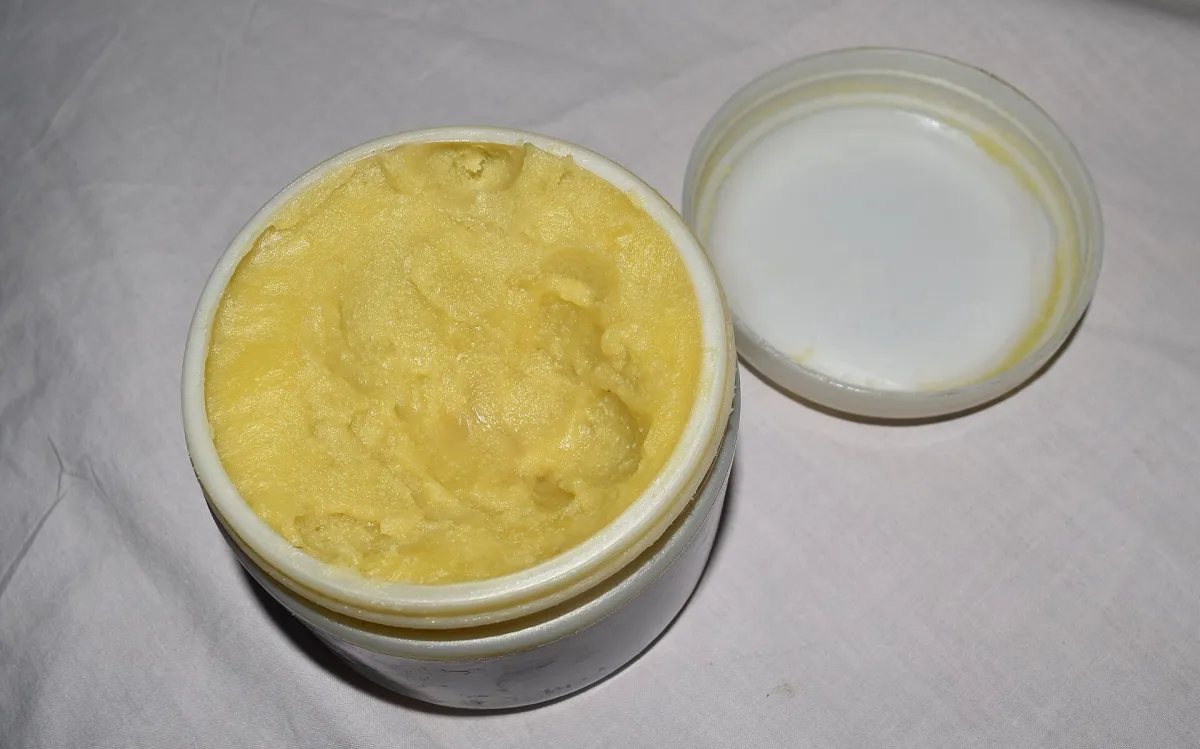
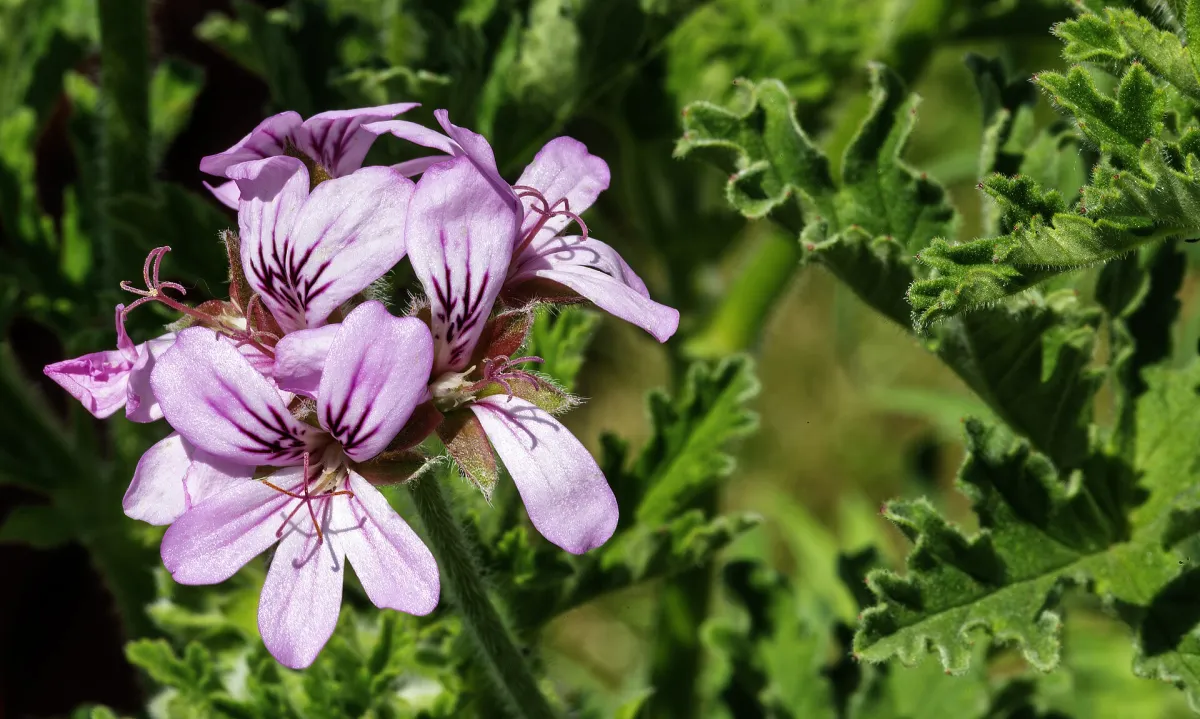
 Photo: Christian Ferrer, CC BY-SA 4.0, via Wikimedia Commons
Evening primrose oil is extracted from the seeds of Oenothera biennis and is rich in gamma-linolenic acid (GLA). It is usually taken in capsules, 1-3 g a day, for premenstrual syndrome, breast pain, menopausal hot flashes or dry skin. In short: it is safe for most adults, but rigorous studies show small or inconsistent benefits, and for eczema a Cochrane review found no clear effect.
That does not make the oil useless. It means you should know exactly what to expect, how long to take it and when to give up. Here is the complete guide.
Key takeaways
- It contains 7-10% gamma-linolenic acid (GLA), an omega-6 that is rare in food, plus 65-75% linoleic acid.
- For PMS and cyclical breast pain, studies are conflicting; some women report relief.
- For hot flashes, one small trial showed reduced intensity; the effect is modest.
- A Cochrane review found no clear benefit for eczema when taken by mouth.
- Usual dose: 1-3 g a day in capsules, for at least 8-12 weeks before judging the effect.
- Take care with blood thinners, planned surgery and pregnancy (especially the final weeks).
What evening primrose is
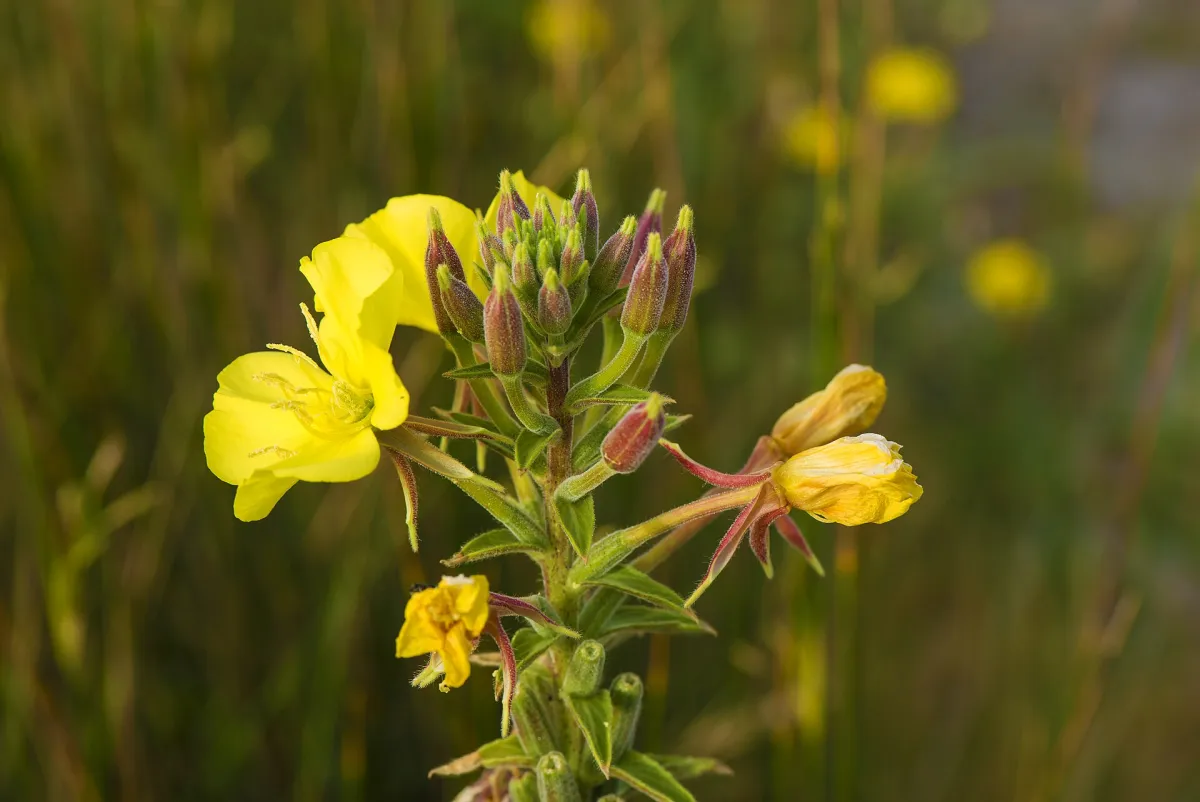
Oenothera biennis is a biennial plant native to North America and long naturalised in Europe, including Romania, where it grows along roadsides, embankments and sandy ground. Its yellow flowers open in the evening and close the next morning, hence the name. Native Americans ate the root and used the leaves on wounds.
The oil is extracted from the tiny seeds, either by cold pressing or by solvent extraction and refining. It is a fluid, pale yellow oil with a faint smell that goes rancid fairly quickly because of its polyunsaturated fats.
Composition: why GLA matters
- Linoleic acid (LA): 65-75%.
- Gamma-linolenic acid (GLA): 7-10%. The body normally makes it from linoleic acid using the enzyme delta-6-desaturase.
- Oleic acid: 6-11%.
- Vitamin E and phytosterols in small amounts.
The theory behind the oil is that some people convert linoleic acid to GLA less efficiently (for instance with age, in diabetes or in atopic dermatitis). GLA is then turned into DGLA, a precursor of anti-inflammatory prostaglandins. The theory is elegant, but clinical trials have not always confirmed the expected benefits.
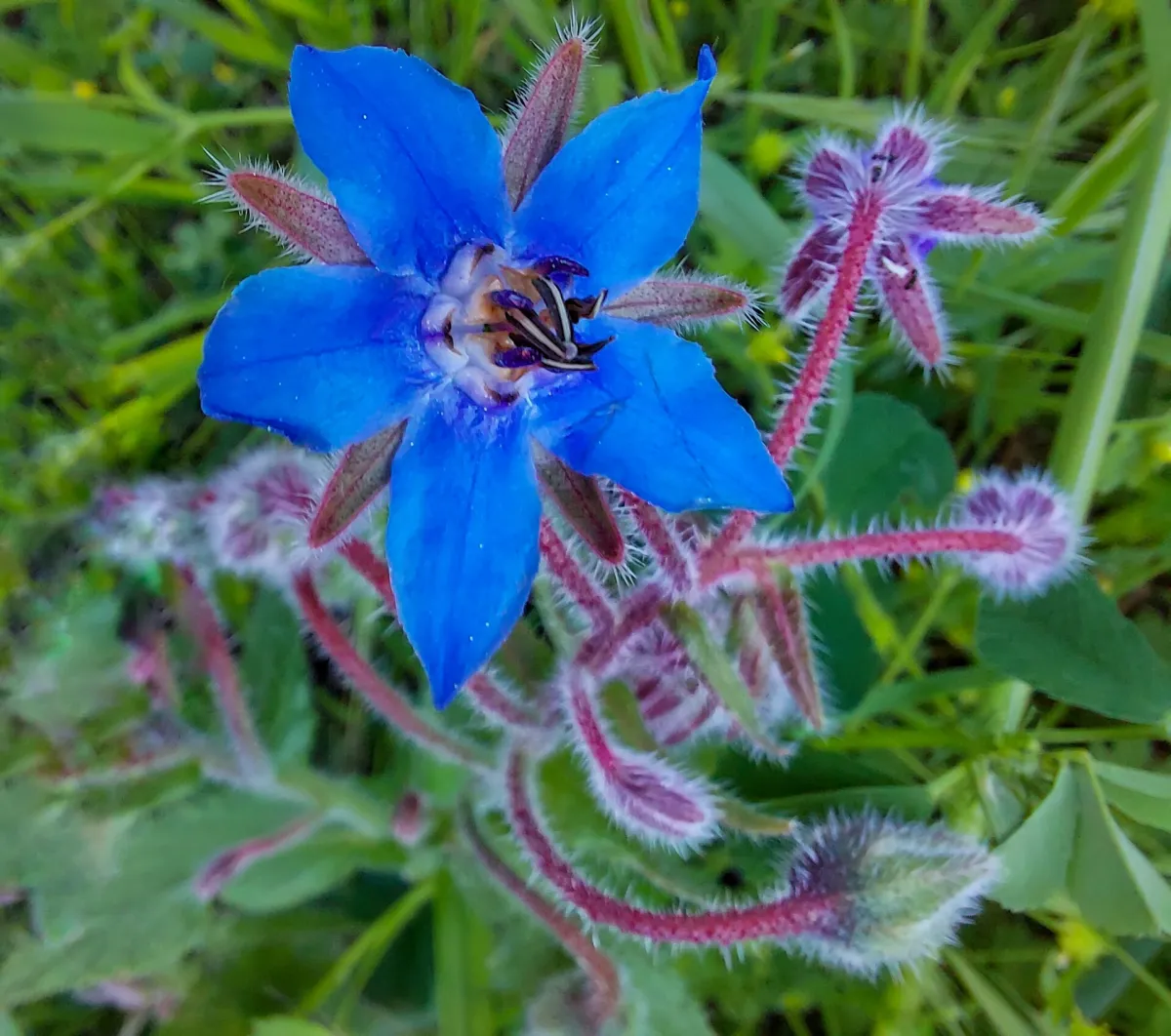
Other GLA sources: borage oil (more GLA, but unpurified products may contain pyrrolizidine alkaloids) and blackcurrant seed oil.
Benefits: tradition, popularity and evidence
Premenstrual syndrome
Evening primrose oil is one of the most popular remedies for PMS: irritability, tender breasts, bloating. Controlled trials have produced mixed results, and systematic reviews have not found a clear effect over placebo for overall symptoms. Some women still report improvement, and the risks are small. A sensible approach: a 3-cycle trial with a symptom diary.
Cyclical breast pain (mastalgia)
Guidelines once recommended the oil for cycle-related breast pain. Later, better-controlled trials showed no clear difference from placebo. If you choose to try it, do so alongside a well-fitting bra, less caffeine and a check-up for any lump.
Menopausal hot flashes
A small 6-week trial in women going through menopause showed a reduction in the intensity of hot flashes versus placebo, though not convincingly in their frequency. The effect is modest, and other options (medical or lifestyle) have better evidence.
Eczema and dry skin
This was long the “star” indication, and in some countries the oil was even a prescription medicine for eczema. A 2013 Cochrane review covering dozens of studies concluded that oral evening primrose and borage oil do not significantly improve atopic dermatitis compared with placebo. Applied topically, like any emollient oil, it can help dry skin lose less water.
Rheumatoid arthritis
Studies with high-dose GLA (often from borage) showed a slight reduction in pain and stiffness in some patients. It is an area where the oil can be discussed with a rheumatologist as an add-on.
Diabetic neuropathy
A few older studies with GLA suggested improvement in some nerve measurements. The results were not robust enough to enter guidelines.
How to take and use it
 Photo: Georg Slickers, CC BY-SA 4.0, via Wikimedia Commons
Capsules (the standard form)
- Choose capsules that state their GLA content (for example 1000 mg oil providing 90-100 mg GLA).
- Start with 1 g a day with a meal for a week.
- Increase to 2-3 g a day, split into 2 doses with food (this lowers the risk of nausea).
- Assess the effect after 8-12 weeks. If you notice nothing, stop.
For PMS
Some women take it only in the second half of the cycle (from ovulation to the period). The evidence does not show one regimen to be clearly better; what matters is keeping a symptom diary for 3 cycles in a row.
On skin
- Body oil for dry skin: 10 ml evening primrose oil + 20 ml almond oil. Apply after a shower to slightly damp skin.
- Night serum for dry skin: 3-4 drops of pure oil pressed onto clean skin. No essential oils on irritated skin.
- Pierced capsule: you can use the contents of a capsule on small areas (elbows, cuticles). Capsule oil usually contains added vitamin E as an antioxidant.
Patch test: 2-3 drops on the inside of your forearm, cover and wait 48 hours.
Dosage table
| Goal | Oral dose | Trial period | Strength of evidence |
|---|---|---|---|
| PMS | 2-3 g/day | 3 cycles | Conflicting |
| Cyclical breast pain | 2-3 g/day | 3-4 months | Weak |
| Hot flashes | 1-2 g/day | 6-12 weeks | Limited, small effect |
| Eczema (oral) | Not recommended as treatment | - | Cochrane: no clear effect |
| Dry skin (topical) | Pure or diluted 1:2 | Daily | Ordinary emollient effect |
| Rheumatoid arthritis | Only with your rheumatologist | 3-6 months | Limited |
How to choose a good oil
- Capsules with stated GLA and added vitamin E as an antioxidant.
- For external use: cold-pressed oil in a dark glass bottle.
- Check the expiry date; store it cool and use within 2 months of opening.
- A sharp, fishy or paint-like smell means oxidation.
Contraindications, interactions and precautions
- Pregnancy: some midwives have used the oil to “ripen the cervix” in the final weeks, but studies have shown no benefit and some observations raised questions about birth complications. Do not use it in pregnancy unless your obstetrician recommends it.
- Breastfeeding: data are insufficient; talk to your doctor.
- Anticoagulants and antiplatelets (warfarin, clopidogrel, aspirin): GLA may affect platelet aggregation. Watch for bleeding.
- Surgery: stop the oil 2 weeks beforehand.
- Epilepsy and phenothiazines: the classic seizure warning comes from old reports now considered inconclusive. People with epilepsy should still ask their neurologist.
- Common side effects: nausea, loose stools, headache, mostly at high doses on an empty stomach.
- Children: do not give capsules to children without a paediatrician.
- Pets: do not give human capsules to dogs or cats without a vet; doses and formulations differ.
When to see a doctor
See a doctor if you feel a breast lump or have nipple discharge, breast pain is one-sided and unrelated to your cycle, PMS seriously affects your life or mood (it may be premenstrual dysphoric disorder, which is treatable), you bleed between periods or after menopause, or eczema becomes infected (yellow crusts, pain, fever).
Common mistakes
- Judging the effect after 2 weeks. Fatty acids are incorporated into cell membranes slowly; the minimum trial is 2-3 months.
- Capsules without stated GLA. You do not know what dose you are taking.
- Using it for eczema instead of treatment. The evidence does not support this.
- Taking it in pregnancy “for an easy birth”. There is no evidence and there may be risk.
- Ignoring a breast lump because “it is hormonal”. Any new lump needs checking.
If you want an oil for urinary comfort or hair, read about pumpkin seed oil; for plant omega-3, see our flaxseed oil guide.
Conclusion
Evening primrose oil is a safe supplement for most adults, with a reputation larger than the evidence behind it. For PMS, breast pain and hot flashes it may be worth a time-limited trial, with a symptom diary and realistic expectations. For eczema, it does not replace treatment. Avoid it in pregnancy and before surgery, and talk to your doctor if you take blood thinners.
Frequently asked questions
Should I take evening primrose oil in the morning or evening? The time of day does not matter; taking it with food does. If you take 2-3 g a day, split the dose between two meals.
How long does it take to work? It is usually assessed after 8-12 weeks. For PMS, after 3 cycles.
Does evening primrose oil help fertility? There is no evidence that it increases fertility. Some women take it for cervical mucus quality, but this is not proven.
Can I take evening primrose oil with the contraceptive pill? No important interactions are known. Still, tell your doctor which supplements you take.
Is evening primrose oil good for acne? Some small GLA studies showed slight improvement, but the evidence is weak. As a skin oil it is fairly light, but it does not treat acne.
What is the difference between evening primrose oil and borage oil? Borage oil has more GLA (20-24%) but must be certified free of pyrrolizidine alkaloids, which are toxic to the liver. Evening primrose does not have this problem.
Can I take evening primrose oil with hormone therapy during menopause? No interactions are known, but the added effect is probably small. Talk to your gynaecologist.
Sources and further reading
- NCCIH (National Center for Complementary and Integrative Health), “Evening Primrose Oil” fact sheet.
- Bamford J.T.M. et al., “Oral evening primrose oil and borage oil for eczema”, Cochrane Database of Systematic Reviews, 2013.
- Farzaneh F. et al., clinical trial of evening primrose oil for menopausal hot flashes, Archives of Gynecology and Obstetrics, 2013.
- PubMed reviews on gamma-linolenic acid in rheumatoid arthritis (search: “gamma-linolenic acid rheumatoid arthritis review”).
Informational content: this article does not replace a medical consultation. Any breast lump, abnormal bleeding or symptoms that affect your life should be assessed by a doctor.