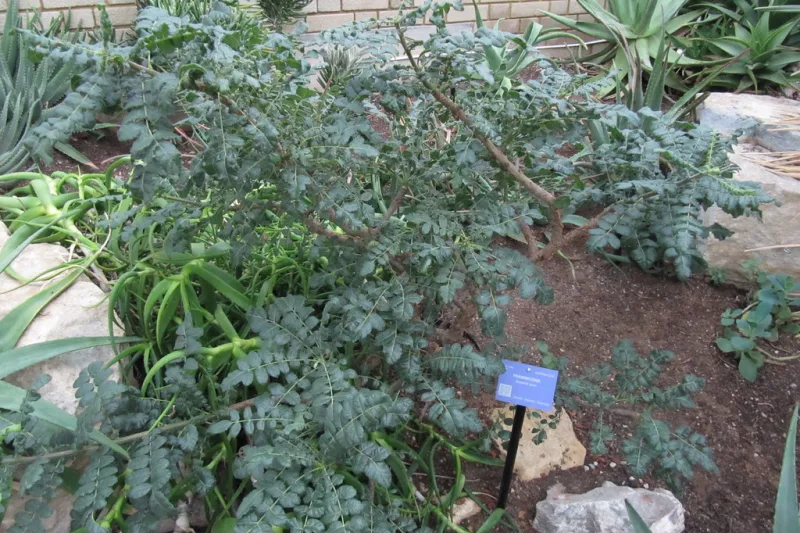

Frankincense Essential Oil: Benefits for Skin, Relaxation and How to Use It
IMPORTANT: Frankincense essential oil is highly concentrated and should never be applied neat (undiluted) to the skin, nor swallowed without the guidance of a qualified professional. Always dilute it in a carrier oil (almond, jojoba, coconut) before applying it to the skin. Pregnant or breastfeeding women, young children, people taking blood thinners or undergoing ongoing medical treatment should ask their doctor before using it. Always do a patch test on a small area of skin first. Frankincense oil does not replace medical treatment for any condition — it is a support for relaxation and skincare, not a medicine.
Grandmother Veta from the village under the hill kept, in the good room beside the icon by the eastern window, a little wooden box filled with yellowish pieces of resin that looked like droplets of dried amber. She called it “the real frankincense,” brought long ago by a merchant from the city, and she only took it out on great holidays or when someone in the house was “caught in heavy thoughts.” She would place a few crumbs on a glowing piece of charcoal, and within moments the room filled with a sweetish, woody, faintly citrusy smoke which, as she put it, “cleared the mind and calmed the heart.” We children sat quietly, watching the smoke rise, and the day’s restlessness seemed to melt slowly away.
Much later I learned that the very resin my grandmother burned is the source of today’s frankincense essential oil — a sought-after product in aromatherapy, skincare and relaxation practices the world over. What was for grandmother a gesture of faith and peace became, for us, a gentle tool for self-care. And that unmistakable scent remained the same: warm, deep, faintly resinous, with an elegance unlike any other oil.
Frankincense essential oil is obtained from the resin of trees in the Boswellia genus (especially Boswellia carterii, Boswellia sacra and Boswellia serrata), which grow in the arid regions of the Horn of Africa and the Arabian Peninsula. This resin, known for thousands of years, was once prized as highly as gold and used in rituals, in perfumery and as a traditional remedy. Today, by steam-distilling the resin, we obtain a fragrant essential oil valued for its calming effect on the mind and for its uses in natural cosmetics.
Table of Contents
- What frankincense oil is and how it is made
- Composition and active principles
- Benefits for health and well-being
- Traditional uses of frankincense
- How to use frankincense oil (step-by-step recipes)
- Dosage and method of use
- Frankincense in your skincare and relaxation routine
- Practical tips and common mistakes
- Conclusion
- Frequently asked questions
What frankincense oil is and how it is made
Frankincense is the aromatic resin harvested from the bark of Boswellia trees. When the trunk is lightly scored, the tree “weeps” a milky sap which, on contact with air, hardens into droplets called frankincense “tears.” These tears are collected after a few weeks, sorted by color and purity, and then processed. The clearest and palest are considered the highest quality.
The essential oil is most often extracted by steam distillation of the resin. Hot steam passes through the crushed resin, carrying off the volatile aromatic compounds, and on cooling these separate from the water as a clear to pale-yellow oil. There is also solvent extraction, which produces a more concentrated “absolute” used mainly in perfumery, but for aromatherapy use the steam-distilled oil is preferred, being considered cleaner.
The smell of frankincense oil is complex: warm and woody at its base, with balsamic, faintly citrusy and peppery notes, and a resinous depth that gives it that “sacred,” soothing character. It is precisely this olfactory richness that makes it so suited to moments of quiet reflection, meditation and deep relaxation.
It is important to distinguish between the burned resin (classic frankincense, used ritually, which produces smoke) and the essential oil (a concentrated liquid obtained by distillation). Both come from the same plant but are used differently: the resin is burned, while the oil is diffused into the air or diluted for application to the skin.
Composition and active principles
Frankincense essential oil is made up of a complex mixture of volatile compounds. The proportions vary depending on the Boswellia species, the growing location and the extraction method, but in general we find:
- Alpha-pinene and other monoterpenes — compounds with a fresh, woody scent that often dominate the oil’s profile and are traditionally associated with a sense of clarity and freshness.
- Limonene — a monoterpene with citrusy notes, present in many essential oils, valued for its bright aroma.
- Sabinene, myrcene, para-cymene — other monoterpenes that add to the complexity of the aroma.
- Incensole and incensyl acetate compounds — molecules specific to frankincense resin, studied for their possible effect on a relaxed state.
An important clarification is needed: boswellic acids, the best-known and most-studied compounds of Boswellia resin for their role in supporting joint comfort, are large molecules and generally do not pass into the essential oil obtained by steam distillation. They are found mainly in resin extracts (capsules, tablets), not in the aromatic essential oil. So frankincense essential oil is valued more for its aroma and calming effect, while resin extracts are used internally for other purposes. This is a distinction many people confuse.
Benefits for health and well-being
Studies suggest, and folk tradition has confirmed for centuries, that frankincense and its essential oil can support well-being in several ways. Here are the most appreciated benefits.
Relaxation and emotional balance
The best-known and most prized effect of frankincense oil is its calming one. Its warm, deep aroma helps create a peaceful atmosphere conducive to unwinding. In aromatherapy, frankincense is often used in moments of tension, unease or mental fatigue, being associated with the feeling of “breathing more deeply” and slowing the racing of thoughts. Many use it in the evening, before bed, or during breathing exercises and meditation.
Support for freer breathing
Frankincense vapors have traditionally been used to support easier breathing and a sense of an “open chest,” especially in the cold season. Diffused into the air or used in an inhalation, the oil brings a pleasant balsamic freshness, welcome when the nose is congested and breathing feels heavy. This does not replace treatment for respiratory conditions but may bring comfort.
Caring for mature skin
In natural cosmetics, frankincense oil is valued for mature, tired or lackluster skin. Tradition calls it a “rejuvenating” and “regenerating” oil, used to support a firm and even appearance of the complexion. Properly diluted and applied as part of a routine, it is considered a help toward more cared-for, more radiant-looking skin.
Comfort for blemish-prone skin
Frankincense oil is also traditionally used for blemish-prone skin, thanks to the sense of cleanliness and freshness it brings. Diluted in a light carrier oil, it can be included in the care of problem areas, provided a tolerance test is done first.
Support for joint comfort
Although boswellic acids (associated with joint comfort) are found mainly in resin extracts rather than the essential oil, gentle massage with diluted frankincense oil is traditionally used on tired areas, thanks to the warm, relaxing sensation. The effect is, above all, one of comfort and muscle relaxation through massage.
A clean, pleasant atmosphere at home
Diffused into the air, frankincense oil leaves a warm, dignified fragrance that pleasantly purifies the atmosphere of a room. Folk tradition used it for exactly this purpose — to “cleanse” the air and the energy of a house, especially on festive days.
Traditional uses of frankincense
Throughout history, frankincense has held a special place. It was burned in temples and churches for the sacred atmosphere it created, used in embalming and purification rituals, and prized in perfumery for the depth of its aroma. In Romanian folk tradition, frankincense smoke was tied to the important moments of life — holidays, services, gestures meant to drive away “evils.”
Beyond the spiritual dimension, the housewives of old used frankincense smoke to scent clean laundry and to freshen rooms after a long winter spent with the windows closed. The modern essential oil takes up these traditional uses in a more convenient and more concentrated form.
How to use frankincense oil (step-by-step recipes)
Frankincense oil can be used in several ways. Here are a few simple, safe recipes you can try at home.
Diffusing for relaxation
- Fill the diffuser’s reservoir with water according to the device’s instructions.
- Add 3-5 drops of frankincense essential oil.
- For a brighter aroma, you can add 1-2 drops of orange or lavender oil.
- Start the diffuser 20-30 minutes before your relaxation time, especially in the evening.
- Diffuse in sessions, not continuously — 30-60 minutes is enough in a well-ventilated room.
Relaxing massage oil
- Into a 50 ml bottle, pour a carrier oil (sweet almond or jojoba).
- Add 8-10 drops of frankincense essential oil (a concentration of about 1-2%).
- For a more complex blend, you can add 4-5 drops of lavender.
- Shake gently and label the bottle.
- Use a few drops for a slow massage on the neck, shoulders or back, in the evening.
Facial serum for mature skin
- Into a small dark-glass bottle (30 ml), pour a fine carrier oil: jojoba or rosehip oil.
- Add 3-6 drops of frankincense essential oil (a concentration under 1%, since facial skin is sensitive).
- Shake gently.
- In the evening, apply 2-3 drops to clean skin with a gentle massage, avoiding the eye area.
- Always do a patch test on the wrist 24 hours before the first use on the face.
Inhalation for easier breathing
- In a bowl of hot (not boiling) water, add 2-3 drops of frankincense oil.
- Lean over the bowl at a safe distance and cover your head with a towel.
- Breathe in the vapors gently for 3-5 minutes, with your eyes closed.
- Do not use on young children, and stop if any discomfort appears.
Relaxing bath
- Mix 4-5 drops of frankincense oil with a tablespoon of carrier oil or a handful of powdered milk or bath salts (so the oil disperses).
- Add the mixture to the warm, already-drawn bath water.
- Relax for 15-20 minutes, breathing in the warm aroma.
- Do not pour the oil directly into the water undispersed — it would float on the surface and could irritate the skin.
Dosage and method of use
The golden rule with essential oils is “less is more.” The recommended concentration for body application is usually 1-2% (about 6-12 drops of essential oil per 30 ml of carrier oil), and for the face it is lower, under 1%. For diffusing, 3-5 drops are enough in an ordinary room.
Frankincense essential oil should not be swallowed except under the strict supervision of a qualified professional. Many online recommendations about the internal use of essential oils are risky and should not be followed without professional advice. For the internal benefits associated with Boswellia (for example, supporting joint comfort), standardized resin extracts in capsule form are used, not the aromatic essential oil.
Store the oil in a dark-glass bottle, away from light and heat, tightly closed. Good-quality frankincense oil keeps well for several years, and some consider that its aroma refines over time.
Frankincense in your skincare and relaxation routine
The true charm of frankincense oil shows when you weave it into a ritual, not when you use it haphazardly. Grandmother Veta did not burn frankincense at just any time — she did it with a particular gesture, in a moment of stillness, and it was precisely this ritual that gave the experience its weight.
You can do the same. Choose a time of day — usually evening — to stop rushing about. Switch on the diffuser with a few drops of frankincense, dim the bright lights, take a few deep breaths and let the aroma carry you into a state of calm. Combined with a few minutes of slow breathing or a page of reading, this simple ritual can become a soothing anchor in busy days.
For the skin, consistency matters more than quantity. A light frankincense serum used evening after evening for a few weeks will bring more benefit than a generous but occasional application. And do not forget: skincare begins from within — water, sleep, a balanced diet — and frankincense oil is only a pleasant support, not a miracle solution.
Practical tips and common mistakes
Mistake no. 1: Applying the oil neat to the skin. Undiluted essential oil can irritate or sensitize the skin. Always dilute it in a carrier oil.
Mistake no. 2: Skipping the patch test. Before the first application on the face or a large area, test the diluted blend on a small patch of skin (the wrist) and wait 24 hours.
Mistake no. 3: Swallowing the essential oil. Frankincense oil is not a supplement to drink. For internal use, resin extracts are used, not the aromatic oil, and only on the advice of a professional.
Mistake no. 4: Diffusing continuously for hours. Excessive diffusion can cause headaches and saturate the air. Use sessions of 30-60 minutes in a ventilated room.
Mistake no. 5: Confusing the essential oil with the resin extract. These are different products, with different compositions and uses. Read the label and understand what you are buying.
Mistake no. 6: Buying an oil of dubious quality. Choose pure oils with the botanical name (Boswellia) on the label, packaged in dark glass. Very cheap oils may be diluted or synthetic.
Mistake no. 7: Using it on young children, or while pregnant or breastfeeding, without medical advice. In these situations, caution is essential.
Conclusion
Frankincense essential oil is, above all, an oil of stillness. Coming from a resin prized for thousands of years, it brings into the modern home the same warm, serene atmosphere that frankincense smoke created in the childhood of so many of us. Used with measure and respect — properly diluted, diffused in sessions, woven into a relaxation ritual — it can become a precious companion for moments of unwinding, for the care of mature skin and for calmer breathing. It is not a medicine and does not cure illness, but it is a gentle ally of well-being. And if you use it with due care, you will enjoy it for years, just as our grandmothers enjoyed the golden resin from the little wooden box.
Frequently Asked Questions
Can frankincense oil be applied directly to the skin? No. The essential oil is highly concentrated and must always be diluted in a carrier oil (almond, jojoba, coconut), usually at a concentration of 1-2% for the body and under 1% for the face. Applying it neat can irritate or sensitize the skin.
What is the difference between frankincense oil and resin extract? The essential oil is obtained by steam-distilling the resin and contains mainly volatile aromatic compounds, valued for scent and calming effect. The resin extract (capsules, tablets) contains boswellic acids and is used internally for other purposes. They are different products.
Can I swallow frankincense essential oil? Internal use is not recommended without the supervision of a qualified professional. For the internal benefits associated with the Boswellia plant, standardized resin extracts are used, not the aromatic essential oil.
Does frankincense oil help with relaxation and sleep? Tradition and aromatherapy value it for its calming effect. Diffused in the evening or used in a relaxing massage, it can create a peaceful atmosphere that favors unwinding before bed. It is not, however, a sleeping pill.
Is it safe for pregnant women? Pregnant or breastfeeding women should consult their doctor before using frankincense oil, as with any essential oil. Caution is advised.
How do I choose a quality frankincense oil? Look for a pure oil with the botanical name (Boswellia carterii, sacra or serrata) on the label, packaged in dark glass. Avoid very cheap products, which may be diluted or synthetic.
How long does frankincense oil keep? Stored correctly — in the dark, in a cool place and tightly closed — frankincense oil lasts several years. Some consider that its aroma refines over time.
Can I use frankincense oil on my face? Yes, many use it heavily diluted (under 1%) in a fine carrier oil as part of mature-skin care. Always do a tolerance test on a small area before the first application on the face, and avoid the eye area.