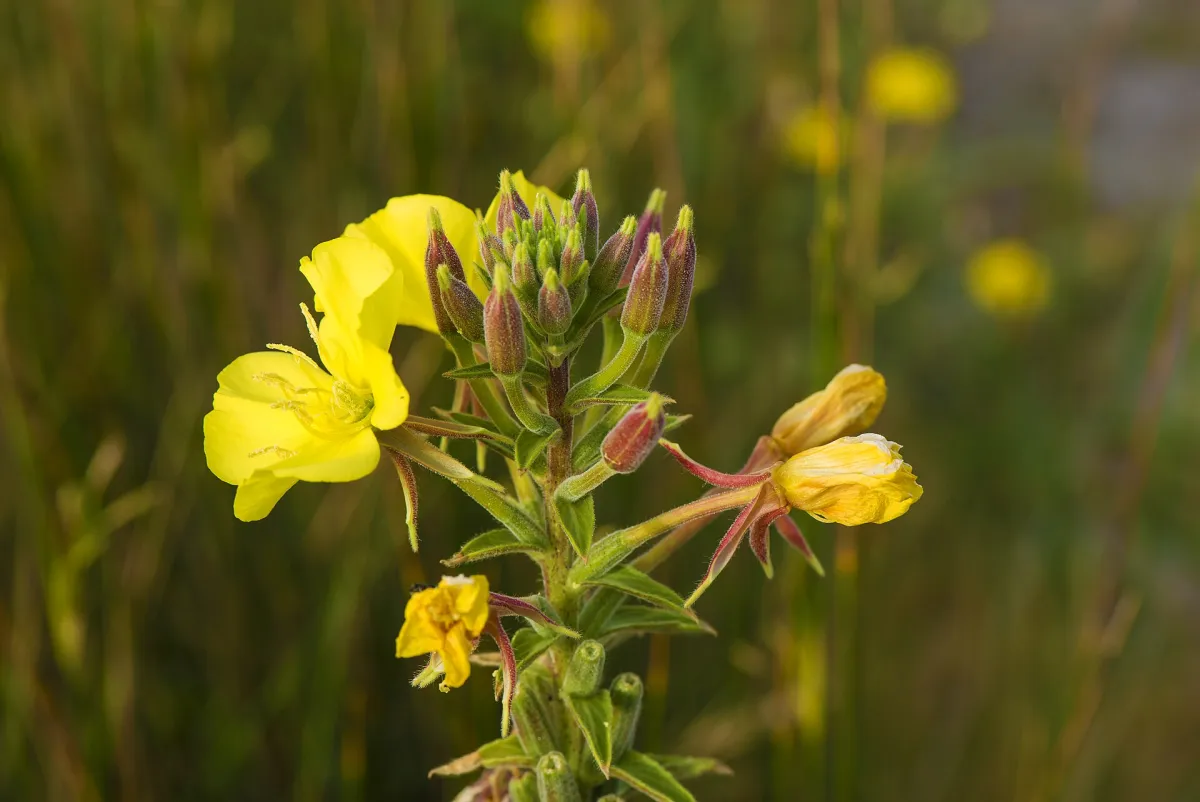
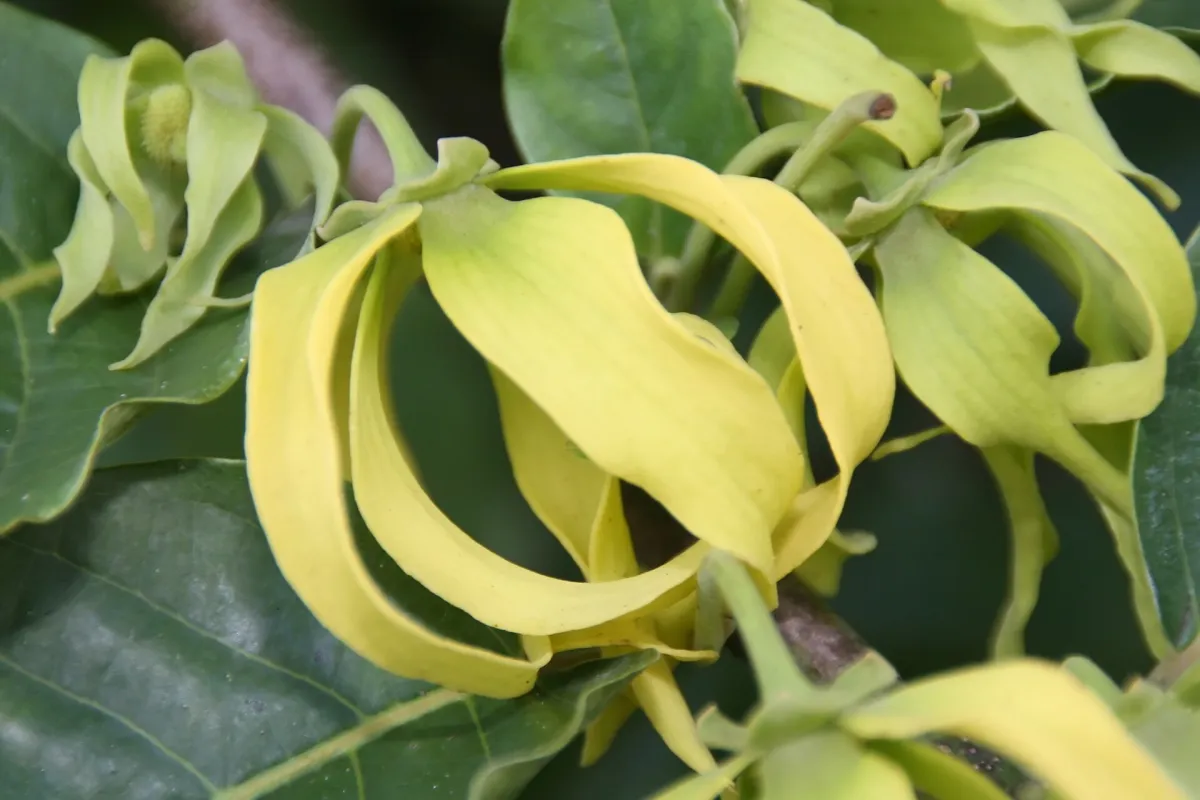
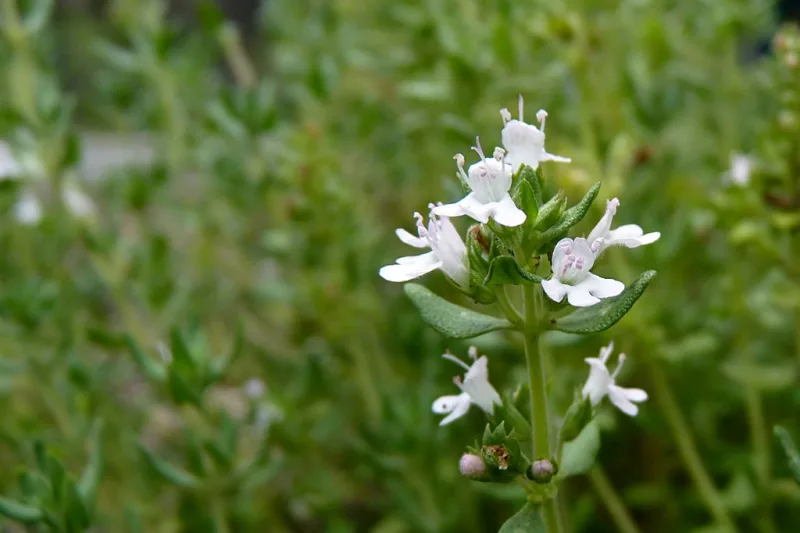
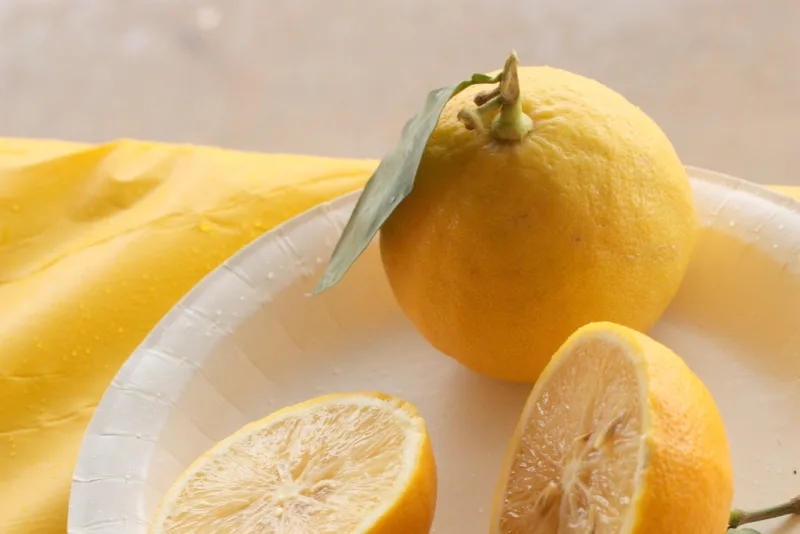
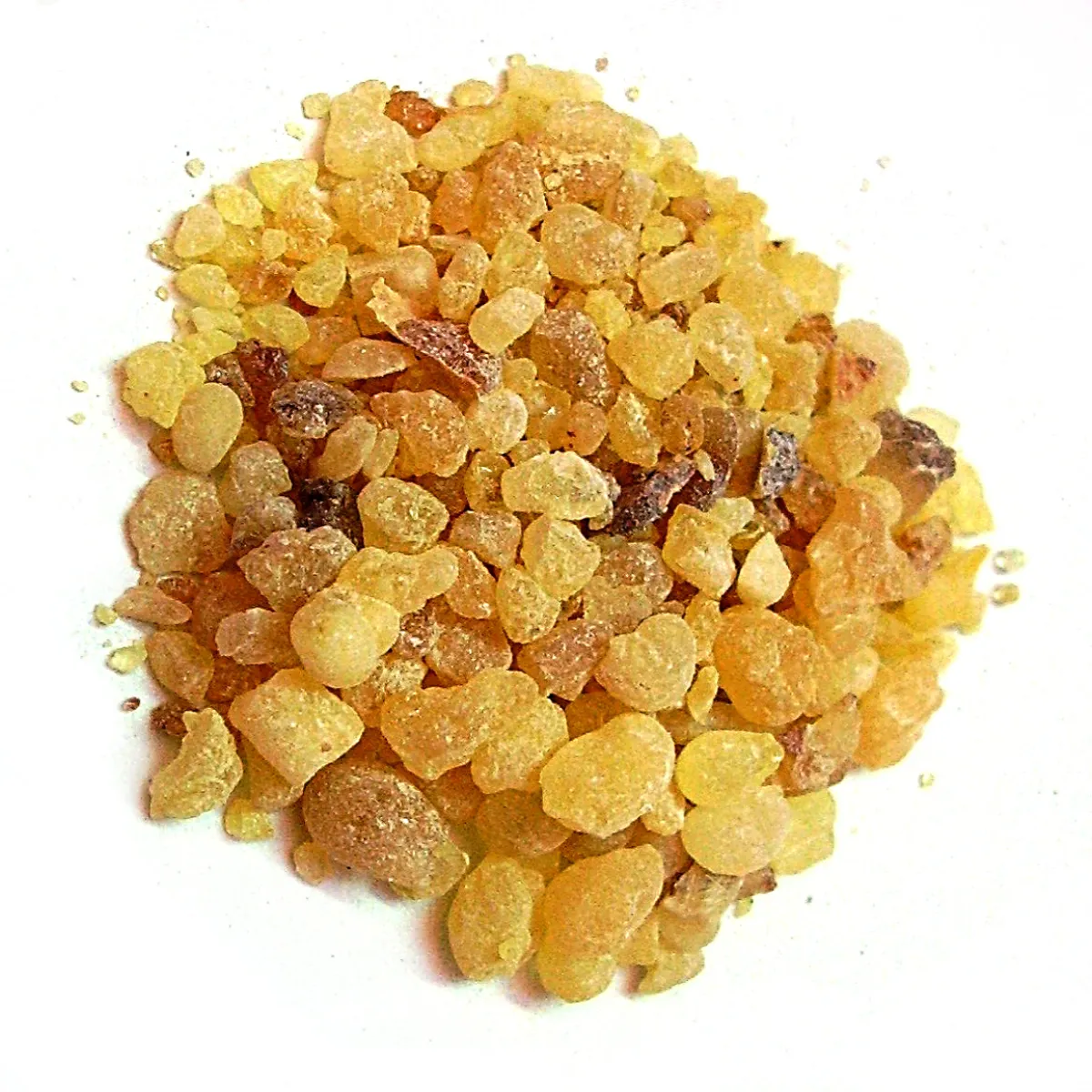
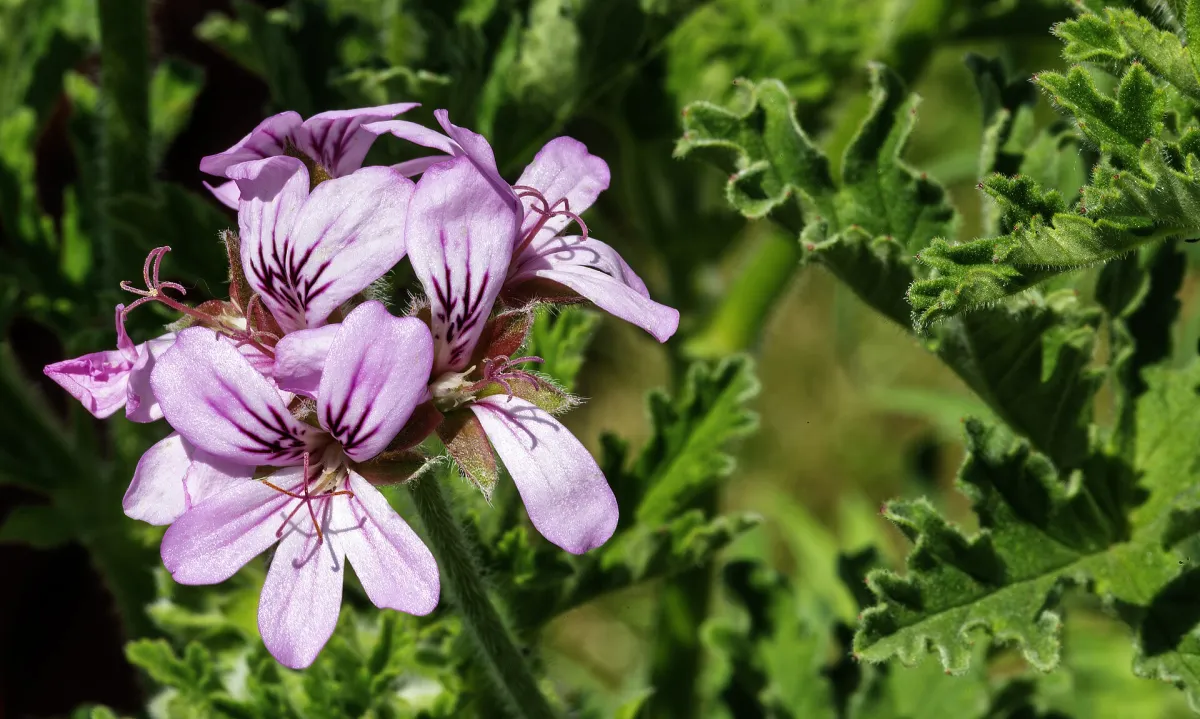
 Photo: Didier Descouens, CC BY-SA 4.0, via Wikimedia Commons
Geranium essential oil is steam-distilled from the leaves of scented geraniums (Pelargonium graveolens and close hybrids) and has a strong rosy scent with a green edge. It is used diluted for combination or oily skin, for relaxation and in massage blends for PMS and menopause. A few small studies support its calming effect, and an older one suggests relief of nerve pain after shingles.
A note on the name: this is not the common windowsill geranium (Pelargonium zonale), but the scented-leaf geranium with deeply cut leaves that grandmothers kept indoors for its fragrance and even tucked into quince jam. Here is what the oil can do and how to use it safely.
Key takeaways
- It comes from the leaves of Pelargonium graveolens (rose or scented geranium), not ordinary bedding geraniums.
- Main compounds: citronellol, geraniol, linalool, citronellyl formate.
- Face: 0.5-1%; body: 2-3% (4-6 drops per 10 ml carrier oil).
- Small studies show an anti-anxiety effect on inhalation; evidence for hormones or acne is weak.
- Never swallow it; avoid in the first trimester, under age 2 and around cats.
What geranium oil is
Scented geraniums are native to South Africa and arrived in Europe in the 17th century. In 19th-century France they were grown for perfumery as a cheaper substitute for rose oil. Today the main producers are Egypt, China, South Africa, Madagascar and Réunion island, home of the famous Bourbon geranium.
The oil is steam-distilled from the leaves and stems. The yield is low (under 0.2%) but far higher than rose, which explains the affordable price.
Types of geranium oil
| Type | Origin | Feature | Scent |
|---|---|---|---|
| Bourbon | Réunion, Madagascar | most prized in perfumery | rosy, fine, slightly minty |
| Egyptian | Egypt | contains 10-epi-gamma-eudesmol | rosy, more herbaceous |
| Chinese | China | higher citronellol | rosy, more lemony |
| Rose geranium | various | selected hybrid | very rose-like |
Composition
- Citronellol (20-40%) and geraniol (10-20%): the rose note; both are known allergens with a low sensitisation risk.
- Citronellyl formate and geranyl formate: the fresh note.
- Linalool, isomenthone, menthone: the green, slightly minty note.
Benefits: evidence versus tradition
Relaxation and anxiety
A randomised study from Iran in women in the first stage of labour found that inhaling geranium oil reduced anxiety and diastolic blood pressure compared with placebo. Other small studies of blends including geranium pointed the same way. The effect seems real but modest. More ideas in our articles on anxiety and stress.
PMS and menopause
In aromatherapy geranium is nicknamed “the oil of feminine balance”. Menopause studies mostly used massage with blends (geranium, lavender, rose, jasmine) and found improvements in hot flushes, mood and quality of life. It is impossible to say how much is due to geranium and how much to massage. There is no evidence that the oil changes hormone levels. See our articles on PMS and menopause.
Nerve pain after shingles
A small American study tested geranium oil applied to the skin of people with postherpetic neuralgia (the pain that lingers after shingles) and observed rapid, temporary pain relief, especially at higher concentrations. It is an interesting result, but the study is old and has not been widely replicated. It does not replace treatment prescribed by your doctor.
Combination and oily skin
Traditionally geranium is used to “balance” the skin: neither too oily nor too dry. In the lab it shows antibacterial and anti-inflammatory activity, but there are no solid clinical studies for acne. A light serum of geranium in jojoba is a pleasant choice for skin with enlarged pores. For acne, see our guide to acne.
Insect repellent
Like citronella, geranium oil contains geraniol and citronellol, which have a mild, short-lived repellent effect. Add it to a citronella spray for a nicer scent.
Minor cuts and bruises
In folk medicine, scented geranium leaves were placed on small cuts and bruises. The oil shows haemostatic and antimicrobial activity in the lab, but for wounds, use ordinary antiseptics.
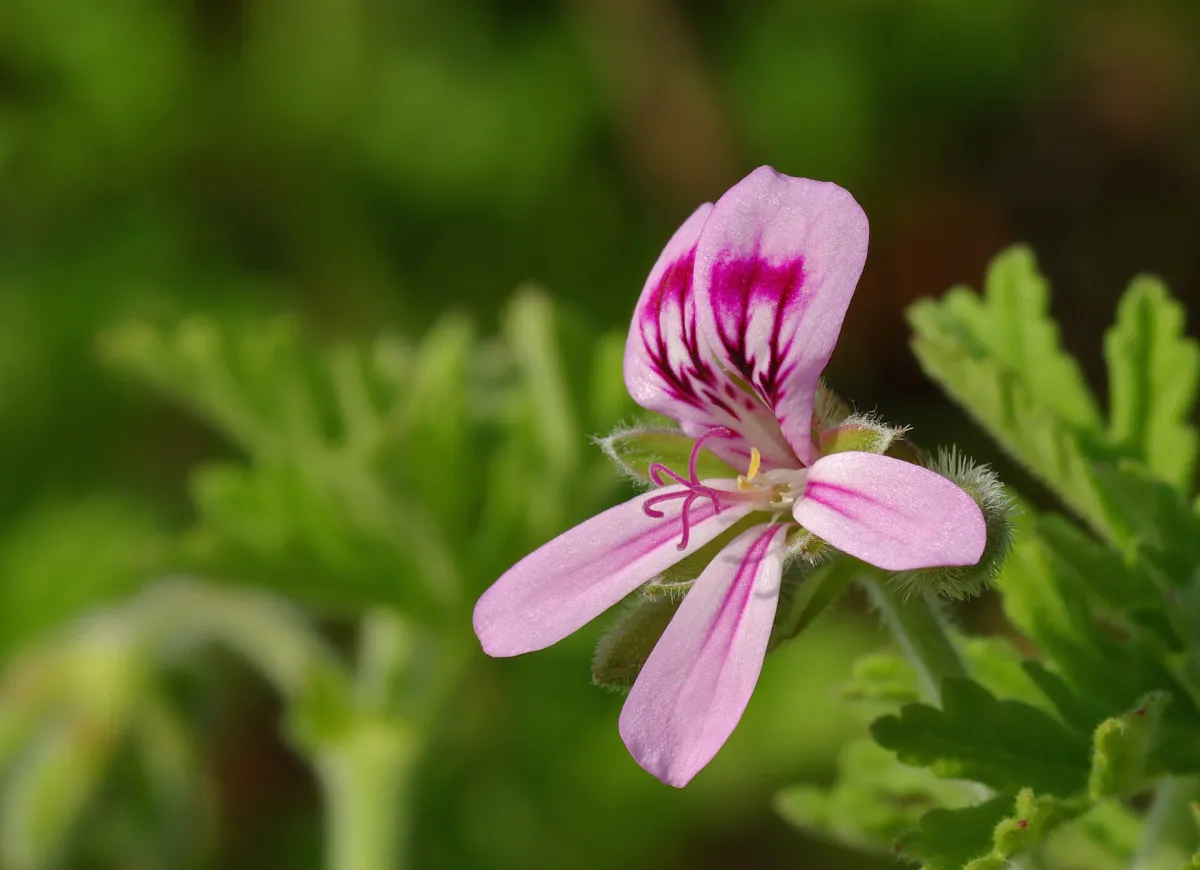 Photo: Laitche, Public domain, via Wikimedia Commons
Practical recipes
Evening serum for combination skin (1%)
- 10 ml jojoba oil
- 2 drops geranium
- 1 drop lavender (optional)
Apply 2-3 drops to clean, slightly damp skin in the evening. Use for 4 weeks and assess the result.
Pre-period massage oil (2%)
- 30 ml sweet almond oil
- 6 drops geranium
- 4 drops lavender
- 2 drops clary sage (optional; not in pregnancy)
Massage the abdomen in clockwise circles and the lower back for 5-10 minutes, then apply a warm compress.
Diffuser for calm evenings
3 drops geranium + 3 drops sweet orange, for 30-45 minutes.
Relaxing bath
4 drops geranium mixed into a tablespoon of carrier oil or whole milk, added to bath water at 37 °C. More in our article on herbal baths for relaxation.
Dry scalp oil
2 tablespoons jojoba or argan oil + 6 drops geranium (about 1%). Massage into the scalp, leave for 30 minutes, then wash.
Facial toner spray
100 ml rose hydrosol or distilled water, 2 drops geranium, 1 teaspoon glycerine. Shake well before each use; keep in the fridge and use within 2 weeks (it contains no preservative).
Dilution table
| Use | Strength | Drops per 10 ml | Drops per 30 ml |
|---|---|---|---|
| Face, sensitive skin | 0.5% | 1 | 3 |
| Face, normal to oily skin | 1% | 2 | 6 |
| Body, massage | 2-3% | 4-6 | 12-18 |
| Children 2-6 | 0.5% | 1 | 3 |
| Children 6-12 | 1% | 2 | 6 |
| Bath (in an emulsifier) | - | - | 3-4 drops |
| Diffuser | - | - | 3-4 drops |
Rule of thumb: 1 ml of essential oil is about 20 drops; 1% in 10 ml is 2 drops. For daily massage, stay at 2%; higher strengths are only for small areas and short periods.
Patch test
- Dilute to your intended strength.
- Apply to a 2 x 2 cm area on the inner forearm.
- Leave for 24-48 hours.
- Redness, itching or stinging mean stop. If you are allergic to rose-type fragrances or to geraniol, skip this oil.
Contraindications and safety
Sensitisation
Geraniol and citronellol are on the EU list of fragrance allergens that must be declared on cosmetic labels. The risk is low at recommended dilutions, but real with neat oil or with daily, high-strength use over years.
Pregnancy and breastfeeding
Avoid in the first trimester. Later, in a diffuser or 1% massage blends, only with your doctor’s agreement. Do not use on the breasts while breastfeeding.
Children
Not under age 2. Above that, brief diffusion and 0.5-1% on skin. Keep the bottle out of reach.
Pets
Geranium plants and their oil are listed as toxic to cats and dogs: they can cause vomiting, lethargy and skin irritation. Do not apply the oil to animals and do not diffuse it where your cat stays.
Medicines
Lab studies suggest geranium oil may affect certain liver enzymes (CYP2B6). The relevance for small external doses is probably minimal, but if you take medicines with a narrow therapeutic window and use the oil daily over large areas, ask your pharmacist.
Diabetes
Some animal studies observed effects on blood sugar with oral use. Do not swallow the oil.
Photosensitivity
Geranium is not phototoxic.
When to see a doctor
- Premenstrual symptoms severely affect your work, relationships or mood (possible premenstrual dysphoric disorder).
- Hot flushes appear after menopause together with vaginal bleeding: this needs a gynaecological check.
- Pain after shingles lasts more than a month or is very intense.
- Spots leave scars or form painful nodules.
- A widespread rash, facial swelling or difficulty breathing after use: emergency.
Common mistakes
Confusing windowsill geraniums with scented geraniums. Ordinary geranium leaves do not give geranium oil.
Adulterated oils. Geranium is often “stretched” with synthetic citronellol and geraniol. Buy from producers who give the Latin name, country of origin and ideally a GC-MS analysis.
Too much on the face. A 5% geranium serum does not “balance” better; it just irritates more easily.
Hormonal expectations. The oil does not replace medical assessment for hormonal imbalance, ovarian cysts or infertility.
Storing it in the light. Keep it in a dark bottle, cool, and use within 2-3 years.
Conclusion
Geranium essential oil is an affordable alternative to rose, with a soothing scent and a well-earned reputation in combination-skin care and women’s massage blends. Studies support a modest calming effect and hint at relief of nerve pain. Used diluted, after a patch test, away from cats and young children, it is one of the most pleasant oils in an aromatherapy kit.
Frequently asked questions
Can I make geranium oil at home from my plants? Not an essential oil; distillation needs large quantities of leaves and equipment. You can make a macerate of scented geranium leaves in olive oil for massage, but it is much weaker.
Are geranium and rose oil the same? No. They share compounds (citronellol, geraniol), which is why they smell similar, but they come from different plants. Rose oil is far more expensive.
Does geranium oil help with hair loss? There is no clinical evidence. It can be part of a pleasant, relaxing scalp massage. For causes, see our article on hair loss.
Can I use geranium against mosquitoes? It has a mild, short repellent effect. Combine it with citronella and reapply often.
Is it good for rosacea-prone skin? Rosacea skin reacts easily to essential oils. If you want to try, use 0.5% maximum and patch test first.
What blends well with geranium? Lavender, sweet orange, bergamot, frankincense, ylang-ylang and cedarwood.
How long can I use a geranium face serum daily? At 1% on the face it is generally well tolerated for months. Take occasional breaks and stop at the first sign of irritation.
Sources
- Tisserand R., Young R. Essential Oil Safety, 2nd edition, Churchill Livingstone, 2014 (geranium profile).
- Studies indexed in PubMed: geranium oil inhalation and anxiety in labour; topical geranium oil in postherpetic neuralgia (Greenway and colleagues).
- Regulation (EC) No 1223/2009 on cosmetic products: list of fragrance allergens (including geraniol and citronellol).
- NCCIH: “Aromatherapy” and fact sheets on essential oils.
Informational content. It does not replace advice from your doctor or pharmacist.