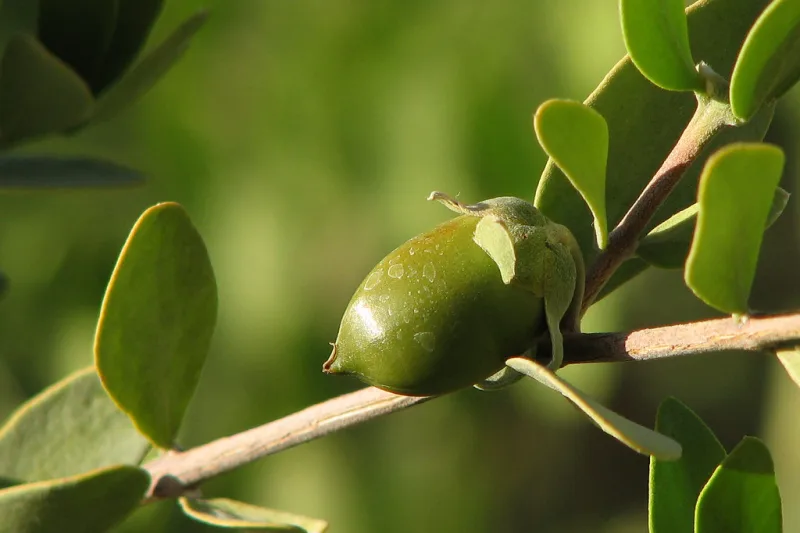

Jojoba Oil: Benefits, Uses and How to Apply It for Skin and Hair
IMPORTANT: Jojoba oil is generally very well tolerated and considered one of the safest oils for cosmetic use, even for sensitive skin. Nevertheless, before using it for the first time on a large skin area, always do a patch test (apply a drop to the inner forearm and wait 24 hours). Jojoba oil is intended mainly for external use; do not apply it to open wounds, severe burns or skin infections without medical advice. People with known allergies to plants in the Simmondsiaceae family should be cautious. Although some food products contain it in small amounts, jojoba is not recommended for internal consumption in large quantities, as it contains eicosenoic acid, which is hard to digest. For serious dermatological conditions (severe eczema, psoriasis, cystic acne), consult a dermatologist — jojoba oil can be a supportive aid, but it does not replace medical treatment.
Aunt Aurelia, a short, sturdy woman from my grandparents’ village at the foot of the sub-Carpathian hills, kept a small dark bottle on the kitchen windowsill, next to the geraniums. She called it her “beauty oil” and said it had saved her through harsh winters, when the wind cracked her cheeks and hands. It was not an oil she pressed from the walnuts or sunflowers in her yard — this one had come from a granddaughter who had moved abroad and sent it to her every year. “It’s jojoba oil,” she would explain with a mysterious air, pronouncing the word “ho-ho-ba,” just as her granddaughter had taught her. Every evening before bed she warmed a few drops in her palms and massaged her face, neck and work-worn hands.
Back then, as a child, I didn’t understand why a foreign oil, made from a desert plant, had ended up on the windowsill of a rural Romanian kitchen. Only later did I realize that Aunt Aurelia had discovered, without knowing the scientific terms, one of the most remarkable substances in natural cosmetics: an “oil” that is, in fact, not even a true oil but a liquid wax astonishingly similar to the sebum our own skin produces. This little story tells us something important — truly good products find their way, across continents and generations, all the way to a grandmother’s windowsill.
Jojoba oil is extracted from the seeds of the Simmondsia chinensis shrub, a hardy plant that grows in the hot deserts of the southwestern United States and northern Mexico. Although we universally call it “oil,” chemically it is a liquid wax made of long-chain esters — exactly the kind of structure found in the natural protective layer of our skin. It is precisely this extraordinary resemblance to human sebum that explains why jojoba is so gentle, balancing and well tolerated by almost every skin type. Prized for centuries by Native American peoples for skin care, hair care and wound healing, jojoba oil has today become a star ingredient in natural cosmetics around the world.
Table of Contents
- What jojoba oil is and how it is made
- The composition of jojoba oil
- Benefits for the skin
- Benefits for the hair
- Traditional and modern uses
- How to use it: step-by-step recipes
- How to choose and store a good jojoba oil
- Lifestyle tips for beautiful skin
- Practical tips and common mistakes
- Conclusion
- Frequently Asked Questions
What jojoba oil is and how it is made
Jojoba is an evergreen perennial shrub with grayish-green, leathery leaves, perfectly adapted to arid conditions. Its scientific name, Simmondsia chinensis, is somewhat misleading — “chinensis” suggests China, but the plant has no connection to Asia; the error comes from a mislabeling made by a botanist in the 19th century. In reality, jojoba is native to the Sonoran Desert, a region stretching across Arizona, California and the Mexican states of Sonora and Baja California.
The plant produces seeds resembling small nuts or coffee beans, rich in an oily substance that makes up about 45–55% of the seed’s weight. This substance is most often extracted by cold pressing — a method that uses no intense heat or chemical solvents and that keeps the precious properties of the final product intact. The resulting oil has a beautiful golden color and a subtle, slightly nutty fragrance when unrefined. The refined version is colorless and almost odorless, preferred in some cosmetic products where neutrality is desired, but the cold-pressed, unrefined version best preserves the nutrients.
What makes jojoba truly special is its remarkable stability. Unlike common plant oils, which are rich in triglycerides that oxidize and turn rancid relatively quickly, jojoba is made of very stable wax esters. This means it resists oxidation for years without spoiling, which is why it was sought industrially as a replacement for sperm whale oil (once used in lubricants and cosmetics), thereby indirectly helping to save these marine mammals from exploitation.
The composition of jojoba oil
The biochemical profile of jojoba oil is unusual and fascinating. Instead of the triglycerides typical of other oils, jojoba is composed of more than 95% long-carbon-chain esters (cerides), formed by combining monounsaturated fatty acids with fatty alcohols. This structure almost perfectly mimics the protective wax of human skin.
Among its important components are:
- Gadoleic acid (eicosenoic acid, omega-9) — a dominant monounsaturated fatty acid that gives the oil its fluidity and light character.
- Erucic acid — present in moderate amounts, contributing to stability.
- Tocopherols (natural vitamin E) — powerful antioxidants that protect the skin from oxidative stress and help preserve the oil.
- Phytosterols — plant compounds that support the skin barrier and have a soothing effect.
- Fat-soluble vitamins — traces of vitamin A and other substances beneficial for regeneration.
Studies suggest that it is precisely this combination of stable esters, antioxidants and phytosterols that explains why jojoba penetrates the skin quickly without leaving a greasy feeling, deeply moisturizes and helps maintain the natural balance of sebum. Folk tradition empirically observed what chemistry confirms today: the oil “sinks into” the skin and “calms it down.”
Benefits for the skin
Balanced moisturizing, without a greasy effect
The greatest advantage of jojoba oil is its ability to moisturize without suffocating the skin. Because its structure resembles sebum, the skin “recognizes” it and absorbs it quickly. It forms a thin, breathable film that locks moisture into the upper layers of the epidermis, while leaving the skin velvety and matte rather than shiny. It is ideal for both dry and dehydrated skin.
Sebum regulation for oily and combination skin
Paradoxically, although it is an oil, jojoba is often recommended for oily, acne-prone skin. The mechanism is interesting: when oily skin is “attacked” with aggressive degreasing products, it responds by producing even more sebum. Jojoba, being so similar to natural sebum, can “trick” the skin into sensing that there is already enough oil on the surface, which helps reduce excessive production. Thus, over time, oily skin can become more balanced.
Support against acne
Studies suggest that jojoba has mild anti-inflammatory and antimicrobial properties that can help calm inflamed pimples. In addition, being non-comedogenic (it does not clog pores for most people), it does not worsen acne the way heavy oils do. A traditional practice found in natural cosmetics is using jojoba as a base for a clay mask, which cleanses the pores without overly drying the skin.
Soothing irritation and sensitive skin
Thanks to its phytosterols and vitamin E, jojoba oil has a remarkable soothing effect. It is traditionally used to relieve dry, flaky skin irritated by cold or wind, as well as the discomfort associated with conditions such as eczema or dermatitis. Many parents prefer it for delicate baby skin (after consulting a pediatrician), precisely because of its gentleness.
Anti-aging and protective effect
The antioxidants in jojoba help neutralize free radicals, the main culprits behind premature skin aging. Used regularly, the oil supports elasticity, deep hydration and a smooth complexion. Natural cosmetic tradition includes it in evening serums precisely for this ability to keep the skin supple and radiant.
Skin healing and regeneration
Native American tribes used jojoba to treat wounds, scratches and minor skin burns. Modern studies suggest that the oil may support the skin’s natural repair process and help fade the appearance of scars and stretch marks over time, through hydration and support for elasticity.
Benefits for the hair
Hydration and shine for the hair
Jojoba oil is an excellent moisturizing agent for hair. It penetrates the hair shaft and nourishes without weighing it down or making it greasy. Dry, brittle and dull hair gradually becomes silkier, more flexible and shinier.
Scalp health
The scalp also produces sebum, and an imbalance leads either to dandruff or to a dry, itchy scalp. Jojoba can help rebalance the scalp’s sebum production while dissolving the excess solidified sebum that clogs follicles. A scalp massage with jojoba oil is a relaxing traditional practice that also improves local circulation.
Support against hair loss
By clearing clogged follicles and maintaining a healthy scalp, jojoba can create an environment favorable to hair growth. Although it is not a “miracle cure” for baldness, used consistently as part of a care routine, it can contribute to thicker, healthier hair.
Protecting the ends and taming frizz
A few drops of jojoba applied to the ends of the hair help seal in moisture, preventing split ends and reducing the “frizzy hair” effect on dry winter days.
Traditional and modern uses
The Native Americans of the Sonoran Desert used jojoba seeds and oil for an impressive variety of purposes: caring for skin exposed to the scorching sun, treating wounds, nourishing hair and even as food in times of hardship (although it is difficult to digest). Women applied the oil to their skin to protect it from the desert wind and the dryness of the air.
In modern cosmetics, jojoba is everywhere: we find it in moisturizing creams, facial serums, makeup removers, lip balms, massage oils, hair products, soaps and even in shaving products. Thanks to its stability and pleasant texture, it is also an ideal “carrier oil” — that is, the base in which concentrated essential oils are diluted before being applied to the skin.
How to use it: step-by-step recipes
Simple evening facial moisturizer
- Cleanse and tone your face as usual.
- Put 3–5 drops of jojoba oil in your palm.
- Rub your palms together lightly to warm the oil.
- Apply to the face and neck with gentle, circular, upward motions.
- Massage gently until absorbed. It can be used alone or over your moisturizer as a final “sealing” layer.
Natural makeup remover (oil cleansing method)
- On dry skin, apply about a teaspoon of jojoba oil.
- Massage for 30–60 seconds, dissolving makeup and impurities.
- Place a cotton cloth soaked in warm water over the face and leave it a few seconds to open the pores.
- Wipe gently. The skin is left clean but not dried out.
Balancing clay mask for oily skin
- Mix one tablespoon of green clay (or bentonite) with water until you get a paste.
- Add 5–6 drops of jojoba oil and blend.
- Apply to the face, avoiding the eye area, and leave on for 10 minutes.
- Rinse with lukewarm water. The clay cleanses while the jojoba prevents excessive drying.
Hair and scalp massage oil
- Gently warm 1–2 tablespoons of jojoba oil (over a steam bath or in your palms).
- Apply to the scalp and massage with your fingertips for 5–10 minutes.
- Spread the rest along the length of your hair, focusing on the ends.
- Let it work for 30 minutes to an hour (or overnight, with a towel on your pillow).
- Wash with a gentle shampoo.
Base for essential oils
For a custom serum, mix 30 ml of jojoba oil with 3–6 drops of a suitable essential oil (lavender for calming, tea tree for problem skin, frankincense for an anti-aging effect). Store in a dark bottle and use in the evening.
Balm for lips and cuticles
Apply a drop of pure jojoba directly to the lips or to dry cuticles. It absorbs quickly and nourishes deeply, making it ideal in winter.
How to choose and store a good jojoba oil
To get all the benefits, quality matters enormously. Here is what to look for:
- Cold-pressed and unrefined: look for the labels “cold-pressed,” “unrefined” or “virgin.” This version preserves the antioxidants and has the characteristic golden color.
- 100% pure: avoid products diluted with cheap mineral oils or synthetic fragrances. The ingredient list should contain only Simmondsia chinensis.
- Dark glass packaging: protects the oil from light, although jojoba is very stable anyway.
- Organic, if possible: organic certification offers an extra guarantee regarding the absence of pesticides.
Storage is simple thanks to the oil’s exceptional stability. Keep the bottle in a cool place, away from direct sunlight. Unlike other oils, jojoba does not necessarily need to be refrigerated and has a very long shelf life — often several years. If you do notice an unpleasant, rancid smell, it is a sign that it should be discarded (though this happens extremely rarely).
Lifestyle tips for beautiful skin
No oil, however good, works miracles on its own. Aunt Aurelia, the one with the bottle on the windowsill, had other “secrets” too: she drank plenty of spring water, ate vegetables from her own garden, slept in the dark and was never in a hurry. The beauty of the skin largely reflects what happens on the inside.
To maximize the effects of jojoba oil, make sure you hydrate properly from within (water, teas, soups), eat foods rich in antioxidants (berries, colorful vegetables, nuts), sleep enough and protect your skin from excessive sun. Chronic stress quickly shows on the complexion, so moments of relaxation — including the little ritual of an evening facial massage with oil — are beneficial not only for the skin but also for the mind.
Practical Tips and Common Mistakes
Mistake no. 1: Using too much. Many people believe that “more is better.” In reality, 3–5 drops are enough for the whole face. Excess leaves the skin shiny and can feel heavy. Start small and add only if needed.
Mistake no. 2: Applying to completely dry skin. Jojoba oil seals in moisture. If you apply it to completely dry skin, there is less moisture to “lock in.” It works best on slightly damp skin, after cleansing or over a water-based toner/moisturizer.
Mistake no. 3: Buying a refined, diluted product, thinking it is pure. Colorless and odorless oil may be refined or, worse, blended. Read the label and prefer the cold-pressed, unrefined, golden version.
Mistake no. 4: Skipping the patch test. Although jojoba is very safe, every skin is different. Always test on a small area before the first extensive use.
Mistake no. 5: Expecting results overnight. Balancing sebum and improving the complexion takes time and consistency. Use the oil regularly for several weeks before evaluating the effects.
Mistake no. 6: Using undiluted essential oils. If you want to add an essential oil, always dilute it in jojoba (a few drops per 30 ml). Pure essential oils can irritate or burn the skin.
Conclusion
Jojoba oil is, without a doubt, one of the most versatile and gentlest treasures of natural cosmetics. The fact that it is not actually an oil but a liquid wax almost identical to our own sebum explains why it suits human skin so well — it moisturizes without suffocating, balances oily skin, soothes irritation and nourishes hair. From the tribes of the Sonoran Desert to the little bottle on Aunt Aurelia’s windowsill, this oil has earned its reputation through real results, not empty promises. Used in moderation, consistently, and of good quality, jojoba can become a staple ally in anyone’s care routine. As always, listen to your skin, start with small amounts, and for any serious dermatological problem, seek a doctor’s advice.
Frequently Asked Questions
Does jojoba oil clog pores? For most people, no. Jojoba is considered non-comedogenic and has a very low comedogenic rating, making it suitable even for oily, acne-prone skin. However, every skin is unique, so a test on a small area is recommended.
Can I use jojoba oil on oily skin? Yes, and it is actually recommended. Because it mimics natural sebum, it can help regulate excessive oil production, making oily skin more balanced over time. Use only a few drops.
Can jojoba be applied around the eyes? Yes, it is gentle enough for the delicate area around the eyes and can be used to moisturize and gently remove makeup from this area. Apply carefully, avoiding direct contact with the eye.
How often can I use jojoba oil? It can be used daily, in the morning and/or evening, on skin and hair as needed. For the face, an evening application is enough; for the hair, a mask once or twice a week.
Does jojoba oil help with scars and stretch marks? Through deep hydration and support for skin elasticity, jojoba can improve the appearance of scars and stretch marks over time. It does not eliminate them completely, but it can reduce their visibility with consistent use.
Can I use jojoba on a baby’s skin? Many parents use it because of its gentleness, but for the very delicate skin of babies it is recommended to consult a pediatrician first and to do a patch test.
How long does jojoba oil last after opening? Thanks to its exceptional stability, jojoba has a very long shelf life, often several years, if kept in a cool place away from light. It is one of the most rancidity-resistant oils.
What is the difference between golden and colorless jojoba? Golden jojoba is cold-pressed and unrefined, preserving its natural color, nutty fragrance and more nutrients. The colorless one is refined, almost odorless and neutral, sometimes preferred in cosmetic formulations where a lack of scent is desired. For maximum benefits, the unrefined golden version is generally better.