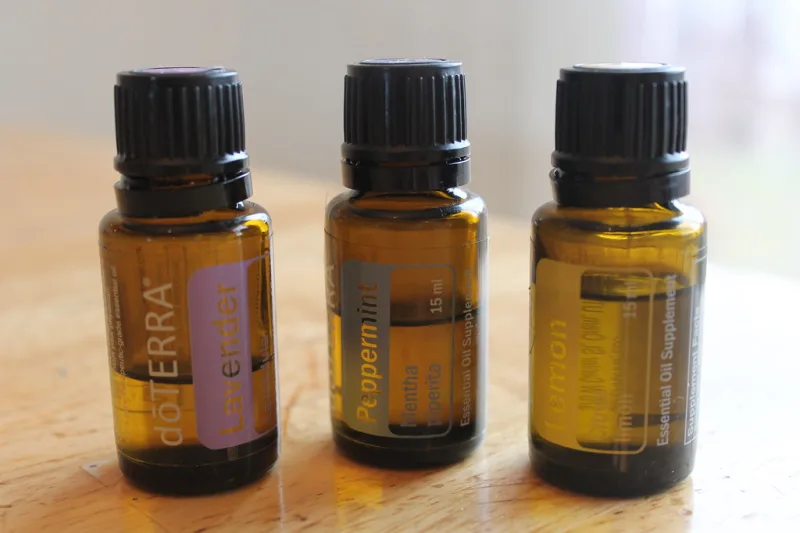

Lemon Essential Oil: Benefits, Uses and How to Use It
IMPORTANT: Lemon essential oil is extremely concentrated and should NEVER be applied undiluted (neat) to the skin, nor swallowed without the guidance of a qualified specialist. Lemon is a phototoxic oil – after applying it to the skin, avoid sun exposure and tanning beds for at least 12–18 hours, as it can cause dark spots and burns. Pregnant or breastfeeding women, young children and people with sensitive skin should use it with caution and only after consulting a doctor. It is not a substitute for medical treatment. At the first sign of irritation, allergy or breathing discomfort, stop using it and seek professional advice.
I still remember old Mrs. Vera, the neighbor at the end of the lane, who kept a small dark-glass bottle with a tiny stopper on her kitchen windowsill. “This is the soul of the lemon, girl,” she would tell me whenever she saw her drop a single drop into a bowl of hot water. Her house always smelled fresh, clean and sunny, even in the depths of winter when the snowdrifts buried the fences outside. She said that ever since she started using lemon oil to wipe the furniture and to scent the rooms, she no longer needed “any of those store-bought things full of chemicals.”
Mrs. Vera had never read a single study and had never attended an aromatherapy course. She had learned it from her mother, who in turn had picked up the habit from a relative who had traveled “to far-off lands, near the sea,” and who came back with little bottles of citrus-peel oils. For her, lemon oil was a remedy for sluggishness, autumn sadness and stale air. And honestly, every time I stepped into her house, I left feeling lighter. Perhaps that is the very essence of aromatherapy: a scent that, for a few moments, changes your mood.
Lemon essential oil is one of the most popular and accessible oils in the world. It is obtained from the fresh peel of lemon fruit (Citrus limon) by cold pressing, and concentrates into a few drops the bright, clean, energizing aroma we all know. It has been valued for centuries for its fresh fragrance, its cleansing properties and its uplifting effect on the mind. In this article we will explore what this oil actually is, how it is made, what it contains, how it can be used safely and which mistakes you should avoid.
Table of Contents
- What lemon essential oil is and how it is made
- Composition and active compounds
- Benefits for health and well-being
- Traditional and modern uses
- How to use lemon essential oil (step-by-step recipes)
- Natural home cleaning with lemon oil
- Dosage and how to use it
- Lifestyle: weaving lemon scent into your daily routine
- Practical tips and common mistakes
- Precautions and contraindications
- Conclusion
- Frequently Asked Questions
What lemon essential oil is and how it is made
Lemon essential oil is the aromatic, volatile and highly concentrated liquid extracted from the peel of the lemon fruit. Unlike lemon juice, which comes from the pulp and is sour, the oil comes exclusively from the outer colored layer of the peel, where tiny glands packed with aromatic compounds are located. This is why the oil’s aroma is so intense, sunny and “green,” without any trace of acidity.
The most prized method of extraction is cold pressing (also called cold expression). The fresh peel is mechanically pressed, without heat, to release the oil from the glands. This process keeps the aroma as close as possible to that of fresh fruit, which is why a good-quality lemon oil smells exactly like a freshly peeled lemon. There are also oils obtained by steam distillation, but these usually have a slightly softer fragrance and do not present the same phototoxicity, making them sometimes preferred for products that come into contact with the skin.
The lemon tree is an evergreen native to Southeast Asia, but today widely cultivated in Mediterranean countries – Italy, Spain, Greece – as well as in California, Argentina and Brazil. Obtaining a small amount of oil requires the peel of many fruits, which explains why, although lemons are cheap, a genuine and pure essential oil still has a certain value. Fortunately, lemon remains one of the most affordable essential oils on the market.
Composition and active compounds
The strength of lemon essential oil lies in its richness of volatile compounds. The dominant component is limonene, a substance from the terpene family that gives the characteristic citrus scent and that is studied for its antioxidant properties and its toning effect. Besides limonene, the oil also contains beta-pinene, gamma-terpinene, citral, geranial and other traces of aromatic compounds which, together, create that complex and vivid fragrance.
These substances are responsible for what folk tradition called the “cleansing power” of lemon. Studies suggest that limonene and related compounds have properties that explain why lemon oil has been used for generations in cleaning products and to freshen the air. These same compounds are also credited with the mental refreshment that many people feel when they inhale the scent of lemon.
It is important to remember that the same concentration that makes the oil so powerful also makes it potentially irritating. A single drop contains the aromatic equivalent of the peel of several lemons. That is why, in responsible practice, the oil is always used in very small amounts and, on the skin, always diluted.
Benefits for health and well-being
Energy, focus and mental clarity
The best-known quality of lemon oil is its energizing and toning effect on the mind. The fresh aroma seems to chase away fatigue and the feeling of a “heavy head,” which is why it is so popular in offices, study rooms and in the morning, when we need a boost. Aromatherapy tradition recommends it for moments of sluggishness, for fighting mental fog and for supporting concentration during intellectual work.
Many people keep a small bottle of lemon oil on their desk and inhale directly from the bottle when they feel their attention slipping. It is a simple gesture, but one that countless people describe as comforting and refreshing.
Supporting a positive mood
Citrus aromas are traditionally associated with good spirits. Lemon oil is often used in diffusers on the grey days of autumn and winter, when the lack of light weighs on our mood. The warm, sunny scent creates a cheerful atmosphere in the home, and many say it reminds them of summer. Aromatherapists frequently recommend it in “uplifting” blends alongside orange, grapefruit or bergamot.
Fresh air and a feeling of cleanliness
One of the most appreciated uses is the aromatic purification of the air. A few drops in a diffuser can transform a stuffy room with a heavy smell into a fresh and pleasant space. Folk tradition used lemon for exactly this purpose, to drive away unpleasant odors from the kitchen, the pantry or rarely aired rooms.
Support for skin care (when diluted)
Used correctly, diluted in a carrier oil, lemon oil is valued in natural cosmetics for the feeling of freshness it leaves and for its aroma. Tradition associates it with oily skin and dull complexions. Be careful, however: because of its phototoxicity, use on the skin requires maximum caution and avoiding the sun after application.
Digestive comfort and a feeling of refreshment
In aromatherapy, the scent of lemon is often used for the feeling of refreshment it provides, especially in cases of mild travel nausea or morning discomfort. Gently inhaling the aroma from a bottle or a tissue is the preferred method in these cases, being the safest.
Traditional and modern uses
In households of old, the lemon – the whole fruit and its peel – was ever-present. Dried peels were placed in wardrobes to scent the linen, used to polish copper items and to remove odors from dishes. Essential oil, once it became accessible, took over and concentrated all these roles. Today we find it in:
- Aromatherapy – in diffusers, for energy and good mood.
- Natural cleaning – in all-purpose cleaning solutions, for fragrance and freshness.
- Natural cosmetics – in handmade soaps, creams and lotions (properly diluted).
- Scenting the home – on sponges, in containers with baking soda, in mopping water.
- Caring for wooden objects – mixed with carrier oils, for polishing furniture.
How to use lemon essential oil (step-by-step recipes)
Aromatic diffusion for energy
- Fill the diffuser reservoir with water, following the manufacturer’s instructions.
- Add 3–5 drops of lemon essential oil.
- For a more complex blend, add 1–2 drops of orange or rosemary.
- Turn on the diffuser in the morning, while you get ready for the day, for a fresh and invigorating atmosphere.
Quick direct inhalation
- Open the oil bottle.
- Hold it a few centimeters from your nose.
- Breathe in deeply and slowly, 2–3 times.
- Repeat whenever you feel the need for a “breath of fresh air.” This is the safest method, as it does not involve contact with the skin.
Invigorating massage oil (diluted)
- In one tablespoon of carrier oil (sweet almond, jojoba or fractionated coconut), add 1–2 drops of lemon oil.
- Mix well.
- Apply to small areas (shoulders, nape of the neck), avoiding the face.
- Do not expose yourself to the sun for at least 12–18 hours after application, due to phototoxicity.
Aromatic room spray
- In a 100 ml spray bottle, pour about 90 ml of distilled water.
- Add 1 teaspoon of alcohol (or witch hazel), which helps disperse the oil.
- Add 10–15 drops of lemon oil.
- Shake well before each use and spray into the air, avoiding delicate fabrics and polished surfaces.
Natural home cleaning with lemon oil
This is where lemon oil truly shines. A few ideas tested by homemakers over time:
- All-purpose cleaning solution: mix water, white vinegar and 10–15 drops of lemon oil in a spray bottle. Use on durable surfaces (be careful with natural stone such as marble, which does not tolerate vinegar).
- Scented baking soda for carpets: mix one cup of baking soda with 10 drops of lemon oil, sprinkle on the carpet, let it sit and vacuum.
- Removing sticky residue: a single drop on a tissue helps clean adhesive marks from glass or ceramic.
- Freshening the trash can: a few drops on a cotton pad placed at the bottom of the bin keep a pleasant smell.
These are the uses in which lemon oil is safest and most effective, because it does not come into prolonged contact with the skin.
Dosage and how to use it
The golden rule in aromatherapy is “less is more.” For diffusion, 3–5 drops are enough for an ordinary room. For application on the skin, the generally recommended concentration is very low – a few drops per tablespoon of carrier oil. For cleaning, the amounts can be somewhat more generous, since there is no prolonged direct contact with the skin.
Ingesting essential oils is a delicate subject. Although some sources promote adding lemon oil to water or food, this should NOT be done without the guidance of a qualified specialist, as the oil is very concentrated and does not dissolve in water, and can irritate mucous membranes. For lemon flavor in cooking, it is much safer to use the grated zest of a fresh lemon.
Lifestyle: weaving lemon scent into your daily routine
The scent of lemon fits perfectly into morning rituals. A diffuser running while you drink your coffee or tea can turn the start of the day into a pleasant and energizing moment. At the office, a bottle within reach helps in moments of fatigue. In the evening, if you want a relaxing atmosphere, you can combine lemon with lavender, for a balance between freshness and calm.
For those who work from home, the citrus aroma can mark the transition “to work mode” – a kind of olfactory signal that it is time to focus. And on gloomy days, when light is scarce, a few drops in a diffuser bring a little of the energy of summer into the home.
Practical tips and common mistakes
Mistake no. 1: Applying it neat to the skin. Undiluted lemon oil can cause irritation and burns. Always dilute it in a carrier oil before any contact with the skin.
Mistake no. 2: Sun exposure after application. Lemon is phototoxic. Applying it to the skin followed by sun exposure can leave dark spots and burns. Wait at least 12–18 hours, or use it only in the evening, on covered areas.
Mistake no. 3: Storing it incorrectly. Lemon oil oxidizes relatively quickly. Keep it in a dark-glass bottle, away from light and heat, ideally in the refrigerator, and use it within a few months of opening.
Mistake no. 4: Ingesting it without guidance. Adding essential oil to water or food, without the advice of a specialist, can irritate mucous membranes. For taste and aroma in cooking, use fresh zest.
Mistake no. 5: Too many drops in the diffuser. More drops does not mean a better effect, just an overwhelming aroma and possible headaches. Stick to 3–5 drops.
Mistake no. 6: Using it on sensitive surfaces. The oil can damage some plastics, varnishes and finishes. Always test on a small, hidden area.
Precautions and contraindications
Lemon essential oil is generally well tolerated when used correctly, but a few precautions are essential. Phototoxicity is the most important: avoid the sun after applying it to the skin. People with sensitive skin should always do a patch test on a small area. Pregnant or breastfeeding women and young children should use the oil with caution and after consulting a doctor. Keep the bottles away from children and pets – some essential oils are toxic to cats. If irritation, headaches or breathing discomfort appear, stop using it. Essential oil is not a replacement for medical treatment; it is a support for well-being, not a medicine.
Conclusion
Lemon essential oil is perhaps the sunniest of all essential oils. With its fresh, vivid and energizing aroma, it brings into the home a feeling of cleanliness and good cheer, supports focus and transforms a gloomy room into a pleasant space. Used wisely – diluted on the skin, in small amounts in the diffuser and never ingested without guidance – it becomes a reliable ally in everyday life. As Mrs. Vera used to say, it is “the soul of the lemon” in a bottle: a drop of sunshine you can keep within reach in any season.
Frequently Asked Questions
Can I put lemon essential oil directly on my skin? No, never neat. The oil must be diluted in a carrier oil (almond, jojoba, fractionated coconut). In addition, because it is phototoxic, avoid sun exposure for 12–18 hours after application.
Is it safe to drink water with lemon essential oil? Not without the guidance of a specialist. The oil is very concentrated, does not dissolve in water and can irritate mucous membranes. For flavor, it is better to use fresh lemon zest.
Why does lemon oil smell exactly like the fresh fruit? Because it is extracted by cold pressing from the fresh peel, where the glands with aromatic compounds are located, without heat that would alter the smell.
How long does lemon essential oil last? Being a citrus oil, it oxidizes faster than others. It is usually used within a few months of opening, if kept cool and away from light.
Can I use lemon oil during pregnancy? Only with caution and after consulting your doctor. Many aromatherapists recommend avoiding essential oils, especially on the skin, in the first trimester.
Which other oils blend well with lemon? Very well with other citrus oils (orange, grapefruit, bergamot), with lavender for balance, with rosemary or mint for focus, and with eucalyptus for a feeling of freshness.
Is lemon oil good for cleaning? Yes, it is one of its safest and most effective uses. It adds a fresh fragrance to cleaning solutions and a “clean home” feeling.
Why do I get a headache when I use lemon oil? Most likely you are using too many drops. Reduce to 3–5 drops in the diffuser and air out the room. If the discomfort persists, stop using it.