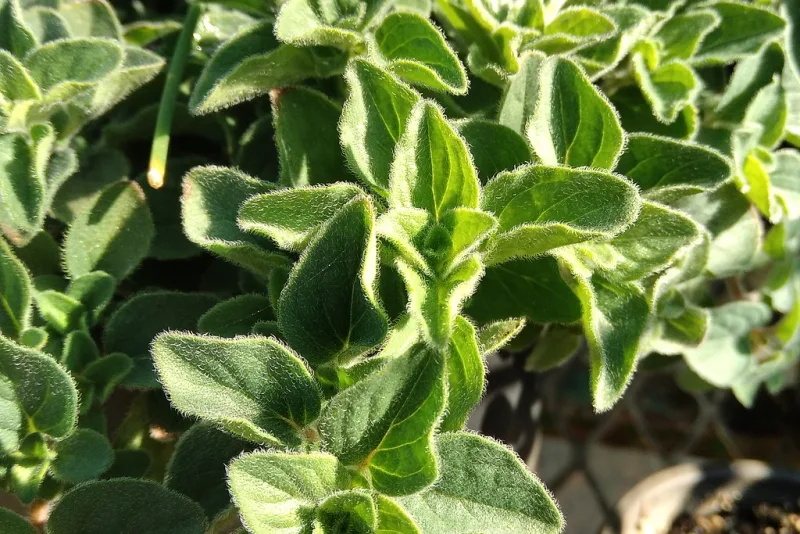

Oregano Oil: Benefits, Uses and How to Use It Correctly
IMPORTANT: Oregano oil is extremely concentrated and potent. It must NEVER be applied undiluted to the skin or mucous membranes, and pure essential oil should NEVER be swallowed neat, as it can cause burns, severe irritation and digestive distress. It is contraindicated for pregnant and breastfeeding women, young children, people allergic to plants in the Lamiaceae family (basil, mint, sage, thyme) and those taking blood-thinning or diabetes medication, as it may amplify their effects. If you are on any medication, have a chronic condition or are planning surgery, talk to your doctor before using it. Oregano oil is a supportive supplement, not a replacement for medical treatment of serious infections.
The story of a remedy from the edge of the village
Aunt Veta from the Sibiu highlands kept an entire shelf of brown bottles in her pantry, each tightly corked and labelled in her own handwriting. The one she reached for most often, especially in late autumn when colds began to spread through the village, was the one labelled “wild oregano oil” — she gathered the plant from the sunny hillsides in July, when the flowers were at their peak and their scent filled the meadow. She would put a drop or two on a teaspoon of honey and give it to anyone with a cold, swearing it “cut the illness off at the root.”
I later learned that what Aunt Veta did was not mere superstition. Oregano hides in its leaves a set of powerful compounds that have drawn the attention of researchers around the world. Our grandmothers used it on instinct and on knowledge passed down through generations, and now science is beginning to confirm many of their intuitions. Modern oregano oil, concentrated and standardised, is the direct descendant of that brown bottle from the mountain pantry.
What is oregano oil
Oregano oil is a concentrated extract obtained from the oregano plant, more precisely from the species Origanum vulgare and, in particular, Origanum vulgare subsp. hirtum (Greek or wild oregano), considered the richest in active compounds. It should not be confused with the oregano-flavoured cooking oil found in supermarkets. There are two distinct products: on one hand the essential oil of oregano, highly concentrated and obtained by steam distillation, and on the other hand the “oregano oil” sold as a supplement, which is that essential oil diluted in a carrier oil (usually olive or coconut oil) to a concentration safe for consumption.
Oregano grows wild on the sunny, rocky hillsides of the Mediterranean region and the Balkans, including Romania. It is a perennial plant in the Lamiaceae family, related to thyme, mint and basil. It is precisely on poor soils, exposed to strong sun, that the plant develops the highest concentration of volatile oils, as a defence mechanism against insects and microbes. That very “defence” is exactly what we are looking for when we use oregano oil.
Table of Contents
- Composition and active compounds
- Health benefits
- Traditional and modern uses
- How to use it correctly (dilution and recipes)
- Dosage and administration
- How to choose a quality oregano oil
- Lifestyle and immune support
- Practical tips and common mistakes
- Conclusion
- Frequently Asked Questions
Composition and active compounds
The strength of oregano oil lies in its remarkably rich chemical profile. The star component is carvacrol, a phenolic compound that, in quality oils, accounts for between 60% and 80% of the total. Carvacrol is responsible for most of the antimicrobial, antifungal and antioxidant properties attributed to this oil. The higher the carvacrol content, the more valuable the oil is considered to be.
Alongside carvacrol we find thymol, another related phenolic compound also known for its antiseptic effects — it is the same substance historically used in mouthwashes. Then we have p-cymene and gamma-terpinene, two precursors that contribute to the oil’s stability and synergistic action. Studies suggest these work together, mutually enhancing each other’s effects, a phenomenon known as the synergy of constituents.
The oil also contains small amounts of terpinen-4-ol, linalool and various other terpenes, plus a range of polyphenolic antioxidants. This combination makes oregano one of the most powerful aromatic plants in terms of antioxidant capacity, exceeding, according to some analyses, many other common spices. It is precisely the richness and diversity of these compounds that explains its broad range of traditional uses.
Health benefits
Immune system support
The best-known benefit of oregano oil is its supportive role during the cold season. Carvacrol and thymol have shown notable activity against a wide range of microorganisms in the laboratory. Folk tradition recommends it at the first signs of a cold, sore throat or stuffy nose, precisely to “catch the illness early.” Many people use it preventively during the winter months, in short courses, to support the body’s resistance.
Antimicrobial and antifungal action
Laboratory studies suggest that oregano extracts and isolated carvacrol may inhibit the growth of certain bacteria, yeasts and fungi. This is why oregano oil is valued as support in cases of candida overgrowth, imbalances of the gut flora, and — applied externally and well diluted — fungal infections of the skin and nails. The proposed mechanism is carvacrol’s ability to disrupt the cell membrane of microorganisms.
Digestive health
In traditional medicine, oregano has always been used to soothe the stomach, stimulate digestion and reduce bloating. Oregano oil may help maintain a healthy balance of gut flora and is sometimes recommended as support for digestive discomfort, gas and a feeling of heaviness after meals. Some traditions also use it as a natural antiparasitic, in supervised courses.
Antioxidant and anti-inflammatory properties
Thanks to its high content of phenolic compounds, oregano oil has a remarkable antioxidant capacity, helping to neutralise the free radicals that contribute to oxidative stress. Studies also suggest a potential anti-inflammatory effect, which makes it interesting as general health support, beyond the cold season.
Respiratory health
The steam and intense aroma of oregano have traditionally been used to clear the airways. Gentle inhalations with a few drops in hot water can bring a sense of relief in cases of nasal congestion and cough, offering pleasant support for breathing during colds.
Traditional and modern uses
In our grandparents’ time, oregano was used as a tea, an aromatic vinegar and in poultices. Today, the concentrated oil extends these uses. Internally, properly diluted, it is taken as a supplement for immunity and digestion. Externally, it is used for the care of blemish-prone skin, for fungal nail infections, and as an ingredient in natural lotions. Around the home, a few drops in water can serve as a natural surface disinfectant, taking advantage of its antimicrobial action. In aromatherapy, diffused, its warm and herbaceous scent creates an atmosphere that supports breathing.
How to use it correctly (dilution and recipes)
The golden rule of oregano oil is dilution. Here are some safe methods, verified by tradition.
Internal course with drops in a carrier oil
For immune support, mix 1-2 drops of oregano essential oil (or 3-4 drops of pre-diluted supplement oregano oil) into a teaspoon of olive or coconut oil. Take the mixture with a little food, once or twice a day. Never take it on an empty stomach, and always diluted. The course should not exceed 7-10 consecutive days.
In gel capsules
The most convenient option for internal use is oregano oil already encapsulated, or diluted and placed in empty gel capsules. These avoid the intense taste and throat burn and ensure a consistent dose. Always follow the directions on the product label.
Gargle for a sore throat
At the first signs of a sore throat, put 1 drop of oregano essential oil into a glass of lukewarm water with a teaspoon of salt. Stir well and gargle for 30 seconds, then spit out. Do not swallow the solution. Repeat 2-3 times a day.
External application for fungal infections
For nail or skin fungus, dilute 1 drop of oregano essential oil in at least a teaspoon of carrier oil (coconut or olive). Apply to the affected area with a cotton swab, once a day. First do a patch test on a small area of skin and wait 24 hours to check for reactions.
Inhalation for the airways
Add 2-3 drops of oregano essential oil to a bowl of hot (not boiling) water. Bring your face to a comfortable distance, cover your head with a towel and inhale the steam for a few minutes, with your eyes closed. Be cautious with people who have asthma, in whom the vapours may irritate the airways.
Dosage and administration
Dosage depends very much on the type of product. Pure essential oil is dozens of times more concentrated than the diluted supplement, which is why reading the label is essential. As a general rule for internal use, the doses usually recommended by tradition and by manufacturers are around a few drops of diluted oil per day, never more without supervision.
Courses are usually taken over short periods of 1-2 weeks, followed by a break. Long, continuous use is not recommended, as the strong antimicrobial action can also affect beneficial gut flora. Many herbalists recommend, alongside a longer oregano course, a probiotic supplement taken a few hours apart, to rebalance the flora.
How to choose a quality oregano oil
A good oregano oil should come from Origanum vulgare (ideally the wild Mediterranean subspecies), not from other plants commercially labelled “oregano.” Look on the label for the Latin botanical species and, if mentioned, the carvacrol content — a figure above 60-70% indicates superior quality. Prefer oils obtained by steam distillation, packaged in dark glass to protect the volatile compounds from light. An authentic oil has a strong, warm, herbaceous and pungent smell; if the smell is weak, the concentration is probably low. Store it in a cool place, away from light, and well sealed.
Lifestyle and immune support
Oregano oil delivers the best results when it is part of a set of healthy habits. During the cold season, combine a short oregano course with enough sleep, good hydration, moderate outdoor exercise and a diet rich in vegetables, fruit and sources of vitamin C. Reducing refined sugar helps maintain the balance of gut flora, and managing stress supports a strong immune system. Seen this way, oregano oil is not a miracle solution on its own, but a valuable ally within a balanced lifestyle.
Practical Tips and Common Mistakes
Mistake no. 1: Using pure, undiluted essential oil. This is the most dangerous mistake. Pure essential oil can burn the mucous membranes and skin. Always dilute it in a carrier oil.
Mistake no. 2: Taking it on an empty stomach. It causes burning and discomfort. Always take it with a little food or diluted in oil.
Mistake no. 3: Courses that are too long. Continuous use, week after week, can unbalance the gut flora. Respect the breaks and take probiotics alongside.
Mistake no. 4: Skipping the patch test. Before any application to the skin, test on a small area and wait 24 hours.
Mistake no. 5: Confusing cooking oil with therapeutic oil. The flavoured oil on the shelf does not have the same properties as concentrated oregano oil.
Mistake no. 6: Using it during pregnancy or in young children without medical advice. It is contraindicated in these situations.
Mistake no. 7: Storing it in light and heat. The volatile compounds degrade. Keep the bottle in the dark and cool.
Conclusion
Oregano oil is one of the most powerful natural remedies inherited from folk tradition and rediscovered by modern science. Rich in carvacrol and thymol, it offers valuable support for immunity, digestion and skin health, provided it is used with respect and caution. The key is correct dilution, moderate doses and short courses. Used wisely, as part of a healthy lifestyle, oregano oil can become that trusted brown bottle in the modern pantry, just as “wild oregano oil” was for Aunt Veta from the highlands.
Frequently Asked Questions
Can I take oregano oil every day? For short periods, yes, but long-term continuous use is not recommended. It is best to take courses of 1-2 weeks, followed by breaks, to protect the beneficial gut flora.
How do I mask the strong taste of oregano oil? The simplest method is to dilute it in olive or coconut oil and take it with a little food, or use gel capsules that release the oil in the stomach, avoiding the throat burn.
Does oregano oil help with nail fungus? Tradition and some observations suggest a beneficial effect on fungal infections, thanks to carvacrol. It is applied locally, well diluted in a carrier oil, after a prior patch test. Severe cases require medical consultation.
Is it safe for children? Internal use is not recommended for young children without a doctor’s approval. The high concentration may be too aggressive for them.
Can I use cooking oregano oil instead of the therapeutic one? No. The flavoured cooking oil does not have the concentration of active compounds needed for the described effects and is not intended for courses.
Oregano essential oil or oregano oil supplement — what is the difference? The essential oil is the pure, highly concentrated extract, which must always be diluted. The “oregano oil” sold as a supplement is already diluted in a carrier oil, at a concentration safe for consumption.
How long does it take to see effects? For immune support, many people feel relief within a few days of the first signs of a cold. For fungal infections, external results may require several weeks of consistent application.
Does it interact with medications? Yes, it may interact with blood thinners and diabetes medication. If you are on any treatment, consult your doctor before using it.