
Peppermint Essential Oil: Benefits, Uses and How to Use It
IMPORTANT: Peppermint essential oil is highly concentrated and must NEVER be used undiluted on the skin or taken internally without clear guidance. Do not apply it to the face, chest or under the nose of babies and children under 6, because menthol can trigger a reflex spasm of the larynx and serious breathing problems. Pregnant or breastfeeding women, and people with severe acid reflux, hiatal hernia, gallstones, epilepsy or an allergy to mint should avoid it or consult a doctor first. The oil near the eyes or on mucous membranes causes intense burning. This article is for information only and does not replace the advice of a doctor or pharmacist.
Grandma Veta from the hills of Argeș kept a row of little brown bottles on her windowsill, each with a label written in indelible pencil. The peppermint one was the most used — you knew it by its cold, sharp scent that opened your nostrils with a single sniff. When someone came to her with a “heavy head” after a long day in the fields, she would take the bottle, drop a single drop onto a clean handkerchief, hand it to the person to hold under their nose for a few moments, then gently rub their temples with fingertips smeared with a little goose fat into which she had blended mint. “It cools the thoughts,” she would say with a laugh, “and chases the pain out through the forehead.”
She was not far off. That cool sensation peppermint oil leaves on the skin is not poetic fancy but the real effect of menthol on the body’s temperature receptors. Romanian folk tradition has used mint — as tea, as crushed leaves, and later as essential oil — for headaches, nausea, indigestion and to “clear the mind.” Today peppermint essential oil is one of the most researched and appreciated oils in aromatherapy, precisely because of its versatility.
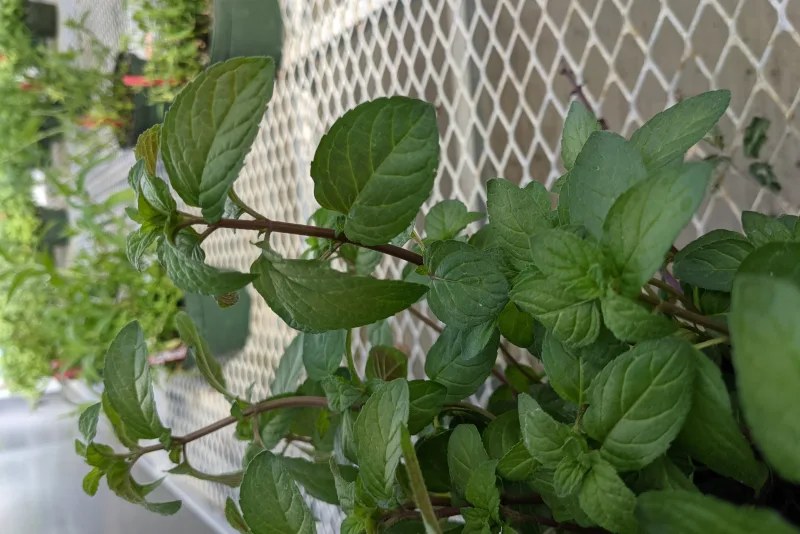
Peppermint essential oil comes from the plant Mentha × piperita, a hybrid species that arose from the natural cross between water mint and spearmint. It is a vigorous perennial with reddish stems and toothed, deep-green, intensely fragrant leaves. The oil, distilled from the plant’s aerial parts, contains a high proportion of menthol and menthone, the compounds responsible for both its characteristic scent and its cooling, relaxing effects.
Table of Contents
- What peppermint essential oil is and how it is made
- Composition and active principles
- Health benefits
- Peppermint oil for headaches
- Traditional and modern uses
- How to use it correctly (step-by-step recipes)
- Dosage and safe dilution
- Peppermint oil for hair and skin
- Lifestyle: weaving mint into your daily routine
- Practical tips and common mistakes
- Conclusion
- Frequently Asked Questions
What peppermint essential oil is and how it is made
Peppermint essential oil is the fragrant, volatile liquid extracted from the leaves and flowering tops of peppermint by steam distillation. The process is simple in principle: steam passes through the plant material, carries the volatile molecules along, is then cooled and condensed, and the oil — lighter than water — separates at the surface. Producing a single kilogram of essential oil requires very large amounts of fresh plant, which is why the finished product is so concentrated and costly.
There is an important difference between peppermint essential oil and the “peppermint oil” you sometimes find sold as an infused oil. The essential oil is distilled and pure, and extremely powerful; the infused (macerated) oil is made by steeping mint leaves in a vegetable oil (olive, sunflower), is much gentler, and can be used more freely on the skin. This article focuses mainly on the essential oil, but we will also mention the macerate, which is friendlier for beginners.
The color of peppermint essential oil ranges from colorless to pale yellow, and the consistency is watery and very fluid. The smell is unmistakable: fresh, minty, slightly sweet and cooling. Quality depends on the mint variety, the moment of harvest (the leaves are richest in oil just before full flowering), and the method of distillation.
Composition and active principles
The strength of peppermint oil comes from a remarkable combination of volatile compounds. The most important are:
- Menthol — the main component, responsible for the cooling sensation, the mild local anesthetic effect, and the characteristic scent. Menthol activates the TRPM8 receptors in the skin, the same ones that signal cold to the brain, which is why you feel coolness even though the actual temperature does not drop.
- Menthone — a related compound with a sharper smell that contributes to the aromatic profile.
- Menthyl acetate — gives a sweeter, finer note to the aroma.
- Cineole (eucalyptol), limonene and pinenes — in smaller amounts, playing a role in the effects on the airways.
This combination explains why peppermint oil acts at once as a coolant, a relaxant of smooth muscle, and a substance that seems to “open up” breathing. Studies suggest that menthol has antimicrobial properties and may help relax the muscles in the intestinal wall, which underlies its traditional use for digestive discomfort.
Health benefits
Easing headaches and tension
The best-known use of peppermint oil, both in folk tradition and in modern research, is for tension-type headaches — that dull pain, like a tight band around the forehead and temples, that comes from stress, fatigue or long hours at a desk. Menthol applied diluted to the temples and forehead produces a feeling of coolness and a slight numbness that seems to distract the perception of pain and relax the tense muscles of the scalp. We give the recipe below.
Support for digestion
Tradition has used mint for centuries for a “bloated belly,” gas, nausea and cramps. Peppermint essential oil, in specially designed internal forms (enteric-coated capsules), is one of the most studied natural remedies for irritable bowel syndrome. Menthol is thought to relax the smooth muscle of the intestine, reducing painful spasms. CAUTION: essential oil should not be swallowed by dropping it directly onto the tongue or into water; internal use requires pharmaceutical forms and, ideally, a doctor’s advice.
Supporting breathing
Inhaled, peppermint vapors give a sensation of a “decongested” nose and fuller breathing. Although menthol does not actually reduce the swelling of the nasal lining, it creates a clear sensation of cool air passing through more easily, very useful subjectively during colds with a blocked nose and in periods of respiratory fatigue.
Energy and focus
The smell of mint has a tonic, awakening effect. Many people use a drop on a handkerchief or in a diffuser during study sessions or long drives to fight drowsiness. Studies suggest that the aroma of mint can subjectively improve alertness and the feeling of freshness.
Relief for sore muscles
Applied diluted and massaged into tense muscles, peppermint oil gives a cool sensation followed by a mild warmth, pleasant after physical exertion. It is a frequent ingredient in gels and ointments for a stiff neck, tense shoulders and tired legs.
Peppermint oil for headaches
Because headaches are the reason many people seek out this oil, it deserves a dedicated section. Here is the traditional method, adapted for safety:
- Place a teaspoon of carrier oil (fractionated coconut, sweet almond or jojoba) in your palm.
- Add 1 drop of peppermint essential oil and mix well with your fingertip.
- Apply a small amount to the temples and the back of the neck, carefully avoiding the area around the eyes and eyebrows.
- Massage slowly in circles for a few minutes. Breathe deeply; the cooling sensation appears within seconds.
- Repeat after a few hours if needed.
For added effect, you can combine the local application with an inhalation: a drop on a handkerchief held a few centimeters from the nose, taking a few slow breaths. If the pain is severe, persistent, accompanied by fever, vision changes, or comes on suddenly “like a thunderclap,” do not rely on oil — see a doctor.
Traditional and modern uses
In the Romanian household of old, mint was ever-present. Dried leaves went into teas for the stomach, and later, when essential oils appeared, they took over many of the old roles:
- Room and air freshener: a few drops in a diffuser or on a bowl of hot water refreshed the room.
- Rubs for the temples and neck in case of headache or “fainting from the heat.”
- Foot baths with warm water into which a few diluted drops were added, for tired and sweaty feet.
- Natural repellent — the strong smell is unpleasant to many insects and to mice, which is why leaves or oil-soaked pads were tucked into the corners of the pantry.
- Mouth hygiene — an improvised mouthwash of one drop of oil in a glass of water (rinse only, never swallow).
Today we add cosmetic uses (hair, skin), aromatherapy for focus and relaxation, and use in natural cleaning products thanks to the fresh scent and antimicrobial properties.
How to use it correctly (step-by-step recipes)
Quick dry inhalation
Drop 1-2 drops onto a cotton handkerchief or a tissue. Hold it 10-15 cm from the nose and breathe slowly several times. Ideal for fatigue, a blocked nose or mild nausea. Keep away from the eyes.
Steam inhalation
Add 1-2 drops of peppermint oil to a bowl of hot (not boiling) water. Lean over it with a towel over your head and breathe the vapors for a few minutes with your eyes closed. Very helpful for the sensation of a stuffy nose. Not recommended for young children or for asthmatics sensitive to strong vapors.
Aromatherapy diffuser
Add 3-5 drops to the water in a diffuser for a medium-sized room. Use in bursts of 30-60 minutes, not continuously. Excellent for focus at the desk or for a fresh atmosphere.
Massage oil for tired muscles
Combine 30 ml of carrier oil (almond, sesame) with 6-8 drops of peppermint oil (a concentration of about 1-1.5%). Massage tense areas — neck, shoulders, calves. The cool sensation appears immediately. Do not apply to open wounds or irritated skin.
Cooling foot bath
In a basin of lukewarm water, mix 2-3 drops of peppermint oil with a tablespoon of bath salt or a tablespoon of milk (which helps disperse the oil). Soak your feet for 10-15 minutes. Refreshing after a long day on your feet.
Cooling room spray
In a 100 ml spray bottle, combine water, a teaspoon of alcohol or witch hazel (to disperse the oil), and 10-15 drops of peppermint oil. Shake well before each use and spray into the air, avoiding delicate furniture.
Dosage and safe dilution
The golden rule is: less is more. Peppermint oil is powerful, and a small amount produces clear effects.
- On the skin (adults): a concentration of 1-2%, that is, about 1 drop of essential oil per teaspoon (5 ml) of carrier oil.
- In a diffuser: 3-5 drops for an ordinary room.
- Direct inhalation: 1-2 drops on a handkerchief.
- Never on the face, neck or chest of young children, and never undiluted on sensitive skin.
Always do a patch test on a small area of skin (the inside of the forearm) and wait 24 hours before the first wider use, especially if you have sensitive skin or a tendency to allergies.
Peppermint oil for hair and skin
For the scalp and hair
The cool tingling sensation that menthol gives has made peppermint oil popular in hair care. Tradition and modern practice suggest that stimulating circulation at the scalp may support a healthy environment for hair growth. Add 1-2 drops of peppermint oil to your usual dose of shampoo (in your palm, just before washing), massage the scalp, then rinse. The cooling sensation is energizing. Do not overdo the amount — too much stings.
You can also make a scalp massage oil: 30 ml of coconut or castor oil with 3-4 drops of peppermint oil, massaged into the scalp once a week, left on for 20-30 minutes, then washed out.
For the skin and pores
In very small amounts and well diluted, peppermint oil gives a feeling of freshness and cleanliness. It is used in products for oily skin, but people with sensitive skin should be cautious, because menthol can irritate. Never apply concentrated peppermint oil to pimples or problem skin.
Lifestyle: weaving mint into your daily routine
Mint should not stay only in the oil bottle. For those who want the gentle benefits without the intense concentration of the essential oil, there are simpler options:
- Mint tea in the morning or after heavy meals — it calms the stomach and freshens the breath.
- Fresh leaves of mint in your drinking water, in salads or in yogurt.
- The mint macerate (vegetable oil infused with leaves) for gentle massages, without the irritation risk of the essential oil.
- A cup of mint tea in the evening, if it suits you, as a relaxing ritual — although for some people mint is more energizing, so notice how you react.
Growing a mint plant on the windowsill or in the garden is one of the easiest joys: mint grows vigorously, almost on its own, and gives you fresh leaves all through the warm season. Be sure to keep it in a pot, because in the garden it spreads invasively.
Practical tips and common mistakes
Mistake no. 1: Applying it undiluted to the skin. Many people believe “natural means gentle” and apply the oil straight. Menthol can cause burns, redness and sensitization. ALWAYS dilute.
Mistake no. 2: Using it on young children. Peppermint oil near the nose or on the chest of infants and children under 6 is dangerous. For little ones, choose other methods, under a doctor’s guidance.
Mistake no. 3: Contact with the eyes. Even vapors from your fingers can accidentally reach the eyes and cause intense stinging. Wash your hands after applying and do not rub your eyes.
Mistake no. 4: Swallowing undiluted essential oil. Dropping it into water “for digestion” is not a safe practice. Internal use requires special pharmaceutical forms and a doctor’s advice.
Mistake no. 5: Confusing essential oil with the macerate. They are very different in strength. Read the label and use the dosage appropriate to each.
Mistake no. 6: Improper storage. Light and heat degrade the oil. Keep it in a closed dark-glass bottle, away from the sun, at room temperature, with the cap tightly screwed on.
Mistake no. 7: Diffusing continuously for hours. The intense, prolonged aroma can cause headaches instead of soothing them. Use in bursts.
Conclusion
Peppermint essential oil is a small household helper with a well-deserved reputation: it cools, refreshes, eases tension headaches, supports digestion and brings a sense of freshness to any room. Its power comes from its concentration — and so do its risks, if used carelessly. Diluted correctly, stored with care and used in moderation, it earns its place in any natural kit, just as it did in Grandma Veta’s row of little brown bottles. Respect the simple safety rules, listen to your body, and when pain or symptoms go beyond ordinary discomfort, see a doctor. Nature offers much, but wisdom lies in using it with a clear head.
Frequently Asked Questions
Can I put peppermint oil directly on my forehead when I have a headache? Not undiluted. Mix one drop with a teaspoon of carrier oil (coconut, almond) and then apply to the temples and the back of the neck, away from the eyes. This avoids irritation while still giving you the cooling effect.
Is peppermint oil safe for children? Not for little ones. Peppermint oil should not be applied to the face, chest or under the nose of babies and children under 6, because of the risk of breathing problems. For older children, use it only diluted and under supervision, ideally with a doctor’s approval.
Can I swallow peppermint essential oil for digestion? Do not drop the essential oil into water or swallow it directly. For internal use there are special enteric-coated capsules, and these are ideally used after talking to a doctor, especially if you have reflux or other digestive conditions.
How do I store peppermint oil so it doesn’t go off? In a dark-glass bottle, away from light and heat, at room temperature, with the cap firmly closed. This way it keeps its aroma and properties for a long time.
Does peppermint oil help hair grow? Tradition and modern practice suggest that massaging the scalp with diluted peppermint oil stimulates circulation and creates an invigorating sensation. Add 1-2 drops to your shampoo or use a diluted massage oil. It is not a medical treatment, but a gentle support.
Why do I feel cold when I apply peppermint oil, even though the skin doesn’t actually cool down? Because menthol activates the TRPM8 receptors in the skin, the same ones that signal cold to the brain. The brain “believes” the area has cooled, even though the real temperature does not drop.
Can I use peppermint oil as an insect repellent? Yes, the strong smell is unpleasant to many insects. A diluted spray or a few drops on cotton pads in the corners can keep some insects and mice at bay. Do not treat it, however, as guaranteed protection against disease-carrying mosquitoes.
Who should avoid peppermint oil? People with an allergy to mint, severe reflux, hiatal hernia, gallstones, epilepsy, pregnant or breastfeeding women, and young children. If in any doubt, ask your doctor or pharmacist before use.