 Photo: Adoscam, CC BY-SA 4.0, via Wikimedia Commons
Shea butter is the fat extracted from the nuts of the African shea tree (Vitellaria paradoxa) and one of the most effective natural moisturisers for dry skin, chapped lips, rough patches and dry or curly hair. It melts at body temperature, forms a protective film that slows water loss from the skin and contains soothing compounds. For sensitive or eczema-prone skin, choose a fragrance-free butter and apply it while your skin is still damp after a shower.
Key takeaways:
- Raw (unrefined) shea butter keeps more of its active compounds; refined shea is white, odourless and better for reactive skin or DIY recipes.
- It works very well as an emollient and occlusive; its anti-inflammatory effects come mainly from lab studies, not large clinical trials.
- On eczema-prone skin it is a good everyday moisturiser, but it does not replace prescribed treatment during flares.
- There is no evidence that it prevents stretch marks, although it can ease itching and tightness.
- On acne-prone facial skin it can clog pores in some people: patch test first.
- Allergic reactions are rare, but if you have a severe tree nut or latex allergy, patch test and prefer refined shea.
What is shea butter?
The shea (karité) tree grows wild across the savannah belt of West and Central Africa. Its fruit holds a fat-rich kernel from which women’s cooperatives traditionally make the butter: the nuts are boiled, dried, lightly roasted, ground and kneaded with water until the fat separates and can be skimmed off. In its countries of origin shea butter is both a cooking fat and a household remedy for skin, while refined grades are widely used by the chocolate and cosmetics industries.
Composition: why it moisturises so well
Shea butter is made mostly of stearic acid, which keeps it solid, and oleic acid, which helps it spread, with smaller amounts of linoleic and palmitic acids. What sets it apart from most plant oils is its larger unsaponifiable fraction, the part that does not turn into soap. It contains:
- triterpene alcohol esters (cinnamates, amyrins, lupeol), studied for anti-inflammatory activity;
- tocopherols (forms of vitamin E), antioxidants that also protect the butter from going rancid;
- phytosterols and, in raw butter, phenolic compounds.
Refining removes a large share of this fraction, which is why the type of shea butter you buy matters.
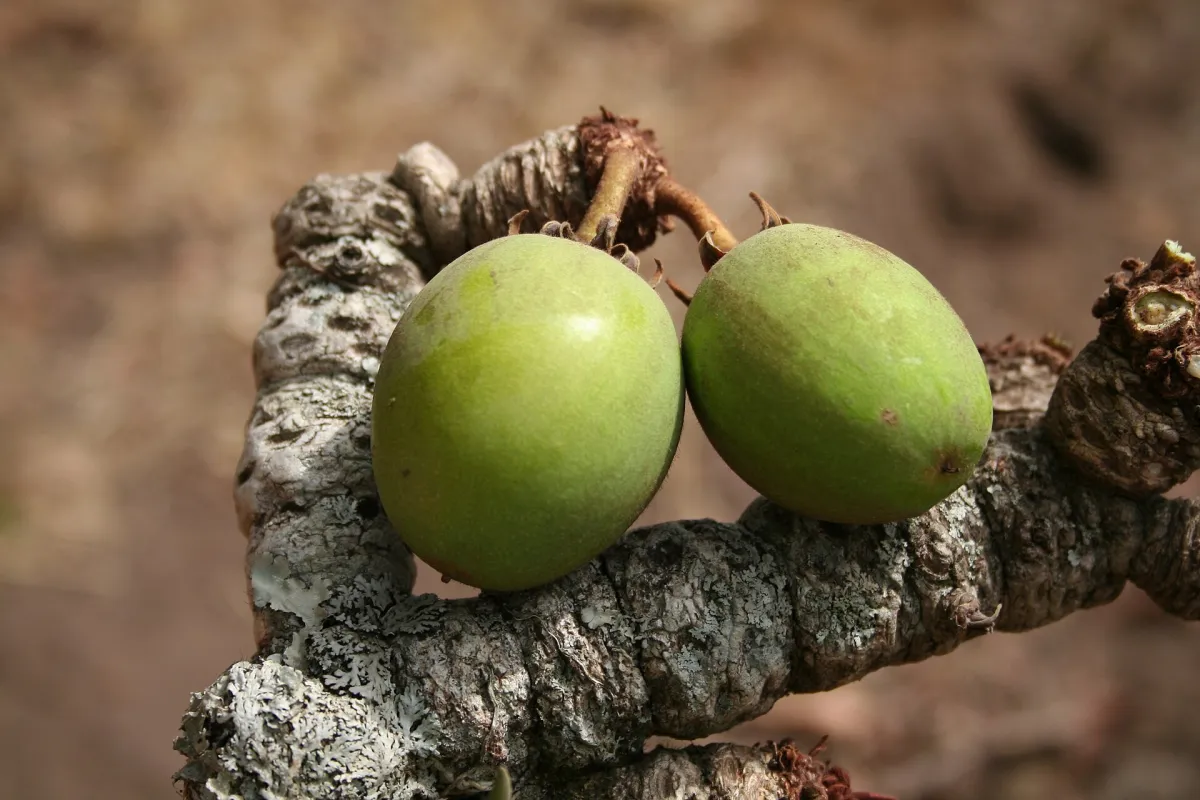 Photo: Marco Schmidt [1], CC BY-SA 2.5, via Wikimedia Commons
Raw vs refined shea butter: which should you choose?
| Type | Look and smell | Active compounds | Best for | Downsides |
|---|---|---|---|---|
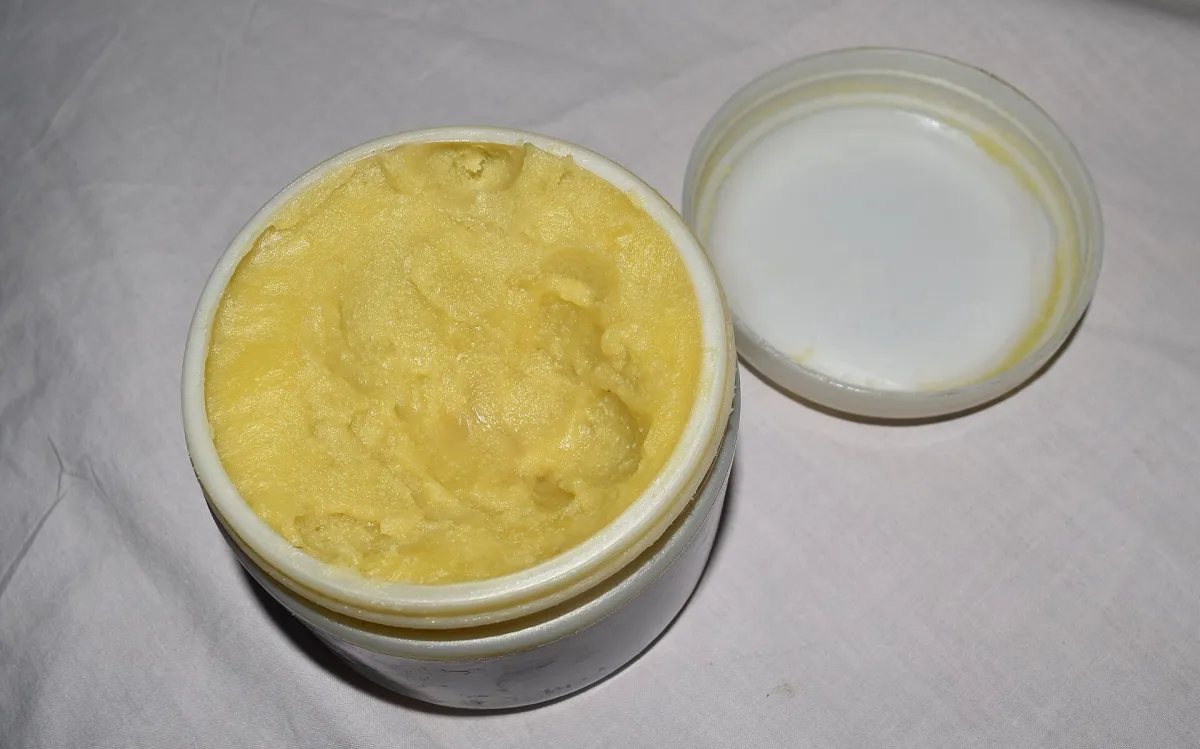
| Raw, unrefined | Ivory to yellowish, nutty, slightly smoky smell | Keeps most of the unsaponifiable fraction | Very dry skin, heels, curly hair, lip balms | Strong smell, variable texture, can turn grainy |
| Refined | White, almost odourless | Partly reduced | Sensitive skin, allergy-prone people, homemade creams | Less active |
| Ultra-refined or fractionated | White, very soft or semi-liquid | Minimal | Commercial cosmetics, light textures | Essentially just an emollient |
A few buying tips:
- Grade A is a trade label for good-quality raw butter; pay more attention to colour, smell, stated origin and the best-before date.
- Deep yellow shea is sometimes coloured traditionally with borututu root. That is harmless, but it does not mean better quality.
- A sour, stale-oil or paint-like smell means the butter has oxidised: do not use it.
- For eczema, babies or reactive skin, choose products without fragrance or essential oils.
Benefits: tradition versus evidence
Dry skin and cracked hands
This is where the benefit is clearest. Shea butter acts as an emollient, filling the gaps between cells in the outer skin layer and softening it, and as a moderate occlusive, slowing water evaporation. The mechanism is well understood and shared by all effective moisturisers. Used daily, it reduces tightness, flaking and splits on the hands, elbows, knees and heels. For a complete approach, see our guides to dry skin and cracked, dry hands.
Eczema-prone skin
Medical guidelines such as NICE and Cochrane reviews treat generous, regular use of emollients as the foundation of atopic dermatitis care. A few small studies have tested shea-based creams in children and adults with mild eczema and found improvements in skin hydration and barrier function, similar to other emollients. There is no evidence that shea butter beats a standard pharmacy emollient. It is a sensible choice if your skin tolerates it, not a treatment for flares. The full strategy is covered in our article on atopic dermatitis.
Chapped lips
Shea butter is a classic lip balm ingredient: it melts on contact, fills cracks and shields lips from wind and cold. For badly chapped lips it works better combined with beeswax, which helps it stay on longer. More tips in our article on chapped lips.
Stretch marks
Rubbing shea butter on the bump during pregnancy is a popular tradition, but the Cochrane review of topical preparations for preventing stretch marks found no reliable evidence that any cream or oil prevents them. Whether you get them depends largely on genetics and how fast you gain weight. Daily massage with shea butter can still ease the itching and discomfort of stretched skin. See also our guide to stretch marks.
Curly, coily or dry hair
Curly hair has a more raised cuticle and loses moisture easily. Shea butter seals water into the lengths, reduces frizz and cuts down on breakage when detangling. This use comes mainly from African tradition and the experience of people with natural curls; clinical trials are lacking, but the lubricating effect on the hair shaft is plausible. On fine, straight hair it tends to weigh hair down and look greasy.
Other traditional uses
In West Africa shea butter is applied to sun-irritated skin, minor scrapes, cuticles, for baby massage and even around the nostrils when the nose is blocked. The anti-inflammatory effects of its triterpenes have been seen in cell and animal studies, but not confirmed in solid clinical trials.
How to apply shea butter properly
- Use a small amount: a pea-sized piece for both hands, a walnut-sized piece for both feet.
- Warm it between your palms for 10-20 seconds until it turns translucent and oily.
- Apply to damp skin, within 2-3 minutes of showering or washing your hands. This locks the water into your skin.
- Press it in rather than rubbing hard, especially on eczema-prone skin.
- On very rough areas, apply a thicker layer at night and cover with cotton gloves or socks.
| Area | Amount | How often | Notes |
|---|---|---|---|
| Body, dry skin | 1-2 teaspoons for the whole body | Once a day, after showering | On damp skin |
| Eczema-prone skin | Generous layer, fragrance-free butter | 2-3 times a day | Leave 30 minutes between it and prescribed creams |
| Lips | Rice grain-sized | As needed, always at bedtime | Best as a balm with beeswax |
| Hands, heels | Hazelnut-sized, thick layer | At night, with gloves or socks | 1-2 weeks in a row |
| Bump in pregnancy | 1 teaspoon | 1-2 times a day, gentle massage | For comfort, not guaranteed prevention |
| Curly or dry hair | Hazelnut-sized for all hair | On damp hair, 2-3 times a week | Lengths and ends only |
 Photo: USAID in Africa, Public domain, via Wikimedia Commons
Simple DIY recipes
1. Whipped shea body butter
- 100 g shea butter
- 30 ml sweet almond or jojoba oil
- optional: 5-6 drops of lavender essential oil (skip it for babies, pregnancy and eczema)
Melt the shea in a double boiler over low heat, without letting the water boil. Once fully melted, keep it on gentle heat for another 10 minutes to prevent graininess. Stir in the oil, pour into a bowl and refrigerate for 20-30 minutes, until it turns opaque at the edges but is still soft. Whip with a hand mixer for 3-5 minutes until fluffy. Store in a clean jar and scoop it out with a dry spatula.
2. Shea lip balm
- 10 g shea butter
- 5 g beeswax (or candelilla wax for a vegan version)
- 5 g almond or olive oil
Melt the wax with the oil in a double boiler, then add the shea butter and stir until smooth. Pour into 4 small tubes or tins and let them set at room temperature. Kept away from heat, the balm lasts several months.
3. Pre-wash mask for curly or dry hair
Melt 1 tablespoon of shea butter with 1 teaspoon of olive or argan oil. Work it through slightly damp lengths, avoiding the scalp if you are prone to dandruff or oily roots. Cover with a shower cap for 30-60 minutes, then shampoo. Once a week is enough.
4. Overnight balm for heels and elbows
Mix 2 tablespoons of shea butter with 1 teaspoon of olive oil. Apply a thick layer at bedtime after a short foot soak and pull on cotton socks.
Important: do not add water, herbal tea or aloe gel to homemade recipes without an emulsifier and a preservative. Anything containing water quickly becomes a breeding ground for bacteria and mould.
Is shea butter comedogenic? Will it clog pores?
Shea butter usually gets low scores (0-2) on old comedogenicity scales, but those ratings come from rabbit-ear tests and do not predict human skin reactions well. In practice:
- on the body it rarely causes problems;
- on acne-prone facial skin or skin with enlarged pores it can contribute to blackheads and breakouts in some people, especially in thick layers;
- refined shea and very small amounts are better tolerated;
- if you have folliculitis or so-called fungal acne (Malassezia), rich fatty products can make it worse.
Test it on a small area of your face, such as the jawline, for 2 weeks before using it all over.
Latex or nut allergy: is shea butter safe?
Botanically, shea is a tree nut, and the tree produces natural latex in its bark, which has raised questions about cross-reactions. The butter, however, is almost entirely fat, and the proteins that trigger allergies are present only in tiny amounts, especially in refined shea. Reported allergic reactions to shea butter are rare.
Still, if you have a severe tree nut or latex allergy (widespread hives, facial swelling or anaphylaxis in the past), talk to your allergist and do this patch test before first use:
- Apply a rice grain-sized amount to the inside of your forearm.
- Cover with a plaster and leave it for 24-48 hours.
- If you notice redness, itching, swelling or blisters, do not use it.
Contraindications and precautions
- Known allergy to shea or a reaction to the patch test.
- Latex condoms: oils and shea butter weaken latex and increase the risk of breakage. Do not use shea as a lubricant with latex condoms.
- Infected skin, weeping wounds, fresh or deep burns: cool a burn under running tap water for about 20 minutes first; fats do not belong on fresh burns.
- Seborrheic dermatitis of the scalp: very rich products can worsen flaking.
- Babies: only pure, fragrance-free butter after testing a small patch; no essential oils.
- Internal use: cosmetic shea butter is not meant to be eaten; food-grade shea is a separate product.
- Topical medicines: if you use steroid creams or other prescribed skin treatments, leave about 30 minutes between them and your emollient, as the NHS advises.
There are no known interactions with oral medicines.
When to see a doctor
- eczema is weeping, forming yellow crusts or spreading quickly (possible infection);
- painful, clustered blisters appear on eczema, especially with fever: this needs urgent care;
- dry skin comes with tiredness, feeling cold, weight gain or itching without a rash (thyroid, kidney or liver causes are possible);
- cracks on the lips or at the corners of the mouth do not heal within 2 weeks;
- wide, purple stretch marks appear without an obvious reason such as pregnancy, puberty or rapid weight gain;
- after applying it you develop swelling of the lips or face or trouble breathing: call emergency services (112, 999 or 911) immediately.
Common mistakes
Overheating. Melting shea over direct heat damages delicate compounds and makes graininess more likely.
Applying it to bone-dry skin. Shea does not add water, it only holds it in. On dry skin the effect is much weaker.
Using too much on the face or fine hair. A thick layer leaves shine, can clog pores and weighs hair down.
Water-based recipes without a preservative. They look fine for a few days, then bacteria and mould grow, often invisibly.
Using rancid butter. If it smells like old oil, throw it away: oxidised fats can irritate the skin.
Unrealistic expectations. It does not cure eczema, erase old stretch marks or work as sunscreen.
Conclusion
Shea butter is an excellent, affordable and versatile natural emollient with clear benefits for dry skin, cracked hands and heels, lips and curly hair. Choose raw shea for very rough areas and hair, refined shea for sensitive or allergy-prone skin, apply it to damp skin and go easy on acne-prone faces. For active eczema, stretch marks or signs of infection, it is a helpful extra, not a treatment.
Frequently asked questions
Can I use shea butter on my face? Yes, if your skin is dry or normal, in a very small amount at night. If your skin is oily or acne-prone, test it on a small area for 2 weeks first, because it can clog pores in some people.
Is shea butter safe for babies? Pure, fragrance-free shea butter is traditionally used for baby massage and dry patches. Test a small area first and avoid essential oils. Persistent rashes should be checked by a paediatrician.
Why is my shea butter grainy? Graininess happens when shea melts and cools slowly, so different fats crystallise separately. It does not mean it has gone off. Melt it fully over low heat and cool it quickly in the fridge.
How long does shea butter last? Usually 12-24 months in a cool, dark place in a closed container. Use a clean spatula and discard it if it smells rancid.
Shea butter or coconut oil: which is better? Shea butter is richer in unsaponifiable compounds and is generally well tolerated by dry and sensitive skin. Virgin coconut oil has some small eczema studies too, but it is more likely to clog pores on the face. For very dry skin, shea is usually the better pick.
Does shea butter prevent stretch marks in pregnancy? There is no evidence that any product applied to the skin prevents stretch marks. Massaging with shea butter does help with itching and comfort and is safe in pregnancy.
I have a nut allergy. Can I use shea butter? Reactions are rare and refined shea contains very little protein. If your allergy is severe, ask your allergist and do a 24-48 hour patch test on your forearm.
Does shea butter protect against the sun? It filters only a very small amount of UV light, far too little for real protection. It does not replace a sunscreen with SPF.
Sources and further reading
- van Zuuren E.J. et al., Emollients and moisturisers for eczema, Cochrane Database of Systematic Reviews, 2017.
- Brennan M., Young G., Devane D., Topical preparations for preventing stretch marks in pregnancy, Cochrane Database of Systematic Reviews, 2012.
- NICE guideline CG57, Atopic eczema in under 12s: diagnosis and management.
- NHS, Emollients (how to use them, how much, and timing with steroid creams).
- Cosmetic Ingredient Review, Safety Assessment of Plant-Derived Fatty Acid Oils as Used in Cosmetics (includes Butyrospermum parkii butter).
Informative content only; it does not replace a consultation with a doctor or pharmacist. Worsening eczema, signs of infection or allergic reactions need medical assessment.