
Tea Tree Oil: Benefits, Uses and How to Apply It Correctly
IMPORTANT: Tea tree oil is for EXTERNAL USE ONLY. It must never be swallowed — ingestion can cause confusion, loss of coordination and serious toxic effects, especially in children. Always apply it diluted in a carrier oil; used neat, it can irritate or burn sensitive skin. Keep the bottle away from children and pets (it is toxic to dogs and cats). Always perform a patch test on a small area of skin before first use. Pregnant or breastfeeding women, people with atopic skin, severe eczema or known allergies to plants in the myrtle family should consult a doctor before using it. This article is for informational purposes and does not replace professional medical advice.
Aunt Lucia, the seamstress at the edge of the village, always kept a small brown bottle on her windowsill that she simply called “the Australian drop.” A nephew who had sailed across the seas had given it to her, and she used it with almost religious thrift — one drop, two, never more. When a neighbor’s child turned up with a scratch that had started to redden, she would mix a single drop with a little sunflower oil and spread it with her fingertip, muttering that “where cleanliness lives, sickness cannot take hold.” Back then no one in the village had heard of Melaleuca alternifolia, but everyone had noticed that the wounds Aunt Lucia tended seemed to heal faster and rarely festered.
Much later I understood that her “Australian drop” was tea tree oil, one of the most studied antiseptic essential oils in the world. Its true story begins far away, in the coastal swamps of northeastern Australia, where Aboriginal peoples crushed the tree’s fragrant leaves and used them as a dressing for wounds, bites and skin infections, long before any laboratory confirmed their intuition.
Tea tree oil is an essential oil obtained by steam-distilling the leaves and young twigs of the Melaleuca alternifolia tree. Despite its name, it has nothing to do with the tea plant (Camellia sinensis) from which we brew ordinary tea — the name comes from the sailors of James Cook, who in the eighteenth century brewed an aromatic drink from the leaves of these trees. Today it is prized worldwide as a natural antiseptic and is one of the few essential oils with a solid reputation in cosmetics and in caring for blemish-prone skin.
Table of Contents
- What tea tree oil is and where it comes from
- Composition and active principles
- Health and skin benefits
- Traditional and modern uses
- How to use it correctly: step-by-step dilution recipes
- Dosage and recommended concentrations
- How to choose a quality oil
- Lifestyle and natural-care tips
- Practical tips and common mistakes
- Conclusion
- Frequently asked questions
What tea tree oil is and where it comes from
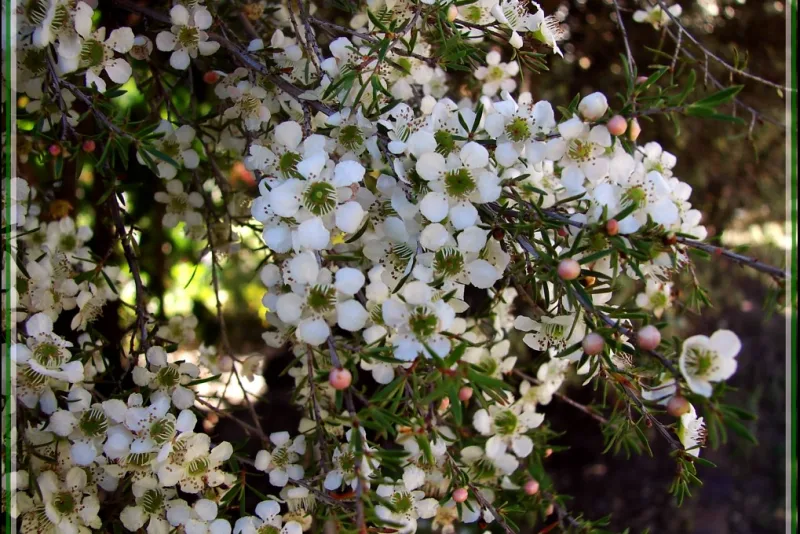
The tea tree (Melaleuca alternifolia) is a shrub or small tree in the Myrtaceae family, related to eucalyptus, niaouli and cloves. It grows naturally only in a restricted area of New South Wales, in northeastern Australia, in swampy zones and along watercourses. It has narrow, soft, needle-like leaves and fluffy white flowers arranged on spikes. The leaves release a fresh, medicinal scent, slightly camphorous and balsamic — a sign of the rich volatile oils they contain.
The commercial oil is produced by steam-distilling the leaves and twig tips. The process concentrates the volatile compounds into a clear to pale-yellow liquid with a distinctive penetrating aroma. Australia remains the world’s leading producer, with specially cultivated plantations, although the plant is now grown in other regions with a suitable climate. The quality of the oil depends greatly on the plant’s chemotype, the timing of the harvest, and the distillation method.
Aboriginal tradition used it as crushed leaves applied directly to wounds and bites, or as an inhaled infusion for respiratory ailments. Its modern popularity exploded in the 1920s–1930s, when Australian researchers began documenting its antiseptic properties, and during the Second World War the oil was included in the first-aid kits of Australian soldiers.
Composition and active principles
The power of tea tree oil lies in a complex mixture of more than a hundred volatile compounds. The most important — and the benchmark by which quality is measured — is terpinen-4-ol, considered the main driver of its antimicrobial action. International quality standards require a good oil to contain at least 30–40% terpinen-4-ol and a low content of 1,8-cineole (eucalyptol), a compound that in large amounts can irritate the skin.
Besides terpinen-4-ol, the oil also contains gamma-terpinene and alpha-terpinene (precursors that oxidize over time), alpha-terpineol, p-cymene, limonene, alpha-pinene and various sesquiterpenes. This rich profile explains why the oil has a broad spectrum of action: studies suggest antibacterial, antifungal and antiviral effects, as well as an ability to modulate local skin inflammation.
An important practical point: the oil oxidizes on contact with air, light and heat. As it oxidizes, the content of compounds that can cause allergic contact reactions increases. That is why tea tree oil should be stored in dark, tightly closed bottles, in a cool place away from light, and ideally used within six months to a year of opening.
Health and skin benefits
Antiseptic and support for blemish-prone skin
The best-known use of tea tree oil is in caring for acne- and blemish-prone skin. Folk tradition and studies suggest that terpinen-4-ol acts on the bacteria involved in pimple formation and helps reduce local inflammation. Applied as a diluted spot treatment, it can soothe redness and help dry out inflamed blemishes without the harsh drying effect of some aggressive chemical products.
Antifungal support
The oil is traditionally valued for superficial fungal conditions of the skin and nails, such as athlete’s foot (the fungal infection between the toes) or fungal-type dandruff. Studies suggest it can inhibit the growth of some common fungi. For affected nails, tradition recommends patient, diluted application over several weeks.
Scalp and hair care
Added to shampoo or to scalp massage oils, tea tree oil is used to soothe an irritated, itchy, flaky scalp. The fresh sensation and slight tingle it leaves behind are appreciated by those with oily scalps. Studies suggest a benefit in reducing dandruff when used in small, regular concentrations.
Support for oral hygiene (rinse only, never swallow)
Traditionally, a few drops diluted in water have been used as a mouthwash for a feeling of freshness and to support oral hygiene. Caution: this use involves rinsing and spitting ONLY, never swallowing, since the oil is toxic if ingested.
Care for minor wounds and bites
Properly diluted, the oil has long been used on superficial scratches, insect bites and minor irritations, for a feeling of cleanliness and to soothe itching. For deep, infected or non-healing wounds, however, medical attention is essential.
Respiratory support through inhalation
A few drops in a bowl of hot water, inhaled carefully under a towel, release a balsamic vapor traditionally valued for the feeling of a clearer nose during mild colds. It should not be used on young children and does not replace treatment for a respiratory infection.
Traditional and modern uses
In Australian folk medicine and, later, in European herbalism, tea tree oil took the role of a broad-spectrum “household disinfectant.” It was used to dress small wounds, to soothe bites, for skin hygiene, and even diluted in cleaning water, thanks to its fresh scent and cleansing action.
Today we find it in countless cosmetic products: gels and lotions for oily skin, anti-dandruff shampoos, soaps, natural deodorants, foot creams and eco-friendly cleaning products. Many households keep it within reach for small domestic emergencies, exactly as Aunt Lucia kept her “Australian drop” on the windowsill.
How to use it correctly: step-by-step dilution recipes
The golden rule is simple: tea tree oil should almost always be diluted. Here are a few basic preparations.
Spot treatment for blemishes
- In a small bottle, mix 1 drop of tea tree oil with 9 drops of carrier oil (jojoba, sweet almond or refined sunflower oil).
- Apply a very small amount, only to the blemish itself, using a cotton swab.
- Use in the evening after cleansing. Start with one application every other day to check your skin’s tolerance.
Scalp massage oil
- Mix 5 drops of tea tree oil into 30 ml of melted coconut oil or jojoba oil.
- Massage gently into the scalp with your fingertips, focusing on itchy areas.
- Leave on for 15–30 minutes, then wash out with shampoo. Repeat once or twice a week.
Enriched shampoo
- To a portion of your usual shampoo (the amount you use for one wash), add 1–2 drops of tea tree oil in your palm just before applying.
- Massage into the scalp, leave for a minute, then rinse thoroughly. Avoid contact with the eyes.
Soothing foot soak
- In a basin of warm water, add 5 drops of tea tree oil pre-mixed with a tablespoon of Epsom salt or a little milk (which helps it disperse).
- Soak your feet for 15–20 minutes. Useful for a feeling of freshness and for caring for the skin between the toes.
Balsamic inhalation (adults)
- Put 2–3 drops in a bowl of hot (not boiling) water.
- Lean in at a comfortable distance, cover your head with a towel, and inhale with your eyes closed, taking breaks. No more than 5–10 minutes.
Dosage and recommended concentrations
For the healthy skin of an adult, common concentrations are 1–5% tea tree oil in a carrier oil — that is, roughly 1–5 drops per 5 ml (one teaspoon) of base oil. For spot treatment of blemishes, slightly higher concentrations may be used, but only locally and on very small areas. Sensitive skin, the area around the eyes, or children’s skin call for the lowest possible concentrations or complete avoidance.
More is not better: too high a concentration increases the risk of irritation and allergic sensitization without any real added benefit. Prudent herbal tradition always recommends “the smallest effective dose.”
How to choose a quality oil
Look for a label with the full botanical name Melaleuca alternifolia, the wording “100% pure,” and, if possible, the terpinen-4-ol content (ideally above 30%). Prefer dark glass bottles with a dropper, and check the production date. A fresh, medicinal, penetrating scent indicates a good oil; a rancid, unpleasantly sharp or “chemical” smell suggests oxidation. Avoid very cheap products with no clear origin, which may be diluted or adulterated.
Lifestyle and natural-care tips
Tea tree oil works best as part of a balanced routine, not as a standalone miracle solution. For blemish-prone skin, gentle cleansing, proper hydration, restful sleep and a diet rich in vegetables, fruit and water matter just as much. Avoid the temptation to “attack” the skin with too many strong products at once — the skin barrier needs balance, not aggression.
For scalp and hair, alternating tea tree oil with nourishing care (vegetable oils, gentle massage) helps keep a comfortable scalp. And for household hygiene, a few drops in a cleaning solution give a fresh feeling and a pleasant, natural scent.
Practical tips and common mistakes
Mistake no. 1: Applying neat, undiluted oil over large areas. This is the most common cause of irritation and mild burns. Apart from a possible tiny spot application on tolerant skin, the oil should be diluted.
Mistake no. 2: Swallowing the oil. It must never be swallowed. Even small amounts can be toxic. Tea tree mouthwash is rinsed and spat out.
Mistake no. 3: Skipping the patch test. Apply a diluted amount to the inside of the forearm and wait 24 hours. Redness, itching or swelling means it should not be used.
Mistake no. 4: Using oxidized oil. An old oil stored in light and heat becomes more irritating and more allergenic. Respect the shelf life and storage conditions.
Mistake no. 5: Contact with the eyes and mucous membranes. It causes strong stinging. On accidental contact, rinse with vegetable oil (not water) and then with plenty of water.
Mistake no. 6: Using it on pets. The oil is toxic to dogs and cats. Do not apply it to them and do not leave the bottle within their reach.
Mistake no. 7: Expecting instant results. Skin and scalp care require weeks of consistency. If the problem worsens, stop use and consult a doctor.
Conclusion
Tea tree oil is one of the most versatile and prized antiseptic essential oils — a small natural “first-aid kit” for skin, scalp and hygiene, passed down from Australian Aboriginal tradition to our modern bathrooms. Its power lies in terpinen-4-ol, and its safe use lies in dilution, caution and respect for dosage. Used wisely — diluted, patch-tested, never swallowed, and kept away from children and pets — it can be a valuable ally in everyday natural care. Like Aunt Lucia’s “Australian drop,” the secret is not the quantity but the wisdom with which you use it.
Frequently asked questions
Can I apply tea tree oil neat, directly onto a pimple? For most people dilution is recommended, since neat oil can irritate and over-dry the skin. If you do apply it neat as a spot treatment, do so only on the tip of the pimple, in a minimal amount, and stop if redness or stinging appears.
Is tea tree oil safe during pregnancy and breastfeeding? Used externally, diluted and in small amounts, it is generally considered cautious, but because of the lack of clear data it is best to consult a doctor before use and to avoid applying it on the breast area during breastfeeding.
Can I use the oil as a mouthwash? Only very heavily diluted in water, strictly for rinsing and spitting, never swallowing. At the slightest risk of it being swallowed (for example with children), avoid this use entirely.
How long can I keep the oil after opening? Ideally six months to a year, in a dark, closed bottle, in a cool place away from light. Oxidized oil becomes more irritating.
Why does my oil smell sharper than another one? The scent varies with the plant’s chemotype and freshness. A rancid or unpleasant smell indicates oxidation — in that case, replace it.
Does the oil help with dandruff? Tradition and studies suggest a benefit in soothing the scalp and reducing dandruff when added in small concentrations to shampoo. For persistent dandruff, consult a dermatologist.
Can I use it on children’s skin? Only with great caution, in very low concentrations, and never on infants or young children, because of the risk of irritation and their heightened sensitivity. Ask your pediatrician.
What do I do if my skin reacts badly? Stop using it immediately, remove the oil with a vegetable oil and then wash with water and mild soap. If swelling, blisters or breathing difficulty appear, seek emergency medical help.