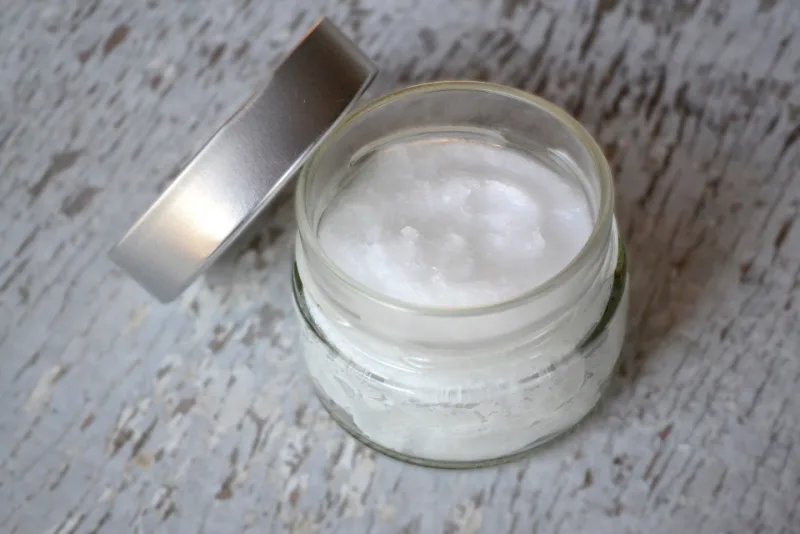

Virgin Cold-Pressed Coconut Oil: Benefits and Uses
IMPORTANT: Coconut oil is generally a safe food and cosmetic product, but it is very high in saturated fat. People with high cholesterol, cardiovascular disease, or who follow a doctor-recommended diet should talk to their physician before consuming large amounts of it daily. On the skin, always do a patch test on a small area before the first use, especially if your skin is prone to acne, because coconut oil is comedogenic for some people. Do not replace prescribed medical treatments with coconut oil remedies, and consult a doctor for serious skin or scalp conditions or in case of a known nut allergy.
Aunt Veronica, a woman who spent her whole working life as a cook in a school cafeteria, always kept one jar of coconut oil on the shelf next to the stove and another, smaller one, in the bathroom. “This one I cook with, and the other I put in my hair and on my elbows,” she would say, laughing, rubbing a teaspoon of the white, waxy oil between her palms as it melted instantly at the touch of her skin. Her nieces came to her specially before important events to have a hair mask done, and she would coat their strands with gentle movements, let the oil work overnight, and the next day comb out glossy hair without having spent a penny on expensive products.
Aunt Veronica’s story is not unusual. In recent years, virgin cold-pressed coconut oil has become one of the most appreciated natural products in kitchens and bathrooms around the world, as more and more people look for natural alternatives to industrial cosmetics and refined oils. This article gives you a complete and honest guide to what this oil actually is, how it is made, what real benefits it can offer, and how to use it correctly, both on the plate and on your skin and hair.
What Is Virgin Cold-Pressed Coconut Oil
Coconut oil is the fat extracted from the white, fleshy kernel of the coconut (the fruit of the coconut palm, Cocos nucifera). Unlike refined coconut oil, which is obtained from dried copra and subjected to refining, bleaching, and deodorizing at high temperatures, virgin cold-pressed oil is made from the fresh coconut kernel, without aggressive heat treatment and without chemical solvents.
The term “cold-pressed” means the extraction is done at controlled, low temperatures that do not denature the heat-sensitive compounds. “Virgin” indicates that the oil comes from the first pressing of quality raw material, without subsequent refining. The result is an oil with a delicate coconut aroma and taste, white when solid and transparent when liquid. Coconut oil’s melting point is around 24-25°C (75-77°F), which is why you find it solid in winter and liquid in summer, with no implication for its quality.
The tradition of using coconut as food and remedy is thousands of years old in the tropical regions of Southeast Asia, India, the Pacific, and South America, where peoples consumed it daily, used it for skin and hair care, and considered it a gift of nature. In Western cultures it was long viewed with suspicion because of its high saturated-fat content, but modern research has nuanced that picture, showing that the type of fat in coconut oil differs from that in animal fats.
Table of Contents
- What is virgin cold-pressed coconut oil
- Composition and active compounds
- Health benefits
- Benefits for the skin
- Benefits for the hair
- Uses in the kitchen
- How to use it: recipes and practical applications
- How to choose a quality coconut oil
- How to store it properly
- Practical tips and common mistakes
- Conclusion
- Frequently asked questions
Composition and Active Compounds
What makes coconut oil so special is its unique fatty-acid composition. About 90% of its fats are saturated, but most are medium-chain triglycerides (MCTs), which behave differently in the body compared to the long-chain fats found in other foods.
Lauric acid makes up nearly half of coconut oil’s fatty-acid content and is its most valuable component. Lauric acid is recognized for its antimicrobial, antiviral, and antifungal properties. In the body it converts into a substance called monolaurin, which studies suggest may help combat certain microbes and fungi.
Capric acid and caprylic acid are other medium-chain fatty acids present in the oil, also known for antimicrobial effects and for being rapidly metabolized by the liver and turned into energy rather than stored as fat.
Myristic acid and palmitic acid are longer-chain fatty acids present in smaller amounts.
In addition to fatty acids, virgin cold-pressed coconut oil contains small amounts of vitamin E (an antioxidant that protects cells), traces of vitamin K, and polyphenolic compounds that give it its characteristic aroma and part of its antioxidant properties. Precisely because it is unrefined, virgin oil retains these minor compounds that are largely lost in refining.
Health Benefits
A quick source of energy
The medium-chain triglycerides in coconut oil are absorbed and metabolized differently from other fats. They reach the liver quickly, where they are converted into energy or ketone bodies. For this reason, athletes and people following ketogenic diets appreciate coconut oil as a fast-releasing energy source.
Supporting digestion and gut flora
The antimicrobial properties of lauric acid may help maintain a healthy balance of gut flora, discouraging the overgrowth of certain microbes and fungi such as Candida. Folk tradition uses a teaspoon of coconut oil on an empty stomach to support digestion, though it is best to start with small amounts to avoid discomfort.
Supporting immunity
Thanks to the monolaurin derived from lauric acid, coconut oil has been associated in tradition with supporting the immune system and resisting seasonal infections. It is not a substitute for a balanced diet and a healthy lifestyle, but rather a possible ally.
Effect on satiety
Fats in general provide a feeling of fullness, and medium-chain triglycerides seem to contribute to this. Moderately replacing other fats with coconut oil may help some people feel fuller longer, but this benefit should not be overstated: coconut oil remains very calorie-dense.
Oral hygiene through “oil pulling”
A traditional Indian practice called “oil pulling” involves swishing a tablespoon of coconut oil in the mouth for 10-20 minutes in the morning before eating. Advocates say it helps reduce bacteria in the oral cavity, freshens the breath, and improves gum hygiene. The oil is then spat out (never into the sink, so it does not solidify in the pipes) and the mouth is rinsed with water.
Benefits for the Skin
Coconut oil is probably best known for its cosmetic uses. On the skin, it acts as an excellent emollient, forming a fine film that reduces water loss and maintains hydration.
Deep hydration
For dry, rough, or flaky skin, coconut oil is a natural moisturizer that penetrates quickly and leaves the skin soft. It is especially useful on elbows, knees, heels, and hands, the areas that suffer most from dryness.
Soothing minor irritations
Its anti-inflammatory and antimicrobial properties make coconut oil a traditional remedy for mild irritation, redness, and sensitive skin areas. Many mothers use it carefully on baby skin, but in that case a prior patch test and, ideally, a pediatrician’s advice are essential.
A gentle makeup remover
Coconut oil effectively dissolves makeup, including water-resistant products. Apply a small amount to dry skin, massage gently, and remove with a cotton pad or warm water. Be cautious, though, if you have oily or acne-prone skin, for which it may be too heavy.
After sun exposure
Tradition uses coconut oil to soothe the skin after time in the sun, thanks to its emollient and cooling effect on application. It does not, however, replace sunscreen and must not be used as protection against UV rays.
Benefits for the Hair
Reducing protein loss
One of coconut oil’s most valued properties is its ability to penetrate the hair shaft better than many other oils. Studies suggest that applying coconut oil to hair can reduce protein loss, in both healthy and damaged hair, making it useful as a pre- or post-wash treatment.
Hydration and shine
For dry, frizzy hair or hair with split ends, a small amount of coconut oil applied to the lengths and ends restores shine and tames flyaways. A pea-sized amount is enough for medium lengths.
Scalp care
Massaging the scalp with warm coconut oil is a tradition in many cultures. It can help hydrate a dry scalp and, thanks to its antifungal properties, is used in tradition against dandruff. People with oily scalps should be cautious, as it can weigh hair down.
Uses in the Kitchen
Virgin cold-pressed coconut oil is very versatile in cooking. It has a relatively high smoke point for an unrefined oil (around 175-180°C / 350-355°F), which makes it suitable for medium-heat cooking, light frying, and baking. Its coconut aroma is subtle and pairs well with Asian dishes, curries, desserts, cakes, and smoothies.
It can replace butter in many vegan baking recipes, giving a pleasant texture. In coffee or tea, a teaspoon of coconut oil creates the popular “bulletproof” drink, favored by those on low-carbohydrate diets. It is also excellent for greasing the pan for pancakes or for sautéing vegetables.
How to Use It: Recipes and Practical Applications
Nourishing hair mask: Melt 2-3 tablespoons of coconut oil (the amount varies with hair length). Apply to dry hair from the middle down to the ends, avoiding the roots if your scalp is oily. Wrap your hair in a warm towel and let the oil work for 30 minutes up to overnight. Then wash your hair with shampoo, possibly twice, to remove the oil completely.
Exfoliating body scrub: Mix half a cup of melted coconut oil with one cup of brown sugar or fine sea salt and a few drops of your favorite essential oil (lavender, orange). Use in the shower to exfoliate and hydrate the skin at the same time. Be careful of slipping in the tub.
Homemade lip balm: Melt one tablespoon of coconut oil with one teaspoon of beeswax and a few drops of honey over a water bath. Pour into a small container and let it set. You get a natural balm for chapped lips.
Facial makeup remover: Apply a small amount to dry skin, massage in circular motions to dissolve makeup, then remove with warm water and a soft towel.
Oil pulling: Put a tablespoon of coconut oil in your mouth, let it melt, and swish vigorously between your teeth for 10-20 minutes. Spit it into the trash (not the sink) and rinse your mouth with warm water.
In food: Start with one teaspoon a day, added to a smoothie, oatmeal, or coffee, or used in cooking, and increase gradually if you tolerate it well. Do not usually exceed 1-2 tablespoons a day.
How to Choose a Quality Coconut Oil
On the label, look for the terms “virgin,” “extra virgin,” and “cold-pressed.” Avoid products labeled only “refined” if you want the full benefits. A quality oil should have a pleasant coconut aroma, a clean white color when solid, and be packaged in glass jars rather than plastic. Prefer organic products and those that indicate the origin and extraction method.
Rancid coconut oil has a sour, unpleasant smell and a bitter taste — throw it out if you notice these signs. Quality varies greatly between producers, so it is worth investing in a trustworthy product, especially if you use it both in food and on your skin.
How to Store It Properly
Coconut oil is remarkably stable and resistant to rancidity thanks to its high saturated-fat content. Store it at room temperature, away from direct sunlight and heat sources, in a well-sealed container. Refrigeration is not necessary; in fact, it becomes very hard and difficult to use in the fridge.
Always use a clean, dry spoon to scoop out the oil, to avoid contamination with water or food residue that could shorten its shelf life. Well stored, virgin coconut oil keeps for one to two years.
Lifestyle and Daily Integration
Coconut oil reveals its value best when it becomes part of a balanced lifestyle. In the kitchen, it can occasionally replace other fats, but it should not become the only source of fat in the diet — variety remains the key to healthy eating. Combine it with olive oil, seeds, nuts, and oily fish for a complete fatty-acid profile.
In a care routine, a single jar of coconut oil can replace several products: makeup remover, body moisturizer, hair mask, lip balm, and massage oil. This simplicity is one of the reasons many people who prefer minimalist cosmetics love it. Keep a small jar in the bathroom and one in the kitchen, just like Aunt Veronica.
Practical Tips and Common Mistakes
Mistake no. 1: Using too large an amount on skin or hair. Coconut oil is highly concentrated; a little goes a long way. Excess leaves the skin greasy and the hair heavy and hard to wash out.
Mistake no. 2: Applying it to oily or acne-prone skin without a patch test. For some people, coconut oil is comedogenic and can clog pores. Always test on a small area before using it on your face.
Mistake no. 3: Consuming large amounts day after day. Coconut oil remains rich in saturated fat and very calorie-dense. Moderation is essential, especially for people with cardiovascular problems.
Mistake no. 4: Spitting the oil into the sink after oil pulling. The oil solidifies at temperatures below 24°C and can clog pipes over time. Always spit it into the trash.
Mistake no. 5: Buying a refined oil believing it to be virgin. Read the label carefully and look for the terms “virgin” and “cold-pressed.”
Mistake no. 6: Heating it to very high temperatures when cooking. Although it has a decent smoke point, virgin oil is not ideal for high-heat frying; more suitable options exist for that.
Conclusion
Virgin cold-pressed coconut oil is a truly versatile natural product that earns its place in both the kitchen and the bathroom. Rich in lauric acid and medium-chain triglycerides, it can support digestion, provide quick energy, and care for skin and hair with disarming simplicity. As with any fat-rich food, the key is moderation and balance: used sensibly, as part of a varied diet and a gentle care routine, coconut oil can become a reliable ally. Choose a quality, virgin, cold-pressed product, store it correctly, and enjoy its versatility, just as generations before us have done.
Frequently Asked Questions
Has solid coconut oil gone bad? No. Coconut oil naturally solidifies at temperatures below 24-25°C and liquefies in the heat. This is a normal property and does not indicate any quality problem. You can melt it easily by holding the jar in warm water.
Can I use coconut oil on my face every day? It depends on your skin type. For dry skin it can be an excellent moisturizer, but for oily or acne-prone skin it can clog pores. Test on a small area and watch the reaction for a few days before including it in your daily routine.
What is the difference between virgin and refined oil? Virgin cold-pressed oil is made from fresh kernel, without aggressive heat treatment, and retains the natural aroma and compounds. Refined oil is processed at high temperatures, has a neutral taste and a higher smoke point, but loses some of the beneficial compounds.
How much coconut oil can I eat per day? Generally, 1-2 tablespoons a day are considered a reasonable amount for most healthy adults. Start with less and increase gradually. People with cardiovascular or cholesterol problems should consult their doctor.
Does coconut oil help hair grow? Coconut oil does not make hair grow faster, but it protects it, reduces protein loss and breakage, which can help maintain healthier and longer hair over time.
Is coconut oil good for cooking? Yes, for medium-heat cooking, baking, and sautéing. It has a subtle coconut aroma that pairs well with desserts and Asian dishes. For very high-heat frying, more suitable alternatives exist.
Can coconut oil cause allergies? Coconut allergies are rare but possible. If you have known allergies to tree nuts, be cautious and consult a doctor. Always test on a small area of skin before the first cosmetic use.
How do I remove coconut oil from hair after a mask? Apply shampoo to dry or slightly damp hair, before adding water, massage well, then rinse. Repeat if necessary. This way, the surfactants in the shampoo dissolve the oil more effectively than if you wet the hair from the start.