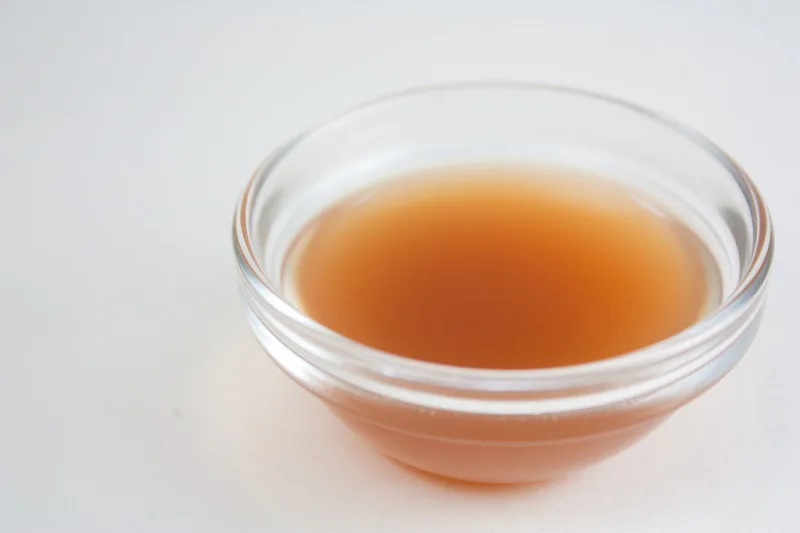

Apple Cider Vinegar for Beauty: Shiny Hair, Clear Skin and Strong Nails
IMPORTANT: Apple cider vinegar is acidic and should never be applied undiluted to skin or scalp. Used at full strength, it can cause burns, irritation, stinging and, in the case of hair, damage to the hair fibre. Avoid contact with the eyes and open wounds. If your skin is very sensitive, or if you have dermatitis, eczema, psoriasis or rosacea, always do a patch test (for example on the inner forearm) and wait 24 hours. People with diagnosed skin conditions, women who are pregnant or breastfeeding, and anyone using skin treatments (acids, retinoids, peels) should consult a dermatologist before applying apple cider vinegar to the face. This article is for informational purposes only and does not replace professional medical advice.
Aunt Floarea, a woman from northern Moldavia I remember from childhood, never bought expensive shampoos or creams with names she couldn’t pronounce. Instead, she kept a bottle of homemade apple cider vinegar on her kitchen windowsill — cloudy and golden, with a gelatinous “nest” at the bottom she called “the mother of the vinegar.” Once a week she rinsed her long, grey but astonishingly glossy hair with a jug of water into which she poured a few spoonfuls of that vinegar. “Hair wants sour, my dear, not sweet,” she would say with a laugh, combing braids that shimmered in the window light.
Later I understood that, without knowing the chemistry behind it, Aunt Floarea was simply applying a principle that modern cosmetics is rediscovering today: our skin and hair have a slightly acidic environment, and many commercial products, through their harshness, disturb that balance. Apple cider vinegar, gentle and inexpensive, helps restore it. In this guide you’ll find everything you need to use apple cider vinegar in your beauty routine — correctly, safely and without ruining the very thing you want to care for.
Apple cider vinegar is made through a double fermentation of apple juice: first the sugars turn into alcohol, then the alcohol, under the action of acetic bacteria, becomes acetic acid. The result is a tart liquid with a low pH, rich in compounds from fermented apples. The unfiltered, unpasteurized version — the one “with the mother” — keeps the most useful substances and is the traditional favourite for cosmetic use.
Table of Contents
- What apple cider vinegar is and why it’s valued in cosmetics
- The composition that makes it useful for beauty
- Benefits for hair
- Benefits for skin
- Benefits for nails, hands and feet
- Step-by-step recipes for each use
- How to choose and store apple cider vinegar
- Lifestyle and habits that strengthen the effects
- Practical tips and common mistakes
- Conclusion
- Frequently Asked Questions
What apple cider vinegar is and why it’s valued in cosmetics
Apple cider vinegar is, in essence, a natural vinegar produced from apples. Unlike white vinegar, often made synthetically and far more aggressive, apple cider vinegar has a milder acidity and a fruity aroma that the skin tolerates more easily. In country households it has always been present, both in the kitchen and on the “remedy shelf.”
Its appeal in beauty care comes from a few simple properties. First, it is acidic, so it can help balance the pH of the skin and scalp, which are naturally slightly acidic (the acid mantle). Second, it has astringent properties, meaning it tends to “tighten” the skin and reduce the appearance of enlarged pores. Third, tradition credits it with mild antimicrobial effects, which is why it has been used against dandruff, foot odour and certain minor skin problems. Studies suggest that acetic acid does indeed have some activity against certain microorganisms, which partly explains the vinegar’s folk reputation.
Finally, it is extremely affordable. A bottle of apple cider vinegar costs about as much as a coffee and lasts for dozens of applications, making it an economical ally in a world of ever more expensive cosmetics.
The composition that makes it useful for beauty
The main “engine” of apple cider vinegar is acetic acid, responsible for its sour taste and acidity. Alongside it, unfiltered vinegar contains traces of organic acids (such as malic acid, characteristic of apples), enzymes, beneficial yeasts and bacteria from the “mother,” as well as small amounts of minerals drawn from the fruit (potassium and others) and polyphenol compounds with antioxidant roles.
The natural alpha-hydroxy acids, similar to those used in mild cosmetic peels, may contribute to a very gentle exfoliation of the skin’s surface layer, helping to smooth its texture. According to research, the polyphenols in apples have antioxidant properties, that is, a tendency to neutralize the free radicals involved in premature ageing.
It’s worth emphasizing that apple cider vinegar is not a “miracle serum” with concentrated active ingredients, but a gentle, natural remedy. It is precisely this gentleness, when properly diluted, that makes it suitable for regular use, unlike strong acids that demand caution.
Benefits for hair
The rinse that restores shine
The best-known cosmetic benefit of apple cider vinegar is the hair rinse. Shampoos, hard water and some styling products leave a fine residue on the hair shaft over time, making it dull, rough and hard to comb. An acidic rinse “closes” the scales of the hair cuticle, dissolves the build-up and restores natural shine. After a few uses, many people notice smoother hair that is easier to detangle and reflects light better.
Balanced scalp and less dandruff
Folk tradition uses apple cider vinegar against dandruff and an irritated scalp. Its acidity may discourage the overgrowth of certain fungi associated with dandruff and help cleanse a scalp loaded with sebum and residue. Many people with an oily or itch-prone scalp say that a weekly rinse soothes their discomfort. It is not, however, a medical treatment: persistent or severe dandruff should be assessed by a specialist.
Less greasy hair, with better volume
By gently cleansing residue from the roots, apple cider vinegar can help hair stay fresh longer and gain more volume. It is especially appreciated by those who feel their hair gets “weighed down” quickly.
Benefits for skin
A natural face toner
Heavily diluted in water, apple cider vinegar can be used as a gentle toner after cleansing the face. The role of a toner is to restore the skin’s pH after contact with water and washing products, and to prepare the skin for moisturizing. The vinegar’s astringent nature can give a sense of “tighter” skin and less visible pores.
Support for acne-prone skin
Thanks to its mild antimicrobial properties and acidity, apple cider vinegar is popularly used on oily skin with clogged pores and minor imperfections. It does not cure acne, but it can be part of a skin hygiene routine, helping to maintain an environment less hospitable to bacteria. Here caution is essential: on skin with inflamed pimples, vinegar can sting and irritate, so dilution must be generous.
Soothing skin after the sun and mild itching
Cool compresses of water with a little apple cider vinegar are an old remedy for sun-warmed skin or mild itching from insect bites. The cooling sensation and slight acidity can bring temporary comfort. Be careful, though: do not apply to burned, blistered or broken skin.
Very gentle exfoliation and smoother texture
The natural acids in vinegar may help, over time and used in moderation, to remove dead cells from the skin’s surface, leaving the complexion smoother to the touch. This effect is subtle and should not be confused with professional peels.
Benefits for nails, hands and feet
Stronger, cleaner nails
A short soak of the nails in a mixture of warm water and apple cider vinegar is traditionally used to clean stains and give nails a healthier look. Tradition also credits it with discouraging fungi, although in the case of a confirmed infection (onychomycosis) medical treatment is absolutely necessary.
Fresh feet, without unpleasant odour
Foot odour is largely caused by bacteria that thrive in the warm, moist environment inside shoes. A foot soak with warm water and apple cider vinegar can help reduce these bacteria and create a feeling of freshness. It is one of the oldest and most cherished summer remedies.
Rough elbows and heels
Thickened skin on elbows and heels can be softened with diluted apple cider vinegar compresses, followed by a gentle scrub with a pumice stone and rich moisturizing with oil or cream. Repeated a few times a week, the ritual helps achieve softer skin.
Step-by-step recipes for each use
1. Rinse for shiny hair
You need: 1–2 tablespoons of apple cider vinegar and 1 cup (about 250 ml) of lukewarm water.
- Wash your hair as usual with shampoo and, if you like, apply conditioner.
- In a jug, mix the apple cider vinegar with the water. For very light or sensitive hair, start with a single tablespoon; for thick, oily hair you can go up to two.
- After the final water rinse, pour the mixture slowly over your hair, gently massaging the scalp and strands.
- Let it work for 1–2 minutes.
- Rinse with clean water. The vinegar smell disappears completely as the hair dries.
Frequency: once a week is enough for most people. Dry or chemically treated hair prefers less frequent use.
2. Gentle face toner
You need: 1 teaspoon of apple cider vinegar and 4–5 tablespoons of water (a ratio of about 1 to 4, or more diluted for sensitive skin).
- Mix the vinegar with the water in a clean container.
- Soak a cotton pad and gently dab your face, avoiding the eye area, nostrils and lips.
- Let it dry for a few seconds, then continue with your usual moisturizer.
Start with a single application every 2–3 days and increase gradually only if your skin tolerates it well.
3. Foot soak against odour
You need: a basin of warm water and about half a cup of apple cider vinegar.
- Pour the vinegar into the warm water in the basin.
- Keep your feet in the soak for 15–20 minutes.
- Rinse, dry thoroughly — especially between the toes — and apply a cream.
Repeat 2–3 times a week for as long as you need.
4. Nail soak
You need: a bowl of warm water and 2–3 tablespoons of apple cider vinegar.
- Keep your fingertips in the mixture for 10 minutes.
- Gently clean the nails with a soft brush.
- Rinse and moisturize the cuticles with oil.
5. Cooling skin compress
You need: a cup of cold water and 1 tablespoon of apple cider vinegar, plus a piece of gauze or a clean cloth.
- Mix the cold water with the vinegar.
- Soak the gauze, wring it out lightly and apply it to the irritated area (not to wounds).
- Leave it on for a few minutes and repeat if needed.
How to choose and store apple cider vinegar
For cosmetic use, look for natural, unfiltered, unpasteurized apple cider vinegar, preferably organic, that contains the “mother” — that cloudy sediment which shows the product is alive and rich in useful compounds. Very cheap vinegars, clear as water and without sediment, are often diluted or made from flavoured alcohol, and are therefore less valuable.
Check the label: ideally, the only ingredient should be apple cider vinegar (possibly with a note of the acidity level, usually around 5%). Avoid products with added sugar, colourings or flavourings.
Store the bottle in a cool place away from direct sunlight, tightly closed. Vinegar has a very long shelf life thanks to its acidity; a small sediment that appears over time is normal and does not indicate spoilage. Always prepare diluted mixtures fresh — especially the face toner — and do not keep large amounts of diluted solution for days on end.
Lifestyle and habits that strengthen the effects
Beautiful skin and hair never come from a single product, even a beloved traditional remedy. Apple cider vinegar gives better results when you integrate it into a balanced lifestyle.
Hydration is essential: drink enough water so your skin stays elastic and your hair healthy from the root. A diet rich in vegetables, fruit, good fats (from nuts, seeds, olive oil, fish) and quality protein provides the “building blocks” the body uses to create strong hair and resilient skin.
Quality sleep, lower stress and sun protection matter enormously for the look of your skin. No apple cider vinegar toner can make up for sleepless nights or chronic unprotected sun exposure. Likewise, for hair, avoiding excessive heat from flat irons and dryers, tight hairstyles and overly harsh washing prolongs the effect of any acidic rinse.
Think of apple cider vinegar as a small care ritual, not as a one-and-done solution. Simple rituals, repeated gently and consistently, are what make a visible difference over time.
Practical tips and common mistakes
Mistake no. 1: Applying it undiluted. The most common and most dangerous mistake. Pure vinegar can burn the skin and scalp. Always dilute generously, especially on the face.
Mistake no. 2: Using it too often. More is not better. Daily hair rinses or toner applied several times a day can dry out and irritate. Once a week for hair and once every 2–3 days for the face are good starting points.
Mistake no. 3: Contact with the eyes. Vinegar in the eyes causes severe stinging. Apply toner carefully and avoid the eye area entirely.
Mistake no. 4: Applying to broken or burned skin. On wounds, scratches, inflamed pimples or blistered sunburn, vinegar does not soothe — it makes things worse. Wait for the skin to heal.
Mistake no. 5: Skipping the patch test. Even a natural remedy can cause reactions. Always test on a small patch before the first use on your face or body.
Mistake no. 6: Unrealistic expectations. Apple cider vinegar does not cure severe acne, does not eliminate confirmed nail fungus and does not replace dermatological treatment. It is a gentle aid, not a medicine.
Mistake no. 7: Combining it with strong acids. If you already use cosmetic products with acids (glycolic, salicylic) or retinoids, adding vinegar can overload the skin. Choose one approach or consult a specialist.
Conclusion
Apple cider vinegar is a humble, inexpensive and surprisingly versatile remedy in beauty care. Used correctly — that is, well diluted, in moderation and with attention to how your skin reacts — it can bring shine to your hair, balance to your scalp, freshness to your skin and a tidier look to your nails and feet. The secret, as Aunt Floarea knew, lies not in quantity but in gentleness and consistency. Listen to your skin and hair, stop if irritation appears, and treat this vinegar as a small natural ritual woven into a healthy lifestyle. In this way, a simple bottle of apple cider vinegar from the pantry can become a quiet, faithful ally of your beauty.
Frequently Asked Questions
Can I use apple cider vinegar undiluted on my hair? It is not recommended. Even for hair, concentrated vinegar can dry the shaft and irritate the scalp. Always dilute 1–2 tablespoons in a cup of water.
Does the vinegar smell stay in the hair? No. The sour smell disappears completely as the hair dries. If it bothers you, you can add a few drops of lavender essential oil to the rinse (with caution, tested beforehand).
How often can I use apple cider vinegar toner on my face? Start with once every 2–3 days, very diluted. If your skin tolerates it well, you can gradually increase frequency, but there’s no need to overdo it.
Does apple cider vinegar help with acne? It may support the hygiene of oily skin through its astringent and mild antimicrobial properties, but it does not cure acne. For moderate or severe acne, see a dermatologist.
Is apple cider vinegar good for nail fungus? Folk tradition uses it for the look of the nails, but a confirmed fungal infection requires medical treatment. Vinegar soaks are at most a hygiene support.
What type of apple cider vinegar should I buy? Choose the natural, unfiltered, unpasteurized version, preferably organic, with the “mother.” Avoid clear, very cheap vinegars and those with added sugar or flavourings.
Can I use it if I have sensitive skin? With great caution. Dilute it much more than usual, always do a patch test and stop at the first sign of irritation. If you have a skin condition, ask your doctor first.
Does apple cider vinegar clarify dyed hair? It can remove build-up and restore shine, but at too high a concentration and used too often it can, over time, affect the colour of dyed hair. Use it rarely and diluted if your hair is coloured.