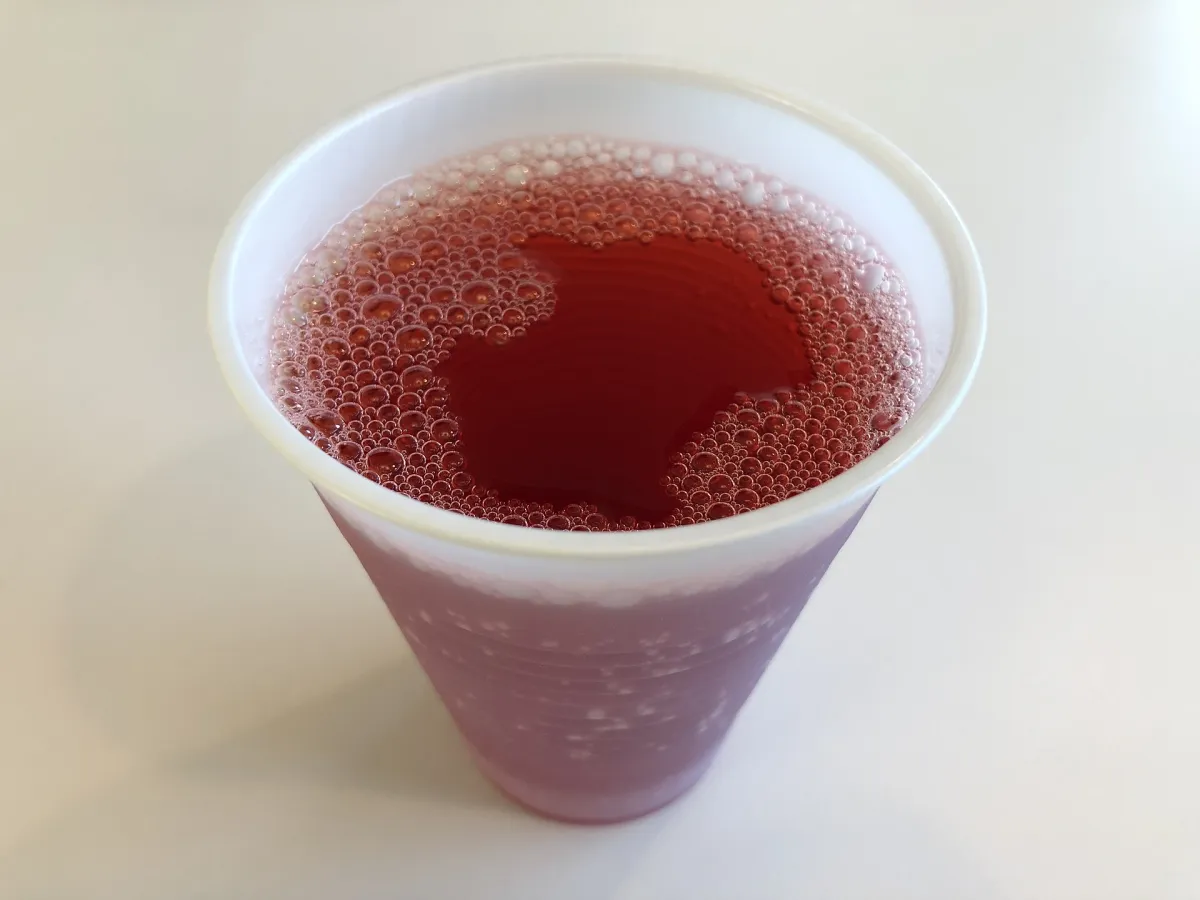
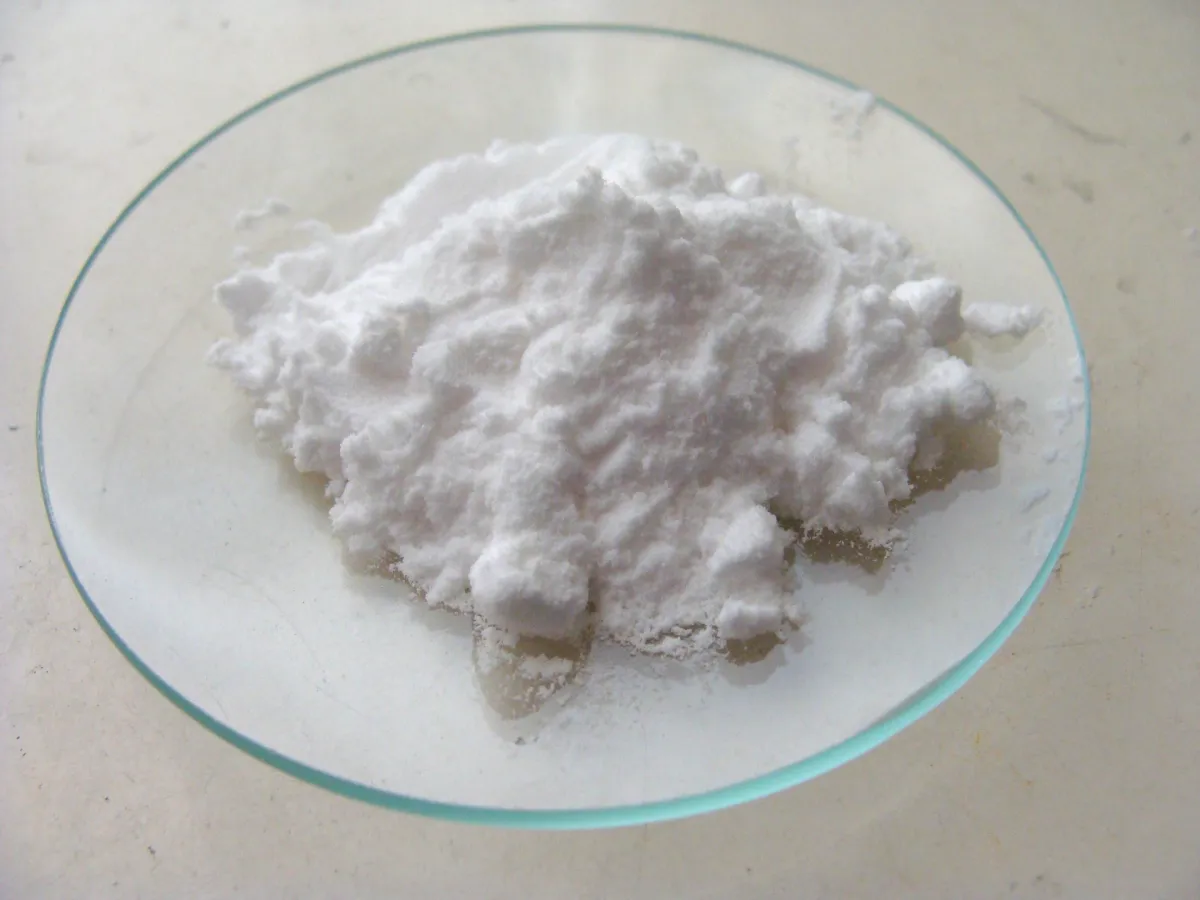
 Photo: Tszrkx, CC0, via Wikimedia Commons
Baking soda (sodium bicarbonate, NaHCO₃) works as a fast antacid for occasional heartburn: half a level teaspoon fully dissolved in 4 oz (120 ml) of water neutralizes stomach acid within minutes. It also has a few genuinely useful external uses, such as mouth rinses, gargles and baths that calm itchy skin. It does not “alkalize” your blood, it does not treat cancer, and it should not be drunk every day, because each dose delivers a large amount of sodium that can harm people with heart, kidney or blood pressure problems.
Key takeaways:
- Adult dose for occasional heartburn: 1/2 level teaspoon (about 2.5 g) in 4 oz of water, no more often than every 2 hours, for a few days at most.
- That single dose contains roughly 600-700 mg of sodium, about a third of the WHO’s daily upper limit.
- Mouth rinses, gargles and baking soda baths are safe for most people, though the evidence is mostly practical and traditional.
- The claim that baking soda cures cancer by “alkalizing” the body is a myth that has cost lives.
- People with high blood pressure, heart, kidney or liver disease, pregnant women and children should not take it by mouth without medical advice.
What baking soda is and how it works
Baking soda is a mildly alkaline salt, a white powder used in baking as a leavening agent and in pharmacy as an antacid. In the stomach it reacts with hydrochloric acid to form salt, water and carbon dioxide. That explains the quick relief, and also the burping that follows: the gas has to go somewhere.
The effect is fast but short-lived. Baking soda does not reduce acid production; it only neutralizes what is there at that moment, and part of it is absorbed into the bloodstream. That is where the trouble starts: about 27% of its weight is sodium. Half a teaspoon carries as much sodium as a generous serving of salty food, and your kidneys then have to clear both the sodium and the excess bicarbonate.
Don’t mix it up with other white powders
- Baking powder contains baking soda plus an acid and starch. It is not an antacid.
- Washing soda (sodium carbonate) is caustic and can burn the mouth and esophagus. Never swallow it.
- Food-grade or pharmacy-grade sodium bicarbonate is the only product suitable for the uses in this article.
What is proven and what is just tradition
Occasional heartburn: an accepted use
Sodium bicarbonate is listed among approved over-the-counter antacid ingredients, and its acid-neutralizing action is basic pharmacology. It suits rare episodes, for example after a heavy, fatty meal. It is not a treatment for chronic reflux: if you get heartburn several times a week, read our guide to heartburn and acid reflux and talk to your doctor.
Oral care: reasonable evidence
Toothpastes containing baking soda have been studied and appear to remove plaque well while being only mildly abrasive. A salt and baking soda mouth rinse is widely recommended in mouth care for people having chemotherapy and for those with inflamed oral tissues, because it neutralizes acidity and cleans gently. For mouth ulcers it can ease the sting, although dedicated studies are few.
Baths and compresses for itching: plausible tradition
Many dermatologists and pediatricians suggest baking soda baths for the itch of chickenpox, insect bites, mild rashes or mild sunburn. The mechanism is not fully understood and controlled trials are almost nonexistent. The risks, however, are low, so a lukewarm soak is reasonable to try.
Medical uses that are NOT for home
In hospital or under a nephrologist, sodium bicarbonate is used for metabolic acidosis in chronic kidney disease, in some poisonings and in resuscitation. Athletes have studied it as a supplement for high-intensity exercise, with frequent digestive side effects. All of these involve calculated doses and blood tests. A kidney specialist prescribing it for a patient with specific lab results does not make it “good for the kidneys” in general.
The dangerous myths
“Baking soda alkalizes the body and cures cancer”
Blood pH is held between 7.35 and 7.45 by your lungs and kidneys, whatever you eat or drink. Baking soda taken by mouth can change the pH of your urine, not that of a tumor. It is true that the environment around some tumors is acidic, but that is a consequence of tumor metabolism, not the cause of cancer, and findings in animal studies have not turned into human treatments. A former Italian doctor who promoted baking soda as a cancer therapy was struck off and convicted after patients died. The real danger of this myth is delaying treatment that works.
“A glass of baking soda water every morning”
Taken daily, baking soda adds sodium every single day, can raise blood pressure, encourages fluid retention and, in larger amounts, can cause metabolic alkalosis: weakness, cramps, confusion and heart rhythm problems. Poison control centers regularly report serious cases caused by exactly these home “cures”. The lemon version makes even less sense: the citric acid reacts with the baking soda in the glass and the two cancel each other out. If you enjoy it, drink plain lemon water in the morning instead.
“It cleanses the kidneys and cures gout and UTIs”
Baking soda can make urine less acidic and sometimes eases burning, but it does not kill bacteria and can mask an infection that is moving up toward the kidneys. Urine alkalinization for gout or certain kidney stones is done only on prescription, with set doses and lab monitoring.
Other ideas to drop
- Whitening teeth with baking soda and lemon: acid plus scrubbing erodes enamel.
- Baking soda for baby colic or added to a bottle: dangerous.
- Baking soda “for weight loss”: it burns no fat, and the sodium promotes water retention.
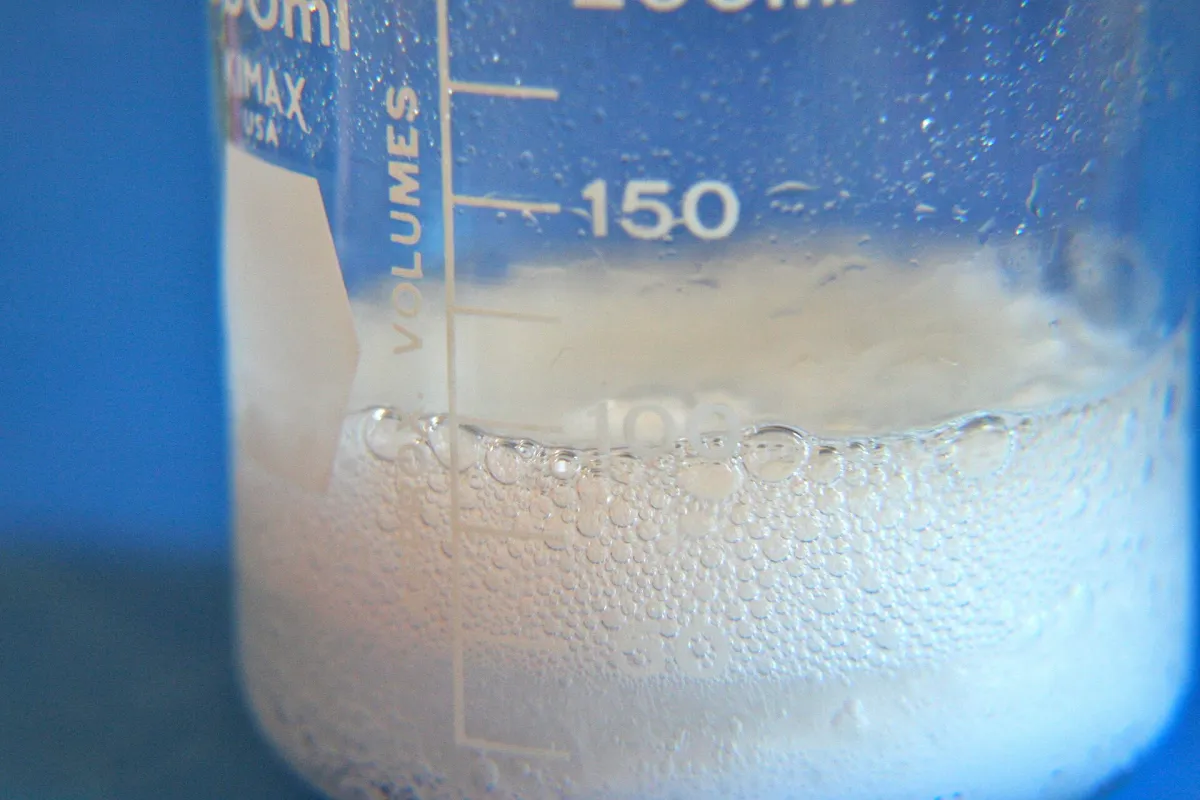 Photo: katerha, CC BY 2.0, via Wikimedia Commons
How to use it correctly, step by step
For occasional heartburn (adults)
- Use a proper measuring teaspoon (5 ml), not a tablespoon. Take 1/2 level teaspoon (about 2.5 g).
- Add it to 4 oz (120 ml) of water at room temperature.
- Stir until the water is completely clear. Undissolved powder can irritate.
- Drink it slowly, in small sips.
- If the burning returns, you can repeat after at least 2 hours.
- Don’t take it right after a very large meal or heavy drinking: gas forming in an overfull stomach can cause painful distension, and stomach rupture has been described in rare cases.
If you find yourself needing it for more than a few days in a row, don’t raise the dose: look for the cause.
Mouth rinse and gargle
- Recipe: 1/2 teaspoon baking soda and 1/4 teaspoon salt in 8 oz (250 ml) of boiled water cooled to about 98-104 °F (37-40 °C).
- Swish for 30 seconds or gargle, then spit. Do not swallow.
- Repeat 3-4 times a day after meals. If a sore does not heal in 7-10 days, see a doctor or dentist.
- Make a fresh batch every day. For herbal versions, see our guide to herbal gargles.
Bath for itchy skin
- Fill the tub with lukewarm water, about 90-97 °F (32-36 °C). Hot water makes itching worse.
- Dissolve 50-100 g of baking soda (roughly 4-7 tablespoons). For a small child’s baby bath: 1-2 tablespoons.
- Soak for 10-15 minutes.
- Pat the skin dry without rubbing and apply an emollient cream while it is still damp.
- You can repeat once or twice a day.
Paste for insect bites and stings
Mix 1 teaspoon of baking soda with a few drops of water into a paste. Apply it to the bite for 10-15 minutes, then rinse. Don’t use it on scratched skin, open wounds or near the eyes. For more options, see our guide to insect bites and stings.
Doses and limits at a glance
| Use | Amount | How to use | Limit | Evidence |
|---|---|---|---|---|
| Occasional heartburn, adult under 60 | 1/2 level tsp in 4 oz water | By mouth, fully dissolved | Max. seven 1/2-tsp doses in 24 h, a few days only | Well-established antacid effect |
| Occasional heartburn, adult over 60 | 1/2 level tsp in 4 oz water | By mouth, fully dissolved | Max. three doses in 24 h | Same effect, higher sodium risk |
| Children under 12 | - | By mouth only on a doctor’s advice | - | Risk of imbalances |
| Mouth rinse, gargle | 1/2 tsp + 1/4 tsp salt in 8 oz | Rinse and spit | 3-4 times a day | Reasonable, standard practice |
| Itch-relief bath | 50-100 g per tub | 10-15 minutes, lukewarm water | 1-2 baths a day | Traditional, few studies |
| Bite paste | 1 tsp + a few drops of water | 10-15 minutes on intact skin | A few times a day | Traditional |
The adult limits are those printed on baking soda antacid labels. They are an absolute ceiling, not a recommended dose. Most people never need more than 1-2 doses in a day.
 Photo: Shixart1985, CC BY 2.0, via Wikimedia Commons
Who should not take baking soda by mouth
Avoid baking soda as an internal remedy, or use it only with your doctor’s approval, if you:
- have high blood pressure or follow a low-salt diet;
- have heart failure, swelling (edema) or a past heart attack;
- have chronic kidney disease (if your nephrologist prescribed it, follow that exact dose and don’t add kitchen baking soda on top);
- have cirrhosis or fluid in the abdomen;
- are pregnant: the sodium promotes fluid retention and alkalosis is risky; your doctor can recommend a suitable antacid;
- take calcium supplements or consume a lot of dairy alongside antacids: the combination can cause milk-alkali syndrome, with high blood calcium and kidney damage;
- have repeated vomiting or an eating disorder;
- are giving it to a child: infants and young children should never be given it by mouth.
Drug interactions
- Keep at least 2 hours between baking soda and other medicines, because it changes stomach acidity and absorption.
- Enteric-coated tablets may dissolve too early, in the stomach.
- It can lower blood lithium levels and speed up the elimination of high-dose aspirin.
- Absorption of iron and some antifungals (ketoconazole, itraconazole) may be reduced.
- With diuretics or corticosteroids, the risk of sodium and potassium imbalances rises.
If you take any long-term medication, ask your pharmacist first, even for a single dose.
When to see a doctor
Call emergency services or go to the ER if:
- your “heartburn” is really chest pain that comes on with exertion, with sweating, shortness of breath or pain in the arm or jaw: it could be a heart attack;
- you develop sudden, severe abdominal pain with a swollen belly after taking baking soda;
- you notice confusion, muscle twitching, marked weakness, unusually slow breathing or palpitations after repeated doses;
- a child has swallowed a large amount.
Book an appointment if you have heartburn more than twice a week or for longer than two weeks, vomit blood, pass black stools, have trouble swallowing or lose weight without trying.
Common mistakes
A tablespoon instead of a teaspoon. A heaped tablespoon is 5-6 times the dose.
Undissolved powder. Drink the solution only once it is clear.
Taking it after a binge. A full stomach plus gas is exactly the situation to avoid.
Daily use for reflux. It hides the symptom and delays a diagnosis.
Mixing it with vinegar or lemon “for extra power”. The fizz only shows that the two have neutralized each other.
Confusing it with washing soda. Store cleaning products away from food and out of children’s reach.
Conclusion
Baking soda earns a spot in the cupboard for rare heartburn, a soothing gargle or a bath that calms itchy skin. Taken by mouth it is a high-sodium medicine, not a tonic: a small, occasional dose in a healthy adult is safe, while daily drinking and “alkalizing cures” have no scientific basis and can do real harm, especially to people with heart, kidney or blood pressure problems.
Frequently asked questions
Can I drink baking soda every day? It is not recommended. Daily use adds sodium, can raise blood pressure and over time can upset your blood chemistry. If you feel you need it every day, you have a digestive problem that should be checked.
Does baking soda alkalize the body? Not in the way it is promoted online. Your lungs and kidneys keep blood pH within very narrow limits. Baking soda only temporarily changes the acidity of your stomach and urine.
Does baking soda help with weight loss? No. It doesn’t burn fat or curb appetite, and its sodium encourages water retention.
How fast does baking soda work for heartburn? Usually within minutes. The effect is short, so symptoms that keep returning during the day need assessment, not repeated doses.
Can I use baking soda to whiten my teeth? Baking soda toothpastes are safe and can reduce surface stains. Scrubbing daily with pure powder, or mixing it with lemon juice, can wear down enamel.
Is baking soda safe during pregnancy? Not by mouth without your doctor’s approval: it is high in sodium and can cause alkalosis. Gargling or rinsing your mouth without swallowing is considered safe.
Does baking soda help with a UTI? It may ease burning, but it does not treat the infection and can delay diagnosis. Fever, back pain or blood in the urine need medical care.
Sources and further reading
- NHS, “Antacids”: uses, side effects and interactions of antacid medicines.
- U.S. Food and Drug Administration, monograph for over-the-counter antacid products (21 CFR Part 331).
- Al-Abri S.A., Olson K.R., “Baking soda misuse as a home remedy: case experience of the California Poison Control System”, Journal of Clinical Pharmacy and Therapeutics, 2013.
- KDIGO 2024 Clinical Practice Guideline for the Evaluation and Management of Chronic Kidney Disease.
- Cancer Research UK, information on alkaline diets and cancer myths.
Informative content only; it does not replace a consultation with a doctor or pharmacist. If you have heart disease, kidney disease or high blood pressure, ask your doctor before taking baking soda by mouth.