 Photo: George Chernilevsky, Public domain, via Wikimedia Commons
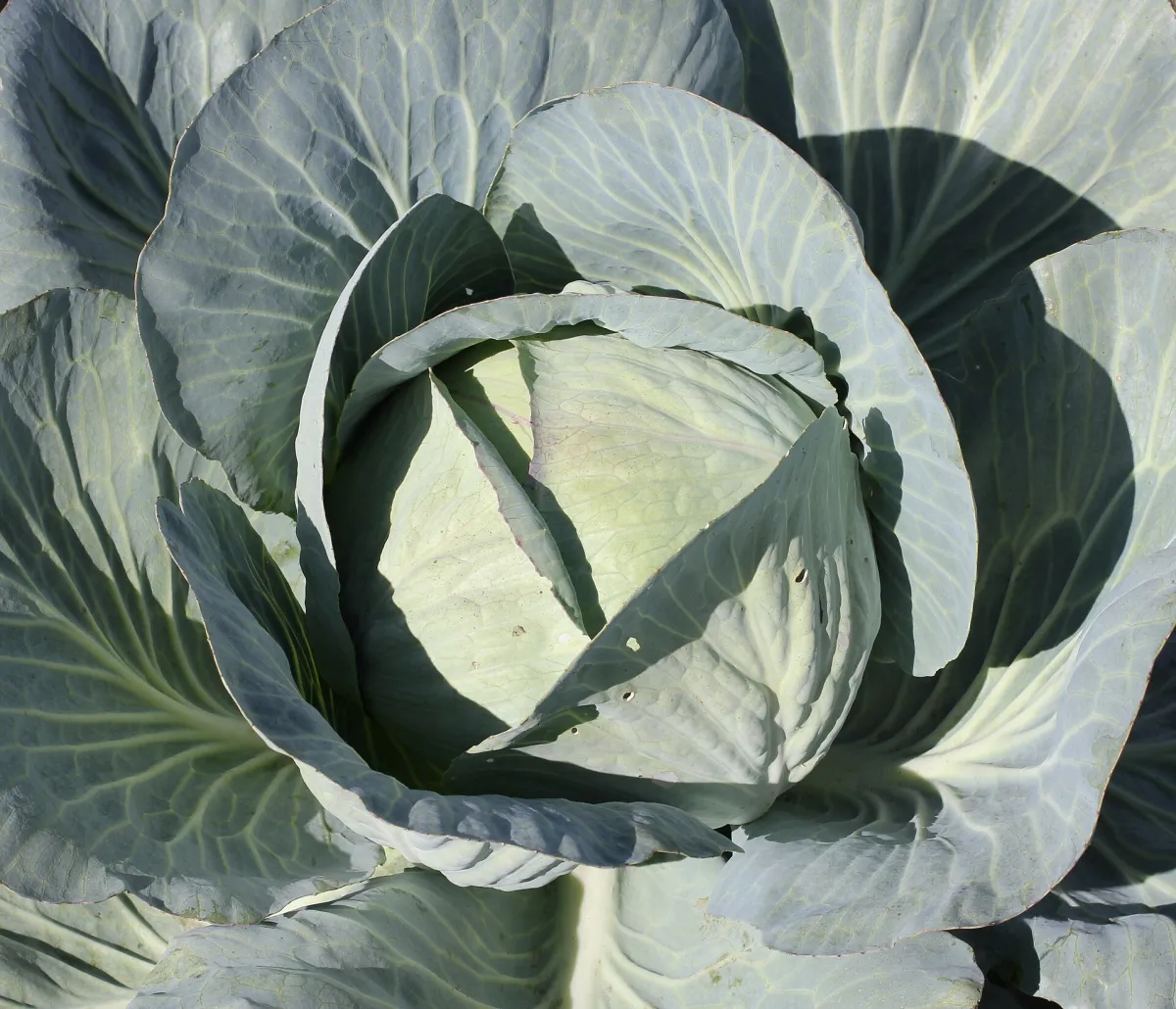
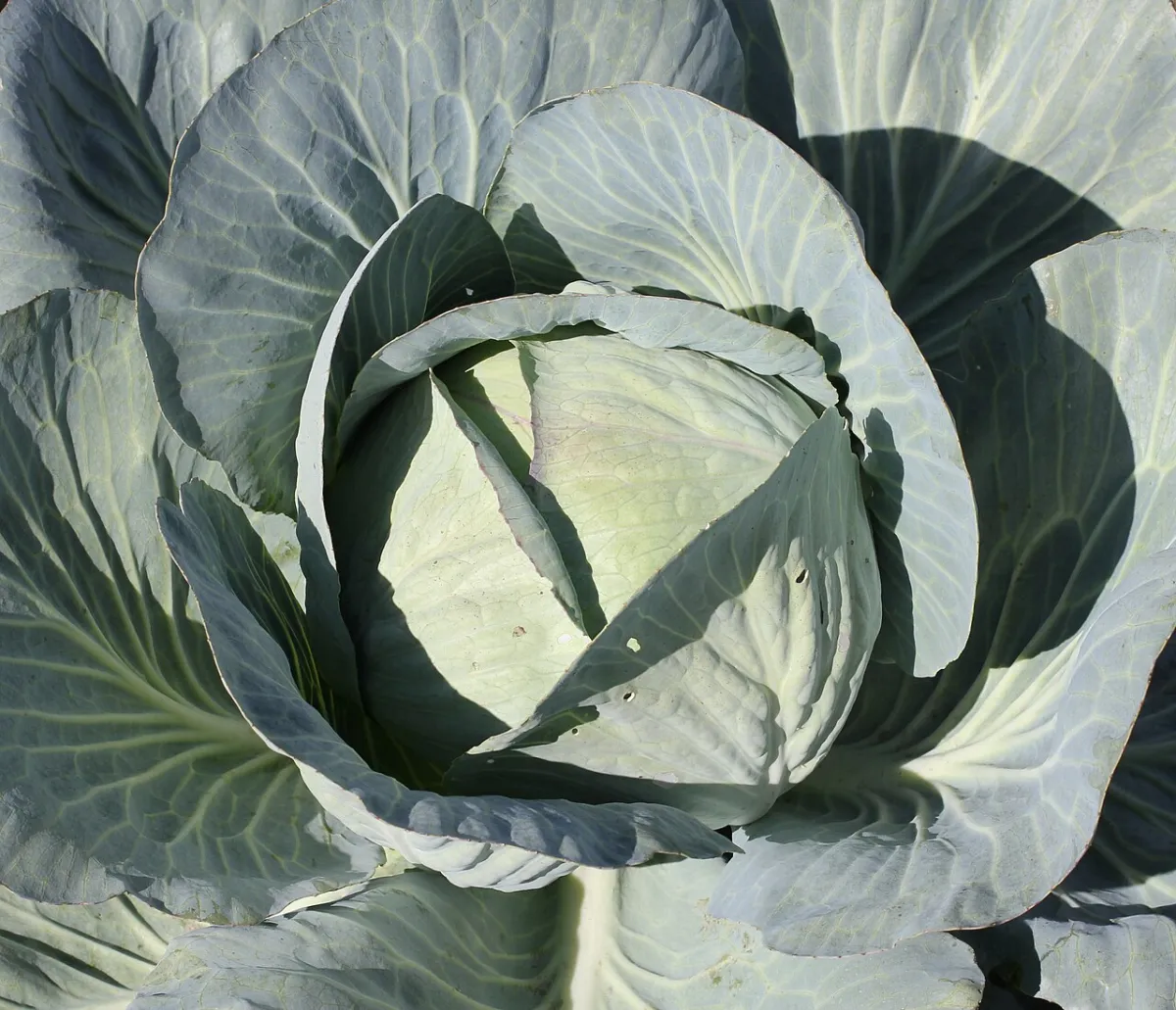
A cabbage leaf poultice is made from washed white cabbage leaves with the thick central rib trimmed, lightly crushed with a rolling pin and placed directly on the painful area for 1-2 hours (or overnight on a knee), held in place with cling film and a scarf. It is traditionally used for swollen knees, joint pain, bruises and engorged breasts during breastfeeding. Small studies show a real but modest effect on pain, sometimes comparable to an ordinary anti-inflammatory gel: it helps, but it does not treat the cause.
In Romanian village homes, cabbage was never just for sauerkraut and stuffed rolls. Grandmothers always kept a head in the pantry “for the knees”, and new mothers were told by the midwife to tuck cold cabbage leaves into their bra. Below you will find the exact method, the variations (cold, warm, with honey), application times and the honest limits of this remedy.
Key takeaways
- Use white or savoy cabbage, healthy outer leaves, without the thick central rib.
- Crush the leaves gently (rolling pin, spoon, wooden mallet) until they release juice, then place them on the skin.
- Knees and joints: 1-2 hours or overnight; engorged breasts: chilled leaves, 20 minutes, 2-3 times a day.
- Small clinical trials (knee osteoarthritis, breast engorgement) show a modest reduction in pain, not a cure.
- Do not apply on open wounds, infected skin or if you are allergic to brassicas; fever, spreading redness and severe pain need a doctor.
What a cabbage poultice is and where it comes from
A poultice (from the Greek kataplasma, “something spread over”) is a plant preparation placed directly on the skin, usually moist, crushed or made into a paste. Unlike herbal compresses, where a cloth is soaked in an infusion, in a poultice the plant itself touches the skin.
Cabbage (Brassica oleracea var. capitata) is one of the oldest plants used this way. Cato the Elder praised it in his writings as a near-universal remedy, and in Romanian villages the cabbage leaf became “the poor man’s bandage”: available all winter, cheap and cold from the cellar. It went on knees swollen after field work, on twisted ankles, on hot foreheads and on the chests of children with a cold.
What cabbage contains and why it might help
A cabbage leaf has no spectacular “active ingredient” like a classic medicinal herb, but it does have a few interesting features:
- Glucosinolates (sinigrin, glucobrassicin), which, when the leaf is crushed, are converted by the enzyme myrosinase into isothiocyanates. In laboratory studies these show anti-inflammatory and mildly irritant local effects that may increase skin circulation.
- Flavonoids and vitamin C, with antioxidant activity.
- Lots of water and an elastic texture, which let the leaf mould around a joint and keep it cool.
The most plausible mechanism is a mix of cooling and occlusion (the leaf keeps the skin moist and cool), a mild counter-irritant effect and, not least, the ritual itself: rest, raising the leg and paying attention to the sore area.
What the research says
Knee osteoarthritis. A German randomised trial (Lauche and colleagues, published in the Clinical Journal of Pain, 2016) compared cabbage leaf wraps with a diclofenac gel and with usual care in people with knee osteoarthritis. After 4 weeks, cabbage leaves reduced pain more than usual care and about as much as the anti-inflammatory gel, without clearly beating it. The trial was small and could not be blinded (patients knew what they were getting), so a placebo effect cannot be ruled out.
Breast engorgement. A Cochrane review of treatments for breast engorgement during lactation included studies of chilled cabbage leaves. Its conclusion: cabbage leaves (chilled or at room temperature) seem to reduce pain and discomfort, roughly as much as cold packs, but the evidence is low quality. A cabbage leaf is therefore a cheap, safe kind of cold pack rather than a specific treatment.
Cough, fever, bruises. For these uses there is only tradition, with no serious studies. They are treated as such below.
How to make a cabbage leaf poultice, step by step
What you need
- 2-4 large leaves of white cabbage or savoy cabbage (savoy is more pliable);
- a rolling pin or a clean bottle;
- cling film or a clean plastic bag;
- a wool scarf, a towel or an elastic bandage;
- optional: a spoonful of honey or clay, for the variations below.
Basic recipe (cold or room temperature)
- Pick outer but healthy leaves, without spots. Rinse under running water and pat dry with a towel.
- With a knife, cut out the thick central rib in a V shape or shave it thinner so the leaf lies flat.
- Lay the leaf on a wooden board and roll over it 3-4 times until it turns soft and glossy with juice. It should not tear.
- Place it on the skin with the inner, glossier side down, overlapping 2-3 leaves for a knee.
- Cover with cling film, then secure with the scarf or bandage without squeezing.
- Leave for 1-2 hours, or overnight on a knee. When the leaf dries out and darkens, it is time to change it.
- After removing it, rinse the skin with lukewarm water.
For a cooling effect (a warm joint swollen after exertion, an engorged breast), chill the leaves in the fridge for 30-60 minutes first, but never in the freezer.
Warm version, for stiffness and “cold” aches
Older generations used a warmed leaf for a stiff back and joints that ache and feel cold in the morning. Scald the leaf in hot water for 30 seconds or hold it on a warm tray for 1-2 minutes, crush it and test the temperature on the inside of your wrist: it should feel pleasantly warm, not hot. Do not use the warm version on a joint that is already red and hot.
Cabbage and honey poultice
A popular variation for coughs and a “chest cold”: the warmed leaf is thinly spread with honey and placed on the chest or upper back, between the shoulder blades, covered with gauze and an old T-shirt. Leave it on for 2-3 hours or overnight. There is no evidence that it treats a cough, but the warmth is soothing. For coughs, homemade cough syrups and good hydration are more useful. Do not use on infants, and check first that the skin tolerates honey.
Cabbage and clay poultice
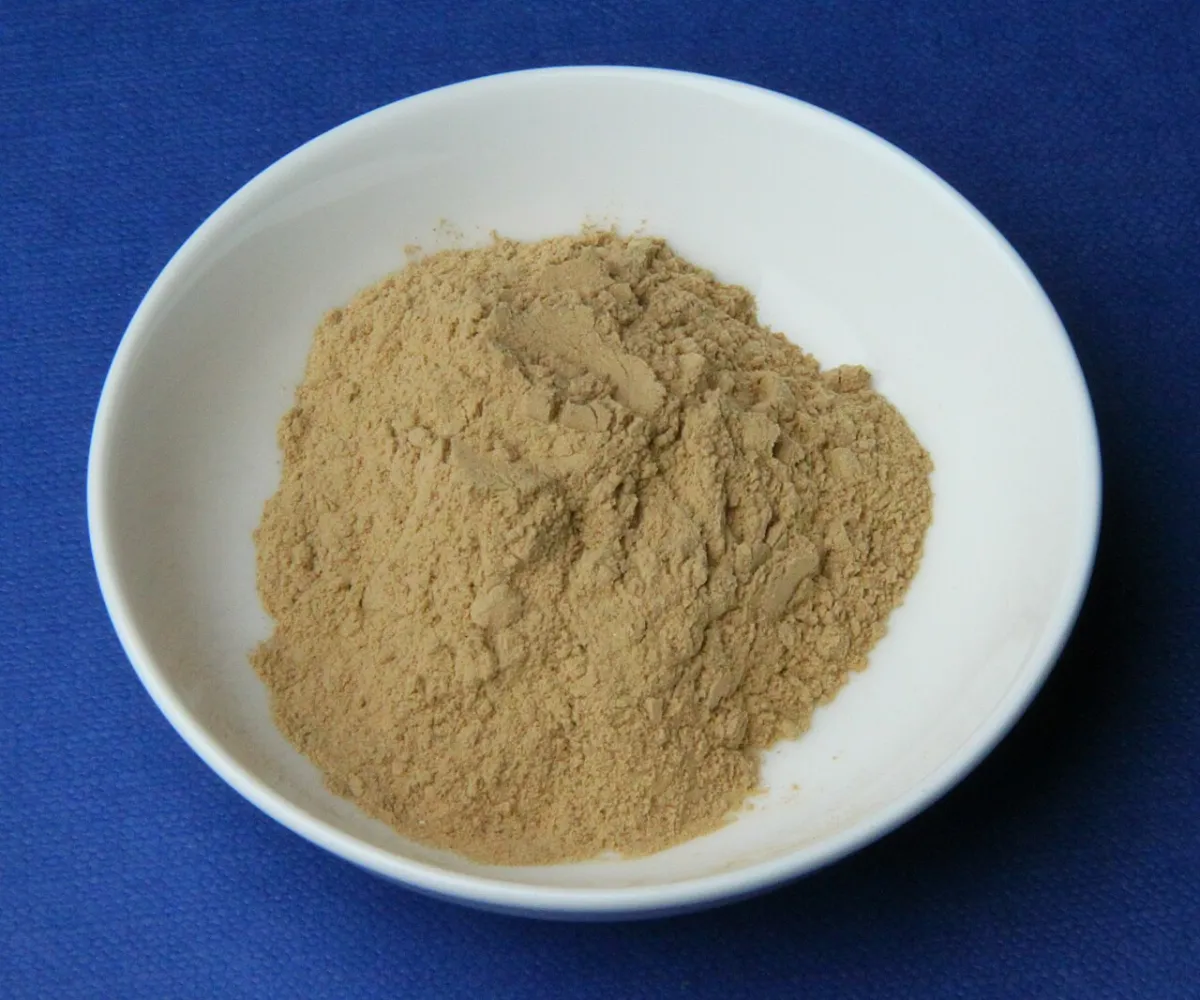
For a swollen joint, you can spread a 0.5-1 cm layer of green clay paste on the crushed leaf and apply it clay side down. The leaf keeps the clay moist for longer. Remove it before the clay dries completely (1-2 hours).
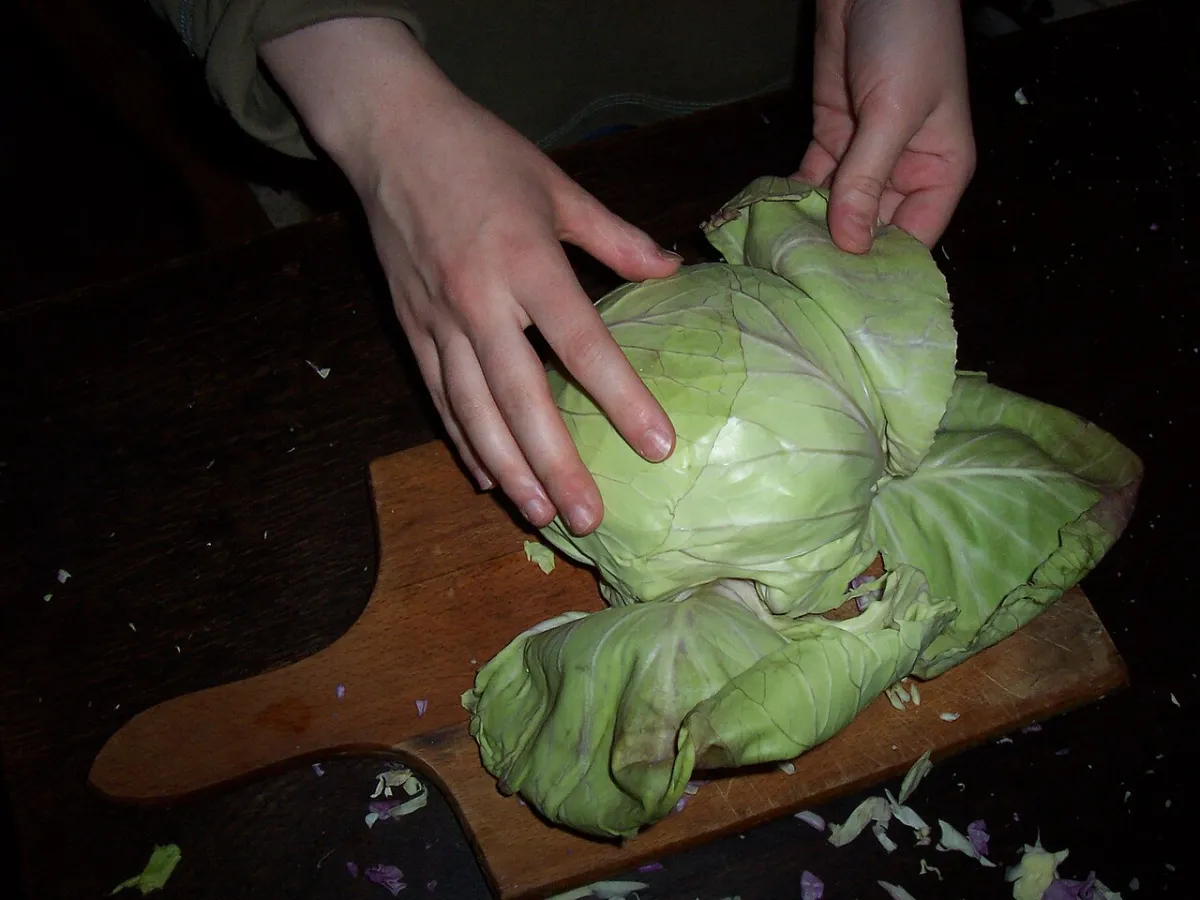 Photo: Nikola Smolenski, CC BY-SA 3.0, via Wikimedia Commons
What it is used for, case by case
| Situation | Version | How long | How often | What the evidence says |
|---|---|---|---|---|
| Painful knee osteoarthritis | room temperature or slightly warm | 2 hours or overnight | daily, 2-4 weeks | small randomised trial: modest effect on pain |
| Joint swollen after exertion, mild sprain | cold (fridge) | 30-60 min | 2-3 times a day, first 2 days | cold-pack effect |
| Engorged breasts while breastfeeding | cold | 20 min | 2-3 times a day, 1-2 days at most | Cochrane: weak evidence, similar to cold packs |
| Bruises, swelling after a knock | cold | 30-60 min | 2-3 times a day | tradition + cooling effect only |
| Cough, “chest cold” | warm, with honey | 2-3 hours | in the evening | tradition only |
Knees and joints
This is the best-known use and the one with the best data. For osteoarthritis, a cabbage leaf can be one part of a daily routine, alongside movement, weight loss where relevant and thigh-strengthening exercises. It does not rebuild cartilage and does not replace the treatment your rheumatologist recommends.
Engorged breasts in early breastfeeding
On days 3-5 after birth, when the milk “comes in”, breasts can become hard, hot and painful. A chilled cabbage leaf tucked into the bra around the breast, leaving the nipple uncovered, brings relief. A note of caution: folk wisdom says cabbage “dries up the milk”, and some mothers even use it when weaning. There is no solid evidence for this, but it is sensible not to wear it for hours on end or for more than 1-2 days. Frequent feeding, emptying the breast and a good latch remain the core treatment. If you develop a fever, a red, hot, wedge-shaped area or chills, it may be mastitis and you need a doctor or a lactation consultant.
Bruises and swelling
A chilled leaf works like a soft cold pack that does not “burn” the skin the way ice can. For minor knocks the classic rule still applies: rest, cold, light compression and elevation. For more ideas, see the article on bruises.
Contraindications and precautions
- Do not apply on open wounds, burns, weeping eczema or infected skin.
- Allergy to brassicas (cabbage, mustard, horseradish) or contact dermatitis can cause itching and redness. Test one leaf on your forearm for 20-30 minutes first.
- In people with diabetes and those with poor circulation or reduced sensation in the feet, avoid warm versions and check the skin often.
- In young children, use only cold or room-temperature versions, for short periods, under supervision.
- Cling film should not stay tight on the skin for hours if you sweat a lot: macerated skin gets irritated.
When to see a doctor
A cabbage leaf should not delay a medical visit if:
- a joint becomes suddenly red, hot and very painful, especially with fever (it may be infection or gout);
- you cannot put weight on the leg after an injury, or the joint looks deformed;
- one calf is swollen, warm and painful (risk of a blood clot);
- while breastfeeding you develop a fever above 38.5°C (101.3°F), chills, or a painful area that does not improve within 24 hours;
- knee pain wakes you at night or gets worse week by week.
Common mistakes
Applying the leaf as it is, uncrushed. Without crushing, the leaf stays stiff, does not mould and does not release its juice.
Leaves straight from the freezer. They can cause superficial frostbite. The fridge is enough.
Wrapping too tightly. A tight bandage restricts circulation. You should be able to slip a finger underneath.
Reusing the same leaf. After 2-3 hours the leaf is wilted and soaked with sweat. Use fresh leaves every time.
Expecting miracles. Cabbage does not “draw water” out of the knee and does not “dissolve” calcifications. It helps with pain, and that is all.
Conclusion
The cabbage leaf poultice is one of the simplest and safest folk remedies: it costs very little, takes five minutes and, for knee pain and breast engorgement, even has a few studies that partly support it. Use it as a smarter cold or warm pack, not as a treatment. If the pain persists, gets worse or a fever appears, see your doctor.
Frequently asked questions
How long should I keep a cabbage leaf on my knee? Between 1 and 2 hours or, if comfortable, overnight. In the osteoarthritis trial, participants wore the leaves for at least 2 hours a day for 4 weeks.
White cabbage or red cabbage? Traditionally white or savoy cabbage is used. Red cabbage works the same way, but it can stain skin and clothes.
Do cabbage leaves reduce milk supply? It is a widespread belief without solid evidence. To be safe, use them only for 20 minutes, 2-3 times a day, and only while your breasts are engorged.
Why does the leaf turn dark on the skin? The leaf wilts from body heat and oxidises. It does not mean it has “drawn out toxins”, only that it needs replacing.
Can I use sauerkraut leaves? Not for a poultice. The brine irritates the skin. Sauerkraut belongs on the plate, not on the knee.
Can I put a cabbage leaf on a wound? No. On open wounds there is a risk of infection. Clean the wound, disinfect it and cover it with a sterile dressing.
Does a cabbage leaf help with fever? A cold leaf on the forehead or calves cools the skin a little but does not lower core temperature. For fever, see the correct methods in the article on cooling compresses for fever.
Sources
- Lauche R. et al., randomised trial of cabbage leaf wraps in knee osteoarthritis, Clinical Journal of Pain, 2016.
- Cochrane Database of Systematic Reviews: treatments for breast engorgement during lactation (Zakarija-Grkovic and Stewart).
- NCCIH (National Center for Complementary and Integrative Health): general information on complementary approaches for osteoarthritis.
This content is for information only and does not replace medical advice. If you have a chronic condition or worsening symptoms, talk to your doctor.