 Photo: Alanna Ralph from Philadelphia, PA, USA, CC BY 2.0, via Wikimedia Commons
Cupping uses small glass, plastic or silicone cups in which a vacuum is created; they are then placed on the skin, usually on the back, for 5-15 minutes. The suction pulls skin and muscle into the cup and increases local blood flow, leaving round purple marks that fade in 3-10 days. Studies suggest a short-term effect on chronic back and neck pain, but the quality of the evidence is low. For colds, bronchitis or “drawing out a chill” there is no evidence, and fire cupping can cause burns.
In many Romanian families, “getting the cups put on” was the first response when someone had a cough or a back “caught by a draught”. Thick-rimmed glasses sat in the cupboard next to the cotton wool and surgical spirit used to light them. Today cupping is back in physiotherapy and sports massage. Here is what it is, how to use it safely and what expectations are realistic.
Key takeaways
- Dry cupping (no cuts) is the traditional Romanian form and the only kind suitable at home.
- Cups go on the back and shoulder muscles, never on the spine, kidneys, moles or varicose veins.
- Duration: 5-10 minutes at first, 15 at most; once every 3-7 days, not daily.
- Silicone or pump cups are much safer than fire cups and easier to control.
- Studies show a modest, short-term reduction in back and neck pain; cupping does not treat colds, bronchitis or pneumonia.
What cupping is and where it comes from
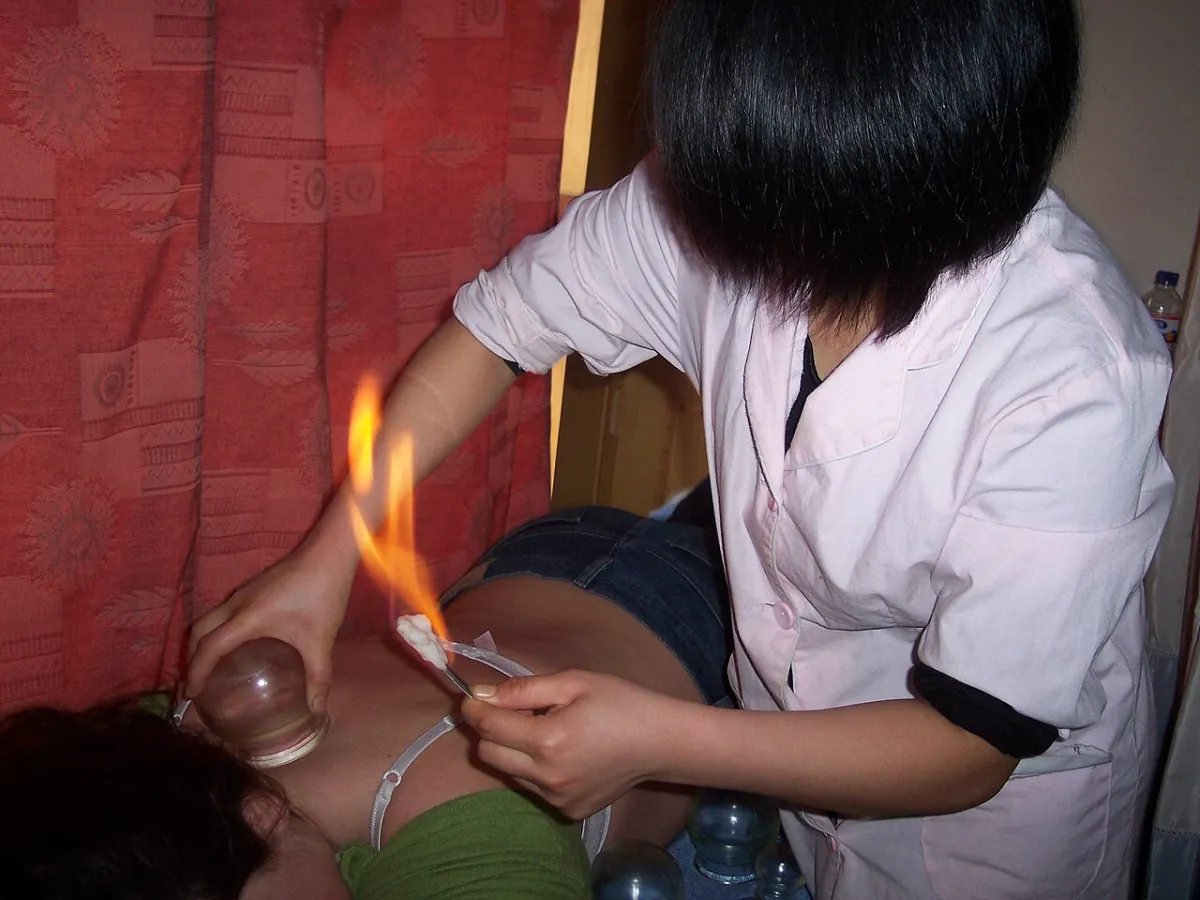
Cupping is one of the oldest known medical practices: it appears in the Ebers papyrus of ancient Egypt, in Hippocrates, in traditional Chinese medicine and in Arabic medicine (as hijama). In Europe, including Romanian villages, it survived as dry cupping: the glass is warmed with a flame, pressed onto the skin, and the cooling air creates a vacuum.
There are three main types:
- Static dry cupping: the cup stays in place for a few minutes. The classic version.
- Sliding cupping (cupping massage): the skin is oiled and the cup, with lighter suction, is glided along the muscles.
- Wet cupping (hijama): after cupping the skin is pricked or scratched and the cup is reapplied to draw a little blood. It is an invasive procedure with a risk of infection and blood-borne disease. Never do it at home.
How cupping might work
The mechanism is not fully understood, but there are a few plausible explanations:
- Mechanical effect: suction lifts skin and fascia, stretching tissues in the opposite direction to pressure massage. Some people feel this as a “release”.
- Increased local circulation: superficial capillaries dilate and some break, which causes the purple marks. The body responds with a local repair process.
- Pain modulation: strong stimulation of the skin may temporarily “override” pain signals from the muscles (the gate control theory of pain).
- Context: touch, warmth, time to relax and expectations matter a great deal in any pain treatment.
The round marks are not “toxins brought to the surface”, and their colour does not reveal how “sick” an organ is. They are small bruises.
What the research says
- Chronic low back pain: several small randomised trials and systematic reviews suggest that dry cupping may reduce pain and slightly improve function in the short term compared with no treatment. Differences versus other active therapies (exercise, massage) are small or uncertain.
- Chronic neck pain: German trials (the Lauche and Cramer group) found a reduction in pain after a few sessions, but also a substantial placebo effect.
- Fibromyalgia, tension headache: preliminary, low-quality data.
- Colds, coughs, bronchitis: no studies show any benefit.
The US National Center for Complementary and Integrative Health (NCCIH) sums it up this way: there is some evidence that cupping may help with pain, but many studies are of low quality and do not allow firm conclusions.
| Use | What the evidence shows | Recommendation |
|---|---|---|
| Chronic low back pain | small, short-term effect | complementary option, alongside exercise |
| Chronic neck and shoulder pain | small to moderate, short-term effect | complementary option |
| Tightness after exercise | practical experience only | light sliding cupping |
| Cold, cough, “chilled back” | no evidence | does not replace a check-up for fever and lingering cough |
| Bronchitis, pneumonia in children | no evidence, burn risk | not recommended |
How to do cupping properly, step by step
What you need
- 4-8 silicone cups or a hand-pump set (recommended at home); or classic glass cups, if you are experienced;
- vegetable oil (olive, almond) or a rich lotion;
- a towel, a light blanket, a warm room;
- a helper: you cannot cup your own back.
Technique with silicone or pump cups
- The person lies face down, relaxed, with arms by their sides or under the forehead.
- Apply a thin layer of oil. It helps the seal and the gliding.
- Choose the areas: the muscles alongside the spine (2-3 finger-widths to the side of it, not on it), the trapezius (shoulders), the area between the shoulder blades.
- Squeeze the silicone cup (or pump 1-2 times) and apply it. The skin should rise 5-10 mm into the cup, no more.
- Ask how it feels: it should be a firm but tolerable pull, not pain.
- Leave the cups for 5 minutes in the first session; in later sessions you can go up to 10-15 minutes.
- To remove, press the skin next to the rim with a finger to let air in. Never pull them off.
- Wipe off the oil, cover the person and let them rest in the warmth for 10-15 minutes.
Sliding cupping (massage)
Use more oil and lighter suction (the skin rises 3-5 mm). Glide the cup slowly in straight lines, upwards along the back muscles, for 5-10 minutes in total. The marks are fainter than with static cups.
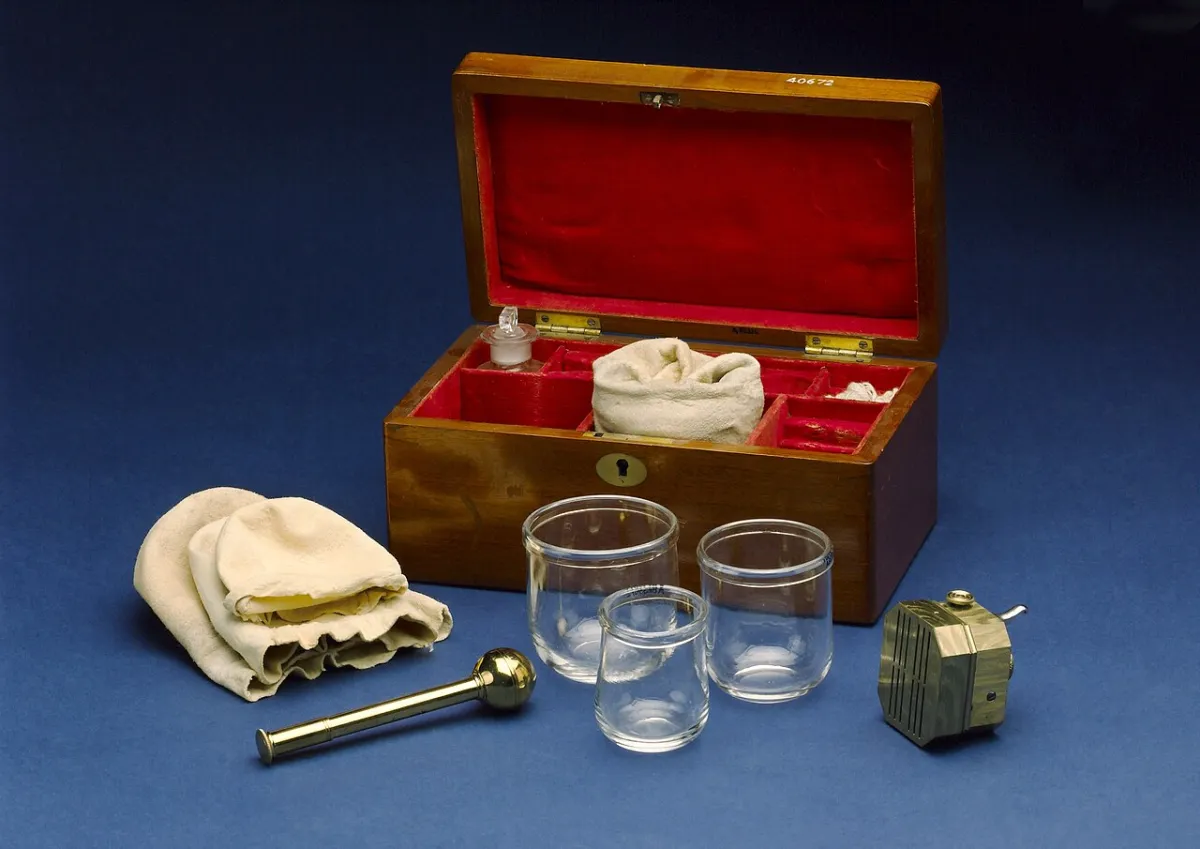 Photo: Wellcome Collection, CC BY 4.0, via Wikimedia Commons
Fire cupping: why we do not recommend it at home
The traditional method uses cotton wool soaked in spirit, set alight and passed quickly through the glass. The risks are real: drops of burning spirit on the skin, an overheated rim, hair or bedding catching fire. Burn units in several countries have reported second- and third-degree burns after home fire cupping. If you still choose this method, never use it on children, keep the flame away from the skin and keep a bowl of water within reach. Pump cups give the same effect without fire.
How often and for how long
| Situation | Session length | Frequency | Number of sessions |
|---|---|---|---|
| First try | 5 min | - | 1 |
| Chronic low back or neck pain | 10-15 min | 1-2 a week | 4-6, then reassess |
| Tightness after sport | 5-10 min (sliding) | after exercise, max. 2 a week | as needed |
| Older people, thin skin | 5 min, light suction | once a week | with your doctor’s approval |
Do not cup the same area again until the previous marks have faded.
Contraindications: who should not use cupping
- people taking anticoagulants or antiplatelet drugs (warfarin, acenocoumarol, rivaroxaban, apixaban, clopidogrel, daily aspirin) and those with bleeding disorders;
- pregnancy, especially on the abdomen and lower back;
- young children and very frail people;
- skin with wounds, burns, eczema, active psoriasis, infections, moles or tumours;
- areas with varicose veins, a history of thrombosis, over lymph nodes, the spine, kidneys, breasts, face;
- high fever, feeling very unwell, advanced heart or kidney failure;
- people with diabetes and fragile skin or neuropathy, only with medical approval.
When to see a doctor instead
Cupping is not appropriate and you need a check-up if:
- a cough lasts more than 3 weeks, brings up blood, or comes with a fever above 38.5°C (101.3°F), shortness of breath or chest pain;
- back pain follows a fall, or comes with fever, weight loss, numbness in the legs or problems passing urine;
- neck pain comes with dizziness, visual disturbances or weakness in one arm;
- after cupping you get blisters, sores or marks that do not fade within 2 weeks.
For lower back pain, see also the article on back pain; for colds, the one on colds and flu.
Common mistakes
Suction that is too strong. More suction does not mean more effect, just blisters and pain. The skin should not rise more than 1 cm.
Leaving cups on too long. Beyond 15-20 minutes the risk of blisters rises sharply.
Cups on the spine. They go on the muscles beside the spine, not on the vertebrae.
Cupping a child with fever and cough. The child needs a medical assessment, fluids and rest. Fire cupping on children is a classic cause of burns.
Going out into the cold straight away. Rest somewhere warm; otherwise you get exactly the stiffness you wanted to avoid.
Conclusion
Cupping is an old remedy that has survived because people often feel real relief in tight muscles. Studies partly confirm this for chronic back and neck pain, but the effect is modest and short-lived. Use silicone or pump cups, with moderate suction and short sessions, combine them with movement and stretching, and set aside the idea that they “draw out a cold”. If you take blood thinners or are pregnant, do not use cupping without your doctor’s approval.
Frequently asked questions
How long should cups stay on the back? 5 minutes in the first session, then 10-15 minutes. Beyond 15-20 minutes the risk of blisters increases.
How often can I do cupping? Once or twice a week, after the marks from the previous session have faded.
What does the colour of cupping marks mean? They are small bruises. The colour depends on suction, duration and each person’s skin and circulation. It does not indicate toxins or organ disease.
Does cupping help with colds and coughs? There is no evidence. Warmth and rest may feel comforting, but cupping does not treat respiratory infections.
Can cupping be used on children? We do not recommend it, especially fire cupping. For a child’s cough, ask a paediatrician.
Can I do cupping if I take aspirin? Daily aspirin and other blood thinners increase the risk of large bruises. Talk to your doctor first.
What should I do if a blister appears? Do not pop it. Clean gently, cover with a sterile dressing and do not cup the area until it heals. If it becomes infected, see a doctor.
Sources
- NCCIH (National Center for Complementary and Integrative Health): information page on cupping.
- Systematic reviews of cupping therapy for low back and neck pain, indexed in PubMed.
- Lauche R., Cramer H. et al., randomised trials of cupping in chronic neck pain.
This content is for information only and does not replace medical advice. If you have a chronic illness or take medication, talk to your doctor before trying cupping.