 Photo: Jengod, CC BY-SA 4.0, via Wikimedia Commons
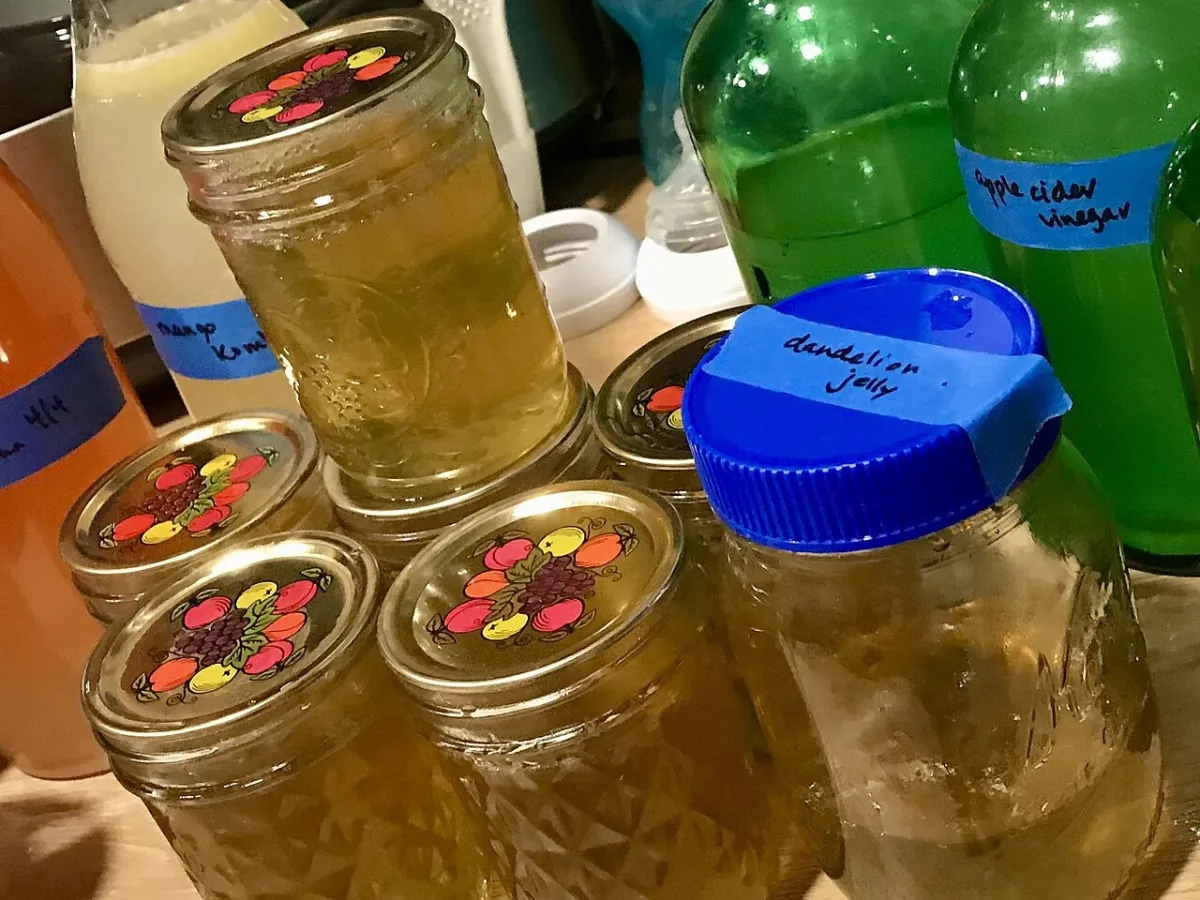
Dandelion honey is not bee honey but a thick syrup made from dandelion flowers: about 300 flowers (150-200 g of petals), 1 litre of water, 1 kg of sugar and 1-2 lemons, simmered slowly for 1-2 hours until it reaches a honey-like consistency. It tastes floral, of caramel and citrus, keeps for up to a year in sterilised jars and is used as a sweetener or, traditionally, a teaspoon at a time for a scratchy throat. Its medicinal value is modest: the flowers contain flavonoids and carotenoids, but the syrup is, first and foremost, sugar.
In April and May, when Romanian meadows turn yellow, grandmothers would send the children out “for dandelions” with a basket. Flowers picked in the sunshine became, a day later, golden jars that lasted all winter. Here is the exact recipe, the variations, the foraging rules and what you can realistically expect from it.
Key takeaways
- Basic ratio: 300 flowers : 1 l water : 1 kg sugar : 1-2 lemons; it yields about 1.2-1.4 kg of syrup.
- Pick the flowers in the morning, in sunshine, away from roads and sprayed land, and use them the same day.
- Steep the infusion for 12-24 hours, then simmer the syrup on low heat for 1-2 hours, until a drop no longer spreads on a plate.
- Storage: sterilised jars, in the dark, for up to 12 months; once opened, in the fridge, 1-2 months.
- Be careful with diabetes (it is over 60% sugar) and allergy to plants in the Asteraceae family.
What dandelion “honey” really is
The name comes from its look and texture: a golden, viscous liquid that flows like honey. It is a close relative of elderflower or acacia flower syrups, made on the same principle: you extract the flowers’ aroma and pigments into water, then concentrate the liquid with sugar. Vegetarians and vegans use it as a honey substitute.
The dandelion (Taraxacum officinale) is one of the best-known medicinal plants in Romania. You will find details on its root, leaves and their medicinal uses in the article on dandelion and the one on dandelion tea. Here we deal only with the flowers and the syrup.
What dandelion flowers contain
- Carotenoids, especially lutein and other xanthophylls, which give the intense yellow colour.
- Flavonoids (luteolin and quercetin derivatives) and phenolic acids (chlorogenic acid, caffeic acid), with antioxidant activity in the lab.
- Polysaccharides and traces of minerals.
- Nectar and pollen, hence the honeyed aroma.
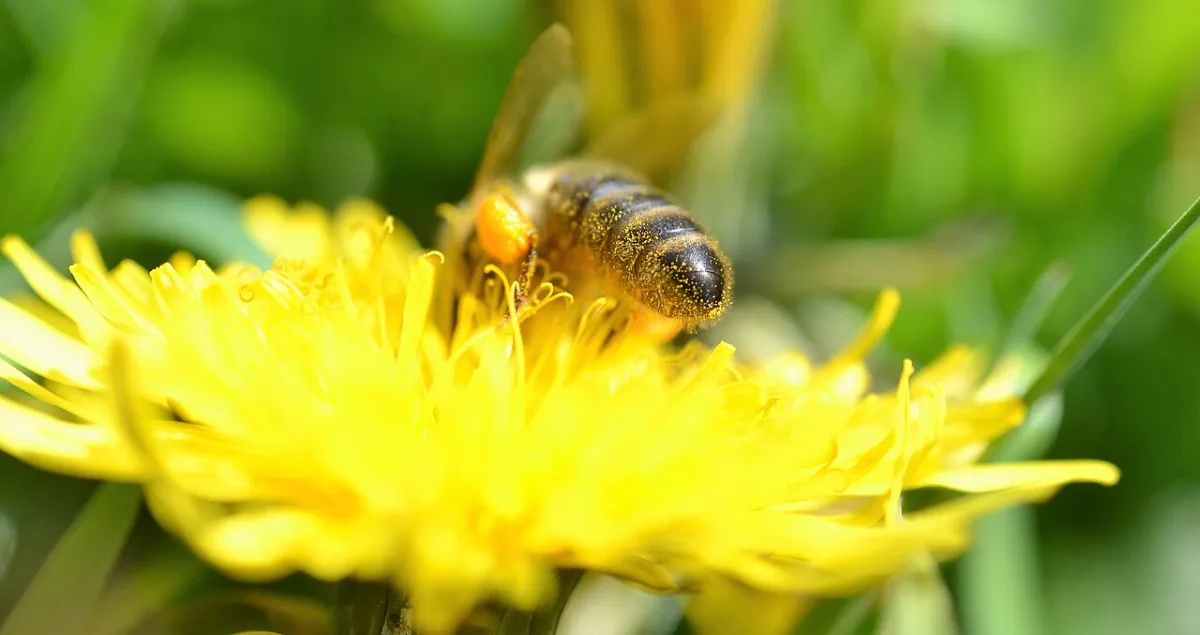 Photo: Conall, CC BY 2.0, via Wikimedia Commons
Some of these compounds pass into the infusion, but long simmering and the large amount of sugar make the syrup nutritionally closer to a sweetener than to a medicinal tea.
Its realistic benefits
- Scratchy throat and dry cough: like any thick syrup, dandelion honey coats the throat and temporarily soothes the scratchy feeling. The effect comes from the texture, not the dandelion. For herbal syrups better suited to coughs, see homemade cough syrups.
- Antioxidants: present, but in small amounts in a teaspoon.
- “Liver cleansing” and “detox”: in traditional medicine and in the EMA monograph these claims concern the root and leaves of dandelion (a mild choleretic and diuretic effect), not flowers boiled in sugar.
- The joy of a seasonal recipe: not to be dismissed. It is a lovely way to spend a spring morning outdoors.
When and how to pick the flowers
| Rule | Why |
|---|---|
| April-May, on sunny days | the flowers are fully open and rich in nectar |
| Between 10 am and 1 pm | after the dew lifts, before the flowers close |
| At least 50-100 m from roads | heavy metals from traffic settle on plants |
| Not from sprayed parks, not next to treated fields | herbicides and pesticides |
| Not from places where dogs are walked | hygiene |
| Only fully open, fresh flowers | better taste, less bitterness |
| Used within 2-3 hours | the flowers close and wilt |
Leave enough flowers for the bees. Dandelions are one of the first food sources for pollinators in spring. Pick from abundant patches and do not strip an entire meadow.
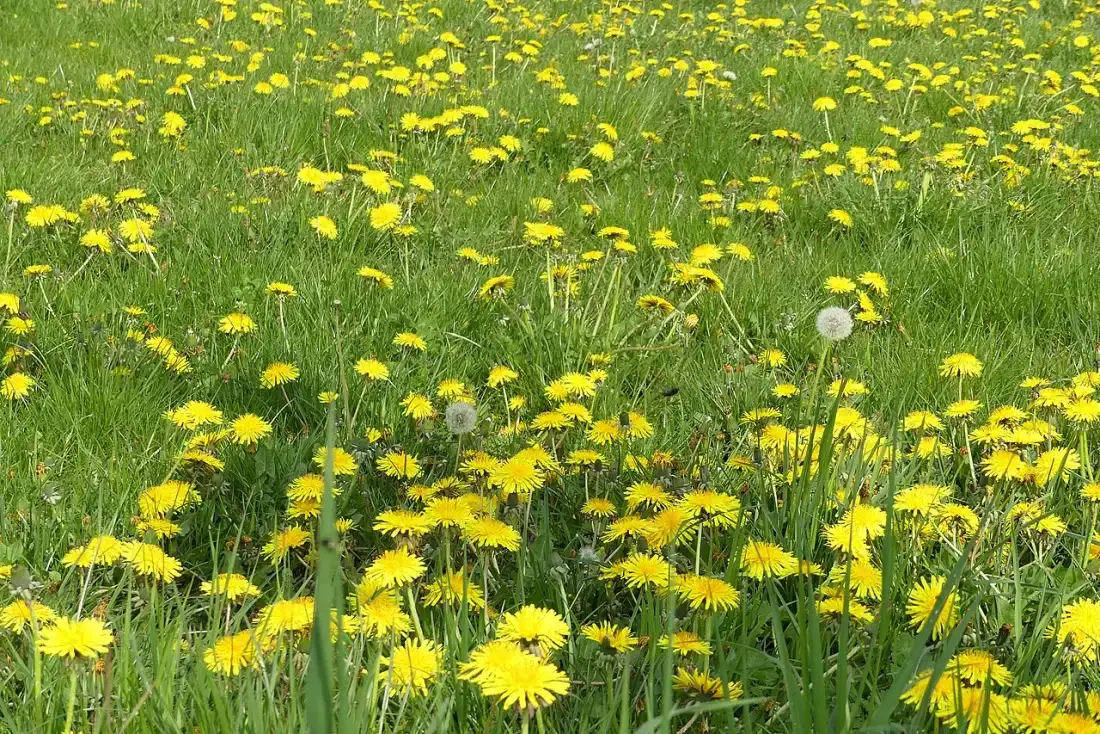 Photo: Bärbel Miemietz, CC BY-SA 4.0, via Wikimedia Commons
The classic recipe, step by step
Ingredients
- 300 dandelion flowers (about two large handfuls or a small basket), i.e. 150-200 g of cleaned petals;
- 1 litre of water;
- 1 kg of sugar (or 800 g for a less sweet syrup that keeps for a shorter time);
- 1-2 organic lemons (or 1 lemon and 1 orange);
- optional: 1 vanilla pod or 2-3 mint leaves.
Method
- Shake the flowers over a white sheet to let insects out. Spread them on a towel in the shade for 30 minutes.
- Remove the green part (the sepals) by pinching or cutting off the base of each flower. It is the slowest step, but it makes the difference between a fragrant syrup and a bitter one. If you are short of time, keep the flowers whole and shorten the steeping.
- Put the petals in a pot, pour over 1 litre of water and add the sliced lemon. Bring to the boil and simmer gently for 10-15 minutes.
- Take the pot off the heat, cover it and leave it 12-24 hours somewhere cool to infuse.
- Strain through gauze and squeeze the flowers well. You will get about 800-900 ml of yellow-brown liquid.
- Add the sugar and put the pot on low heat. Simmer uncovered for 1-2 hours, stirring now and then, without letting it boil hard.
- The plate test: put a drop on a cold plate. If it does not spread and runs slowly when you tilt the plate, the syrup is ready. Remember, it thickens a lot as it cools.
- Pour it hot into sterilised jars, filled to the top, close immediately and turn them upside down for 10 minutes.
Variations
| Variation | What changes | Result | Keeps for |
|---|---|---|---|
| Classic | 1 kg sugar per 1 l infusion | honey-like texture | 12 months |
| Less sweet | 600-700 g sugar | runnier syrup | 2-3 months, in the fridge |
| With bee honey | use 500 g sugar; at the end, below 40°C, stir in 300 g honey | more complex flavour | 6 months, somewhere cool |
| Quick, whole flowers | steep 2-3 hours | slightly bitter | 12 months |
| With ginger | 2-3 slices of ginger in the infusion | spicy, good in winter | 12 months |
Bee honey should not be boiled: heat above 40°C (104°F) destroys its enzymes and aroma. You can read more about its properties in the article on raw honey.
How to use it
- As a sweetener: in tea, yogurt, pancakes, over fresh cheese.
- For a scratchy throat: 1 teaspoon, held in the mouth and swallowed slowly, 2-3 times a day.
- In spring teas: 1 teaspoon in a cup of nettle or dandelion leaf tea.
- Children: over 1 year, ½-1 teaspoon, occasionally. The classic version contains no bee honey, but it is high in sugar.
Contraindications and precautions
- Diabetes: a teaspoon holds about 13-15 g of syrup, i.e. 8-10 g of sugar. Count it as a dessert.
- Allergy to Asteraceae (chamomile, calendula, ragweed, arnica): itching, hives and, rarely, more serious reactions may occur.
- Version made with bee honey: do not give to children under 1 year (risk of infant botulism).
- Plants picked in polluted places: do not use them.
- Mix-ups: dandelion can be confused with other yellow Asteraceae flowers (for example coltsfoot, which has different leaves and a different season). Pick only if you are sure of the plant.
When to see a doctor
Dandelion honey is a food, not a treatment. See a doctor if:
- a cough lasts more than 3 weeks or comes with fever, breathlessness or blood;
- after eating it you develop hives, swollen lips or difficulty breathing (allergy);
- you have diabetes and your blood sugar is poorly controlled.
Common mistakes
Flowers picked in the rain or in the evening. They are closed, low in nectar and the syrup turns out bland.
Leaving the sepals on and steeping too long. The syrup becomes bitter.
Boiling too hard. The sugar caramelises, the syrup darkens and tastes burnt.
Too little sugar without refrigeration. The syrup ferments or goes mouldy.
Unsterilised jars. Mould appears on the surface within a few weeks.
Conclusion
Dandelion honey is a pleasant, cheap and easy spring recipe that captures the colour of April meadows in a jar. It soothes the throat like any thick syrup and makes a fragrant sweetener, but dandelion’s “detox” benefits belong to its roots and leaves, not to flowers boiled in sugar. Pick responsibly, away from pollution, and enjoy it as you would a jam.
Frequently asked questions
How many dandelion flowers do I need? About 300 flowers for 1 litre of water and 1 kg of sugar.
Do I have to remove the green part of the flowers? It is not essential, but the syrup is less bitter if you keep only the yellow petals.
How long does dandelion honey simmer? On low heat, 1-2 hours after adding the sugar, until it passes the cold-plate drop test.
Why has my syrup crystallised? Either it simmered too long or there was too much sugar. Add a few spoonfuls of water and lemon juice and warm it gently.
Can I make dandelion honey without sugar? Not really; the sugar preserves it. Versions with sweeteners keep only a few days in the fridge.
Is it good for coughs? It soothes the throat like any thick syrup. For a persistent cough, see a doctor.
Can I freeze the flowers to make it later? Yes, cleaned petals can be frozen in bags, but the aroma will be weaker.
Sources
- EMA/HMPC: Community herbal monograph on Taraxaci radix cum herba (dandelion root and herb), traditional use.
- Reviews of the phytochemistry of Taraxacum officinale (flavonoids, phenolic acids, carotenoids), indexed in PubMed.
- CDC and WHO: information on infant botulism and avoiding honey in children under 1 year.
This content is for information only and does not replace medical advice. If you have diabetes or allergies, talk to your doctor before eating it.