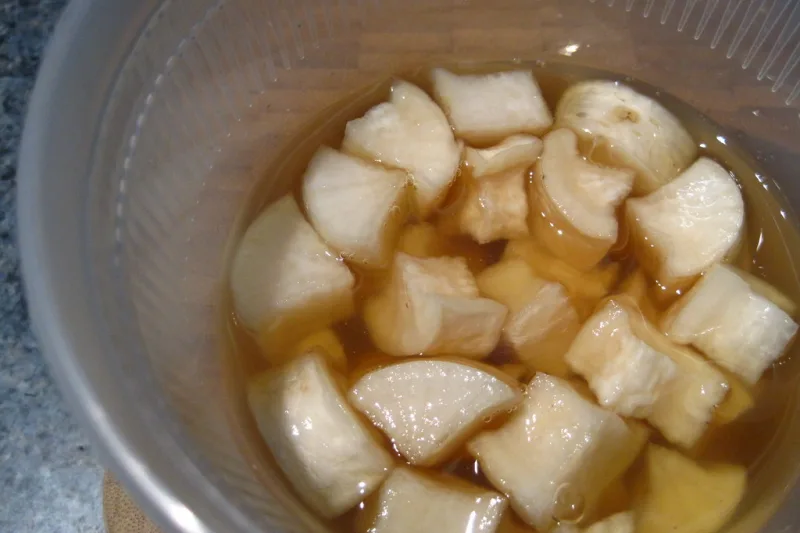

Homemade Natural Cough Syrups
IMPORTANT: Homemade cough syrups are a gentle aid for mild coughs, an irritated throat and seasonal colds, but they do not replace medical care. Honey must NEVER be given to children under 1 year of age, because of the risk of infant botulism. See a doctor promptly if a cough lasts more than 2-3 weeks, or if there is high fever, shortness of breath, chest pain, coughing up blood or wheezing, if the person has asthma, chronic lung disease or diabetes (these syrups contain a lot of sugar/honey), or if a young child, a pregnant woman, or someone on medication is involved. A persistent cough can be the sign of a serious condition and should be investigated by a specialist.
Grandma Veta from the Argeș region kept a small cupboard with painted wooden doors, and through autumn and winter it held a few well-sealed jars. One smelled of onion and honey, another of black radish, and the third of thyme freshly picked from the hill. When one of her grandchildren started coughing in the evening, she would not rush to the pharmacy: she would take a wooden spoon, carefully scoop out a teaspoon of syrup, and give it to us, warm, before bed. “A cough must be soothed, not frightened,” she used to say, and she would tuck us in well. By morning, more often than not, the throat no longer scratched as badly.
Those jars were no accident, but a tradition passed down from generation to generation. Homemade cough syrups are among the oldest and most widespread folk remedies in the Romanian countryside and far beyond. They combine simple ingredients found in any household — onion, radish, honey, lemon, sugar — with medicinal plants known for their effect on the airways: thyme, plantain, elderflower, chamomile, coltsfoot. The result is a warm, pleasant-tasting remedy that softens the irritated throat, helps thin secretions and brings a sense of relief especially in the evening, when the cough seems to worsen.
In this article I will show you, step by step, how to prepare the best-known natural cough syrups, when to use each one, how much to take and what mistakes to avoid. You will find recipes for both dry, irritating coughs and productive coughs with phlegm, plus storage tips and important precautions.
Table of Contents
- Why natural cough syrups work
- Dry cough vs. productive cough: which syrup to choose
- The basic ingredients and what each one brings
- Onion and honey (or sugar) syrup recipe
- Black radish syrup recipe
- Thyme syrup recipe
- Plantain syrup recipe
- Elderflower syrup recipe
- Simple honey, lemon and ginger syrup
- Pine/fir bud syrup
- How to take it and how much
- How to store homemade syrups correctly
- Lifestyle tips that help the cough pass
- Practical Tips and Common Mistakes
- Conclusion
- Frequently Asked Questions
Why natural cough syrups work
Coughing is one of the body’s defense reflexes: it is the body trying to expel something that irritates the airways — mucus, dust, cold air, infectious agents. It is not a disease in itself, but a symptom. That is exactly why the goal of a natural syrup is not to “stop” the cough at any cost, but to calm the irritation and help the body heal more comfortably.
Homemade syrups work in several complementary ways. First, through their thick, sweet consistency, they form a protective layer over the irritated lining of the throat. Honey and sugar, thanks to their sticky texture, “coat” the inflamed area and reduce the scratchy sensation that triggers coughing fits. This effect, known as demulcent action, is the reason even a simple teaspoon of honey can soothe an irritated throat.
Second, many of the plants used contain substances that thin bronchial secretions (expectorant effect) or that relax the muscles of the airways. Thyme, for example, is valued in folk tradition for its effect on coughs with phlegm, while plantain and its mucilage are sought out for dry, irritating coughs. Honey also has mild antimicrobial properties and is, according to several sources, comparable to some pharmacy preparations for calming nighttime cough in children over 1 year of age.
Finally, the ritual itself matters: a warm syrup taken in the evening, together with rest and good hydration, supports the natural healing process. Many people underestimate how much it helps to simply drink more warm fluids and to humidify the air in the room.
Dry cough vs. productive cough: which syrup to choose
Before preparing any syrup, it is good to understand what type of cough you have, because the approach differs.
A dry cough (irritating, non-productive) is that tormenting cough that does not “bring anything up.” It often appears at the start of colds, with allergies, after exposure to cold or dry air, or as a residual cough after an infection. Demulcent syrups that soften and protect the throat are suitable for it: plantain, plain honey with lemon, mallow, linden syrup. The goal is to calm the irritation.
A productive cough (wet, with phlegm) is accompanied by mucus that the body is trying to expel. Here you do not want to “block” the cough, but to help it become more effective by thinning the secretions. Expectorant syrups are appropriate: thyme, onion, black radish, elderflower, fir bud. They help the mucus become more fluid and easier to clear.
Many homemade syrups, such as onion and honey, have mixed effects and can be used in both situations. If you are not sure of the type of cough, choose a gentle syrup with honey and a well-known plant, and observe how your body responds. If the cough worsens or persists, see a doctor.
The basic ingredients and what each one brings
Before the recipes, it is worth knowing the “building blocks” from which most homemade syrups are made:
- Honey — the demulcent base par excellence. It calms irritation, has a mild antimicrobial effect and a pleasant taste that makes the syrup easy to take. Choose honey that is as natural as possible, not overheated. Do NOT give it to children under 1 year.
- Sugar — the classic alternative to honey, used especially in “old-fashioned” onion and radish syrups. It draws the juice out of vegetables and creates a sweet syrup. Less nutritious than honey, but accessible.
- Lemon — brings vitamin C and a touch of freshness, cuts through the feeling of a “loaded” throat and balances the sweetness. Lemon juice also has a mild astringent effect, pleasant for irritation.
- Onion — the classic folk remedy. It contains sulfur compounds that, in folk tradition, are valued for their expectorant and antimicrobial effect.
- Black radish — an emblematic cough syrup, made by “hollowing out” the radish and filling it with honey or sugar.
- Thyme — an aromatic plant rich in volatile oils (especially thymol), traditionally used for coughs with phlegm and for mild bronchitis.
- Plantain — its leaves contain mucilage that softens the throat, which is why it is highly sought after for dry coughs.
- Elderflower — elder blossoms are diaphoretic (they promote sweating) and are traditionally used in colds and coughs.
- Ginger — a hot, warming root, valued for its warming effect and the sense of clearing it gives the airways.
Onion and honey (or sugar) syrup recipe
This is probably the best-known traditional cough syrup in the Romanian kitchen. It is simple, cheap and surprisingly effective for coughs with phlegm and for colds.
Ingredients:
- 2 medium onions (yellow or red)
- 3-4 tablespoons of natural honey (or, if unavailable, 3-4 tablespoons of sugar)
- optional: the juice of half a lemon
Step-by-step preparation:
- Peel the onions and cut them into thin rings or small cubes.
- Place a layer of onion in a clean jar, then a layer of honey (or sugar), and repeat the layers until you use up the ingredients.
- Cover the jar with a lid or a small plate and leave it at room temperature for 8-12 hours (overnight). In contact with the honey/sugar, the onion will release abundant juice — this is the syrup.
- Strain the liquid through a fine sieve into another clean jar. Gently squeeze the onion to extract all the juice.
- If you like, add the lemon juice and stir.
How to take it: one teaspoon 3-4 times a day for adults; for children over 1 year, half a teaspoon 2-3 times a day. Keep in the refrigerator for 2-3 days.
The smell of onion may be off-putting at first, but the taste of the syrup is surprisingly sweet and acceptable. It is an excellent option when you do not have medicinal plants on hand.
Black radish syrup recipe
Black radish (the one with the dark, pungent skin) is the undisputed star of homemade syrups. The classic method is striking in its simplicity: the radish becomes the container for its own syrup.
Ingredients:
- 1 large black radish
- natural honey or brown sugar, as much as fits in the hollow
Step-by-step preparation:
- Wash the radish well and cut off a “lid” from the top (keep it).
- With a teaspoon or a knife, hollow out the inside, forming a cup-like cavity. Leave the walls thick enough to hold.
- Fill the cavity with honey (or sugar), but not all the way to the top, because the juice will rise.
- Put the “lid” back on and stand the radish upright in a glass or bowl. Leave it for 8-12 hours.
- A sweet-pungent syrup, made of the radish juice mixed with the honey, will collect in the cavity. This is the remedy.
You can “refill” the radish with honey another 2-3 times, until it stops releasing juice. A faster variation: grate the radish, mix it with honey, leave it for 6-8 hours and strain.
How to take it: one teaspoon 3-4 times a day for adults; half a teaspoon 2-3 times a day for children over 1 year. It has an intense, slightly pungent but, for many, very pleasant taste.
Thyme syrup recipe
Thyme is one of the most valued plants for coughs with phlegm and for mild bronchitis. Its warm aroma and volatile oils make it a reliable ally in the cold season.
Ingredients:
- 2 tablespoons of dried thyme (or a handful of fresh thyme)
- 250 ml water
- 150-200 g honey or sugar
Step-by-step preparation:
- Put the thyme and water in a small pot and bring to a gentle boil.
- Let it simmer over low heat for 10-15 minutes, until the liquid reduces slightly.
- Remove from heat, cover and let it infuse for another 15-20 minutes.
- Strain the infusion through a fine sieve or cheesecloth.
- If using sugar: return the strained liquid to the pot, add the sugar and simmer gently until it thickens into a thin syrup. If using honey: let the infusion cool until lukewarm (not hot) and only then stir in the honey, to preserve its properties.
How to take it: one tablespoon 3 times a day for adults; one teaspoon 2-3 times a day for children over 1 year. Keep in the refrigerator for 5-7 days.
Plantain syrup recipe
Plantain (the leaf of Plantago) is the remedy par excellence for dry, irritating coughs. The mucilage in the leaves softens and protects the lining of the throat.
Ingredients:
- fresh plantain leaves, washed and cut into strips
- sugar or honey
Step-by-step preparation (cold maceration method):
- Place a layer of chopped leaves in a jar, then a layer of sugar (or honey), and repeat until the jar is full.
- Press each layer gently. Close the jar.
- Leave the jar in a cool, dark place for 2-3 weeks (traditionally, some bury it in the ground for a constant temperature). During this time, the leaves release a juice that, together with the sugar, forms the syrup.
- Strain the syrup, squeeze the leaves and store the liquid in the refrigerator.
If you need a quick syrup, you can make a plantain infusion (2 tablespoons of leaves to 250 ml of hot water, steeped for 15 minutes) and sweeten it with honey once it has cooled.
How to take it: one tablespoon 3 times a day for adults; one teaspoon for children over 1 year.
Elderflower syrup recipe
Elder blossoms, picked in early summer and dried, make a fragrant, pleasant syrup that is useful for colds and coughs, especially when you want to stimulate sweating and “break” a cold at its onset.
Ingredients:
- 2 tablespoons of dried elderflowers (or a few fresh flower heads)
- 500 ml water
- 300-400 g sugar
- the juice of 1 lemon
Step-by-step preparation:
- Boil the water, remove it from the heat and pour it over the elderflowers. Cover and let it infuse for 20-30 minutes.
- Strain the infusion well.
- Return the liquid to the heat, add the sugar and simmer over low heat until it thickens slightly.
- Toward the end, add the lemon juice, which also helps with preservation.
- Pour hot into clean bottles and seal them.
How to take it: one tablespoon diluted in a glass of warm water, 2-3 times a day. It can also be used as a concentrated syrup for warm lemonades.
Simple honey, lemon and ginger syrup
When you do not have medicinal plants on hand, this simple mixture is a quick rescue for an irritated throat and a mild cough.
Ingredients:
- 4-5 tablespoons of honey
- the juice of one lemon
- 1 teaspoon of freshly grated ginger (optional)
Preparation:
- Mix the honey with the lemon juice in a small jar.
- Add the grated ginger and stir well.
- Leave it for 1-2 hours so the flavors blend.
Take one teaspoon as needed, dissolved if you like in a cup of warm (not boiling) water. It is a gentle, pleasant remedy, well suited for the evening, before bed.
Pine/fir bud syrup
In mountain regions, fir (or pine) bud syrup is a traditional remedy for coughs and colds. It is made in spring, when the tender, light-green buds appear.
Ingredients:
- fresh fir/pine buds
- sugar
Step-by-step preparation:
- Rinse the buds gently and place them in a jar, alternating layers of buds with layers of sugar.
- Press down, close the jar and leave it in the sun for 3-4 weeks. The sugar will gradually melt and form a greenish, fragrant syrup.
- Strain and keep in a cool place.
How to take it: one tablespoon 2-3 times a day. It is intensely aromatic, with a pleasant resinous taste. Be mindful of responsible harvesting — do not pick buds in protected areas and do not strip the trees bare.
How to take it and how much
Whatever the recipe, a few general rules help you use homemade syrups correctly:
- Adults: usually one tablespoon (10-15 ml) 3-4 times a day.
- Children over 1 year: half a teaspoon to one teaspoon, 2-3 times a day, depending on age. Talk to a doctor for young children.
- Before bed: an evening dose is often the most useful, because coughing tends to worsen at night.
- Do not exceed the recommended amounts — syrups are sweet and can burden digestion or blood sugar if overused.
- Let the syrup work on the throat: take it slowly, letting it slide down, and avoid drinking liquids right afterward, so the protective layer stays on the lining for a few minutes.
If after 2-3 days you notice no improvement, or if symptoms worsen, stop the home remedy and consult a doctor.
How to store homemade syrups correctly
Natural syrups contain no industrial preservatives, so they must be handled with care:
- Clean jars and bottles: wash them well and, ideally, scald them before use.
- In the refrigerator: syrups with fresh juice (onion, radish, thyme infused with honey) should be kept refrigerated and used within 2-7 days.
- Syrups boiled with a lot of sugar (elderflower, fir) last longer, weeks or even months, if they are well sterilized and sealed.
- A clean spoon every time: never put a used spoon directly into the jar, so you do not contaminate the syrup.
- Check appearance and smell: if mold, unusual foam or a sour/fermented smell appears, throw the syrup away.
Lifestyle tips that help the cough pass
A good syrup works best alongside a few simple habits that support healing:
- Hydrate abundantly: warm fluids (teas, soups, water with honey and lemon) thin secretions and soothe the throat.
- Humidify the air: a humidifier or a bowl of water on the radiator prevents the mucous membranes from drying out, which worsens coughing.
- Rest: sleep is when the body recovers. Sleep with your head slightly elevated if the cough bothers you at night.
- Avoid smoke and cold, dry air: smoking, wood smoke and aggressive air conditioning irritate the airways.
- Gargle with warm salt water: this helps an irritated throat and complements the effect of the syrup.
- Steam inhalations: warm steam (possibly with thyme or chamomile) clears the airways.
Practical Tips and Common Mistakes
Mistake no. 1: Adding honey to boiling-hot liquid. Honey loses some of its delicate properties at high temperatures. Always let infusions or syrups cool until lukewarm before stirring in the honey.
Mistake no. 2: Giving honey to children under 1 year. This is an absolute safety rule. Honey can contain spores of Clostridium botulinum, which are dangerous for infants. For young children, use sugar-based alternatives only on a doctor’s advice.
Mistake no. 3: Treating every cough the same way. Dry and productive coughs call for different approaches. “Stopping” a productive cough at all costs can prevent the clearing of secretions.
Mistake no. 4: Ignoring a persistent cough. A cough that lasts more than 2-3 weeks, accompanied by fever, weight loss, night sweats or blood, should NOT be treated with a homemade syrup — it needs medical investigation.
Mistake no. 5: Using plants you have not identified with certainty. Do not pick plants you do not know for sure. Plantain, thyme and elder have “look-alikes” in nature; use only clearly recognized plants or those bought from a trusted source.
Mistake no. 6: Overdoing the sugar. Syrups are sweet. People with diabetes or blood-sugar problems must be cautious and consult a doctor.
Mistake no. 7: Careless storage. A syrup kept warm in a dirty jar will ferment or grow mold. Container hygiene is essential.
Conclusion
Homemade natural cough syrups are a valuable inheritance from folk medicine — accessible, cheap and pleasant-tasting. Onion, black radish, thyme, plantain, elderflower and honey form a genuine “kitchen pharmacy” for the cold season. Used correctly — with attention to the type of cough, dosages, preparation hygiene and essential precautions (especially for young children, pregnant women and people with chronic illnesses) — they can bring real relief in mild colds and throat irritations.
Even so, they remain a support, not a substitute for medical care. Listen to your body, watch how your symptoms evolve, and do not hesitate to see a doctor when a cough is severe, persistent or accompanied by worrying signs. As Grandma Veta used to say, a cough must be “soothed” with patience, warmth and gentle remedies — but also with the wisdom to know when more is needed.
Frequently Asked Questions
From what age can I give my child a homemade cough syrup? Syrups containing honey can only be given after the age of 1. Under 1 year, honey is strictly forbidden because of the risk of infant botulism. For young children, any remedy should be discussed in advance with the pediatrician.
Which syrup is best for a dry cough? For a dry, irritating cough, demulcent syrups that soften the throat are suitable: plantain, plain honey with lemon, mallow, linden. They form a protective layer and reduce the scratchy sensation.
And for a cough with phlegm? For a productive cough, syrups with an expectorant effect are recommended: thyme, onion, black radish, elderflower, fir bud. They help thin and clear the mucus.
How long does a homemade syrup keep? It depends on the recipe: those with fresh juice (onion, radish) are kept refrigerated and used within 2-3 days; those boiled with a lot of sugar (elderflower, fir) last weeks or months if well sterilized.
Can I use sugar instead of honey? Yes. Sugar is the classic alternative, especially in onion and radish syrups. Honey, however, brings additional properties (a mild antimicrobial effect, a richer taste). For children under 1 year, neither honey nor syrups should be given without a doctor’s advice.
Does a homemade syrup cure bronchitis? No. Syrups can calm the symptoms of a mild cough and can accompany recovery, but they do not treat bacterial bronchitis or a lung condition. These require diagnosis and, possibly, medical treatment.
Can I take homemade syrups if I have diabetes? With caution and after talking to your doctor, because syrups contain large amounts of sugar or honey. There are less sweet alternatives (plain thyme or plantain infusions), but the decision must be individualized.
When must I absolutely see a doctor? See a doctor if a cough lasts more than 2-3 weeks, if there is high fever, shortness of breath, chest pain, coughing up blood, unexplained weight loss or night sweats, or if the affected person is a young child, a pregnant woman or someone with chronic illness.