
Natural Remedies for an Upset Stomach: A Complete Guide to Folk Cures
IMPORTANT: The natural remedies described here are suitable for mild and occasional digestive discomfort. If your stomach pain is severe, lasts more than two or three days, or is accompanied by fever, repeated vomiting, blood in the stool, black tarry stools, sudden weight loss, difficulty swallowing or chest pain, seek medical attention urgently. People with gastric or duodenal ulcers, severe acid reflux, gallbladder disease, kidney stones, pregnant or breastfeeding women, and anyone taking blood thinners (anticoagulants), diabetes or blood-pressure medication should talk to a doctor before using ginger, peppermint or other herbs in medicinal amounts. These remedies do NOT replace professional diagnosis and treatment.
Old Auntie Veta from my grandmother’s village had a saying I have never forgotten: “The stomach is a person’s second mind — upset it, and it will upset you for a whole week.” She was past eighty and had never in her life taken a pill for her stomach. Whenever someone in the village complained that “the food sat heavy” or that “they had heartburn and a sore pit of the stomach,” Auntie Veta would reach into the larder for a little jar of dried ginger, a bunch of peppermint hanging from the rafters, and a handful of chamomile flowers gathered from the meadow. She would set the water to boil on the cast-iron stove, and within minutes the whole house smelled of medicine.
I remember how, as a child, I stuffed myself at a wedding with stuffed cabbage rolls, roast meat and cakes until a sharp pain and dreadful nausea took hold of me. My mother was ready to take me to the doctor, but Auntie Veta sat me on the bench, made me a warm ginger tea with honey, and rubbed my belly with her warm palm, in slow circles, muttering something that sounded like an incantation. Within half an hour I felt better. Only much later did I understand that there was no magic in it — it was the knowledge that the old folk had passed down from one generation to the next, knowledge that modern medicine confirms today.
An upset stomach — or, more precisely, functional dyspepsia — is one of the most common human complaints. It shows up as a feeling of heaviness after a meal, bloating, heartburn, nausea, belching, and sometimes cramps or the sensation that food is “sitting still.” The causes are many: meals that are too rich or too rushed, fatty and fried foods, alcohol, excess coffee, stress, late dinners, but also a simple stomach chill or a mild bout of food poisoning. The good news is that, in the vast majority of mild cases, nature offers us gentle and effective remedies, tried and tested by hundreds of years of folk tradition.
Table of Contents
- Why natural stomach remedies work
- Ginger — the king of digestive remedies
- Peppermint and the menthol that soothes the stomach
- Chamomile — the flower that calms inflammation
- Other plants and foods that are friends of the stomach
- Step-by-step recipes: teas, tinctures and compresses
- Remedies for specific situations (nausea, bloating, heartburn, cramps)
- Lifestyle and habits that protect the stomach
- Practical tips and common mistakes
- Conclusion
- Frequently Asked Questions
Why natural stomach remedies work
Before diving into the details of each remedy, it is worth understanding why a simple cup of tea can work wonders for an irritated stomach. The plants used traditionally for digestion act through several pathways at once, and modern studies have begun to confirm these mechanisms.
First, many of them are carminative — that is, they help expel gas from the gut and relax the muscles of the digestive tract. Peppermint, fennel, caraway and anise belong to this category. When the muscles of the stomach and intestinal wall relax, cramps ease and the feeling of bloating subsides.
Second, some plants are anti-inflammatory and antispasmodic. Chamomile, for instance, contains compounds that calm irritation of the mucous lining and reduce spasms. Ginger, in turn, speeds up gastric emptying, which means food no longer “lingers” and causes heaviness and nausea.
Finally, many warm teas also have a comforting, anti-stress effect. The stomach is closely linked to the nervous system — the old folk rightly said that “worry settles in the stomach.” A warm tea, sipped slowly in a moment of quiet, lowers the nervous tension that often underlies digestive complaints. Folk tradition intuited this connection long before medicine started talking about the “gut-brain axis.”
Ginger — the king of digestive remedies
If we had to pick a single remedy for an upset stomach, ginger would, without a doubt, top the list. This knobbly root, brought from Asia, has conquered kitchens and larders all over the world precisely because of its extraordinary effects on digestion.
How ginger works
Ginger (Zingiber officinale) contains active substances called gingerols and shogaols, responsible for its pungent taste and therapeutic properties. Studies suggest that ginger speeds up gastric emptying, stimulates the production of saliva and digestive juices, and has an anti-inflammatory effect. Its best-documented effect, however, is antiemetic — that is, against nausea and vomiting. This is why ginger is traditionally recommended for morning sickness, motion sickness (in cars, on boats) and discomfort after heavy meals.
How to use ginger
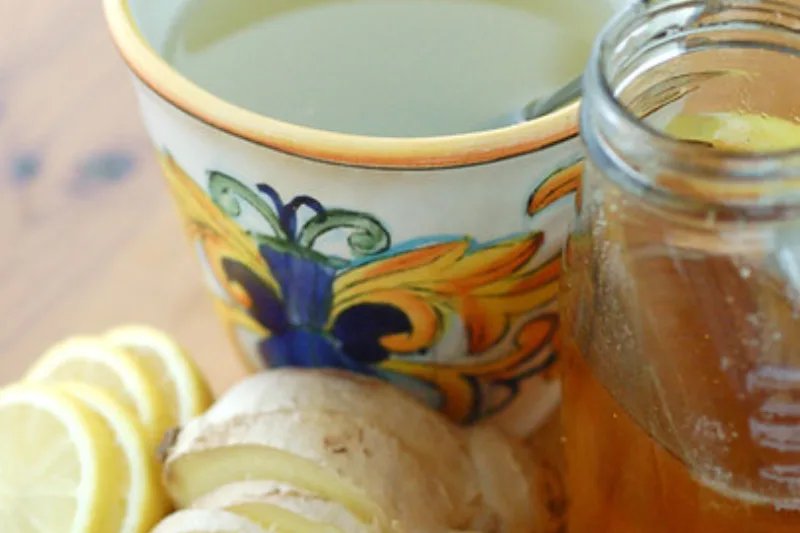
Ginger can be used fresh (the root), dried and ground (powder), or candied. For an upset stomach, fresh ginger tea is the most popular form. You grate or thinly slice a piece of root about the size of a thumb joint, pour hot water over it, and drink it warm, perhaps sweetened with a teaspoon of honey and flavored with a little lemon. A slice of ginger chewed directly, with a touch of salt, is an old folk trick for sudden nausea.
Peppermint and the menthol that soothes the stomach
The second great stomach plant is peppermint. Its refreshing aroma is not only pleasant but deeply soothing to the digestive tract. Grandmothers kept it hanging from the rafters in dried bunches and used it in winter, when the garden slept under the snow.
The benefits of peppermint for digestion
Peppermint (Mentha piperita) contains menthol, a compound with a proven antispasmodic effect. It relaxes the smooth muscle of the digestive tract, which helps calm cramps and release trapped gas. Studies suggest that peppermint oil may be helpful in irritable bowel syndrome, precisely because of this relaxing effect. For a bloated, cramping stomach, a cup of peppermint tea after a meal brings quick relief.
A word of caution about reflux
There is, however, an important nuance: in people with acid reflux (heartburn that rises toward the throat), peppermint can sometimes worsen symptoms, because it also relaxes the sphincter between the stomach and the esophagus. So if your main problem is heartburn, peppermint is not the first choice — chamomile, or ginger in small amounts, is more suitable.
Chamomile — the flower that calms inflammation
Chamomile is probably the gentlest and most versatile remedy in all of nature’s pharmacy. Its small flowers, with white petals and a yellow heart, are a gift of summer that any skilled housewife gathers and dries for autumn and winter.
Why chamomile helps the stomach
Chamomile (Matricaria chamomilla) is known for its anti-inflammatory, antispasmodic and mildly calming properties. Folk tradition has always used it for gastritis, cramps, colic (including in children and infants, in a very diluted form and with a doctor’s approval) and for soothing an irritated stomach. A warm cup of chamomile tea in the evening calms both the stomach and the nerves, helping toward a better night’s sleep.
Chamomile also has the advantage of being extremely well tolerated, making it suitable even for the most sensitive stomachs. The only major precaution is for people allergic to plants in the daisy family (daisies, marigolds, ragweed).
Other plants and foods that are friends of the stomach
Beyond the great trio — ginger, peppermint, chamomile — folk tradition uses a wide range of plants and foods to make peace with an upset stomach.
Fennel and anise are remarkable for their effect against bloating. Their seeds, chewed or prepared as an infusion, are an old remedy for the gas that torments the belly. The old folk often drank a fennel tea after heavy meals of beans or cabbage.
Caraway was a constant in heavy dishes precisely because it aided digestion. Added to braised cabbage or mashed beans, it prevented bloating.
Lemon balm (melissa) has a double effect: it calms the stomach and soothes the nerves. It is excellent when the upset stomach has an emotional cause, when “worry has settled in the stomach.”
Lemon peel and lemon juice stimulate digestion. Warm lemon water drunk in the morning on an empty stomach is an old habit for “getting the stomach moving.”
Baking soda is the grandmothers’ emergency remedy for heartburn: half a teaspoon dissolved in a glass of water quickly neutralizes acidity. Be careful, though — it should not be used often, nor by people with high blood pressure, because it adds a lot of sodium.
Boiled rice and rice water are the traditional remedy for an upset stomach with diarrhea. The water in which the rice was boiled, drunk warm, helps regulate the stool and gently hydrates.
Grated apples and boiled carrots are soothing, easy-to-digest foods, recommended when the stomach “no longer wants” heavy food.
Step-by-step recipes: teas, tinctures and compresses
Now for the practical part. Here is how to correctly prepare the most effective remedies for an upset stomach.
Classic ginger tea for nausea and heaviness
- Peel and grate or thinly slice a piece of fresh ginger about 2-3 centimeters long.
- Place the slices in a cup and pour 250 ml of boiling water over them.
- Cover the cup and let it steep for 8-10 minutes.
- Strain, let it cool until it is comfortably warm, and sweeten with a teaspoon of honey.
- Add a few drops of lemon juice if you like.
- Sip slowly, in small mouthfuls. You can drink 2-3 cups a day, after meals.
Peppermint tea for bloating and cramps
- Place a teaspoon of dried peppermint leaves (or a few fresh leaves) in a cup.
- Pour 250 ml of hot water (not boiling, so the volatile oils are not lost).
- Cover and let it steep for 5-7 minutes.
- Strain and drink warm, after a meal. It does not necessarily need sweetening.
Chamomile tea for irritation and a calm evening
- Place 1-2 teaspoons of dried chamomile flowers in a cup.
- Pour in 250 ml of hot water.
- Cover well (covering is essential — otherwise the aromatic oils evaporate) and let it steep for 7-10 minutes.
- Strain and drink warm. One cup in the evening, before bed, is ideal.
Grandmother’s digestive blend
For a complete effect, the old folk combined the plants. A balanced blend is: one part chamomile, one part peppermint and half a part fennel (lightly crushed seeds). Use one teaspoon of the blend per cup of hot water, steep for 8 minutes covered, and drink after heavy meals.
Warm compress on the belly
An external remedy that is simple and surprisingly effective: soak a towel in warm water (or use a hot water bottle, or a warmed bag of cherry pits), wring it out and place it over the stomach area. The heat relaxes the muscles and soothes the cramps. Auntie Veta added a gentle rub, clockwise, following the natural path of the intestine.
Remedies for specific situations
For nausea: ginger is the champion. Warm ginger tea, slices of candied ginger, or simply the smell of freshly cut lemon can help. Small, frequent sips of liquid are tolerated better than large amounts.
For bloating: peppermint, fennel, anise, caraway. A walk after a meal also helps release gas.
For heartburn (acidity): avoid peppermint and large amounts of ginger. More suitable are chamomile, water with half a teaspoon of baking soda (occasionally), or a spoonful of cooked oatmeal, which “lines” the stomach.
For cramps: chamomile and peppermint, plus a warm compress on the belly.
For mild diarrhea: rice water, grated apples, ripe bananas, weak peppermint tea. Hydration is essential.
Lifestyle and habits that protect the stomach
The best remedy is, of course, prevention. The old folk knew simple things of great value:
- Eat slowly and chew well. Digestion begins in the mouth. A rushed meal is an invitation to indigestion.
- Moderate portions. A stomach filled to bursting cannot work properly. “Leave the table a little hungry,” the old folk said.
- Avoid late meals. Lying down right after eating encourages reflux and heaviness. Leave at least two or three hours between dinner and sleep.
- Limit fried fats, alcohol, excess coffee and carbonated drinks, especially if your stomach is sensitive.
- Drink enough water throughout the day, but avoid drinking large amounts during the meal itself.
- Move. A short walk after a meal aids digestion more than any pill.
- Manage stress. Slow breathing, enough sleep and moments of quiet protect the stomach just as much as a proper diet.
Practical tips and common mistakes
Mistake no. 1: Drinking the tea too hot. A boiling-hot tea irritates the already sensitive lining of the stomach. Always wait until it becomes comfortably warm and pleasant to drink.
Mistake no. 2: Steeping without a lid. The volatile oils in peppermint and chamomile — the very active ingredients — evaporate with the steam. Always cover the cup while steeping.
Mistake no. 3: Using peppermint when you have heartburn. Peppermint relaxes the esophageal sphincter and can worsen reflux. For heartburn, choose chamomile.
Mistake no. 4: Overusing baking soda. Baking soda quickly calms heartburn, but used often it can unbalance digestion and add too much sodium. It is an emergency remedy, not a daily one.
Mistake no. 5: Ignoring warning signs. If the pain persists, intensifies, or worrying symptoms appear (blood, fever, weight loss), no tea replaces a medical consultation.
Mistake no. 6: Eating right after you feel better. After a bout of upset stomach, reintroduce food gradually — light soups, rice, toast, grated apples — and only then return to normal meals.
Conclusion
An upset stomach is a complaint as old as the world itself, and folk wisdom has gathered, over the centuries, a true treasury of gentle and effective remedies. Ginger against nausea, peppermint for bloating and cramps, chamomile for irritation and calm — these are the pillars on which the folk tradition of healing the stomach rests. Adding fennel, caraway, lemon balm, rice water and healthy lifestyle habits, we have at hand a whole pharmacy, grown in the garden and gathered from the meadow. What matters is to use these remedies in moderation, to listen to the signals of our own body, and not to hesitate to ask for a doctor’s help when the discomfort goes beyond the bounds of a simple indigestion. As Auntie Veta used to say, the stomach is a person’s second mind — it deserves to be cared for with gentleness and respect.
Frequently Asked Questions
How quickly does ginger tea work for nausea? Relief is usually felt within 15-30 minutes of drinking the tea. Small, frequent sips are tolerated best when nausea is intense. If the nausea persists for several hours or is accompanied by repeated vomiting, a medical consultation is needed.
Can I drink these teas daily, as prevention? Chamomile and peppermint can be consumed regularly, in moderation (1-2 cups a day). Ginger, being stronger, is best used as needed or in moderate amounts. Vary the plants and do not overdo it — even good remedies, in excess, can become problematic.
Which tea is best for heartburn? For heartburn (acidity, reflux), chamomile is recommended and, occasionally, water with a little baking soda. Avoid peppermint and large amounts of ginger, because they can worsen reflux in some people.
Is ginger safe during pregnancy? Ginger is traditionally used for morning sickness, but during pregnancy any medicinal plant should be used only with a doctor’s approval and in small amounts. Do not rely on the internet — always ask the doctor following your pregnancy.
What should I eat after my upset stomach has passed? Reintroduce food gradually: clear soups, boiled rice, toast, ripe bananas, grated apples, boiled carrots. Avoid fats, fried foods, full-fat dairy and spicy foods for a few days, until the stomach fully recovers.
Why do I bloat after certain meals? Bloating often occurs after foods rich in fermentable fiber (beans, cabbage, onions), after eating too quickly (you swallow air), or in people with food intolerances. Fennel, peppermint and caraway help. If the bloating is very frequent and severe, it is worth having it investigated by a doctor.
Can I give chamomile tea to a child with colic? Traditionally, very diluted chamomile was used for infants and children, but for small children any remedy should be given only on the recommendation of a pediatrician, in amounts and concentrations adapted to the child’s age.
How long can I keep dried herbs? Dried herbs best retain their properties for about a year, if kept in airtight jars in a dry, dark, cool place. After a year, the aroma and active ingredients gradually decline, so it is good to renew them from one season to the next.