 Photo: Biopresto, CC BY-SA 3.0, via Wikimedia Commons
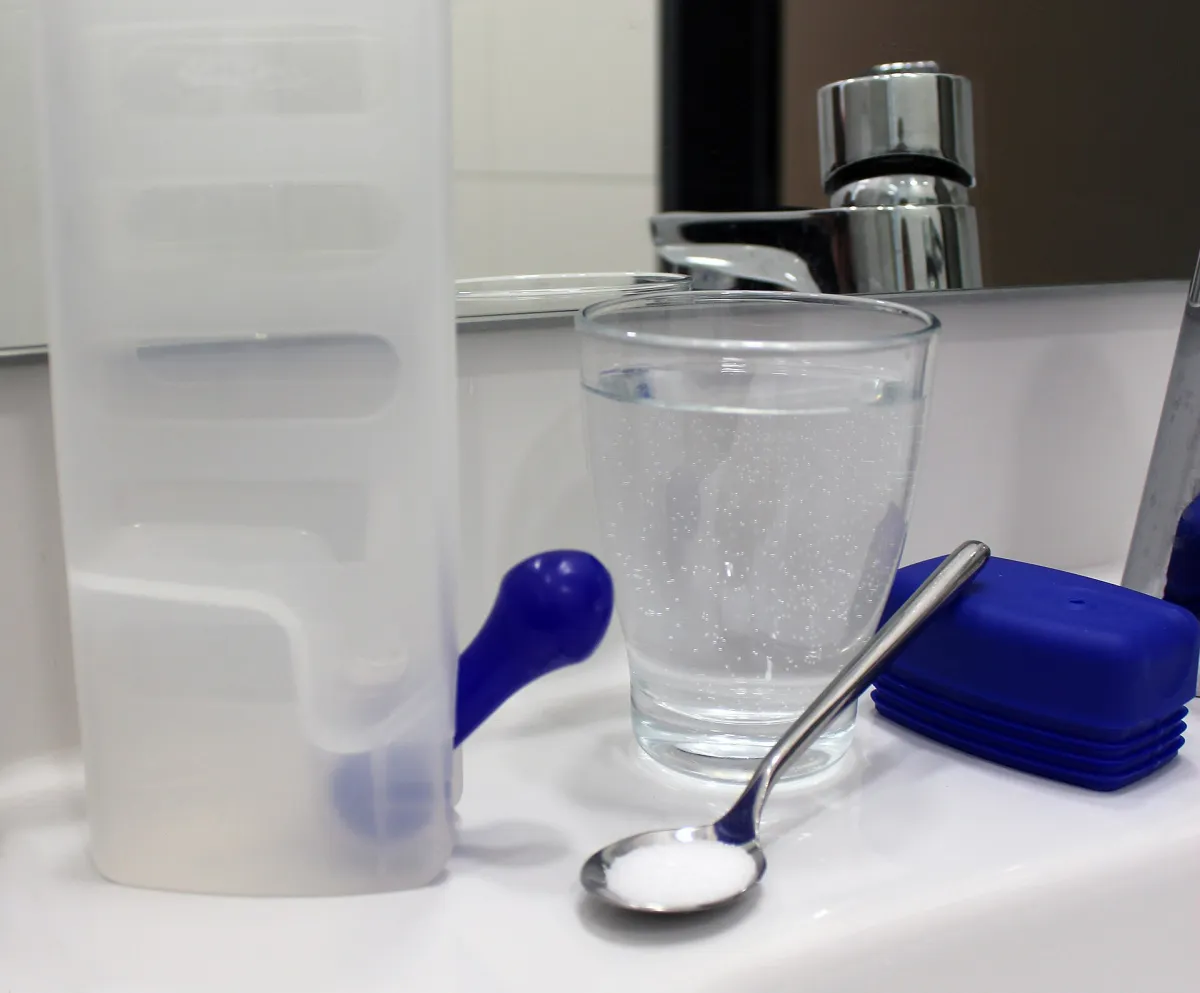
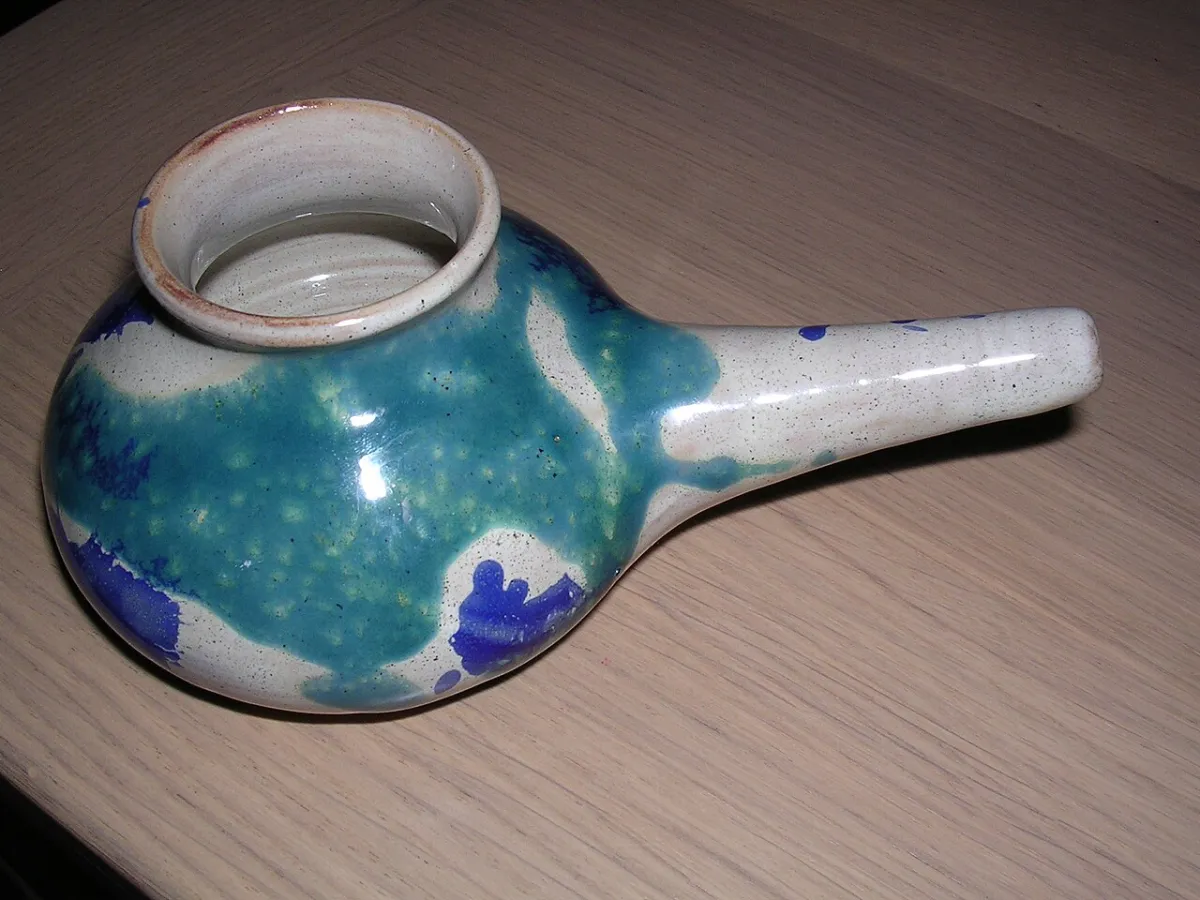
A saline nasal rinse is made with 4.5 g of non-iodised salt in 500 ml of boiled and cooled water (an isotonic 0.9% solution, like medical saline) or 9-10 g in 500 ml (a hypertonic solution of about 2%, for a very blocked nose). Using a neti pot or a squeeze bottle, you pour 120-150 ml through each nostril while leaning over the sink, once or twice a day. Cochrane reviews show that nasal irrigation reduces symptoms in chronic sinusitis and allergic rhinitis and may help with colds. The golden rule: never use water straight from the tap.
Romanian grandparents would sniff salty water from a cupped palm, and sailors swore that seawater “unblocks” the nose. Modern medicine kept the idea and turned it into one of the best-studied home remedies for the nose. Here is how to do it correctly and safely.
Key takeaways
- Isotonic (0.9%): one level teaspoon of salt (about 4.5-5 g) in 500 ml of water. Good for daily use.
- Hypertonic (2%): two level teaspoons in 500 ml of water. More effective for a very blocked nose, but it may sting.
- Water: boiled for 1 minute and cooled to lukewarm, distilled or sterile; use the solution within 24 hours.
- Volume: 120-150 ml per nostril, once or twice a day, for as long as symptoms last.
- For babies, use saline drops or spray and a nasal aspirator, not a high-volume rinse.
What a nasal rinse is and how it works
Nasal rinsing (irrigation) means passing a large amount of saline through one nostril so that it comes out of the other, washing the nasal cavity and part of the sinuses. Its effects are mainly mechanical:
- It removes thickened mucus, crusts, pollen, dust and other allergens.
- It improves the movement of the cilia, the tiny hairs that normally clean the nose.
- It reduces swelling of the lining, especially hypertonic solutions, which draw water out of tissue by osmosis.
- It moisturises a lining dried out by warm indoor air in winter.
Unlike herbal steam inhalations, which humidify and warm the air you breathe, a rinse actually reaches the lining and cleans it.
What the research says
- Chronic sinusitis: a Cochrane review (Chong et al., 2016) found that daily high-volume irrigation (about 150 ml per nostril) with hypertonic saline may improve symptoms at 3 months compared with no treatment. Rinsing is recommended in the European guidelines (EPOS) as part of treatment.
- Allergic rhinitis: a Cochrane review (Head et al., 2018) suggests that saline irrigation reduces nasal symptoms compared with no irrigation, without significant side effects.
- Colds and acute upper respiratory infections: the Cochrane review (King et al., 2015) found limited evidence, but some studies show relief of congestion and reduced need for decongestants, especially in children.
- After sinus surgery: a standard part of post-operative care.
| Situation | Recommended solution | Frequency | What the evidence shows |
|---|---|---|---|
| Cold, blocked nose | isotonic or hypertonic | 1-3 times a day, a few days | modest benefit for congestion |
| Acute sinusitis | isotonic or hypertonic | twice a day | supportive, eases discharge |
| Chronic sinusitis | hypertonic, high volume | 1-2 times a day, weeks to months | Cochrane: improvement at 3 months |
| Allergic rhinitis | isotonic | 1-2 times a day in season, evenings | Cochrane: reduces symptoms |
| Dry nose in winter | isotonic, low volume or spray | as needed | comfort |
Homemade saline recipe
Ingredients
- 500 ml water: boiled for 1 minute (3 minutes above 2,000 m altitude) and cooled to 35-37°C (95-99°F), or distilled or sterile water from a pharmacy;
- salt without iodine or anti-caking agents: additive-free coarse cooking salt, pure sea salt or pickling salt (4.5 g for isotonic, 9-10 g for hypertonic);
- optional: a pinch of baking soda (about 1-2 g), which makes the solution gentler and reduces stinging.
Method
- Boil the water for 1 minute in a clean pan, then let it cool, covered.
- Weigh the salt or use a level teaspoon (about 4.5-5 g of fine salt; coarse salt weighs less for the same volume).
- Dissolve the salt (and baking soda) in the lukewarm water. Stir until no crystals remain.
- Pour the solution into a clean, lidded container. Use it within 24 hours at room temperature; throw away what is left.
Why not tap water? Tap water is safe to drink because stomach acid destroys microorganisms, but it is not sterile. In the nose, some free-living amoebas (such as Naegleria fowleri) can reach the brain and cause an extremely rare but almost always fatal infection. The FDA and CDC have documented cases linked precisely to nasal rinsing with tap water.
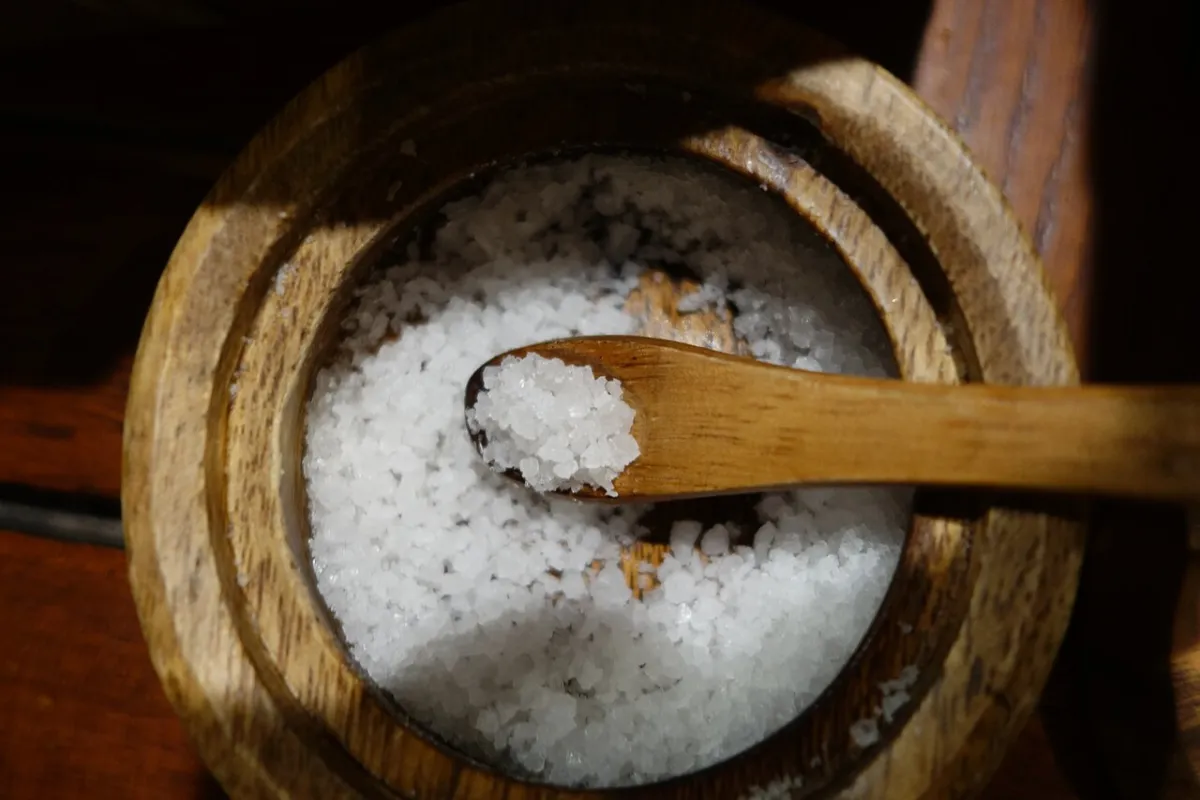 Photo: Relativity, CC BY-SA 4.0, via Wikimedia Commons
The right technique, step by step
With a neti pot
- Fill the pot with lukewarm solution (about 250 ml, for both nostrils).
- Lean over the sink and tilt your head sideways at about 45°, with your forehead slightly higher than your chin.
- Breathe through your mouth, keeping it open. Do not swallow or talk.
- Insert the spout into the upper nostril and pour slowly. The solution will come out of the lower nostril within 3-5 seconds.
- Use half the solution (120-150 ml), then blow your nose gently, without pressure, one nostril at a time.
- Repeat on the other side.
- Stay bent over for 30-60 seconds, then gently turn your head left and right so the remaining solution drains from the sinuses.
With a squeeze bottle
Same position, but squeeze the bottle gently to create a soft stream. It is easier to use than a neti pot and suits people with a very blocked nose.
For children
- Babies: 2-3 drops or one puff of sterile saline from the pharmacy in each nostril, then a nasal aspirator. No high volumes and no hypertonic solution.
- Children aged 2-6: sterile saline spray or pipettes, 2-5 ml per nostril, sitting up with the head tilted slightly forward.
- Children over 6 who cooperate: paediatric rinse bottles with 60-120 ml, under supervision.
Keeping the device clean
- Wash the pot or bottle after each use with hot water and a little washing-up liquid, rinse well and let it air-dry upside down.
- Once a week, disinfect it (boiling, the dishwasher if the manufacturer allows it, or diluted vinegar, then rinse).
- Everyone uses their own device.
- Replace plastic bottles every 3 months.
Contraindications and precautions
- Active ear infection or perforated eardrum: rinsing can push fluid towards the ear. See an ENT specialist.
- A completely blocked nose, where the solution cannot come out the other side: use a spray first, do not force it.
- Frequent nosebleeds, recent nose or sinus surgery: only on medical advice.
- Stinging: too much salt, or water too cold or too hot; adjust it or add baking soda.
- Do not add essential oils, iodine, vinegar, lemon, honey or garlic to the solution: they irritate and can damage the lining.
When to see a doctor
- sinusitis symptoms last more than 10 days or get worse after initial improvement;
- fever above 38.5°C (101.3°F), severe facial or tooth pain, swelling of the eyelids or face;
- visual disturbances, severe headache, stiff neck;
- discharge from one side only, foul-smelling or bloody;
- ear pain after rinsing.
Common mistakes
Unboiled tap water. The single most important mistake to avoid.
Iodised salt with anti-caking agents. It irritates the lining and stings.
A solution that is too strong. “More salt” does not mean more effect, just burning and dryness.
Blowing hard after rinsing. It can push fluid into the ears. Blow gently, one side at a time.
Keeping the solution for days. After 24 hours, throw it away.
Tipping your head back. The solution runs into your throat. Tilt your head sideways and forward, not back.
Conclusion
Saline nasal rinsing is one of the few folk remedies that has passed the test of modern research with flying colours: cheap, simple and effective for a blocked nose, chronic sinusitis and allergic rhinitis. The difference between a safe remedy and a risky one lies in the details: boiled or sterile water, additive-free salt, the right concentration and a clean device. For the throat, pair it with a herbal gargle; for fever or symptoms that don’t clear, see a doctor.
Frequently asked questions
How much salt per litre of water for a nasal rinse? 9 g (about 2 level teaspoons) for an isotonic solution; 18-20 g for a hypertonic one.
Can I use tap water? Only after boiling it for 1 minute and letting it cool. Unboiled water can contain microorganisms that are dangerous in the nose.
How often can I rinse my nose? Once or twice a day while you have symptoms. For chronic sinusitis or allergic rhinitis, daily and long-term, on your doctor’s advice.
Why does it sting? The concentration is wrong, the water is too cold or the salt contains additives. Add a pinch of baking soda and check the recipe.
Can I use sea salt? Yes, if it is pure, without iodine or anti-caking agents.
Is it safe for children? Yes, with sterile saline and small, age-appropriate volumes. For babies, only drops and an aspirator.
Do nasal rinses prevent colds? There is no clear evidence that they prevent infections, but they help clear the nose during them.
Sources
- Cochrane Database of Systematic Reviews: Chong L. Y. et al., Saline irrigation for chronic rhinosinusitis (2016).
- Cochrane Database of Systematic Reviews: Head K. et al., Saline irrigation for allergic rhinitis (2018); King D. et al., Saline nasal irrigation for acute upper respiratory tract infections (2015).
- FDA and CDC: guidance on safe use of nasal irrigation devices and the risk of Naegleria fowleri.
This content is for information only and does not replace medical advice. If nasal symptoms persist, or you develop fever, facial pain or visual disturbances, see a doctor.