
Spring Detox: Natural Plants and Methods for a Clean Body
IMPORTANT: A spring detox is not a crash diet and does not replace medical treatment. People with chronic kidney or liver disease, diabetes, high blood pressure, pregnant or breastfeeding women, children, and frail elderly people should NOT follow restrictive cures without their doctor’s approval. Many depurative plants (dandelion, nettle, artichoke) interact with medications (diuretics, anticoagulants, antidiabetics, blood-pressure drugs). If you experience dizziness, severe abdominal pain, palpitations, or feel unwell, stop and consult your doctor. Detoxing means supporting your eliminating organs, not forcing them.
Grandma Veta from the villages below the mountains had a ritual she observed religiously for as long as anyone could remember. At the first melted snow, when the ground still smelled of winter but the first little nettle leaves were already sprouting along the fence, she would grab a small basket and a pair of old gloves and head out “for greens.” She used to say that over the winter “the blood thickens from bacon and from sitting by the stove” and that a person must “renew themselves on the inside” along with nature. She made nettle soups, boiled dandelion tea root and all, and, whether we liked it or not, gave us a little glass of bitter green juice she called “the spring remedy.”
Back then it seemed like one of the old folks’ oddities. Today we understand that Grandma Veta was doing, in her own intuitive way, exactly what nutritionists recommend now: after the winter months of heavy food, few fresh vegetables, and little movement, spring is the natural moment to return to green, light foods rich in chlorophyll and water, and to support the liver, kidneys, and gut to work more efficiently. In this guide you will find everything you need to know about a smart, gentle, and safe spring detox.
What “detoxing” actually means
The human body already has an extraordinarily efficient detox system: the liver transforms toxic substances into easily eliminated compounds, the kidneys filter them from the blood and excrete them in urine, the gut evacuates waste, the lungs exhale unwanted gases, and the skin sweats. No plant and no tea “cleans” toxins in place of these organs. What a well-designed natural detox can do is support these organs: give them enough water, fiber, and antioxidants, plants that gently stimulate bile flow and renal elimination, and, above all, a break from the things that overload them (excess sugar, alcohol, fried foods, ultra-processed products).
That is why, in Romanian folk tradition, the “spring cure” was not a black fast, but the opposite: it was the shift from heavy winter food to the abundant spring greens — nettles, sorrel, lesser celandine, orache, wild garlic, dandelion. It was a gesture of nutritional common sense, repeated from one generation to the next.
Table of Contents
- Why spring is the ideal moment
- Signs that your body needs a “renewal”
- Traditional Romanian depurative plants
- Green juices and how to prepare them
- Detox teas: step-by-step recipes
- Eating during the spring cure
- Hydration, movement, and sleep
- A gentle 7-day plan
- Practical tips and common mistakes
- Conclusion
- Frequently Asked Questions
Why spring is the ideal moment
There is a deep logic in choosing spring for such a cure. First, it is the season when nature offers us “in abundance” exactly the foods we need: young spring plants are extremely rich in vitamins (especially vitamin C and folic acid), minerals (iron, magnesium, potassium), chlorophyll, and antioxidants. After a winter spent mostly on preserves, pickles, meat, and fats, the body “thirsts” for this fresh green.
Second, spring brings more light and more movement. The days grow longer, we go outside more, we move more — all of which help circulation, sweating, and metabolism. And an active metabolism is the fundamental ally of any real detox.
Not least, folk tradition associated spring with “renewal.” Just as a big spring cleaning was done in the house, a “cleaning” was done in the body too. This seasonal rhythm also makes sense for the mind: marking the start of a new cycle with healthy habits increases the odds we will keep them.
Signs that your body needs a “renewal”
The old folks read these signs in a person’s face and overall state. Here are those that, traditionally, indicated the need for a spring cure:
- Persistent tiredness, lack of energy in the morning, a general “heaviness”
- Pale, lackluster complexion, prone to blemishes or spots
- Sluggish digestion, bloating, a feeling of “fullness” after meals
- A whitish coating on the tongue in the morning
- Irregular bowel movements after the winter months
- Constant cravings for sweets and heavy food
- Sleep that does not truly rest you
None of these signs is a diagnosis — if they persist or are severe, they must be investigated medically. But in their mild, seasonal form, they often suggest that the body would benefit from a return to dietary simplicity.
Traditional Romanian depurative plants
Nettle — the “queen” of the spring cure
The nettle (Urtica dioica) is the emblematic detox plant in our tradition. It appears among the first, it is extraordinarily rich in iron, vitamin C, vitamin K, and chlorophyll, and has a mild diuretic effect, supporting renal elimination. Studies suggest that nettle has anti-inflammatory and metabolism-supporting properties. Traditionally it is eaten as soup, as a purée (instead of spinach), as fresh juice, or as tea from dried leaves.
How to make nettle soup: Gather the tender tops (with gloves!), wash them well, blanch them to remove the sting, then simmer with sautéed onion, rice, and a bunch of lovage. At the end, many add a splash of fermented bran sour (borș) or lemon juice. It is one of the most nourishing and depurative soups of spring.
Dandelion — the liver’s friend
Dandelion (Taraxacum officinale) is, in folk medicine, the liver plant par excellence. The leaves are eaten in salads (bitter, but they stimulate bile secretion and appetite), while the root is used for tea or even roasted “dandelion coffee.” Dandelion has a choleretic effect (stimulates bile production) and a mild diuretic action. Caution: it is contraindicated in obstructive gallstone disease and in those allergic to plants of the Asteraceae family.
Wild garlic — the garlic of the forest
Wild garlic (Allium ursinum) smells and tastes like garlic but is milder. Rich in sulfur compounds, vitamin C, and chlorophyll, it is traditionally valued for its “blood-cleansing” effect and for supporting digestion. It is eaten raw, chopped into salads, in pesto, or in soups (added at the end so it does not lose its properties).
Artichoke and black radish
Artichoke (Cynara scolymus) is one of the best-known hepatoprotective plants, used as a tincture or extract to support the liver and the digestion of fats. Black radish, in the form of juice with honey, is a folk remedy for stimulating bile. Both require caution in people with biliary problems.
Burdock, shepherd’s purse, horsetail
These plants round out the spring apothecary: burdock (root) is depurative and good for the skin, horsetail (Equisetum arvense) is remineralizing and diuretic, and shepherd’s purse has a tradition in regulating various functions. All are used moderately and for short periods.
Green juices and how to prepare them
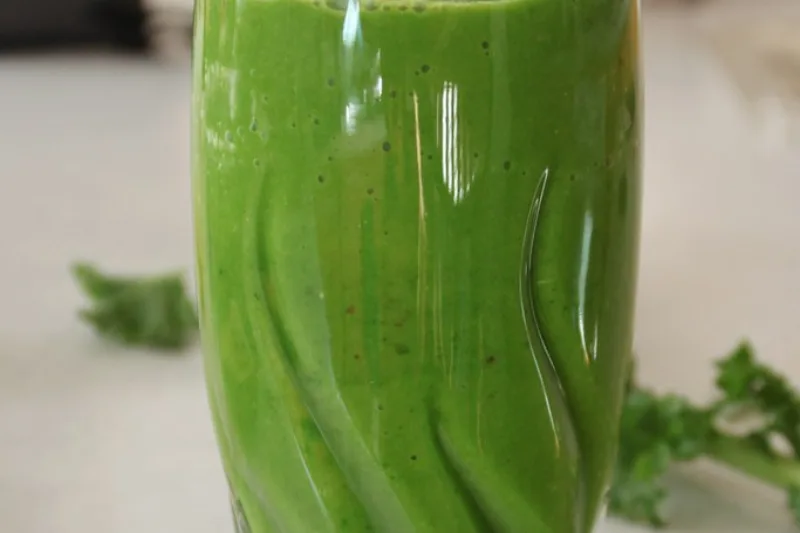
Green juice is probably the most modern face of the spring cure, but with old roots — Grandma Veta would press nettles through a piece of cheesecloth and obtain exactly such a juice. Their advantage: they concentrate the chlorophyll, enzymes, and minerals of green plants in an easily assimilated form.
Classic spring green juice (1 serving):
- A handful of fresh green leaves (young spinach, lightly blanched nettle, dandelion or wild garlic leaves)
- Half a cucumber (hydrating, gentle on the stomach)
- One stalk of celery (mildly diuretic)
- Half a green apple (for natural sweetness)
- The juice of half a lemon (vitamin C, helps iron absorption)
- A small piece of ginger (optional, for digestion)
- Water or coconut water to taste
Pass everything through a juicer or blend well and strain. Drink immediately, preferably in the morning on an empty stomach. Caution: green juices have a high content of potassium and oxalates — people with kidney disease, kidney stones, or those on medication should avoid them or seek their doctor’s advice.
If you do not have a juicer, you can make a green smoothie (pulp and all, so richer in fiber) using a blender and adding a little water. The smoothie has the advantage of fiber, which feeds the gut microbiota.
Detox teas: step-by-step recipes
Dandelion (root) tea
- Put one teaspoon of dried, chopped dandelion root into 250 ml of cold water.
- Bring to a boil and simmer gently (decoction) for 5–7 minutes.
- Let it steep, covered, for another 10 minutes.
- Strain and drink one cup in the morning, before a meal.
Typical cure: 1–2 cups a day for 2–3 weeks, with a break.
Nettle (leaf) tea
- Pour 250 ml of hot water (not vigorously boiling) over one teaspoon of dried nettle leaves.
- Cover and let steep for 8–10 minutes.
- Strain. You may drink 2 cups a day.
Nettle has a diuretic effect — drink enough water alongside it and do not consume it late in the evening.
Combined depurative tea
A balanced traditional combination: equal parts nettle, dandelion, horsetail, and mint (mint for taste and digestion). Prepare by infusion, one teaspoon of the mix per cup, 10 minutes. Drink over the course of 2 weeks, at most 2–3 cups a day.
Artichoke tea
Prepare according to the package instructions (usually a short infusion). It has a characteristic bitter taste and is taken before meals to support the digestion of fats. Not to be used in gallstone disease.
Eating during the spring cure
Real detoxing begins on the plate. Here are the dietary principles of a gentle and effective cure:
More green. Fresh greens at every meal: salads, vegetable cream soups, smoothies. Green means chlorophyll, fiber, vitamins, and water.
Less “heavy.” Temporarily reduce fatty meat, cured meats, fried foods, very fatty cheeses. Total elimination is not necessary — conscious moderation is.
No refined sugar or ultra-processed foods. This is probably the most important gesture. Giving up industrial sweets, fizzy drinks, and packaged snacks does more for “detoxing” than any tea.
Plenty of fiber. Vegetables, fruit, legumes, whole grains — fiber feeds the good bacteria in the gut and aids elimination. A gut that works well is the key to a real detox.
Good fats in measure. Extra-virgin olive oil, seeds, nuts, avocado — in reasonable amounts.
Light proteins. Fish, eggs, legumes, yogurt — to avoid losing muscle mass and to provide satiety.
Hydration, movement, and sleep
No tea works without these three pillars.
Water is the main “solvent” of detoxing. The kidneys need water to filter and eliminate. The general recommendation is to drink water steadily throughout the day, starting with a glass in the morning. Lemon water, so dear to tradition, is a pleasant way to start the day, although its “miraculous” effect is more myth than reality — its value lies in hydration and in the habit of starting the day with something healthy.
Movement stimulates circulation, sweating, and transit. Spring invites long walks, hikes, gardening. Sweating through exercise is a natural means of elimination.
Sleep is when the brain and body truly “clean” themselves at the cellular level. Studies suggest that during deep sleep the processes of clearing metabolic waste from the brain intensify. A spring cure without quality sleep is incomplete.
A gentle 7-day plan
This is not a fast, but a week of “resetting”:
- Days 1–2: Give up refined sugar, alcohol, fried foods. Drink 2 cups of depurative tea a day. Start each morning with a glass of water.
- Days 3–4: Add a green juice or smoothie in the morning. Meals based on vegetables, soups, salads. A daily walk of at least 30 minutes.
- Days 5–6: Keep the rhythm. Include a nettle or wild garlic soup. Go to bed earlier, aiming for quality sleep.
- Day 7: A “light” day, with simple meals, plenty of water, a large portion of greens, and a moment of conscious rest.
After this week, the idea is not to return to old habits, but to keep a few: more green, less sugar, more water and movement.
Practical Tips and Common Mistakes
Mistake no. 1: The black fast or extreme cures. Eating nothing for several days or consuming only juices does not “clean” better — on the contrary, it can slow metabolism, cause dizziness, and lead to loss of muscle mass. A gentle detox with real food is far more effective and safer.
Mistake no. 2: Overdoing diuretic plants. More does not mean better. Excessive consumption of nettle, dandelion, or horsetail can unbalance minerals and overload the kidneys. Respect the doses and take breaks.
Mistake no. 3: Ignoring contraindications. Depurative plants interact with medications. Anyone taking diuretics, anticoagulants, antidiabetics, or blood-pressure drugs must ask their doctor first.
Mistake no. 4: Foraging plants from unsuitable places. Never gather nettles, dandelion, or wild garlic from roadsides, near crops treated with pesticides, or from polluted areas. “Depurative” plants can become sources of toxins if foraged wrongly.
Mistake no. 5: Relying only on teas and ignoring lifestyle. No tea makes up for lack of sleep, a sedentary life, smoking, or a disastrous diet. Detoxing is a whole, not a single product.
Mistake no. 6: Confusing wild garlic with toxic plants. Wild garlic resembles the leaves of lily of the valley or autumn crocus, which are poisonous. Forage only if you are 100% sure (the garlic smell is the key).
Conclusion
A spring detox, as practiced by Grandma Veta and the generations before us, is neither a miracle diet nor an esoteric ritual. It is, in essence, a gesture of seasonal common sense: after the hard winter, we return to fresh green, to water, to movement, and to quality sleep, giving our eliminating organs the ideal conditions to do the work they do anyway, day after day. The traditional depurative plants — nettle, dandelion, wild garlic, artichoke — are precious allies, but they work best integrated into a healthy lifestyle, not as “magic remedies.” Listen to your body, respect moderation, beware of excess, and when in doubt, ask your doctor. Spring is nature’s invitation to return to simplicity — and the best “spring remedy” remains balance.
Frequently Asked Questions
Does plant detoxing actually work, or is it just a myth? Plants do not “extract” toxins as if by magic, but they can genuinely support the eliminating organs: some stimulate bile flow, others have a mild diuretic effect, and greens bring fiber and antioxidants. The real benefit comes from the whole — plants plus a clean diet, water, movement, and sleep.
How long should a spring cure last? Traditionally, 2–3 weeks are enough. Depurative plants are used for short periods, with breaks. Lifestyle changes (more green, less sugar) are, however, worth keeping all year round.
Can I follow a detox cure if I take medication? Only with your doctor’s approval. Many depurative plants interact with diuretics, anticoagulants, antidiabetics, and blood-pressure drugs. Do not improvise.
Are green juices better than smoothies? It depends on the goal. Juices concentrate the micronutrients but lose the fiber. Smoothies keep the fiber, which feeds the microbiota and provides satiety. For a gentle detox, the smoothie is often the more balanced choice.
Can I lose weight with a spring detox cure? Any weight loss comes from giving up sugar, alcohol, and heavy food, plus more movement — not from any “toxin elimination.” Extreme cures that promise rapid weight loss are risky and unsustainable.
Is it safe to forage nettles and dandelion myself? Yes, if you recognize them with certainty and gather them from clean areas, away from roads and treated crops. Use gloves for nettles and wash the plants well. With wild garlic, be very careful not to confuse it with similar toxic plants.
What symptoms show a cure suits me or, on the contrary, harms me? If you feel more energetic, your digestion improves, and your complexion clears, the cure suits you. If you experience dizziness, great weakness, abdominal pain, palpitations, or excessive urination, stop and consult your doctor.
Should I repeat the cure every season? Tradition speaks mainly of the spring cure and, possibly, a lighter one in autumn. More important than periodic “cures” is keeping healthy habits consistently, throughout the entire year.