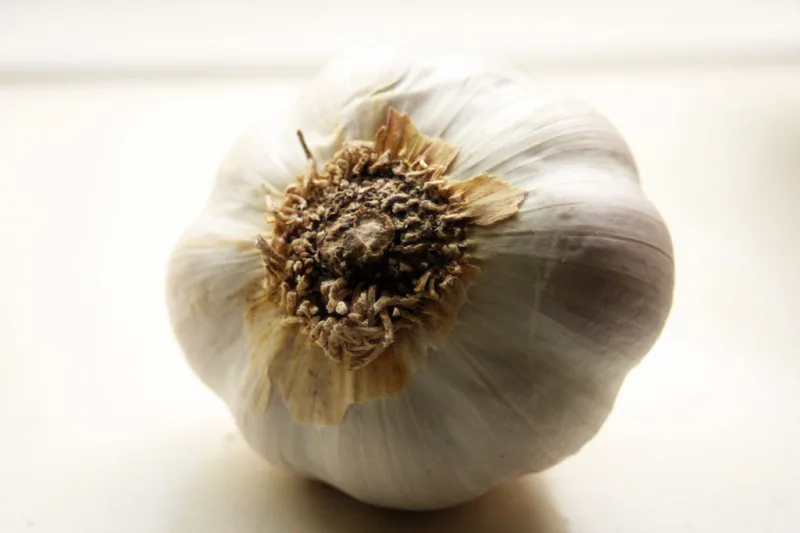
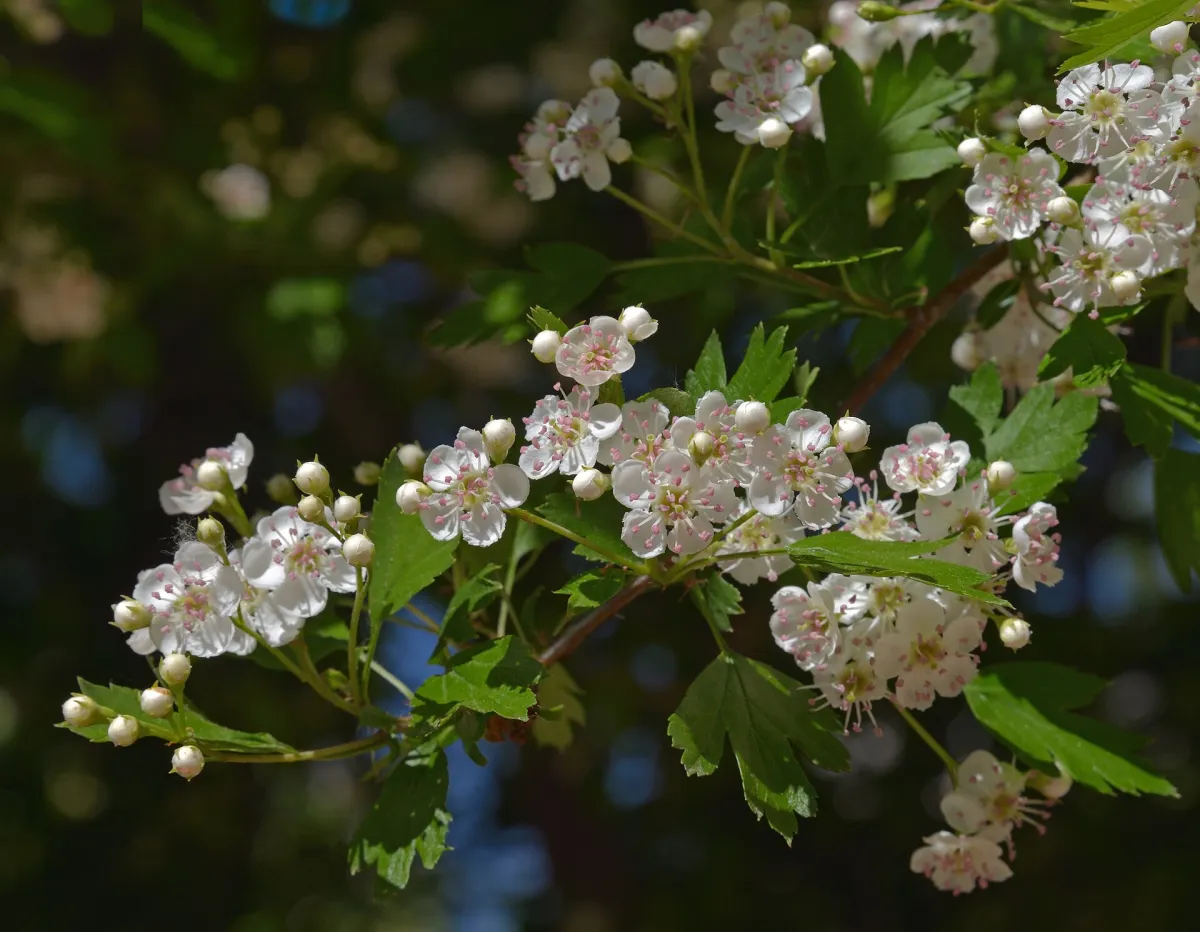
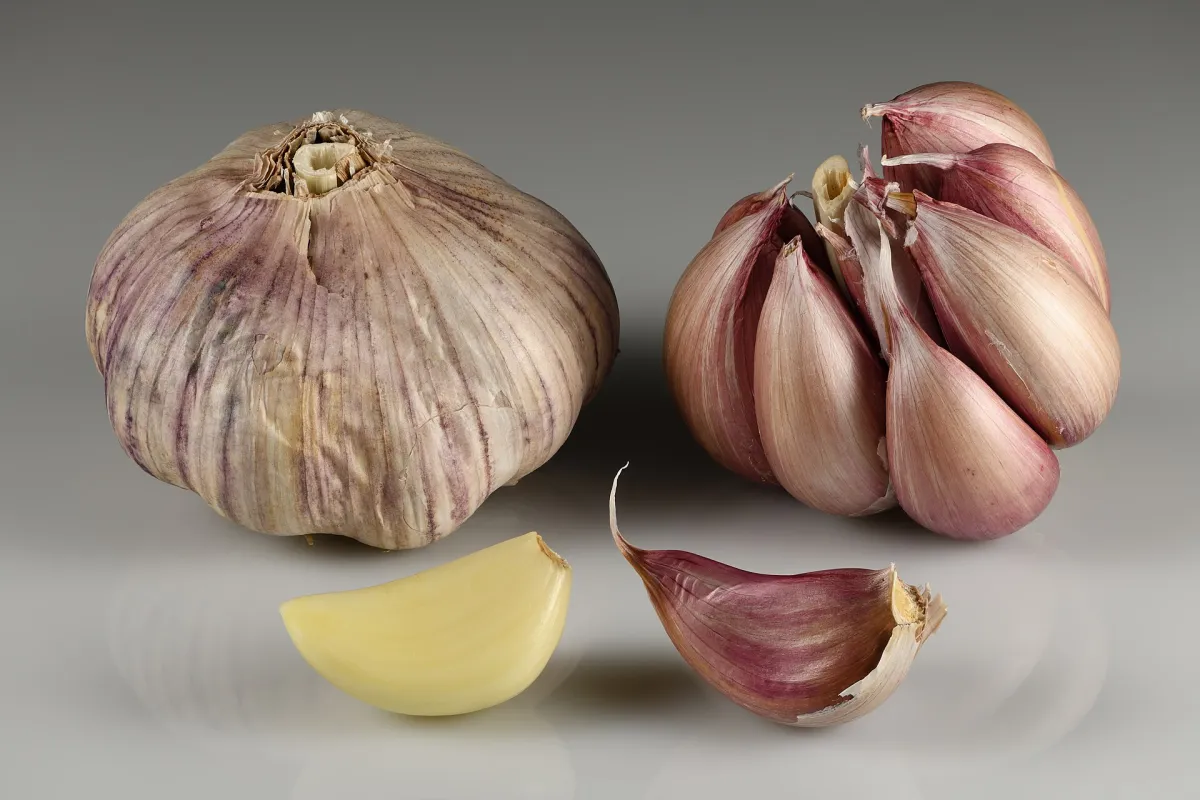
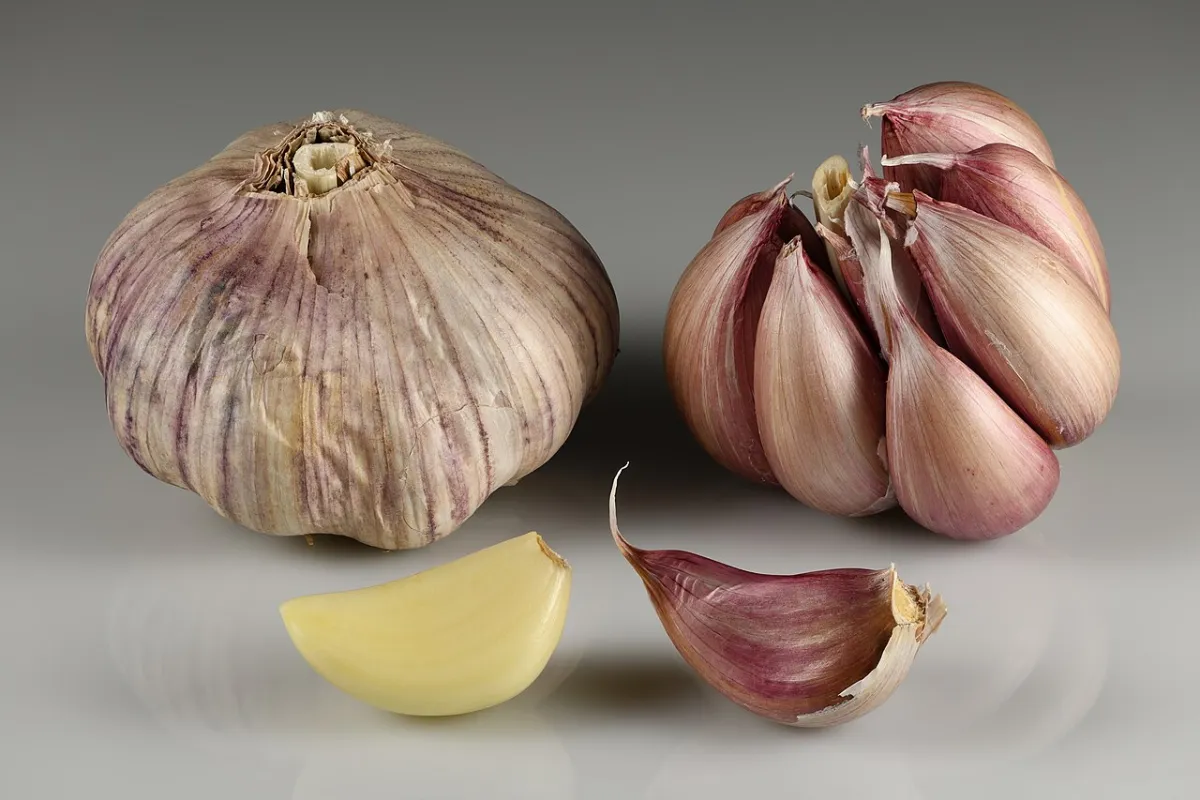
 Photo: Ivar Leidus, CC BY-SA 4.0, via Wikimedia Commons
The Tibetan garlic cure is a tincture made from 350 g of crushed garlic and 200 ml of 96% food-grade alcohol, macerated for 10 days somewhere dark and cool, then taken in drops diluted in 50 ml of milk, three times a day before meals: over the first 10 days the number of drops rises from 1 to 15 and falls back again, then you take 25 drops three times a day until the bottle is finished (about 2-3 months). Garlic has modest, proven effects on blood pressure and cholesterol, but there are no studies on the Tibetan cure itself, and people on blood thinners, with ulcers or with alcohol problems should not take it.
The recipe has circulated for decades in family notebooks and magazines across Eastern Europe, with a story about a Tibetan monastery, a UNESCO expedition and the promise that it “rejuvenates the blood vessels” and should be repeated every 5 years. The story cannot be verified. What we can do is give you the exact recipe, a clear schedule, what science says about garlic, and what to watch out for.
Key takeaways
- Ingredients: 350 g peeled garlic cloves and 200 ml of 96% food-grade alcohol (or 250 ml in some versions).
- Maceration: 10 days somewhere cool and dark, then strain and rest for 2-3 more days.
- How to take it: drops in 50 ml cold milk, 15-20 minutes before breakfast, lunch and dinner.
- Schedule: days 1-5 drops rise from 1 to 15, days 6-10 fall from 15 to 1, then 25 drops three times a day until finished.
- Not for people on blood thinners, or with ulcers, gastritis, pregnancy, breastfeeding, children, liver disease or alcohol dependence; stop 7-10 days before surgery.
What the Tibetan cure really is
Technically, the Tibetan cure is a concentrated garlic tincture: the alcohol extracts soluble compounds from the crushed cloves, and the rising-then-falling drop schedule lets the body get used to the taste and the irritant effect on the stomach. Milk masks the taste and protects the stomach lining.
You can read more about tinctures in general in the guide to herbal tinctures. For garlic as a food (eaten raw, macerated in honey, roasted), see the article on garlic. Here we focus on the cure’s recipe and its safety.
What garlic contains and what ends up in the tincture
Raw garlic contains alliin and the enzyme alliinase, kept apart in different cells. When you crush a clove they meet and form allicin, the pungent compound behind many of garlic’s studied effects. Allicin is unstable and within hours or days turns into other sulphur compounds: ajoene, diallyl sulphides, vinyldithiins. A matured alcohol tincture contains little allicin as such, but it does contain these derivatives, plus S-allyl cysteine, a stable, well-absorbed compound.
In practice: the tincture is not the same as raw garlic, nor as the standardised supplements tested in studies. Its effects may be similar, but they have not been measured.
What studies say about garlic
- Blood pressure. Meta-analyses (notably those led by Karin Ried) show that garlic supplements can lower systolic pressure by a few mmHg in people with hypertension, especially aged garlic extract. A Cochrane review found the evidence insufficient to draw conclusions about cardiovascular events and mortality.
- Cholesterol. A small effect on total and LDL cholesterol, in the range of a few percent, with inconsistent results between studies.
- Colds. A Cochrane review of garlic for the common cold found only one study of acceptable quality, not enough for a recommendation.
- “Cleaning plaque from the arteries”. There is no evidence that any tincture dissolves atherosclerotic plaque. Atherosclerosis is slowed by controlling blood pressure, cholesterol and blood sugar, quitting smoking and exercising.
| What is promised | What the evidence shows for garlic | What we don’t know |
|---|---|---|
| Lowers blood pressure | modest effect in hypertension (supplements) | the effect of the Tibetan tincture |
| Lowers cholesterol | small, inconsistent effect | the equivalent dose in drops |
| “Cleans the arteries”, “dissolves calcium” | no evidence | - |
| Boosts immunity, prevents colds | weak evidence | - |
| “Rejuvenates” the body | no evidence | - |
The Tibetan cure recipe, step by step
Ingredients and equipment
- 350 g peeled garlic cloves (about 5-6 large bulbs), preferably fresh, locally grown;
- 200 ml of 96% food-grade (rectified ethyl) alcohol, from a pharmacy or shop, never rubbing alcohol or methanol;
- a 500-700 ml glass jar with a lid, washed and scalded;
- a wooden or ceramic mortar, or a blender;
- double-layered gauze, a dark glass dropper bottle.
Preparation
- Crush the garlic into a paste. Leave the paste in the air for 10 minutes so allicin can form.
- Put the paste in the jar and pour the alcohol over it. Stir with a wooden spoon.
- Close the jar tightly, wrap it in paper or put it in a dark cupboard at 10-15°C (50-59°F) (a pantry or the bottom of the fridge). Some versions call for the fridge; what matters is that it does not sit somewhere warm.
- Shake the jar gently once a day for 10 days.
- Strain through double gauze and squeeze the paste well. The liquid is yellowish-green; a greenish tint is normal.
- Leave the tincture for 2-3 more days in the cold so the sediment settles, then pour it slowly into the dropper bottle, leaving the sediment behind.
You will get about 150-200 ml of tincture, enough for the whole cure.
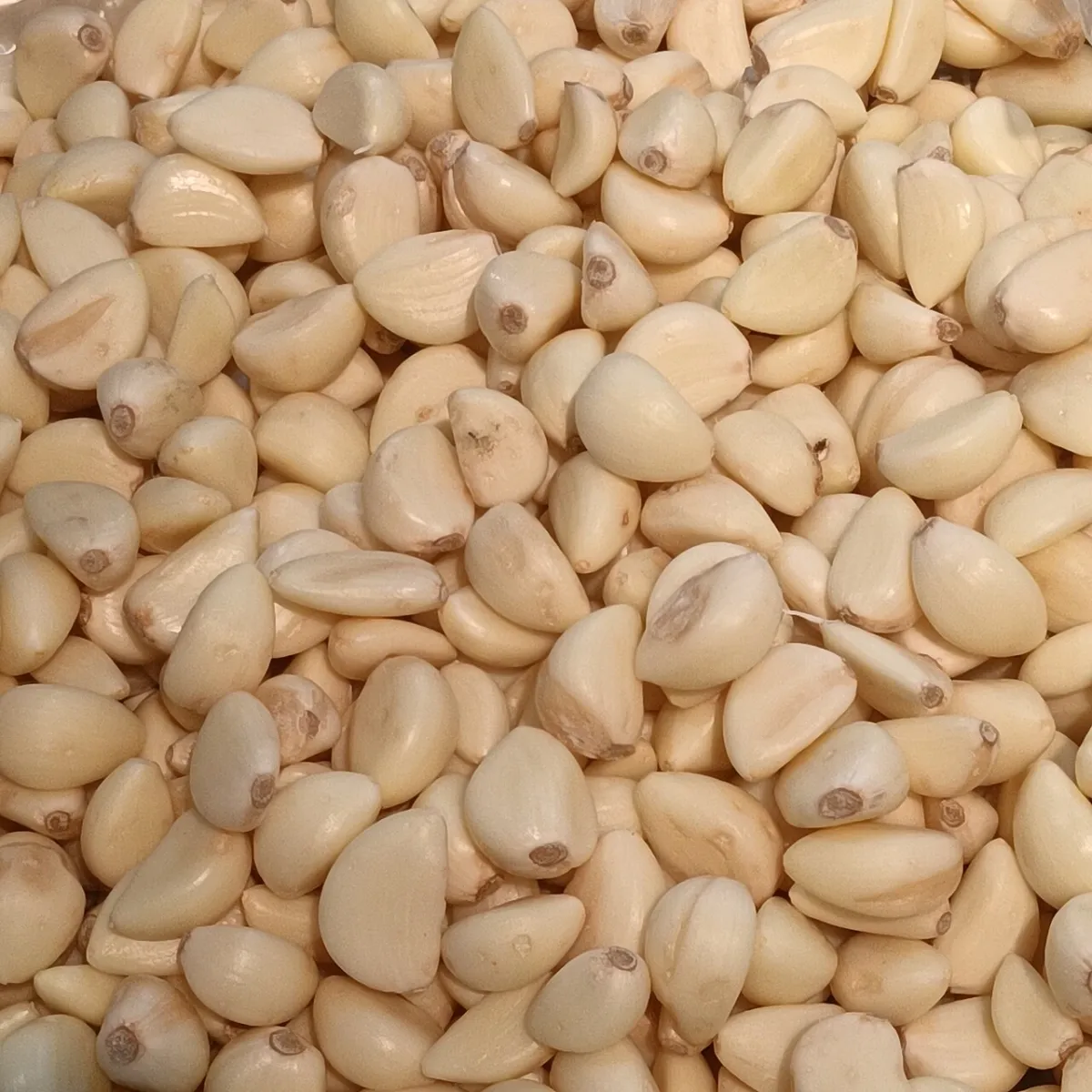 Photo: Fumikas Sagisavas, CC0, via Wikimedia Commons
Dosing schedule
The drops go into 50 ml of cold milk (or water, if you do not tolerate milk) and are taken 15-20 minutes before meals.
| Day | Morning | Lunch | Evening |
|---|---|---|---|
| 1 | 1 | 2 | 3 |
| 2 | 4 | 5 | 6 |
| 3 | 7 | 8 | 9 |
| 4 | 10 | 11 | 12 |
| 5 | 13 | 14 | 15 |
| 6 | 15 | 14 | 13 |
| 7 | 12 | 11 | 10 |
| 8 | 9 | 8 | 7 |
| 9 | 6 | 5 | 4 |
| 10 | 3 | 2 | 1 |
| 11 until finished | 25 | 25 | 25 |
Tradition says it should be repeated no sooner than 5 years later. It is one of the few “rules” of the cure that makes sense from a safety point of view: this is not a remedy to take continuously.
How much alcohol and garlic you actually get
One drop is roughly 0.03-0.05 ml. At 25 drops three times a day you take about 3-4 ml of tincture a day, around 3 ml of pure alcohol. That is a small amount for a healthy adult, but it is not zero: it matters for people who must avoid alcohol entirely, for professional drivers facing very sensitive tests and for anyone recovering from alcohol dependence.
Contraindications and interactions
- Anticoagulants and antiplatelet drugs (warfarin, acenocoumarol, rivaroxaban, apixaban, dabigatran, clopidogrel, daily aspirin): high doses of garlic may increase bleeding risk.
- Surgery and dental extractions: stop the cure 7-10 days before.
- Ulcers, gastritis, reflux: garlic and alcohol irritate the stomach lining.
- Pregnancy and breastfeeding: no, because of the alcohol and lack of data.
- Children and teenagers: no.
- Liver disease, pancreatitis, alcohol dependence, or treatment with disulfiram or metronidazole: no.
- Antiretroviral drugs (for example saquinavir): garlic can lower their blood levels.
- Low blood pressure or strong blood pressure medication: monitor your readings, as effects can add up.
- Allergy to garlic or onion.
Common side effects: garlic-smelling breath and sweat, heartburn, bloating, rarely allergic reactions.
When to see a doctor
The Tibetan cure is not a treatment for high blood pressure or high cholesterol. See a doctor if:
- your blood pressure is consistently above 140/90 mmHg;
- you have chest pain, breathlessness on exertion, palpitations or dizziness;
- unusual bleeding appears during the cure (gums, nose, unexplained bruises, black stools);
- you have persistent stomach pain, vomiting or dark stools.
Do not stop prescribed blood pressure or cholesterol medication to do the cure.
Common mistakes
Rubbing alcohol instead of food-grade alcohol. Rubbing alcohol contains additives and is not for consumption; methanol is deadly.
Taking the drops neat. This burns the tongue, oesophagus and stomach. Always dilute in milk or water.
Speeding up the schedule “to finish sooner”. Higher doses bring no extra benefit and increase stomach irritation.
Doing the cure “preventively” while on blood thinners. The bleeding risk is real.
Repeating it every year. The recipe itself calls for a break of several years.
Conclusion
The Tibetan garlic cure is a concentrated alcohol tincture with a clever dosing schedule and a good story. Garlic has real but modest effects on blood pressure and cholesterol, yet the cure itself has never been studied and does not “clean” the arteries. If you choose to do it, use food-grade alcohol, respect the dilution and schedule, and talk to your doctor first if you take medication or have stomach problems. Exercise, diet and blood pressure control remain the real “cure” for your blood vessels.
Frequently asked questions
How long does the Tibetan cure last? The first 10 days follow the rising and falling schedule, then you continue with 25 drops three times a day until the tincture runs out, usually another 6-10 weeks.
Can I use vodka instead of 96% alcohol? Some versions use 40% vodka, but extraction and preservation are weaker. The classic recipe calls for 96% food-grade alcohol.
Why is it taken with milk? To mask the taste and reduce stomach irritation. Water or plant milk work too.
When is the best time to do the cure? Tradition suggests autumn or winter. In practice, what matters is that you have no surgery planned and take no interacting medication.
Can I do the cure if I have high blood pressure? Only with your doctor’s approval and without stopping your treatment. Garlic’s effect can add to that of your medication.
Why did the tincture turn greenish? It is a normal reaction of garlic’s sulphur compounds, especially in garlic stored cold. It does not mean it has gone off.
How long does the tincture keep? In a dark bottle, kept cool, it lasts a few months, as long as the cure. Do not make it far in advance.
Sources
- Ried K. et al., meta-analyses on the effect of garlic on blood pressure and cholesterol, indexed in PubMed.
- Cochrane Database of Systematic Reviews: Garlic for the common cold (Lissiman et al.) and the review of garlic for hypertension (Stabler et al.).
- NCCIH: garlic fact sheet, including interactions with blood thinners.
This content is for information only and does not replace medical advice. If you take medication or have a chronic condition, talk to your doctor before starting any cure.