 Photo: Shixart1985, CC BY 2.0, via Wikimedia Commons
Chilblains (pernio) are red-purple swellings that itch and burn, appearing on the toes and fingers a few hours after exposure to damp cold. They are treated by gradual, not sudden, warming, by keeping the area warm and dry and by not scratching; they usually clear on their own in 1-3 weeks. Skin that is white, grey, hard and numb after intense cold is not a chilblain but frostbite, which needs a doctor urgently.
People often mix up the two, and the confusion can be dangerous. Chilblains are an inflammatory reaction of small blood vessels to cold, uncomfortable but benign. Frostbite is actual freezing of tissue, an injury that can destroy skin and even fingers or toes. This article focuses mainly on chilblains, but shows you clearly where natural remedies stop.
Key takeaways
- Chilblains appear in damp cold above freezing, in people with sensitive peripheral circulation.
- Warm up gradually: never by a fire, stove, hot water or rubbing with snow.
- Lukewarm soaks, calendula ointment and dry wool socks support healing.
- Smoking and tight shoes make chilblains much worse.
- Blisters, open sores or grey, numb skin need prompt medical care.
What chilblains are
Chilblains (pernio)
In the cold, small vessels in the fingers and toes narrow to conserve heat. In some people, on rewarming, the vessels reopen too fast and leak fluid and inflammatory cells into the tissue. The result is red or purplish patches or swellings that sting, itch intensely (especially in the evening, in the warmth) and sometimes hurt. They appear on toes, fingers, heels, ears and nose.
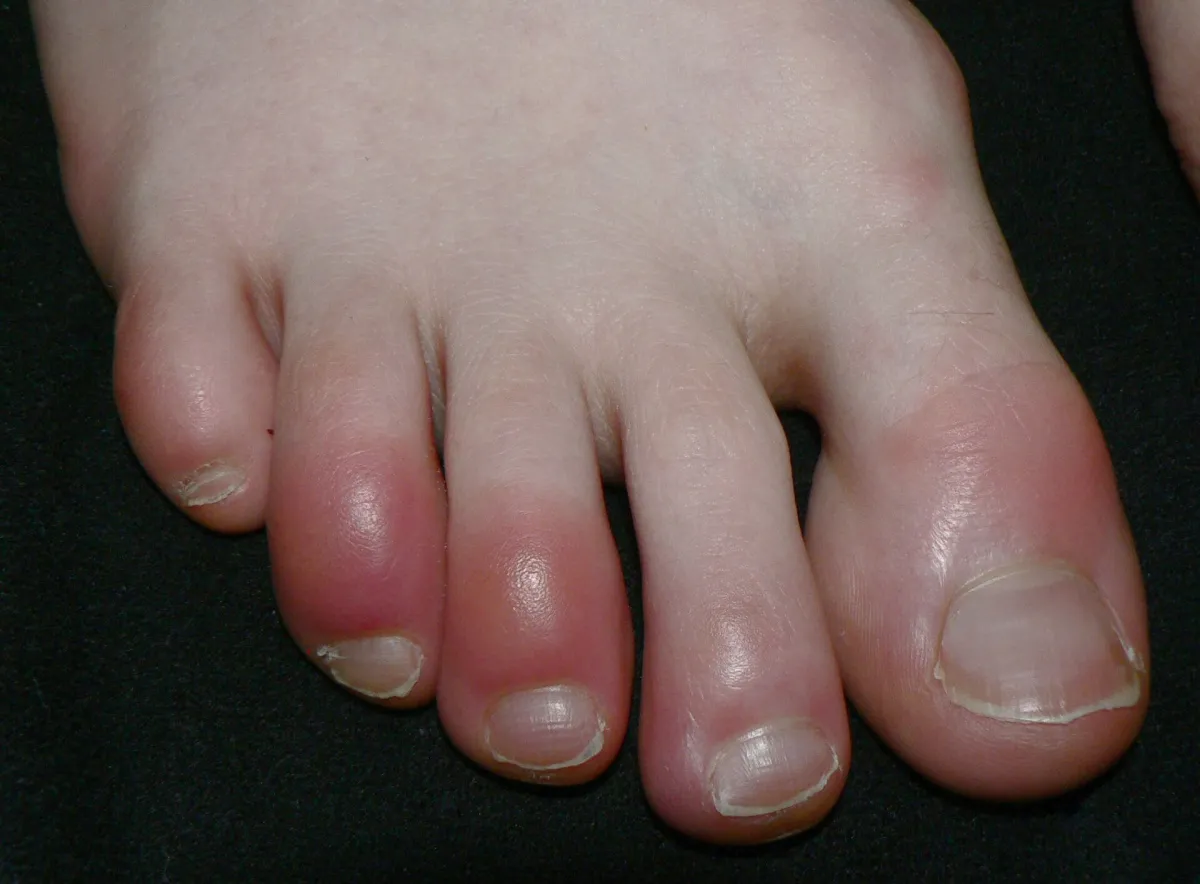 Photo: Sapp, Public domain, via Wikimedia Commons
Frostbite (frozen tissue)
It happens below 0 °C, especially with wind, damp, alcohol or wet clothing. The skin turns white or grey, hard, waxy and numb. After rewarming, large blisters may form, and in severe cases the skin turns black. It is a medical emergency.
| Feature | Chilblains | Frostbite |
|---|---|---|
| Temperature | Damp cold, above 0 °C | Below 0 °C, wind |
| Appearance | Red-purple, swollen | White, grey, waxy, then blisters |
| Sensation | Itching, burning | Numbness, loss of feeling |
| Course | Clears in 1-3 weeks | Can leave permanent damage |
| What to do | Home care | Emergency services or hospital |
Causes and risk factors
- Damp cold: wet shoes, walking through slush, working outdoors.
- Sensitive peripheral circulation: people with constantly cold hands and feet or Raynaud’s syndrome.
- Low body weight and little insulating fat.
- Smoking, which narrows blood vessels.
- Tight shoes, tight socks, thin gloves.
- Sudden warming: hands put straight on a radiator, feet plunged into hot water.
- Associated conditions: lupus, some blood disorders, diabetes (for frostbite).
Correct first aid
- Get out of the cold and remove wet clothes, socks and gloves immediately.
- Warm up gradually: hands in your armpits, feet wrapped in a blanket, in a warm room.
- Lukewarm, not hot water: if you use a soak, the water should feel comfortable to the elbow, around 37-39 °C, for 15-20 minutes.
- Do not rub the skin, with snow, a towel or alcohol. Rubbing damages fragile vessels.
- Stay away from fires, stoves and radiators: numb skin cannot feel a burn.
- Have a warm drink (tea, soup), not alcohol. Alcohol feels warming but increases heat loss.
Natural remedies for chilblains
Warm herbal foot soak
A lukewarm soak for 10-15 minutes, 1-2 times a day, eases the burning and helps circulation. Folk medicine added astringent and soothing herbs to the water:
- Oak bark: simmer 2 tablespoons in 1 litre of water for 10 minutes, strain and add to the basin. Its tannins are astringent, useful on swollen, unbroken skin.
- Chamomile: 3 tablespoons of flowers in 1 litre of boiling water, steeped for 15 minutes. Soothing for irritated skin.
Then dry the skin very well, including between the toes.
Calendula ointment
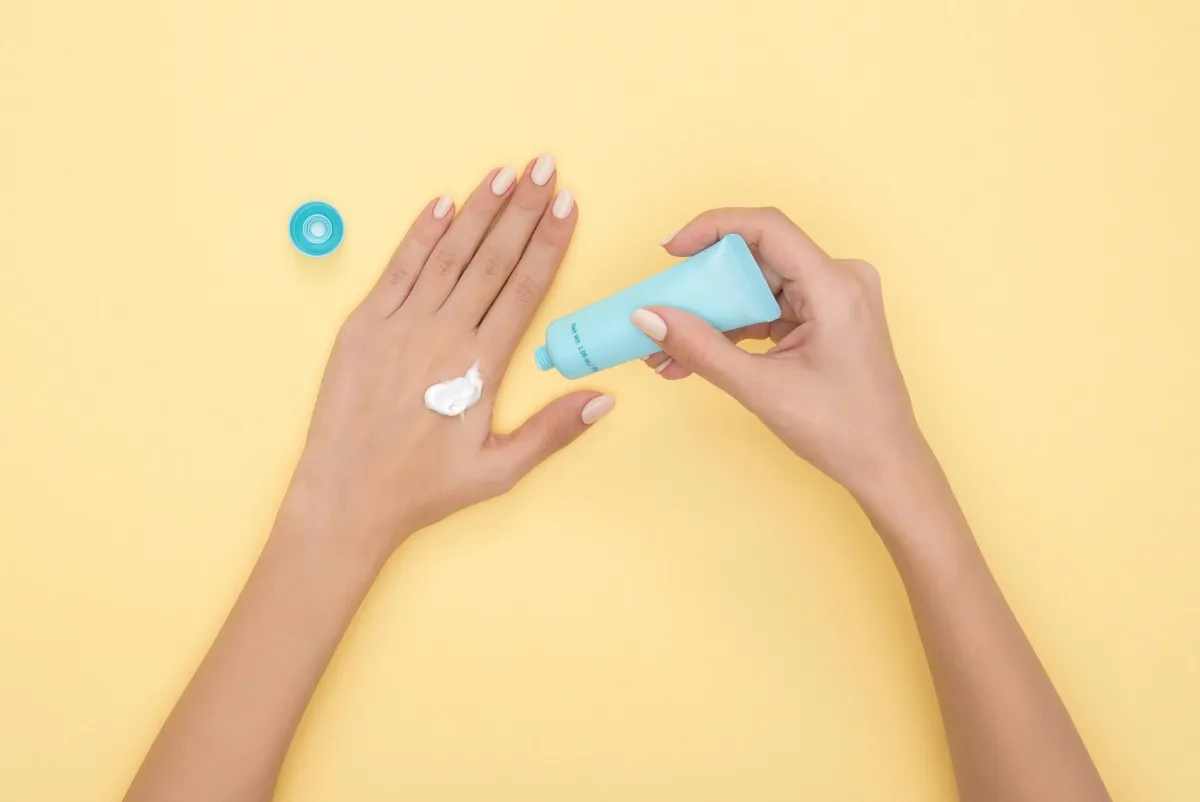
Calendula has a recognised traditional use for minor skin inflammation and healing small wounds. A calendula ointment applied thinly in the evening on chilblains without broken skin can soothe it. A home recipe is in our guide to calendula.
Gentle massage, around the area only
Once the chilblain is no longer acutely inflamed, light massage of the sole and calf, not the swollen toe itself, with warm vegetable oil stimulates circulation. Olive oil or St John’s wort oil are traditional choices.
Folk remedies with limited evidence
Grandmothers used water from boiled potatoes, rubs with roasted onion or celery juice. No studies support them, but warm, gentle ones do no harm on intact skin. Avoid rubs with vinegar, surgical spirit or raw garlic: they irritate already inflamed skin.
What to avoid
- Hot water, hot-water bottles or heaters placed directly on the skin.
- Scratching: the skin breaks easily and can become infected.
- “Warming” ointments with chilli or camphor on inflamed skin.
- Squeezing swollen toes into tight shoes.
- Alcohol and smoking.
Prevention in the cold season
| Measure | Why | How |
|---|---|---|
| Layers | A warm body sends more blood to the extremities | Three layers, the outer one waterproof |
| Dry wool socks | Wool insulates even when slightly damp | Change them at once if they get wet |
| Comfortable shoes | Unrestricted circulation | One size with room for a thick sock |
| Thick gloves or mittens | Fingers warm each other | Mittens are warmer |
| Hat and scarf | You lose a lot of heat through your head | Always below 5 °C |
| Movement | Gets the blood flowing | Wiggle toes, walk, do not stand still |
| No smoking | Vessels stay open | Ask your doctor for help quitting |
Skin that goes through repeated chilblains is often dry and cracked as well; a protective routine is in our guide to cracked hands.
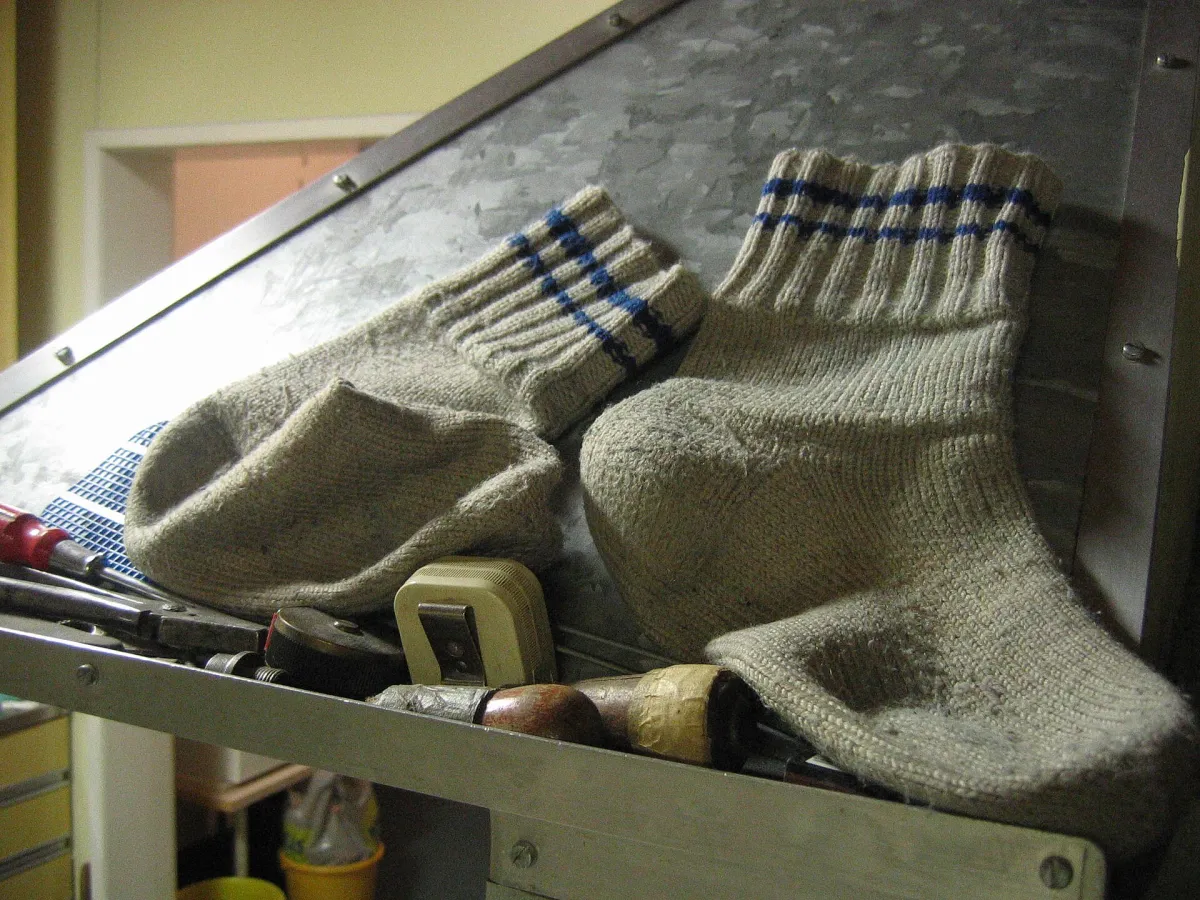 Photo: SeppVei, Public domain, via Wikimedia Commons
Contraindications and precautions
- Diabetes, neuropathy, peripheral arterial disease: heat sensitivity is reduced; test water with your elbow or a thermometer and see a doctor for any lesion.
- Allergy to the daisy family (Asteraceae): calendula and chamomile can cause reactions.
- Oak bark should not be used on open wounds or large areas of damaged skin.
- St John’s wort oil can make skin more sensitive to sunlight; apply it in the evening.
- Children and older adults lose heat faster; check their fingers and toes often.
When to see a doctor
- The skin was white, grey or hard and numb (suspected frostbite).
- Blisters appear, especially with bloody fluid, or open sores or black areas.
- There is pus, spreading redness or fever.
- Chilblains return every winter, appear even in mild cold, or last more than 3 weeks.
- You also have joint pain, a facial rash or marked fatigue (possibly an autoimmune disease such as lupus).
- You have diabetes or known circulation problems.
A doctor may recommend vessel-dilating treatment for recurrent cases or tests for an underlying cause.
Common mistakes
Rubbing with snow. An old and harmful myth: it cools further and injures the skin.
Warming up by the stove. Numb skin burns without you feeling it.
Popping blisters. Blisters protect the skin underneath; let a doctor decide.
Going back into the cold before healing. Damaged skin gets chilblains more easily the second time.
Wet cotton socks. Wet cotton chills; wool and technical fabrics insulate better.
Conclusion
Chilblains are a reaction of small vessels to damp cold and heal on their own if you warm the skin gradually, keep it warm and dry and do not rub it. Lukewarm soaks with chamomile or oak bark, calendula ointment and dry wool socks make recovery more comfortable. White, grey, numb skin, blisters or sores are not for home remedies: they need a doctor, quickly.
Frequently asked questions
How long do chilblains last? Usually 1-3 weeks. Itching eases within a few days if you avoid cold and sudden warming.
Should I put cold-damaged feet in hot water? No. The water should be lukewarm, around 37-39 °C. Hot water worsens inflammation and can burn numb skin.
Why do chilblains itch in the evening? In the warmth vessels dilate and inflammation and itching increase. Avoid sitting with your feet next to a radiator.
Do chilblains leave marks? Usually not. Frostbite can leave scars, cold sensitivity and, rarely, tissue loss.
Can I get chilblains without freezing temperatures? Yes. Chilblains typically appear in damp cold between 0 and 10 °C, especially in spring and autumn.
What ointment can I use on chilblains? On intact skin, a calendula ointment or a simple emollient cream. On sores or blisters, only what your doctor recommends.
Are children more prone to chilblains? Young children lose heat faster and do not always say they are cold. Check their fingers and change wet gloves straight away.
Sources
- NHS (UK): Chilblains and Frostbite, symptoms, care and emergency signs.
- American Academy of Dermatology (AAD): Chilblains (pernio).
- EMA/HMPC: Community herbal monographs on Calendula officinalis and Quercus cortex (oak bark).
- PubMed reviews on pernio and its management.
Informative content only. It does not replace medical advice. For suspected frostbite, call emergency services.