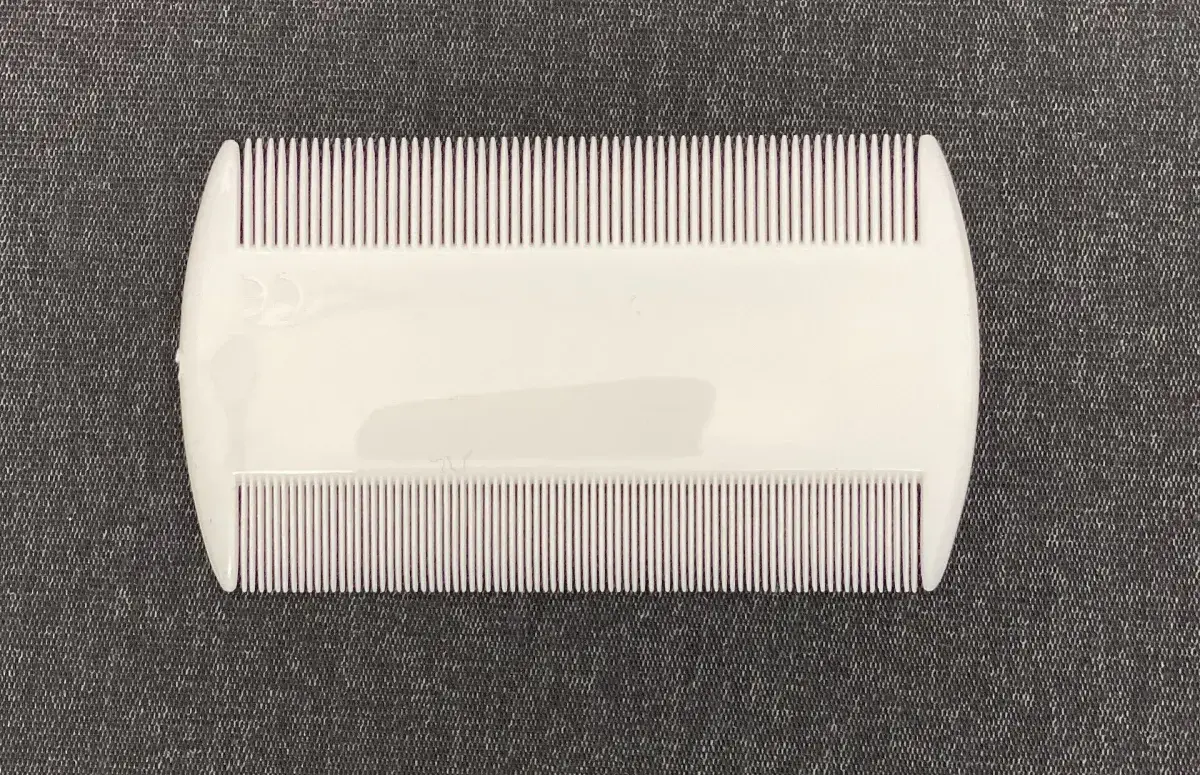
 Photo: Whispyhistory, CC BY-SA 4.0, via Wikimedia Commons
The most reliable natural way to get rid of head lice is wet combing with a fine-toothed metal nit comb, done on hair soaked in conditioner every 3-4 days for at least two weeks. The comb removes live lice and many nits, and repeating it catches the young lice that hatch from any eggs left behind. Oils and vinegar can help as add-ons, but none of them replaces methodical combing.
Lice are not a sign of poor hygiene and they are not dangerous: in Europe they do not spread disease and they cannot jump from head to head. They are, however, maddening, especially when they come back for the third time in the same autumn after the children return to nursery or school. The good news is that once you understand their life cycle, you can clear them patiently without harsh products or, worse, dangerous internet “recipes”.
Key takeaways
- Lice spread almost exclusively through direct head-to-head contact, not through pillows, pets or the air.
- Wet combing with a fine metal comb, repeated every 3-4 days for 14 days, is the backbone of any natural treatment.
- Tea tree and lavender oil have early evidence but can irritate the scalp; do not use them under age 2-3.
- Vinegar does not kill lice; it only loosens the “glue” that holds nits.
- Petrol, kerosene, garden insecticides and hair dye are dangerous and must never be used.
What lice are and what nits look like
The head louse (Pediculus humanus capitis) is a wingless, grey-brown insect about 2-3 mm long that lives only on the human scalp and feeds on blood several times a day. The female lays 5-10 eggs a day, cemented to the hair shaft very close to the scalp, usually within 1-4 mm of the root. These eggs are called nits.
Nits look like small oval specks, whitish-yellow or grey, that do not come off when you blow on the hair or shake it. That is how you tell them apart from dandruff, which falls away easily. Live nits sit close to the scalp; those more than 1 cm from the root are usually empty shells or dead.
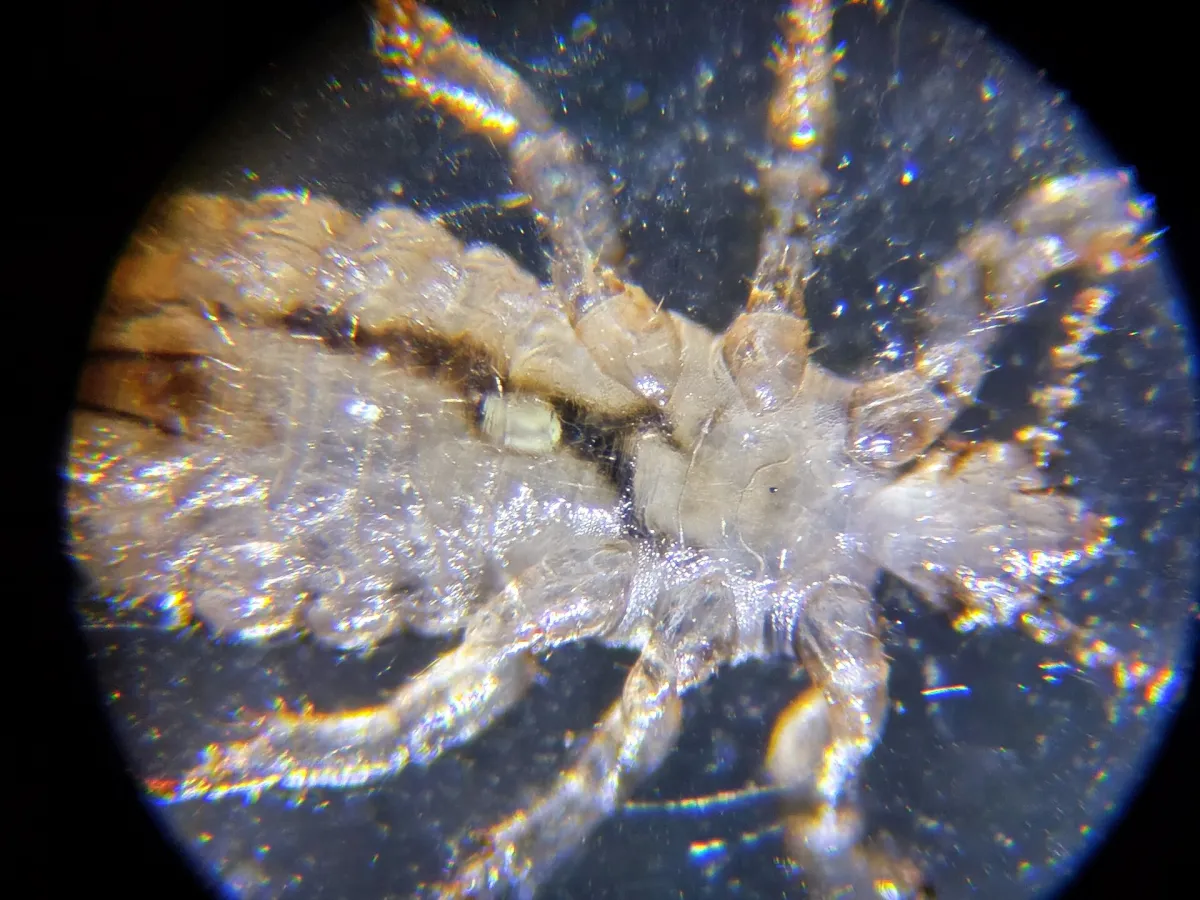 Photo: Korinna, CC BY 4.0, via Wikimedia Commons
The life cycle: the key to treatment
The life cycle explains why one treatment is almost never enough:
| Stage | Approximate duration | What it means for you |
|---|---|---|
| Nit (egg) | 7-10 days to hatch | Eggs survive most treatments |
| Nymph (young louse) | 7-10 days to adulthood | Cannot lay eggs yet |
| Adult | about 3-4 weeks on the head | Females lay eggs daily |
| Off the scalp | 1-2 days | No need to disinfect the house obsessively |
The practical lesson: if you comb or treat once and stop, the surviving eggs hatch a week later and everything starts again. Repeating every 3-4 days for at least 14 days catches each new generation before it can lay eggs.
Causes and how lice spread
Lice cannot jump or fly. They crawl quickly from one hair to another, so transmission almost always happens through direct head-to-head contact: play, hugs, selfies, sharing a bed. Spread through hats, brushes or pillows is possible but much rarer than people think.
A few myths worth clearing up:
- Lice are not linked to hygiene. They cling just as well to hair washed every day.
- Pets do not carry human lice. Dogs and cats have their own species-specific parasites.
- Long hair does not “attract” lice, but it makes them harder to find and to comb out.
- Itching does not start right away. With a first infestation it may appear only after 4-6 weeks, as an allergic reaction to louse saliva.
How to recognise an infestation
Typical signs are an itchy scalp (especially behind the ears and at the nape), a feeling that “something is moving” in the hair, restless sleep and, in children who scratch a lot, small scratches or crusts on the back of the neck. A firm diagnosis means finding a live louse. Nits alone, especially those far from the scalp, do not prove an active infestation.
The best way to check is the nit comb itself, on wet hair with conditioner: lice slow down and the conditioner makes them easy to spot on the comb teeth or a white tissue.
Natural remedies: what works and what does not
Wet combing (the main method)
This is the insecticide-free method recommended by the NHS and the only “natural” remedy with solid support. You need a special comb with metal teeth spaced 0.2-0.3 mm apart, a cheap hair conditioner, a white towel and patience.
- Wash the hair with normal shampoo and apply plenty of conditioner without rinsing.
- Detangle with an ordinary comb.
- Divide the hair into sections and pull the nit comb from the root (touching the scalp) to the tip.
- After each stroke, wipe the comb on a white tissue and check what came out.
- Work section by section until you have covered the whole head twice. It takes 15-30 minutes for short hair and 45 minutes or more for long hair.
- Rinse out the conditioner and clean the comb in very hot water.
Repeat on days 1, 5, 9 and 13. If you find no live lice at the last session, the infestation is over.
Vegetable oils and “smothering”
Olive oil, coconut oil or thick conditioner left on overnight under a shower cap are popular remedies. Studies do not show that they reliably kill lice, but oil slows the insects down and makes combing easier. Use it as a comb lubricant, not as a stand-alone treatment. You can read more about it in our guide to coconut oil.
Essential oils: tea tree and lavender
Some laboratory work and small clinical studies suggest that tea tree oil and lavender oil act on lice and may reduce egg hatching. The data are limited, though, and products vary widely in strength. Essential oils can also cause irritation and contact allergy.
If you want to use them on a child over 6: 5-10 drops of essential oil in 50 ml of carrier oil, applied to the scalp and left for 30-60 minutes, followed by wet combing. Do a patch test on the forearm 24 hours beforehand. Never use them undiluted and never on children under 2-3.
Apple cider vinegar
Vinegar does not kill lice. It may soften the substance that glues nits to the hair, making them easier to comb out. A rinse of one part vinegar to two parts water, left for 10 minutes before combing, is reasonable. Do not use it on a scratched scalp (it stings) and do not combine it with other treatments on the same day. Other cosmetic uses are covered in our article on apple cider vinegar for beauty.
Dimeticone, an insecticide-free alternative
It is not an herbal remedy, but it deserves a mention: dimeticone lotions (a silicone) coat lice and kill them physically, without neurotoxins, and lice do not develop resistance. The NHS lists them as a first-line option alongside wet combing, which makes them a good choice for families who avoid insecticides.
Quick comparison of methods
| Method | What the evidence shows | Safety | How to use it |
|---|---|---|---|
| Wet combing | Effective if repeated correctly | Very safe, any age | Days 1, 5, 9, 13 |
| Dimeticone | Effective, no resistance | Safe; flammable until dry | 2 applications 7 days apart |
| Tea tree oil | Preliminary data | Irritation risk, not under 3 | Diluted, plus comb |
| Olive / coconut oil | Does not reliably kill | Safe | Lubricant only |
| Vinegar | Does not kill lice | Stings on scratches | For nits only |
| Petrol, kerosene, insecticide | Dangerous | Burns and poisoning | Never |
A 14-day plan for the whole family
- Day 0: check every family member with wet combing. Treat only those with live lice.
- Day 1: first full combing session (or first dimeticone application). Wash pillowcases and hats used in the last 2 days at 60 °C.
- Days 5 and 9: repeat sessions. Now you catch the lice that have just hatched.
- Day 13: check session. No live lice means success.
- Afterwards: a weekly check during hair washing, especially in the first month of school.
Things you cannot wash (soft toys, headphones) can go in a sealed bag for 2 days. There is no need for insecticide sprays at home or obsessive vacuuming of the sofa.
Contraindications and precautions
- Children under 2: wet combing only. No essential oils, no alcohol-based products.
- Pregnancy and breastfeeding: wet combing and dimeticone are preferred; avoid concentrated essential oils.
- Asthma and allergies: essential oils can trigger attacks or contact dermatitis.
- Irritated or infected scalp: do not apply vinegar, alcohol or essential oils to scratches.
- Never use petrol, kerosene, diesel, pet or garden insecticides, hair dye or bleach. They have caused serious burns and poisoning in children.
When to see a doctor
See your family doctor or paediatrician if:
- the scalp has yellow crusts, pus, swollen glands at the nape or fever (signs of secondary infection);
- itching and rash continue after you no longer find lice (it may be dermatitis, eczema or pruritus from another cause);
- you find lice in the eyebrows or eyelashes;
- the infestation persists after two correct 14-day cycles;
- the patient is a baby.
Common mistakes
A single treatment. The most common reason lice “keep coming back” is not reinfestation but surviving eggs.
A plastic comb. Plastic combs flex and let small lice slip through. Invest in a good metal comb.
Combing dry hair. On dry hair, lice run and hide. Conditioner slows them down.
Treating everyone “just in case”. Treat only people with live lice. Preventive treatments irritate the scalp for no benefit.
Panic and shame. Lice are not a hygiene problem. Tell the nursery or school discreetly so other children are checked, otherwise the cycle repeats.
Cutting the hair very short. Not necessary. It only makes combing easier; it does not cure anything.
Conclusion
Head lice are cleared with method, not with harsh chemicals. Wet combing repeated according to the louse life cycle, possibly supported by dimeticone, solves the great majority of cases. Natural oils and vinegar can make combing easier, but they are not miracles. With a 14-day plan, checking the whole family and some patience, you can get rid of lice for good without putting your child at risk. If your little one’s scalp is left flaky or crusty afterwards, our guide to cradle cap and baby scalp care may also help.
Frequently asked questions
How long do lice live off the head? Usually 1-2 days. Without blood they dry out quickly. Nits that fall off the hair cannot hatch at room temperature, so there is no need to disinfect the house.
Can lice jump from one child to another? No. Lice do not jump or fly. They crawl from hair to hair during direct head-to-head contact.
Does vinegar kill nits? No. Vinegar only softens the glue that holds nits to the hair and makes them easier to remove with the nit comb.
Can my child go to school with lice? Most paediatric guidelines say exclusion is not needed once treatment has started. Still, check the school’s rules and let the teacher know.
Does tea tree oil prevent lice? Some small studies suggest a repellent effect, but the evidence is weak. A weekly check with a nit comb is safer prevention.
Why does my child have lice again after a month? Either eggs survived (treatment was not repeated enough) or the child was reinfested by a classmate or an untreated family member. Check everyone.
Can I use an anti-lice shampoo and oils on the same day? It is not advisable. Combinations increase the risk of irritation. Follow the product instructions and use oil only as a lubricant for combing on the following days.
Sources
- NHS (UK): Head lice and nits, guidance on wet combing and treatments.
- CDC (Centers for Disease Control and Prevention): Head Lice, information for parents and schools.
- American Academy of Pediatrics: clinical report “Head Lice”, published in Pediatrics.
- PubMed reviews on dimeticone and essential oil treatments for pediculosis.
Informative content only. It does not replace medical advice. For babies, pregnant women or complicated infestations, ask a doctor or pharmacist.