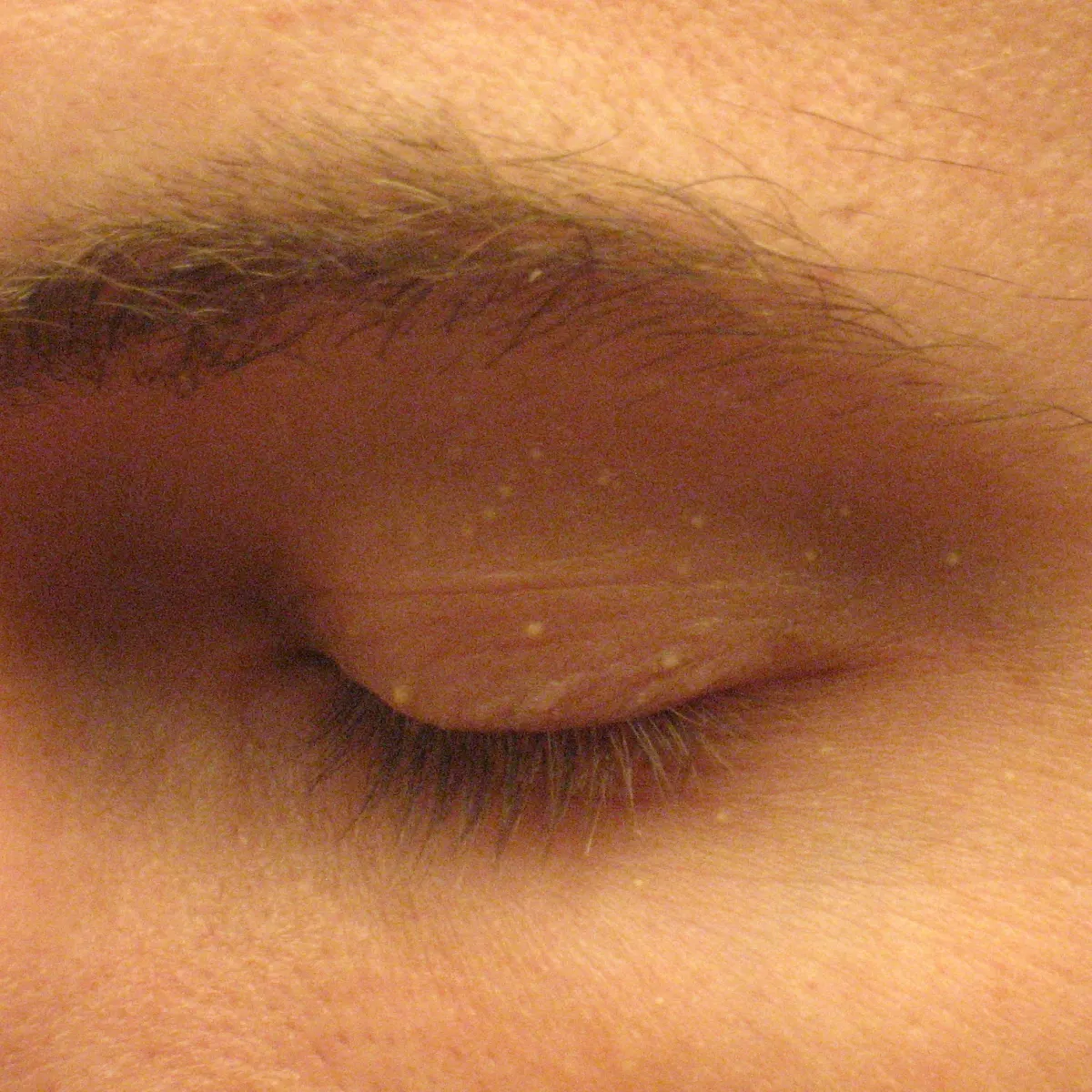
 Photo: Alan Swartz, CC BY 2.0, via Wikimedia Commons
Ingrown hairs happen when a cut or plucked hair grows back into the skin instead of rising to the surface, causing a red bump, sometimes with pus, that itches or hurts. Most clear up on their own within 1-2 weeks if you leave them alone: warm compresses 2-3 times a day, gentle exfoliation and a break from shaving the area. In the long run, prevention depends on your shaving or hair-removal technique, not on miracle creams.
The problem is more common in people with curly or coarse hair, on the beard, neck, armpits, legs and bikini line. In men who shave daily, the chronic form has a medical name: pseudofolliculitis barbae, better known as razor bumps. The good news is that by adjusting a few habits, most people get rid of it almost completely.
Key takeaways
- An ingrown hair is a hair that curls back into the skin; the body treats it as a foreign object and inflames.
- Warm compresses and gentle chemical exfoliation (salicylic or glycolic acid) free the hair without trauma.
- Aloe vera soothes irritation; diluted tea tree oil may help inflamed bumps.
- Do not dig into the skin with tweezers or needles: you raise the risk of infection, dark marks and scars.
- Severe pain, local heat, fever or bumps that keep coming back in the same spot need medical attention.
What ingrown hairs are
When a hair is cut very short, its tip becomes sharp. If the hair is curly, it can bend and re-enter the skin (extrafollicular penetration), or it can stay trapped under the skin inside the follicle (transfollicular penetration), especially after waxing or plucking. The body reacts as it would to a splinter: a red papule forms, sometimes a pustule, and after healing a dark mark may remain.
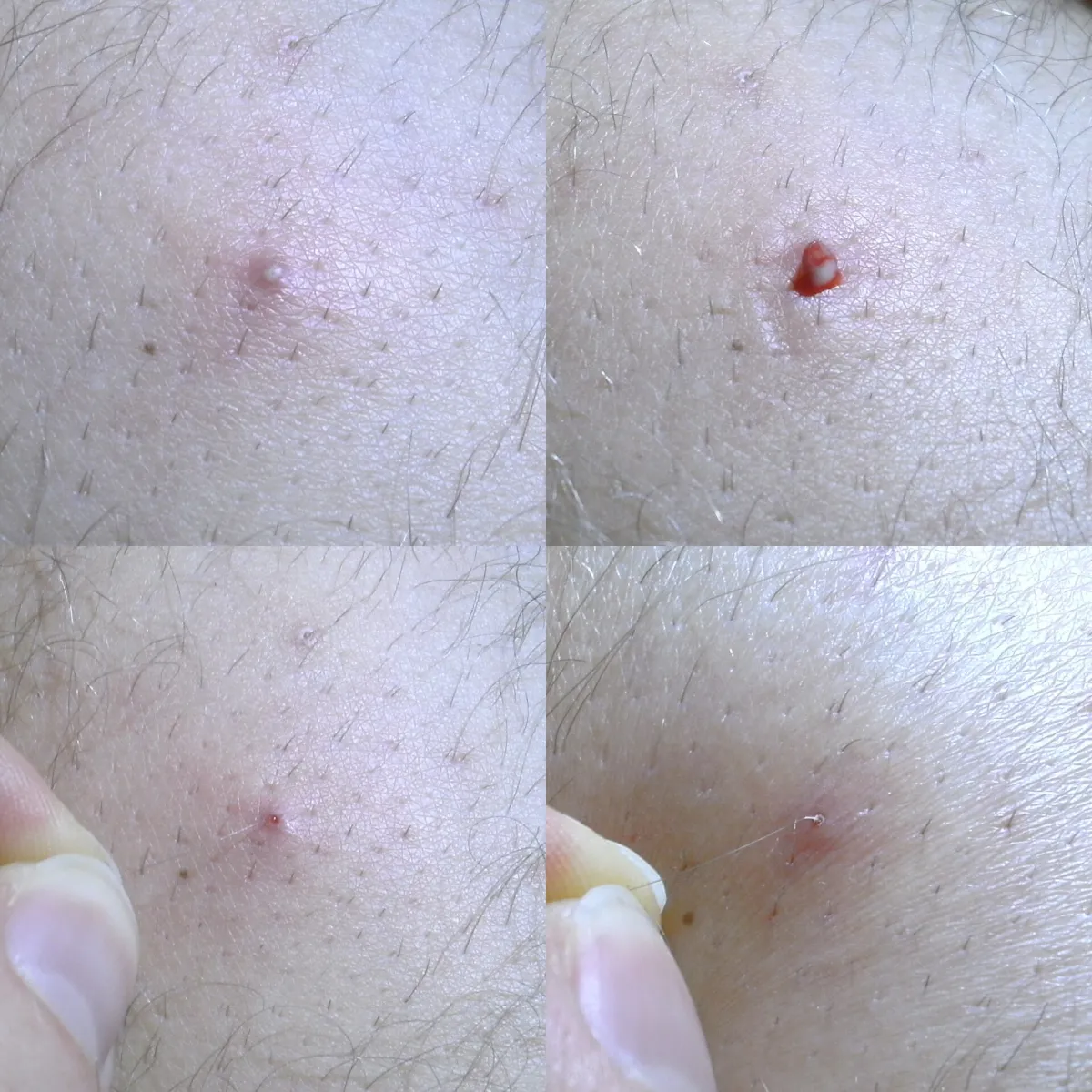 Photo: LBPics, CC BY-SA 3.0, via Wikimedia Commons
Causes and risk factors
- Curly or coarse hair, which naturally tends to bend back toward the skin.
- Very close shaving: multi-blade razors, stretching the skin, shaving against the grain.
- Dull blades, which tug instead of cutting.
- Waxing or plucking, which can break the hair below the skin surface.
- Thick, dry skin, with dead cells covering the follicle opening.
- Tight clothing, which rubs and presses on freshly shaved areas (jeans, synthetic underwear).
Natural remedies and home care
Warm compress
This is the first and simplest step. A clean cloth soaked in warm (not hot) water, held on for 5-10 minutes 2-3 times a day, softens the skin and helps the hair reach the surface. You can use chamomile tea cooled to body temperature for a mild soothing effect.
Gentle exfoliation
Chemical exfoliation (1-2% salicylic acid or 5-10% glycolic acid) dissolves the dead cells that keep the hair trapped, without injuring the skin. Apply in the evening, every 1-2 days, on prone areas. Very gentle mechanical exfoliation (a soft mitt, circular movements, no pressure) twice a week is an alternative, but not on skin that is already inflamed.
Aloe vera
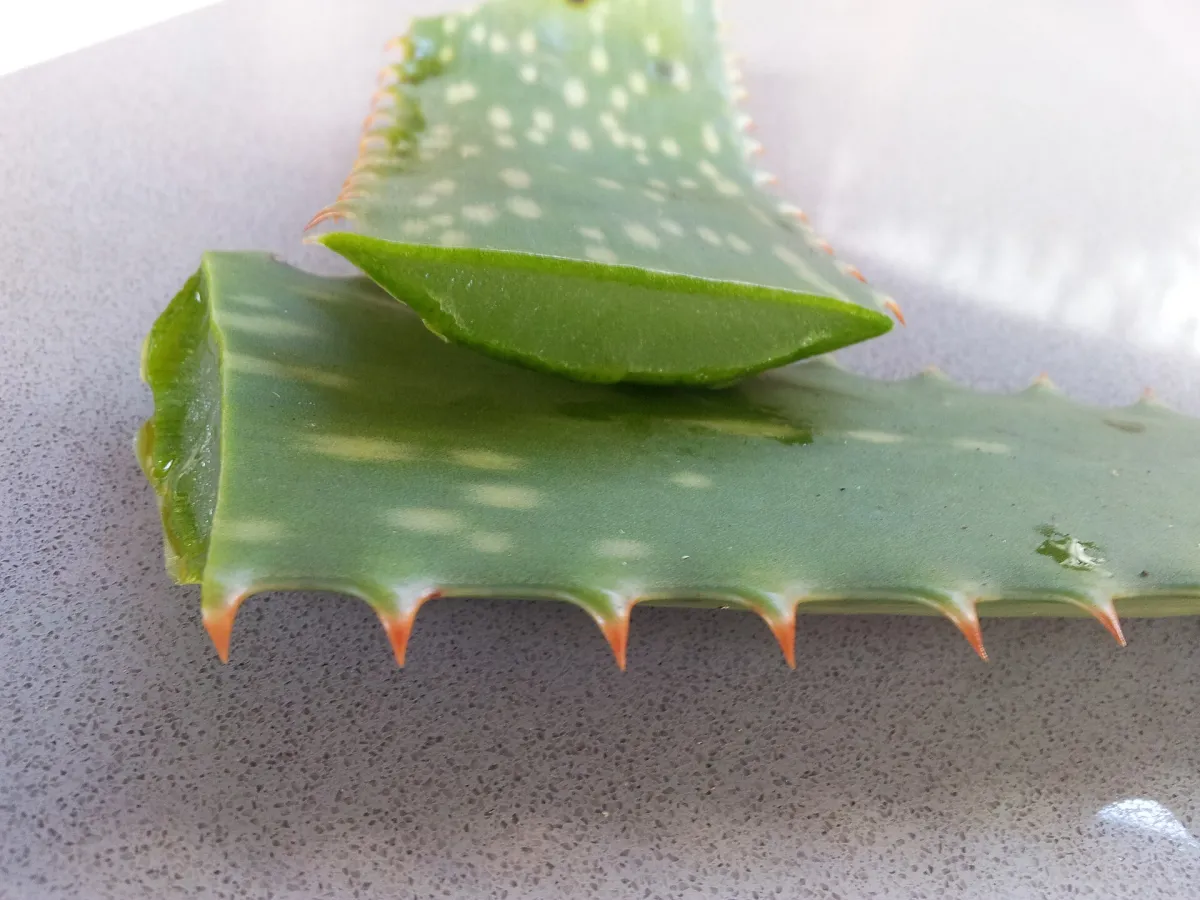
Aloe vera gel is used traditionally on irritated skin and has evidence for moisturising and soothing effects. Applied after shaving, it reduces the burning feeling. Use a pure gel without alcohol or fragrance, or gel straight from the leaf once you have removed the yellow layer (aloin), which can irritate.
Tea tree oil, diluted
Tea tree oil has antimicrobial and anti-inflammatory properties documented in laboratory studies and in mild acne. For an inflamed bump: 1-2 drops in 1 teaspoon of carrier oil or aloe gel, dabbed on in the evening. Never apply it undiluted or on freshly shaved, raw skin.
Recipe: soothing after-shave gel
- 2 tablespoons of pure aloe vera gel
- 1 tablespoon of strong chamomile tea, cooled
- 2 drops of tea tree oil (optional, adults only)
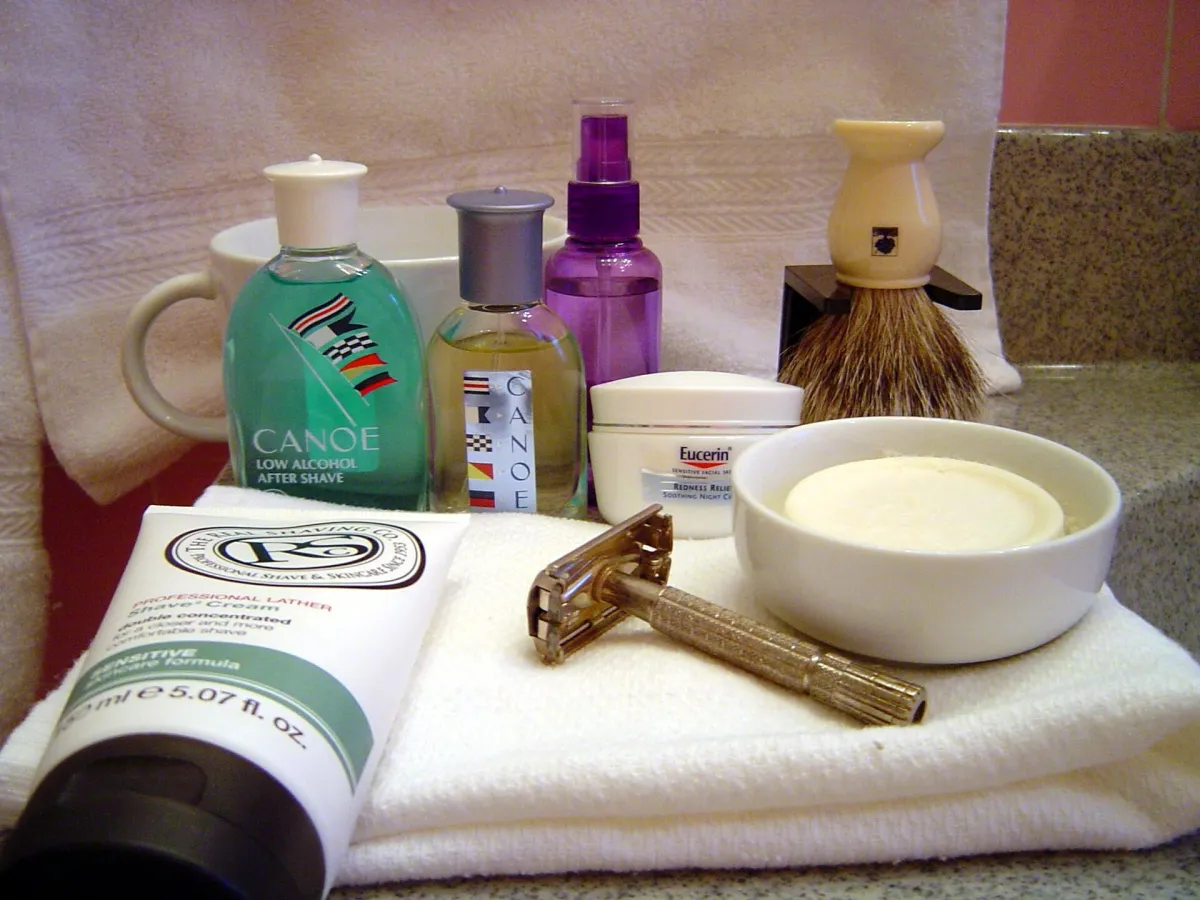
Mix in a clean jar, keep it in the fridge and use within 5 days. Apply a thin layer after shaving, on skin patted dry.
How to free a visible hair safely
If you can clearly see the loop of the hair at the surface, after a warm compress you can lift only the tip with a sterile needle or disinfected tweezers, without piercing the skin and without pulling the hair out. Let it grow freely. If the hair is not visible, do not go looking for it: digging turns a minor irritation into an infection.
Prevention: the routine that matters most
| Habit | Why it helps | How to do it |
|---|---|---|
| Shave with the grain | The hair stays longer and does not curl into the skin | First pass always “with the grain” |
| Single or double sharp blade | Clean cut, no tugging | Replace every 5-7 uses |
| No skin stretching | The hair does not retract below the surface | Keep the skin relaxed |
| Plenty of foam or gel | Less friction | Leave it on 1-2 minutes before shaving |
| Exfoliate 2-3 times a week | Keeps the follicle open | Salicylic or glycolic acid |
| Electric shaver or trimmer | Does not cut at skin level | Leave 0.5-1 mm of stubble |
| Loose clothes after waxing | Less friction | Cotton, for 24-48 hours |
For chronic problems, laser hair removal greatly reduces ingrown hairs because it reduces the number and thickness of hairs. It is worth discussing with a dermatologist.
Special areas
Beard and neck. A beard trimmer that leaves 1 mm is often the simplest solution. If you must be clean-shaven, shave after a shower, when the skin is softened.
Armpits. The skin is thin and sweaty; avoid alcohol-based deodorants right after shaving. Dark patches left after repeated irritation are discussed in our article on dark underarms.
Bikini line. This is where ingrown hairs are most common, because of curly hair and friction. A trimmer is better than a blade. Painful, recurring bumps here may be something other than ingrown hairs (see below).
Contraindications and precautions
- Aspirin allergy: avoid salicylic acid.
- Sensitive skin, eczema: no essential oils; start with compresses and aloe.
- Pregnancy: strong exfoliants and essential oils only with your doctor’s approval.
- Diabetes or weak immunity: any infected bump should be seen by a doctor, as infections progress faster.
- Do not use hydrogen peroxide, strong alcohol or undiluted vinegar on inflamed skin.
When to see a doctor
- The bump grows, becomes hot, very painful or full of pus: it may be an abscess or a boil.
- You develop a fever or a red streak spreading from the lesion.
- You have painful bumps that keep returning in the same place, in the armpits or groin, sometimes draining: these may be signs of hidradenitis suppurativa, a condition that needs specialist treatment.
- Thick scars (keloids) or persistent dark marks remain.
- You have widespread folliculitis, with many pustules over large areas.
Common mistakes
Squeezing the bump. It pushes infection deeper and leaves marks.
Shaving over the inflamed area. The blade ruptures pustules and keeps irritation going. Take a few days off.
Five-blade razors on curly hair. They cut below skin level, exactly what you want to avoid.
Harsh scrubbing on irritated skin. Exfoliation is for prevention, not for active lesions.
Alcohol-based aftershave. It stings, dries the skin and makes it more vulnerable.
Conclusion
Ingrown hairs are more a problem of technique than of products. Warm compresses, gentle exfoliation and aloe vera help healing, while shaving with the grain, sharp blades and trimmers prevent them. Put the tweezers away, be patient and see a doctor if bumps become painful or keep coming back. If you also deal with clogged pores, see our guide to blackheads.
Frequently asked questions
How long does an ingrown hair take to go away? Usually 1-2 weeks, if it is not irritated further. Leftover dark marks can take a few months to fade.
Should I pull an ingrown hair out with tweezers? Only if the loop is clearly visible at the surface, with sterile tools, and only to lift the tip without plucking it. Otherwise leave it alone.
What should I put on an inflamed ingrown hair? Warm compresses, aloe vera gel and, in adults, diluted tea tree oil. If there is a lot of pus or severe pain, see a doctor.
Does waxing cause more ingrown hairs? In some people it does, especially with curly hair, because the hair can break below the skin. Regular exfoliation between sessions helps.
Does exfoliating before shaving help? Chemical exfoliation the evening before is useful. Mechanical scrubbing right before shaving can irritate the skin.
Can I prevent ingrown hairs without giving up shaving? Yes: shave after a shower, with the grain, with a sharp blade, without stretching the skin, and exfoliate 2-3 times a week.
Does laser hair removal solve the problem for good? It greatly reduces the number of hairs and, with them, ingrown hairs. Results depend on hair and skin type; talk to a dermatologist.
Sources
- American Academy of Dermatology (AAD): shaving tips and preventing ingrown hairs.
- NHS (UK): Ingrown hairs, symptoms, care and when to see a GP.
- PubMed reviews on pseudofolliculitis barbae and its management.
- PubMed reviews on aloe vera in skin care and on Melaleuca alternifolia (tea tree) oil in dermatology.
Informative content only. It does not replace medical or dermatological advice.