 Photo: Original uploader was Silver442n at en.wikipedia, Public domain, via Wikimedia Commons
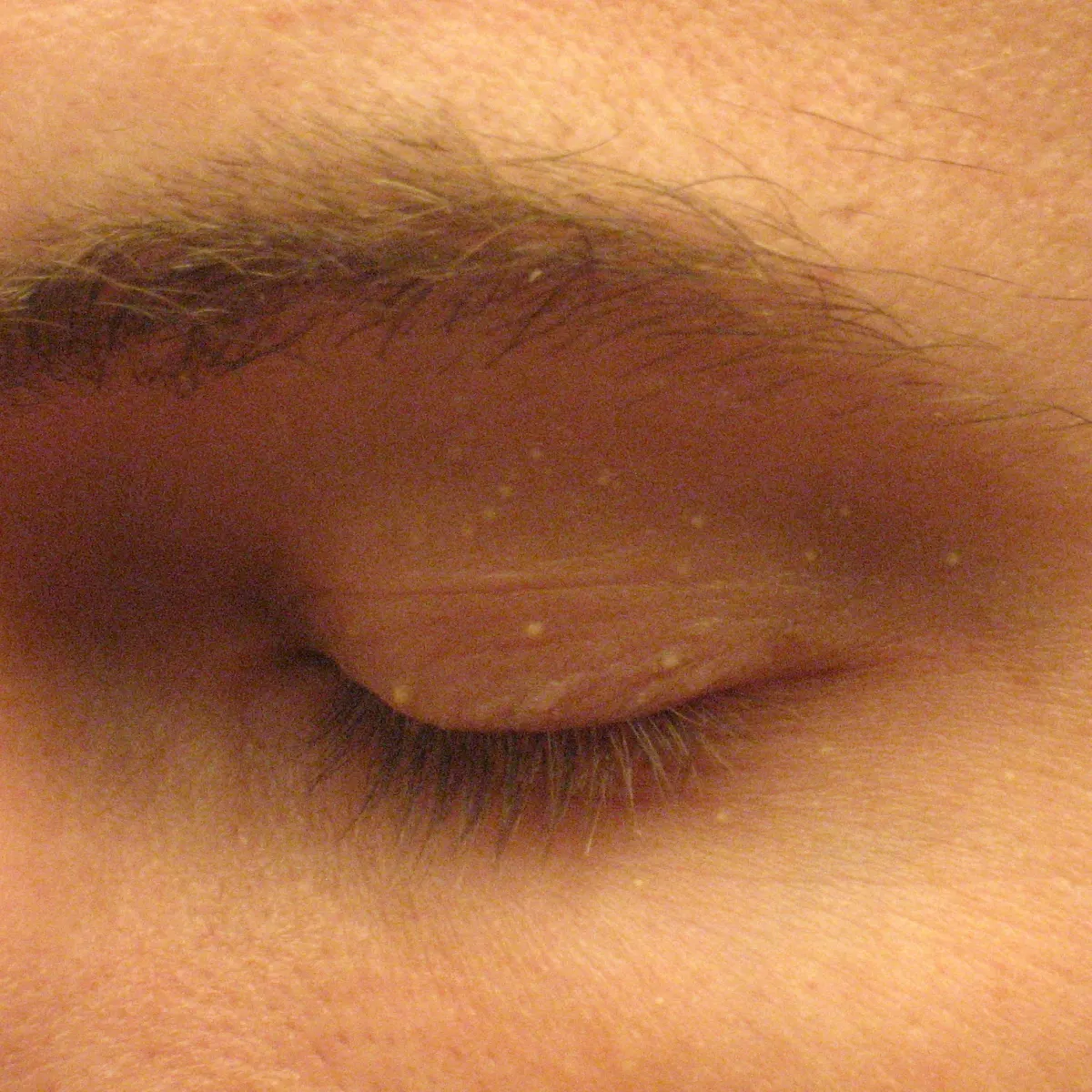
Milia are tiny, hard, white or yellowish bumps, usually 1-2 mm across, made of keratin trapped just under the surface of the skin. They show up most often on the eyelids, under the eyes, on the cheeks and nose. Unlike whiteheads, they have no opening to the surface, so they cannot be squeezed out: pressing only irritates the skin and can leave marks. In newborns they clear on their own within weeks; in adults, patience, gentle chemical exfoliation, lighter products around the eyes and, if needed, extraction by a dermatologist are what actually work.
Key takeaways:
- Milia are keratin cysts, not oil trapped in a pore, which is why squeezing does nothing.
- They are harmless, not contagious, and not caused by poor hygiene or diet.
- In newborns they are very common and fade by themselves, no creams or oils needed.
- In adults, gentle chemical exfoliation (lactic acid, salicylic acid, retinoids), daily sunscreen and dropping heavy eye creams help most.
- Extraction with a sterile needle or blade belongs in a clinic, especially near the eyes.
- A pearly bump that grows, bleeds or shows tiny blood vessels needs a dermatologist.
What are milia?
Your skin renews itself constantly: cells move up from the deeper layers, fill with keratin and shed. Sometimes that keratin gets sealed inside a tiny pocket just beneath the surface, with no way out. The result is a milium (plural milia), a firm, pearl-white dot that doesn’t hurt and doesn’t turn red. The name comes from the Latin word for millet seed, which is exactly what they look like.
Milia can appear alone or in small clusters, often symmetrically around the eyes. They can sit unchanged for months, which sets them apart from pimples that come and go within days.
Primary vs secondary milia
Primary milia form on otherwise healthy skin with no obvious trigger. These are the classic baby milia and the ones adults notice on their eyelids and cheeks.
Secondary milia develop where skin has been damaged and healed: after burns (including bad sunburn), blisters, dermabrasion, laser treatments, aggressive peels, tattoos, or long-term use of steroid creams. Sun-damaged skin, which renews more slowly, is also prone to them.
Rare types that need a dermatologist
Less common forms include milia en plaque, many milia clustered on a raised, reddish, inflamed patch (often behind the ears or on the eyelids), and multiple eruptive milia, which appear suddenly in large numbers. Milia that follow blistering conditions, such as some forms of porphyria or autoimmune skin diseases, or that appear in children alongside other unusual signs (sparse hair, nail or teeth abnormalities) should be checked by a doctor, as they can point to an underlying condition.
Milia vs whiteheads: how to tell them apart
Mistaking milia for whiteheads is the main reason people end up with red, scabbed skin after trying to pop them. This table also covers other small bumps that commonly turn up on the face.
| Bump | What it looks like | Where | Can it be squeezed? | What to do |
|---|---|---|---|---|
| Milia | Hard white pearl, 1-2 mm, no visible pore | Eyelids, under eyes, cheeks, nose | No | Patience, gentle exfoliation, extraction by a dermatologist |
| Whitehead (closed comedone) | Domed, softer, sometimes inflamed around it | Forehead, chin, oily areas | Not advised, contents are sebum | Acne care, salicylic acid |
| Sebaceous hyperplasia | Soft yellowish bump with a small central dip | Forehead, cheeks, usually over 40 | No | Dermatology assessment, in-clinic procedures |
| Xanthelasma | Flat, soft yellow plaques | Eyelids, inner corner of the eye | No | Cholesterol check, dermatologist |
| Syringoma | Small skin-colored or yellowish bumps, often many | Lower eyelids | No | In-clinic procedures only |
Rule of thumb: if the bump is hard as a pearl, has no opening and hasn’t changed in weeks, it is very likely a milium. For other facial bumps, see our guides on blackheads and sebaceous cysts, which are larger and sit deeper.
What causes milia on the face?
The exact cause of primary milia isn’t fully understood. The factors most often linked to them are:
- slower skin turnover, with age or long-term sun exposure;
- very occlusive products around the eyes: thick creams, ointments and balms rich in petrolatum, lanolin or heavy oils, which can encourage milia exactly where they are applied every day;
- skin injury: burns, blisters, friction, harsh cosmetic procedures;
- steroid creams used on the face for a long time;
- individual tendency: some people keep getting milia no matter how carefully they look after their skin.
There is no evidence that milia are caused by particular foods, toxins or a sluggish liver. Poor hygiene isn’t a cause either.
What helps naturally and gently
There are no large clinical trials comparing home treatments for milia. The advice below rests on dermatologists’ experience and a simple mechanism: when skin renews faster and isn’t smothered by heavy products, the trapped keratin has a better chance of working its way out.
Patience: many clear on their own
In adults, some milia resolve spontaneously over weeks or months as the thin layer of skin above them wears away. If you only have a few and they don’t bother you, leaving them alone is a perfectly good choice.
Gentle chemical exfoliation
Chemical exfoliants loosen the bonds between dead cells and speed up skin renewal:
- lactic acid, an alpha hydroxy acid found naturally in fermented milk, is the gentlest and suits dry or sensitive skin;
- glycolic acid, originally derived from sugar cane, works harder but irritates more;
- salicylic acid, a beta hydroxy acid related to compounds in willow bark, gets into oily areas and is useful if you also have blackheads;
- retinoids (retinol and retinal in cosmetics; tretinoin or adapalene, which need a prescription in many countries) are seen by dermatologists as the most effective topical option, but must be introduced slowly.
Physical scrubs with sugar, salt, crushed kernels or stiff brushes won’t remove milia, because the cysts aren’t on the surface. Scrubbing just inflames the skin, and the micro-injuries can even trigger new milia.
 Photo: Einebillion, CC BY 4.0, via Wikimedia Commons
Warm compresses and proper cleansing
A warm compress (water around 38-40 °C / 100-104 °F, not hot) held on the area for 5-10 minutes softens the outer layer and helps an exfoliant applied afterwards work evenly. It won’t melt milia or make them pop out, but it is a safe, pleasant step. Wash your face with a mild, fragrance-free cleanser and lukewarm water, then pat dry rather than rub.
Honey and oat mask
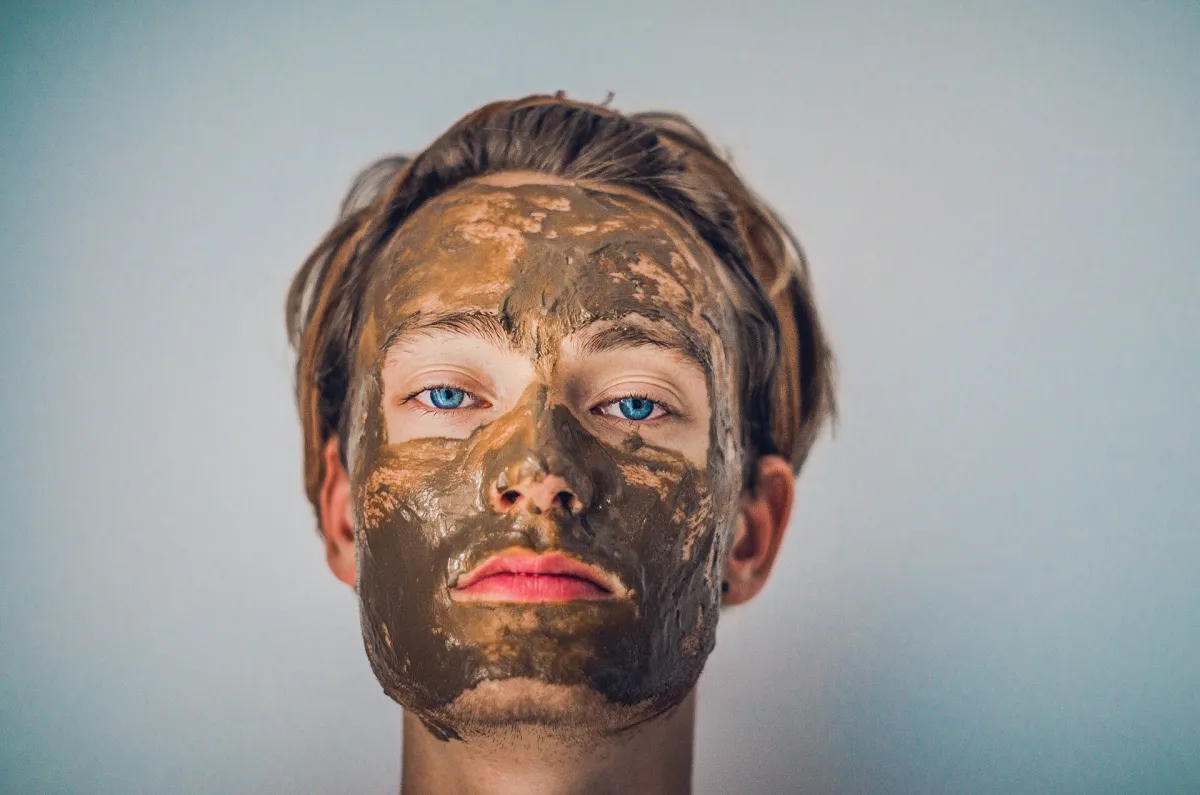
Honey has a long traditional use on skin as a soothing, mildly antiseptic agent, and finely ground oats calm irritation. There’s no data showing it clears milia, but it is a gentle alternative to scrubs on your acid-free nights: mix 1 teaspoon of raw honey with 1 teaspoon of finely ground oats and a few drops of water, spread over cheeks and nose (not the eyelids), leave for 10-15 minutes and rinse with lukewarm water. More recipes are in our guide to natural face masks.
Lighter moisturizing and sun protection
If milia keep appearing exactly where you apply your eye cream or a rich balm, switch for 6-8 weeks to a light, non-comedogenic lotion or a hyaluronic acid gel. Heavy plant oils applied neat to the eyelids aren’t a good idea if you’re prone to milia. Daily sunscreen (SPF 30 or higher) matters twice over: it prevents the sun damage that slows skin turnover, and it is essential when you use acids or retinoids.
How to use exfoliants: strength and frequency
| Product | Typical cosmetic strength | Starting frequency | Areas | Notes |
|---|---|---|---|---|
| Lactic acid | 5-10% | 2-3 evenings a week | Cheeks, nose, forehead | Gentlest, good for dry skin |
| Glycolic acid | 5-8% | 2 evenings a week | Cheeks, forehead | May sting, increases sun sensitivity |
| Salicylic acid | 0.5-2% | 2-3 evenings a week | Nose, chin, oily zones | Avoid if allergic to aspirin |
| Retinol | 0.2-0.3% | 2 evenings a week, building up slowly | Whole face, away from eyelids | Not on the same night as acids |
| Honey and oat mask | - | 1-2 times a week | Cheeks, nose | Alternative to scrubs |
| Warm compress | 38-40 °C | 5-10 minutes before the exfoliant | Any area | Only softens the skin |
An exfoliant evening, step by step:
- Cleanse with a mild cleanser and pat dry.
- Wait 10 minutes so the skin is fully dry (less stinging).
- Apply a thin layer of exfoliant, keeping about 1 cm away from the lash line and eyelid edges.
- After a few minutes, apply a light, fragrance-free moisturizer.
- In the morning, sunscreen.
- Alternate: one night acid or retinol, one night moisturizer only. Never stack several actives on the same night.
Results usually show after 6-12 weeks of consistent use. If nothing has changed after 3 months, it’s time to see a dermatologist.
Milia in babies: what to do and what not to
In newborns, milia look like tiny white dots on the nose, chin and cheeks, sometimes on the gums or the roof of the mouth (Epstein pearls and Bohn’s nodules). They’re normal, painless and don’t bother the baby. They usually fade on their own within the first weeks of life.
Do: wash the face with lukewarm water and pat gently, no products. Don’t: squeeze, rub, or apply oils, rich creams or adult acne lotions. Milia shouldn’t be confused with baby acne (red bumps, sometimes with pus) or with cradle cap on the scalp. If milia are very numerous, persist beyond a few months, or come with other skin, hair or nail problems, talk to your pediatrician.
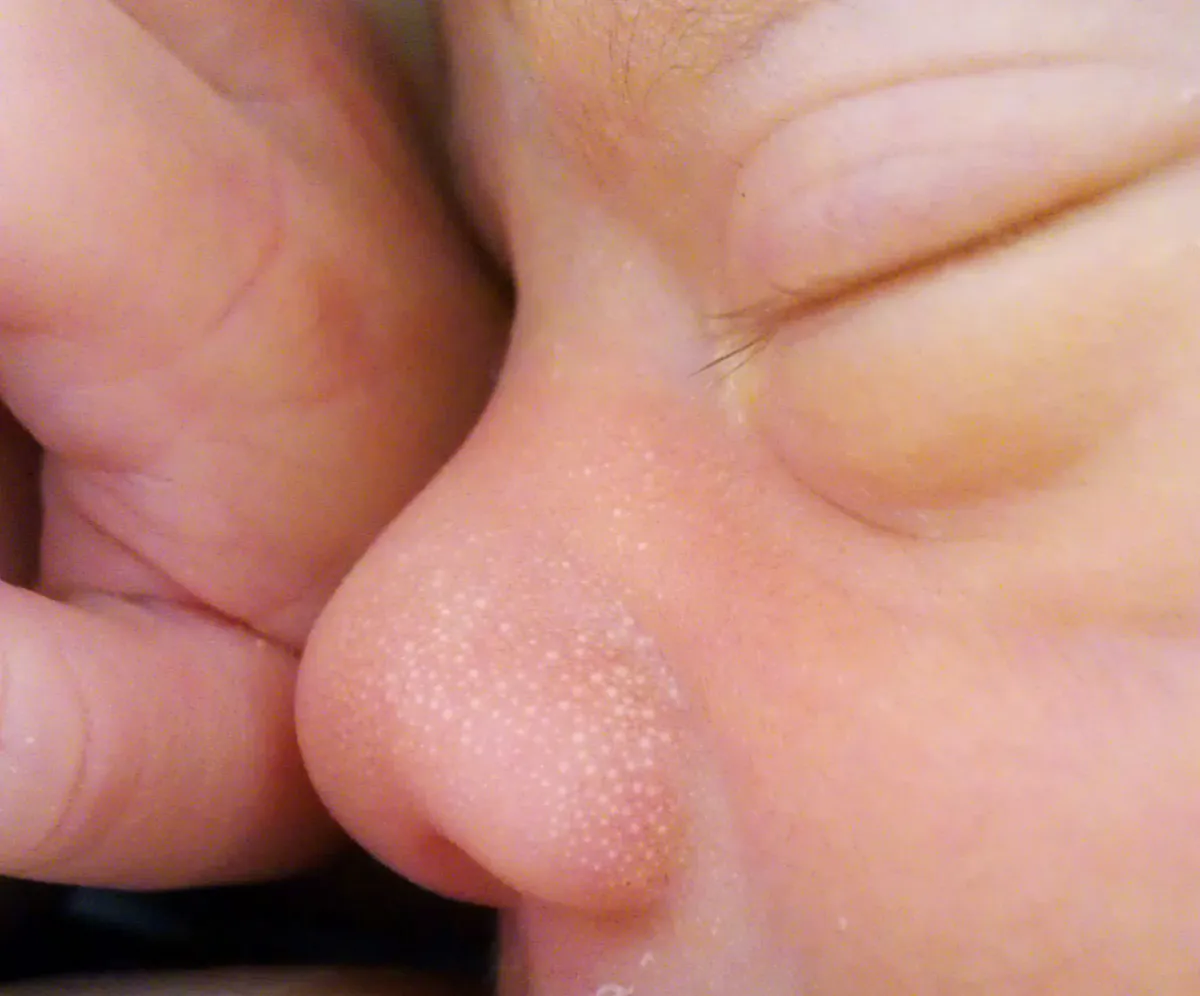 Photo: Serephine, CC0, via Wikimedia Commons
When professional extraction makes sense
Extraction is the only method that removes a milium on the spot. A dermatologist nicks the thin layer of skin with a sterile needle or fine blade and pushes the keratin out, sometimes with a comedone extractor. It takes a few minutes, stings briefly and rarely leaves marks when done properly. It’s worth considering if:
- milia bother you and haven’t budged after 2-3 months of good skin care;
- they sit on the eyelids or very close to the eyes, where acids shouldn’t go;
- you have many of them or they keep coming back;
- you want the diagnosis confirmed.
Other in-clinic options include superficial chemical peels, fine electrocautery, cryotherapy, laser and prescription retinoids. The choice depends on how many milia you have, where they are and your skin type.
Contraindications and precautions
- Pregnancy and breastfeeding: avoid topical retinoids (retinol, tretinoin, adapalene). Ask your doctor about low-strength acids; salicylic acid peels are not done in pregnancy.
- Eye area: no acids or retinoids on the eyelids or their edges.
- Rosacea, eczema, perioral dermatitis: skin reacts easily; start with lactic acid once a week or leave milia to the dermatologist.
- Aspirin allergy: skip salicylic acid.
- Bee product allergy: skip the honey mask.
- Isotretinoin treatment or recent procedures (laser, peel): don’t add exfoliants without medical approval.
- Risky combinations: retinoid plus acid plus scrub on the same night almost guarantees irritation.
When to see a doctor
See a dermatologist if:
- the pearly bump grows, bleeds, crusts or has fine blood vessels on its surface (an early basal cell carcinoma can resemble a milium);
- many milia appear suddenly, or a red patch studded with milia develops;
- milia appeared after unexplained blisters or sores;
- you have flat yellow plaques on your eyelids (xanthelasma, which also warrants a cholesterol check);
- you tried to remove them and the area became red, swollen, painful or pus-filled;
- your baby’s milia persist beyond a few months or come with other signs.
Common mistakes
Squeezing them like pimples. There is no pore, so nothing comes out. You’re left with redness, scabs and sometimes marks or scars.
Picking at them with a needle at home. You risk infection and scarring, and near the eye you can injure the eyelid or the eye itself.
Scrubbing with harsh exfoliants. The micro-injuries can create exactly what you’re trying to get rid of.
Treating milia like acne. Toothpaste, alcohol and drying spot treatments don’t help and irritate the delicate skin around the eyes.
Changing three products at once. If irritation appears, you won’t know the culprit. Add one new product every 2-3 weeks.
Skipping sunscreen while using acids or retinol.
Sticking with the same heavy eye cream even though milia appear right where you apply it.
Bottom line
Milia on the face are small, harmless keratin cysts that can’t be squeezed and have nothing to do with poor hygiene. In babies they disappear by themselves; in adults they respond to patience, slowly introduced chemical exfoliation, lighter products around the eyes and sunscreen. If they bother you, sit on your eyelids or won’t shift after a few months, a proper extraction at a dermatologist’s clears them in minutes, without the marks that home attempts leave behind.
Frequently asked questions
Do milia go away on their own? Often, yes. In babies within weeks, in adults within months, although some persist for a long time. Gentle exfoliation can speed things up.
Can I remove milia myself with a needle? It isn’t recommended. Without sterile tools and proper technique you risk infection and scarring, and near the eyes the risk is even higher. Extraction belongs in a clinic.
What is the difference between milia and whiteheads? Whiteheads are pores clogged with sebum, appear with acne and feel softer. Milia are hard keratin cysts with no opening, which is why they can’t be squeezed.
Does retinol help with milia? Retinoids speed up skin renewal and are among the most recommended topical options. Introduce them slowly, keep them off the eyelids and avoid them in pregnancy.
Can eye cream cause milia? Yes, very rich or occlusive creams can encourage milia in people who are prone to them. If the bumps appear exactly where you apply a product, try a lighter formula.
Are milia contagious or linked to diet? They aren’t contagious, and there’s no evidence they’re related to diet, toxins or the liver.
Why do milia come back after extraction? Extraction removes the existing cyst but doesn’t change your skin’s tendency. Regular gentle exfoliation, lighter products and sunscreen lower the risk of recurrence.
Can I use coconut oil for milia? No. Heavy oils on the eyelids or cheeks can encourage new milia in prone skin and won’t dissolve existing ones.
Sources and further reading
- DermNet (New Zealand), “Milia”, dermatology information sheet.
- British Association of Dermatologists, patient information leaflet “Milia”.
- American Academy of Dermatology, public information on milia and how dermatologists treat them.
- NHS (UK), “Skin rashes in babies”, section on milia in newborns.
- StatPearls (NCBI Bookshelf), “Milia”.
Informational content only; it does not replace a consultation with a dermatologist, doctor or pharmacist.